News / Blog
Announcing: The Maynard Institute is partnering with BlueLena.
Watch this space for more information on how to manage YOUR donor portal with BlueLena and FundraiseUp!



One of the Maynard Institute’s core programs, the Maynard 200 Fellowship is designed to advance the careers of investigative storytellers, executive leaders, frontline editors and media entrepreneurs of diverse backgrounds (see bios). The fellowship provides professional development training and year-long mentorship. In 2022, media strategist Dickson Louie returned to lead the media entrepreneurship cohort and continued the media entrepreneurship award program originally launched in 2021. Based on the scores from a panel of media business experts, faculty, and Maynard 200 alumni, three fellows, Michael Tennant, Nancy Flores and Lisa D. Tinsley have been recognized for their outstanding media venture pitches.
Given to the Fellow with the top overall score from the judges, the Dori J. Maynard Award honors the late president of the Maynard Institute and the daughter of Robert C. Maynard, our co-founder. The amount of this award, which is funded by Dickson Louie each year, is $1,000 and will go toward the operating expenses of the winning start-up.
The Quentin Hope Metrics Award in Entrepreneurship is a $1,000 prize funded by the Maynard Institute. The award honors Quentin Hope, who served as the coach for Institute co-directors Evelyn Hsu and Martin Reynolds in the year-long Media Transformation challenge and helped them define and create metrics for their projects.
We extend our thanks to the 2022 award judges Linda Lloyd da Silva, Peter Lamb, Ned Hawley, Clarisa Strohmeyer, Travers Johnson, Waylae Gregoire, Cathy Eckstein, Caroline Ceniza-Levine and Susan Leath.
Michael Tennant is the recipient of this year’s Dori J. Maynard Media Entrepreneurship Award for his presentation on his start-up, Curiosity Lab.
Tennant is a founder, writer and movement builder dedicated to spreading tools of empathy and helping people find their purpose. Before founding Curiosity Lab in 2017, he spent 15 years becoming a media, advertising and nonprofit executive, and delivering awardwinning marketing strategies for companies like MTV, Vice, Procter & Gamble, Coca-Cola, Sweetgreen and Oatly.
Tennant created Actually Curious, the conversation card game that became a viral sensation in 2020 during the pandemic and the rise of the racial justice movement for helping people to build meaningful connections and tackle important topics facing the world.
He has channeled his business success and momentum into a sustained movement supporting BIPOC and other underrepresented communities through speaking, writing, leadership, mentorship, consulting, partnerships and talent-pipeline programs.
In a statistical tie, Nancy Flores and Lisa D. Tinsley are the recipients of this year’s Quentin Hope Metrics Award. This award is given to the Fellow with the top overall score in the metrics category.
Flores had presented on her startup, Austin Vida, a digital news and culture site that amplifies, informs, and celebrates the Latinidad of the Austin community with culturally-competent news.
In addition to editor and publisher of Austin Vida, Nancy is an award-winning local journalist. She founded Cultura Media, Austin Vida’s umbrella organization, and was recently named one of “Austin’s Top Latina Entrepreneurs to Watch” by the digital news outlet Austonia.
Flores grew up in the bordertown of Eagle Pass, Texas, and is the proud daughter of Mexican immigrants. She has specialized in writing about underrepresented Central Texas communities, most recently reporting for the Austin American-Statesman and Austin360. Her contributions to Austin’s Latino community recently earned her
the Award of Excellence in Media Arts from the city’s Mexican American Cultural Center. In 2019, Remezcla listed her among the nation’s “Latino Columnists You Should Be Reading.”
Tinsley discussed her venture, KISA Public Radio (KPR), an independent, nonprofit media organization that was founded on a mission to enlighten the world about the African American community. Every day, KISA Public Radio connects with thousands worldwide on the air and online to explore issues affecting the African American community. Programming includes news about health, science, entrepreneurship, arts, culture and more.
Tinsley has worked as a news researcher and archivist for 25 years. She loves to share her research that will enrich the lives of others. Tinsley launched KISA Public Radio in 2017, and when not working as program director of the radio station, she can be found found volunteering with food banks and Habitat for Humanity, traveling with family and friends and watching documentaries.
Led by Executive-in-Residence Dickson Louie, the Maynard 200 entrepreneurship track is designed to support fellows navigating the modern media landscape. As Principal of Louie & Associates and Lecturer at the University of California Davis Graduate School of Management, Louie has over 25 years of professional management experience within the news media industry. He brings veteran expertise as a planning and business development executive at the Los Angeles Times, the San Jose Mercury News and the San Francisco Chronicle.
“In this Maynard 200 media entrepreneur track, fellows learn the frameworks that will help increase the odds of their venture’s success: discovering market opportunities, identifying business models, learning how to pitch ideas, setting goals, and leading a start-up team.”
Dickson Louie, Principal of Louie & Associates
In October 2022, Louie received a partial scholarship from IDEO U for their Activating Strategy course, in recognition of his work in co-creating the Summer Strategy Sessions for the Maynard 200 Media Entrepreneurship and Executive Leadership Tracks with Virgil Smith. The scholarship will allow Louie to receive the IDEO U “Human-Centered Strategy” certificattion. IDEO, the parent organization of IDEO U, is a global consulting firm and a pioneer in the concept of design thinking.
The Maynard 200 program is grateful to all members of the 2022 faculty and mentors. In addition to media entrepreneurship, the Maynard 200 program includes three other areas of focus for investigative storytellers, executive leaders, and frontline editors. Each track is led by accomplished industry veterans such as peabody award-winning journalist Aaron Glantz for investigative storytelling, former newsroom C-suite executive Virgil Smith for the leadership track, and senior editor John X. Miller for frontline editors and managers.
The Maynard 200 Fellowship program will continue next year in a hybrid virtual and in-person format hosted at the USC Annenberg School for Communication and Journalism in Los Angeles, California. Maynard 200 fellows will benefit from tuition-free training and mentorship, plus air travel and lodging expenses will be covered by the Maynard Institute. Subscribe to our newsletter for the call for applications coming soon!
Watch this space for more information on how to manage YOUR donor portal with BlueLena and FundraiseUp!
We’re partnering with the Kansas City Defender for Black Philanthropy Month! August is Black Philanthropy Month! Founded in…
The inaugural cohort of Fire Up Fellows represent the power and potential of diverse news in the State…

The Maynard Institute will welcome back over 50 Maynard 200 Fellows (see bios) on Tuesday, October 25th, for the second and final in-person training week hosted at the University of Southern California (USC) Annenberg School of Communication and Journalism. The video below captures the spirit of the first week of the Maynard 200 Fellowship gathering at USC Annenberg earlier this year.
The final day of the October training week will conclude with commencement celebrations and each fellow will be matched with a mentor from their respective field or specialization. The graduation activities will be preceded by a fireside chat with Maynard Institute Co-Executive Director, Martin Reynolds and Kevin Merida, executive editor for the Los Angeles Times. Fellows will also present their final projects, including the review of a special case study prepared by Maynard 200 fellows on the current development strategie of the Los Angeles Times.
The new video about the Maynard 200 Fellowship program kicks off with scenes from the 2022 welcome reception, where guests were asked to describe how they felt about the program in one word. From “Inspired” and “honored” to “supported” and “connected,” fellows shared how they felt. The one word spoken into the microphone by Denise Watson, features editor at The Virginian-Pilot and Daily Press in Virginia, was “empower…that’s what Maynard has always done and that’s what I hope to do.“
Watch the 3 minute video to understand why the Maynard 200 program is so meaningful to both fellows and faculty.
During the final week of Maynard 200, each track will meet guest faculty speakers and leaders in the industry. We are proud to welcome back previous faculty as well as introduce new guest speakers. To read more about the Maynard 200 faculty roster, check out their full bios (PDF).
In addition to attending training sessions, fellows will also be presenting their final projects including a case study of The Los Angeles Times. As part of the in-person program, fellows will be presenting their case study findings directly to LA Times executive editor, Kevin Merida, and other executives in attendance.
The Maynard 200 Fellowship program doesn’t end with the commencement celebration. One of the lasting positive outcomes of this fellowship is the signature 1:1 mentorship component. After the formal curriculum concludes, fellows are paired with a veteran media professional in their area of interest who has committed to mentoring the fellow for a year. This community building is key to pushing the industry forward.
This year’s mentors comprise a distinguished roster of award-winning media executives, academics, communications professionals and business and entrepreneurship experts. We are pleased to have several Maynard Institute alumni, including graduates from its legacy programs and past Maynard 200 programs, joining us as mentors this year.
The program is tuition-free thanks to funding by Google News Initiative, Craig Newmark Philanthropies, The Hearthland Foundation, the McClatchy Foundation and supporters like you! Your tax-deductible donation directly impacts the careers of journalists while supporting the institute’s mission to promote diversity, equity, inclusion and belonging in the news media.
We are creating better representation in newsrooms through our Maynard 200 fellowship program, which gives media professionals of color the tools to become skilled storytellers, successful managers, empowered executives and inspired entrepreneurs. Donate today!
Watch this space for more information on how to manage YOUR donor portal with BlueLena and FundraiseUp!
We’re partnering with the Kansas City Defender for Black Philanthropy Month! August is Black Philanthropy Month! Founded in…
The inaugural cohort of Fire Up Fellows represent the power and potential of diverse news in the State…
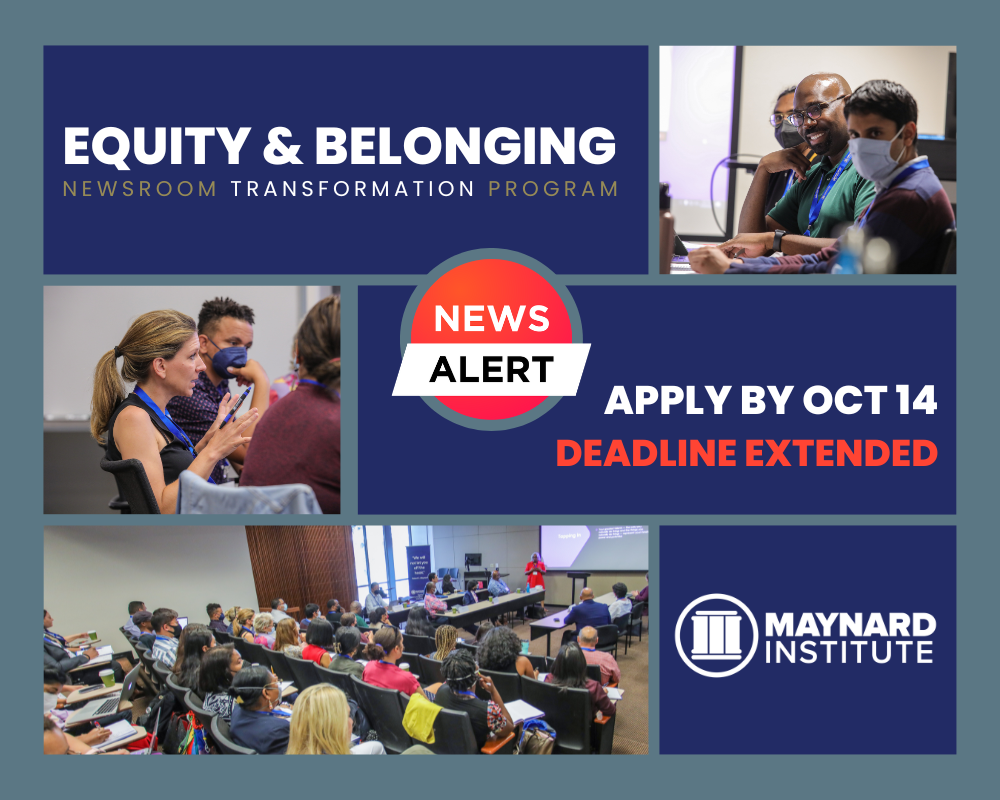
Is your news organization ready to establish a more equitable workplace and provide better coverage of underserved communities? Subscribe for email updates about our next program application period.
What makes this program unique? The Equity & Belonging Newsroom Transformation Program leverages an embedded coaching model to help news organizations better inform underserved communities and establish workplace cultures of belonging. Our goal is to help newsrooms become more equitable and inclusive in their reporting, workplace, and in the communities they serve. The team of consultants piloting the program curriculum will work closely with Maynard Institute facilitators who are steeped in the Fault Lines® training methodology. As the extended application deadline approaches on October 14, we asked the program’s consultants why they think organizations should apply. Read their bios to learn more about their expertise and check out their quotes below.
“Too often diversity efforts are performative. We want to operationalize belonging so that BIPOC and folks of diverse backgrounds can thrive and contribute even more meaningfully to the growth, sustainability and credibility of the outlets where they work. We want to show that when organizations invest in equity and inclusion, working relationships between people improve, there is less labor strife, attrition and toxicity. Newsrooms that center the concept of belonging foster innovation, better journalism, and more importantly, the capacity to build or repair relationships with communities. We are excited to see what we can create through this program.”
Martin G. Reynolds, Co-Executive Director of the Maynard Institute
“Newsrooms face multiple levels of revolution internally and externally: from changing community and newsroom demographics and social and political tensions, to differing generational expectations about inclusion, work and journalism ethics. This program offers the opportunity to examine your dynamics, learn about who you are, how you work together and what your impact has been and could be on each other and in your communities. This holistic, in-depth approach aspires to help journalists of today face complex challenges with empowering insight and tools.”
Mei-Ling Hopgood, Maynard Institute program researcher and Professor at the Medill School of Journalism, Media, Integrated Marketing Communication at Northwestern University

“Newsrooms are feeling the pressure and urgency when it comes to understanding and implementing best practices surrounding DEI. We are excited to support organizations as they grow in their knowledge and implement sustainable, long term investments towards strengthening the equity and inclusion in their respective newsrooms.”
Kate Sultuska, Global Equity Collective

“What would it mean for your news organization to be deeply understood and deeply challenged to grow in its diversity goals? Our mission is to partner with you in that process through the Newsroom Transformation Program program. Our team holds expert credentials in journalism, law, professional leadership, counseling, management, social policy, and advanced DEIB training. This background makes us uniquely positioned to understand your newsroom’s internal DEIB challenges and opportunities, as well as the essential community connections and impacts a newsroom must negotiate in today’s world. DEIB has an important role to play in your institution’s news voice and identity, and we promise to be a collaborative guide on that journey.”
Carol Ross-Burnett, CRB LLC

“There’s never been a more urgent time for newsrooms to grapple with inequity in their own businesses and in society. We are proud to be part of this important initiative.”
Anasstassia Baichorova, Global Equity Collective

“This initiative presents a great opportunity to bring experts in the field together to lead two news organizations toward sustainable, equitable change. Our goal is to test methodologies, re-test, and document the processes of both pilot programs in order to replicate the work to assist future media outlets that want to make meaningful change.”
Felecia D. Henderson, Director of Cultural Competency at the Maynard Institute

The Newsroom Transformation Program will provide two news organizations with the opportunity to develop the tools needed to implement a sense of belonging and equity in the newsroom. The goal is to create a professional learning experience that will benefit a media outlet. The Maynard Institute wants to help contribute to best practices in community journalism and to the implementation of the Fault Lines® framework.
APPLICATIONS ARE NOW CLOSED. Application responses will be used to determine your training needs and how the training can build upon your existing knowledge, skills, and experiences. Learn more.
We’re partnering with the Kansas City Defender for Black Philanthropy Month! August is Black Philanthropy Month! Founded in…
The inaugural cohort of Fire Up Fellows represent the power and potential of diverse news in the State…
Fire Up is made possible by a budget allocation from the State of California and is part of…
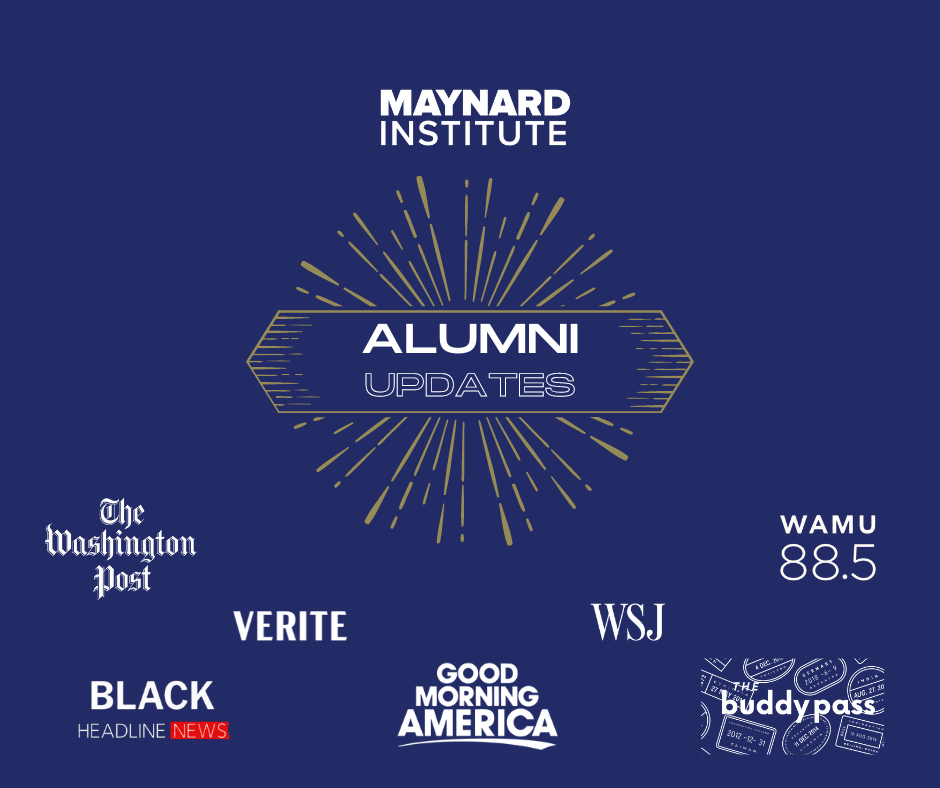
The Maynard Institute has trained journalists of color for over 45 years, so there are always alumni promotions and wins to celebrate! Check out the latest alumni updates from the summer and fall of 2022.
In her new role, Tucker will help drive campaign and congressional coverage aimed at engaging the next generation of Post readers and subscribers. She has worked at the Washington Post on the newsletter team since 2021. She is in the Frontline Editors and Managers track of the Maynard 200 Fellowship.
The Intersection Magazine, joined Black Headline News, a partnership of Black-owned media outlets, as founding member. Harrod, a Maynard 200 Felloship entrepreneur track alumni, founded the digital publication in 2020.
“The Black Headline News (BHN) channel is a collaborative movement, highlighting the importance of disseminating valuable information to communities across the nation from a Black perspective. The collective effort gives Black-owned media outlets a free, unified, safe, platform to connect with online readers, viewers, and listeners nationwide, sharing content across the world diaspora, expanding their reach, brand, and audience,” says the BNC’s call to action.
Joiner, an award-winning journalist with more than two decades of experience covering issues that impact underserved and marginalized communities, is joining Verite’s newsroom leadership team as assistant managing editor. Lottie was a Maynard 200 Fellow with a focus on executive leadership and a 2021 participant in the Poynter Leadership Academy for Women in Media program.
The longtime diversity, equity and inclusion executive was most recently the Director of Editorial Diversity Initiatives at Politico, before joining the the team at Dow Jones/Wall Street Journal, where she will focus on Dow Jones newsrooms, as well as working with leaders and others across company verticals to drive DEI strategy into all aspects of our global business. She helped to found the Politico Journalism Institute (PJI), an initiative to advance young journalists of color, in 2014, with guidance from Dori Maynard and Evelyn Hsu of the Maynard Institute of Journalism.
Tennant is the founder of Curiosity Lab, a movement to spread empathy. Actually Curious, the empathy card game created by Curiosity Lab, was recently featured on a segment for Good Morning America. The Maynard 200 2022 Fellow focusing on entrepreneurship, describes the deck as “a conversation card game that uses the science and psychology of trust-building and emotional connection to bring people closer together.”
With over 20 years of experience working as a bilingual journalist and editor for media organizations in the United States and Latin America, Frontado joins the NPR affiliate in Washington, DC, WAMU 88.5. She most recently worked as the executive editor for the NPR affiliate in Austin, Texas for over 2 years.
Adams founded The Buddy Pass in 2018 based on a mission to promote, celebrate, and encourage Black travel. The 2019 Maynard 200 Fellowship alum received capital investment, multi-year content partnership from the yet-unnamed entity. Adams commented that, “Everything I learned from Maynard–from the business model canvas to the practice pitch sessions–helped me get here.”
For 45 years, the Maynard Institute has fought to push back against the systemic lack of diversity in the news industry through training, collaborations and convenings. Founded by Robert C. Maynard, the Institute promotes diversity and antiracism in the news media through improved coverage, hiring and business practices. We are creating better representation in U.S. newsrooms through our programs , which gives media professionals of color the tools to become skilled storytellers, empowered executives and inspired entrepreneurs. Visit the Maynard Institute website to learn more.
Contact Community Engagement Manager, Ava Macha, at amacha@mije.org to be featured in our next Maynard Family Update.
Watch this space for more information on how to manage YOUR donor portal with BlueLena and FundraiseUp!
On Tuesday, May 19, 2026 the Maynard Institute was honored to receive the Lorraine Branham Award from Syracuse…
“Our contributions to journalism will outlast ourselves if we do it right — I’m really encouraged that there’s…
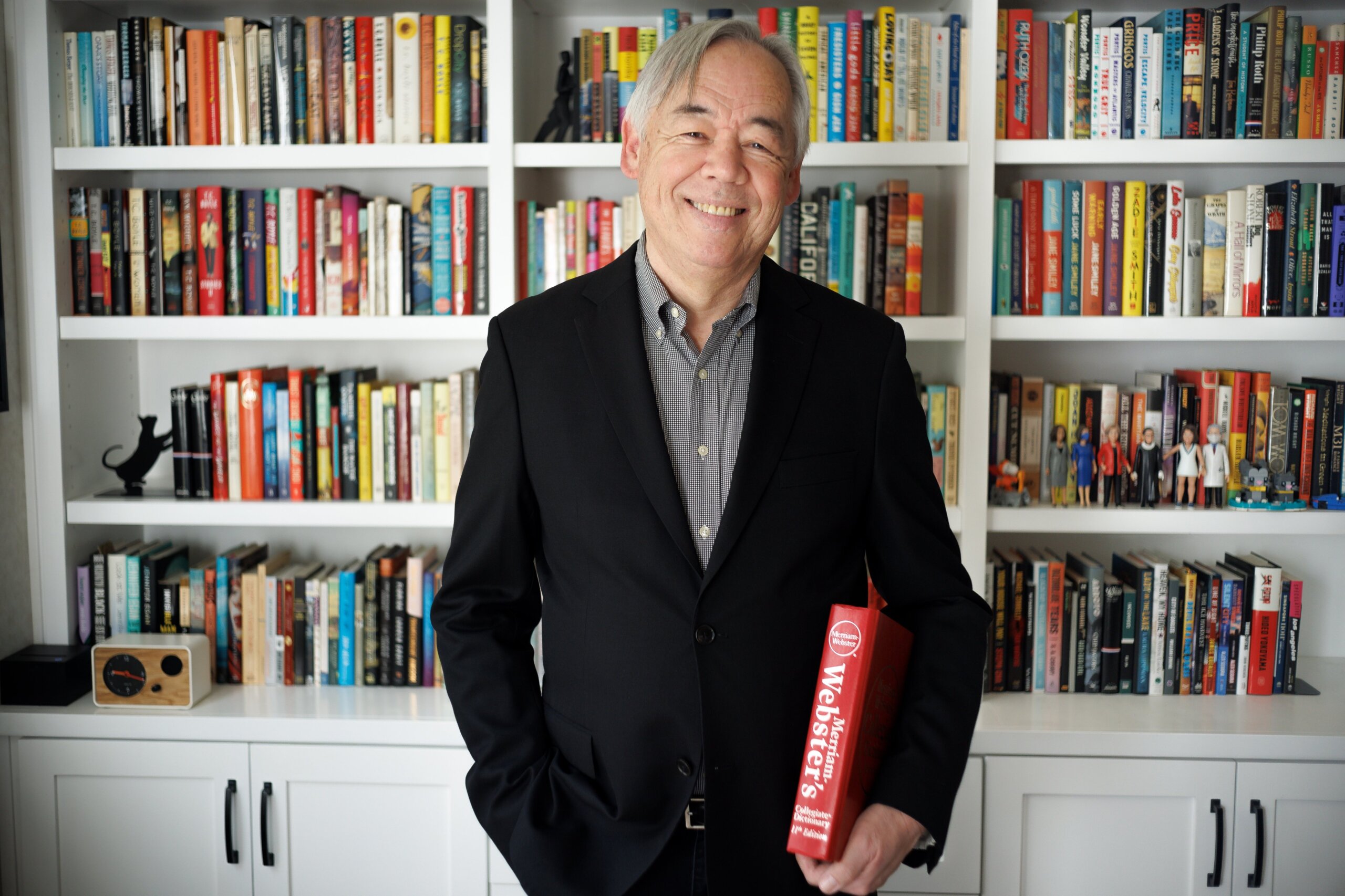
Photo by Henry Fuhrmann via Twitter.
We at the Maynard Institute were shocked and deeply saddened to learn of Henry Fuhrmann’s sudden passing on September 14, 2022. His staunch allyship serves as enduring inspiration for us all. We are humbled by Fuhrmann’s support of the institute’s programs to further diversity, equity, inclusion and belonging in journalism. We were fortunate to spend time with Henry at the institute’s networking reception at the 2022 Asian American Journalists Association (AAJA) convention. At the news of his death, AAJA announced Fuhrmann would receive the 2023 Lifetime Achievement Award for “his lifelong dedication to excellence in journalism, his leadership through humble service, his generous mentorship of future generations, and commitment to AAJA.”
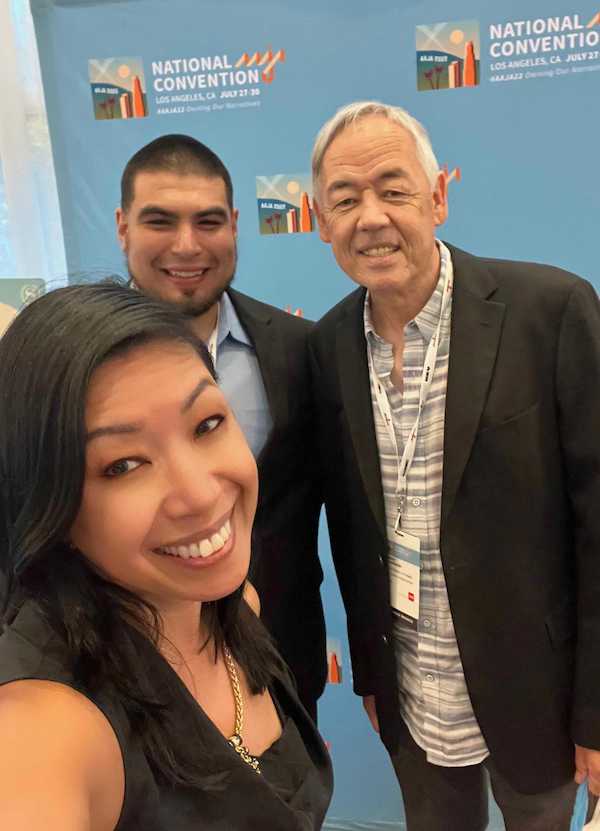
(L-R) Odette Alcazaren-Keeley, Pete Camarillo, Henry Fuhrmann at the AAJA 2022 Convention
Fuhrmann’s mentorship has transformed the path of many emerging journalists. He joined the USC Annenenberg Media Center as an adjunct instructor and writing coach in 2016. A statement from USC Annenberg honored the late professsor, “Known for his kindness and expertise, Fuhrmann indisputably left a mark on USC Annenberg and the Media Center, both on its students and teachers alike.”
Fuhrmann’s support of the institute included being part of the faculty for the inaugural class of Maynard 200 in 2018. He shared his expertise as a veteran editor of the Los Angeles Times, providing the fellows with concrete skills in self editing and copy editing to embolden their narrative writing.
Later, Fuhrmann also served as a mentor for Maynard 200 Fellow Samantha Guzman. Executive Editor of Decibel at Austin PBS, Guzman graduated from the Fellowship’s executive leadership program in 2021. Due to the COVID-19 pandemic, Guzman and Furhmann were not able to meet in person until 2022. As outpourings of appreciation for Fuhrmann spread online, Guzman tweeted “I don’t know what I would have done without Henry’s guidance during some of my most challenging times.”

Photo and tweet by Maynard 200 Fellow Samantha Guzman of meeting mentor Henry Fuhrmann for the first time in person in Austin, Texas.
As the rise of the internet was forever changing journalism, Fuhrmann helped his newsroom navigate the new terrain of blogging. The Los Angeles Times reported: “In the 2000s he was deputy editor of the Business section, and later, as more stories were being published online, he helped create style and usage rules for the new medium where none had existed.”
Fuhrmann, a self-described “word nerd,” also initiated changes in the newsroom to retire other outdated terms, such as replacing “transvestite” with “transgender.” He also campaigned to replace the word “internment” when describing the forcible incarceration of Japanese Americans during World War II.
In addition to Fuhrmann’s advances at the Times, his role as thought leader has had a lasting impact on the industry as a whole. In 2019, Fuhrmann successfully advocated for dropping the hyphen in words like “Asian-American” and “African-American.” He wrote in his essay for the Conscious Style Guide, “Those hyphens serve to divide even as they are meant to connect. Their use in racial and ethnic identities can connote as otherness, a sense that people of color are somehow not full citizens or fully American.” Fuhrmann’s essay influenced the AP Stylebook to remove the hyphen.
We extend our sincere condolences to Fuhrmann’s family and friends of Fuhrmann. As a dearly departed member of the Maynard family, we will honor hime by continuing to fight for fairness in this industry.
Watch this space for more information on how to manage YOUR donor portal with BlueLena and FundraiseUp!
On Tuesday, May 19, 2026 the Maynard Institute was honored to receive the Lorraine Branham Award from Syracuse…
“Our contributions to journalism will outlast ourselves if we do it right — I’m really encouraged that there’s…

Is your news organization ready to establish a more equitable workplace and provide better coverage of underserved communities? Subscribe for email updates about our next program application period.
FOR IMMEDIATE RELEASE — Oakland, Calif. (September 9, 2022): The Robert C. Maynard Institute for Journalism Education, a nonprofit dedicated to expanding diversity in the news media and dismantling structural racism in newsrooms, announced today the launch of the Equity and Belonging Newsroom Transformation Program. The pilot program, funded by the John S. and James L. Knight Foundation, is an initiative that will pair news organizations with consultants who have a wealth of experience training journalists on diversity, equity, inclusion and belonging (DEIB) issues. The goal is to help transform workplace structures, organizational cultures and news coverage to be more inclusive and reflective of the United States.
To launch the new initiative, Maynard will pilot the program in two news organizations during two five-month periods. One organization selected will be an alumni of the Table Stakes Local News Transformation Program. The second pilot program is open to nonprofit, for-profit and independent news organizations across the country. Applications for the Equity and Belonging Newsroom Transformation Program must be submitted by 11:59 P.M. PDT on Oct. 7.
Each news organization will work closely with the Maynard Institute team and consultants Global Equity Collective and CRB Global LLC & Rich Diversity Consulting LLC to create the strategies, plans, benchmarks and training to implement DEIB values for lasting impact. Joining the Maynard team will be Jean-Marie Brown, Maynard Fault Lines® senior trainer and professor of professional practice in journalism at Texas Christian University. Mei-Ling Hopgood, journalist and professor at the Medill School of Journalism, Media, Integrated Marketing Communication at Northwestern University, will document the impact of the initiative and publish a case study at the conclusion of the pilot program.
“Too often diversity efforts are performative,” said Martin G. Reynolds, co-executive director of the Maynard Institute. “We want to operationalize belonging so that BIPOC and folks of diverse backgrounds can thrive and contribute even more meaningfully to the growth, sustainability and credibility of the outlets where they work.
“We want to show that when organizations invest in equity and inclusion, working relationships between people improve, there is less labor strife, attrition and toxicity. Newsrooms that center the concept of belonging foster innovation, better journalism, and more importantly, the capacity to build or repair relationships with communities. We are excited to see what we can create through this program,” Reynolds said.
“This initiative presents a great opportunity to bring experts in the field together to lead two news organizations toward sustainable, equitable change,” said Felecia D. Henderson, director of cultural competency at the Maynard Institute. “Our goal is to test methodologies, re-test, and document the processes of both pilot programs in order to replicate the work to assist future media outlets that want to make meaningful change.”
For 45 years, the Maynard Institute has fought to push back against the systemic lack of diversity in the news industry through training, collaborations and convenings. Founded by Robert C. Maynard, the Institute promotes diversity and antiracism in the news media through improved coverage, hiring and business practices. We are creating better representation in U.S. newsrooms through our programs , which gives media professionals of color the tools to become skilled storytellers, empowered executives and inspired entrepreneurs. Visit the Maynard Institute website to learn more.
CONTACT:
Felecia D. Henderson
Director of Cultural Competency, Maynard Institute
fhenderson@mije.org
Martin G. Reynolds
Co-Executive Director, Maynard Institute
mreynolds@mije.org
Applications are now closed. Subscribe for email updates about our next program application period.
Watch this space for more information on how to manage YOUR donor portal with BlueLena and FundraiseUp!
We’re partnering with the Kansas City Defender for Black Philanthropy Month! August is Black Philanthropy Month! Founded in…
The inaugural cohort of Fire Up Fellows represent the power and potential of diverse news in the State…
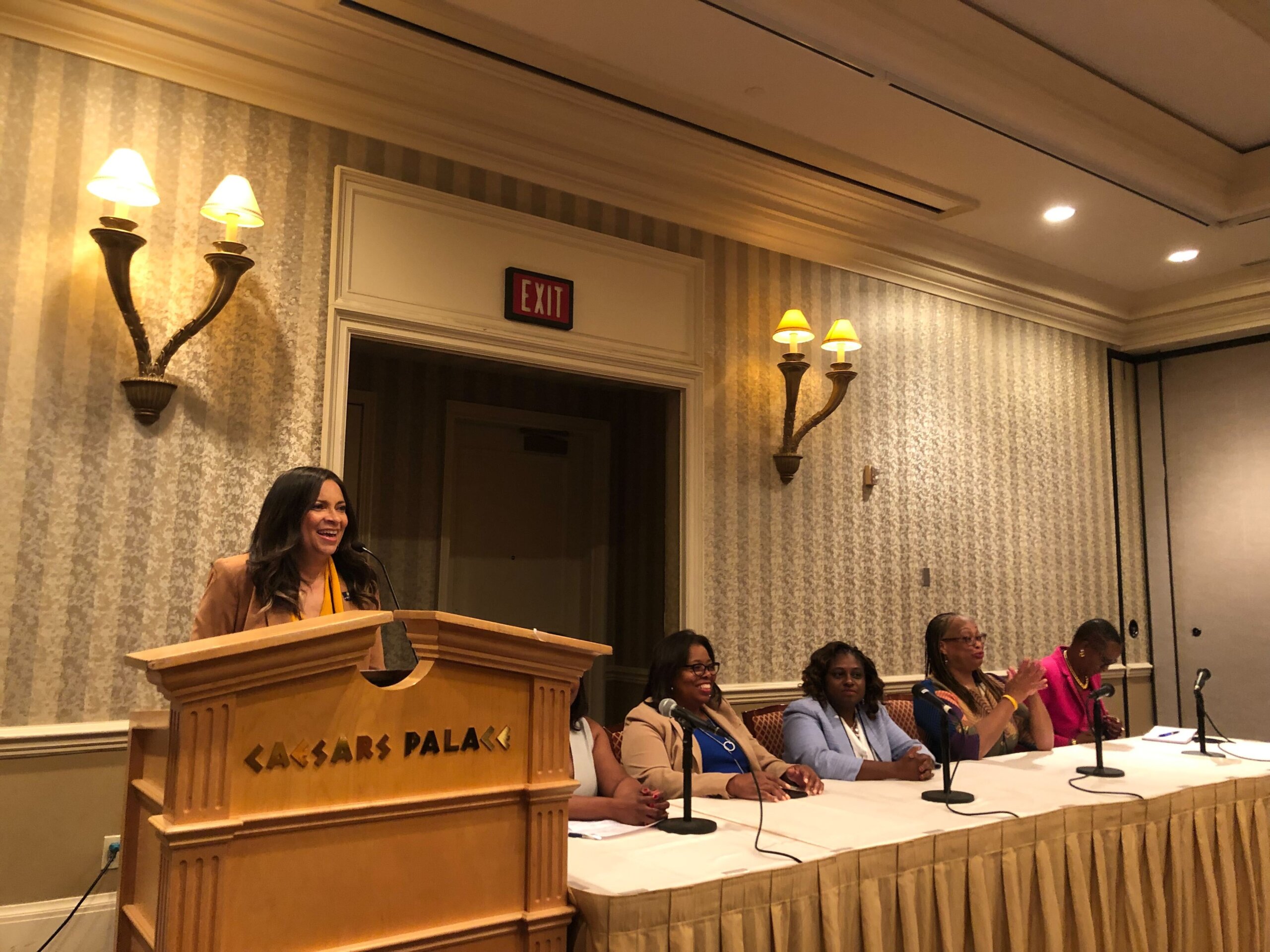
The Maynard Institute was fortunate enough to present two in-person events at this year’s NABJ-NAHJ Convention in Las Vegas. In addition to a cocktail reception celebrating the institute’s 45th anniversary, Felecia Henderson, an award-winning newspaper editor and Director of Cultural Competency at the Maynard Institute, organized and moderated a panel discussion titled, ‘The New Face of Executive Leadership: Black Women Smash Print Industry’s Glass Ceiling.’ This blog details some highlights and key takeaways from the standing-room only session.
Last year proved to be history-making for Black journalists in positions of power. In 2021, six women were tapped to lead print news organizations as executive editor, roles traditionally held by white men. They are charged with coverage, operational budgets, hiring, retention and the overall health and viability of their organizations. In a wide-ranging conversation, seven ground-breaking women shared their journeys, issues they face inside and outside their organizations, and what they are doing to ensure more journalists of color have opportunities to succeed.
Panelists included:

Photo by Mark Russell / The (Memphis) Commercial Appeal
In addition to her role as Director of Cultural Competency at the Maynard Institute, Henderson has served as a coach on Diversity, Equity, Inclusion and Belonging issues to more than 100 print and broadcast news organizations nationwide that participate in Table Stakes digital newsroom innovation programs. Prior to joining the institute, Felecia was Assistant Managing Editor at The Detroit News where she was a member of the senior management team responsible for newsroom operations. Henderson shared she was inspired to create the panel session for NABJ-NAHJ convention, in part, because of lack of attention to this key milestone.
“I conceived this discussion to shine a spotlight on the extremely talented, groundbreaking women who are leading print news organizations in 2022. There has been no full-scale story on this historic period in the journalism industry, and the women deserve recognition,” she said.
The ‘New Face of Executive Leadership’ session was designed to help participants take away strategies on earning or maintaining a seat at the leadership table. Key points ranged from addressing racist and sexist hate mail and social media vitriol, to tips for developing mentors and allies.
Henderson opened the session to a completely packed room. As attendees continued to stream in when there was standing-room only, she acknowledged that panelists Katrice Hardy and Mary Irby-Jones were forced to cancel their appearances at the convention.

Photo by Odette Alcazaren-Keeley
Henderson led with asking panelists about some of the positive experiences they have had as some of the first Black, female executives at their respective papers. Leisa Richardson of The State Journal-Register in Springfield, Ill., said, “I have had the opportunity to shape the careers of BIPOC journalists. Relaunching careers or starting young careers.”
As executive editors, the panelists also emphasized their ability to impact diverse hiring and fair reporting practices on communities of color at their organizations. “To be able to shape coverage and hold the door open and wait to fill a job until the applicant pool is diverse is critical,” said Reeve of the Houston Chronicle, “and it’s not something you see unless there are executives of color.”
Monica Richardson of the Miami Herald echoed the importance of holding space and nurturing journalists of color, saying that she feels joy when, “journalists come to me and say that they have never had anyone else to go to before.”
The audience reaction was palpable upon hearing about the panelists’ experiences with overt and covert racism. Richardson, who is the first Black executive editor in the history of the Miami Herald, shared her decision to publicly address a piece of particularly egregious hate mail. She was concerned with backlash. “You have to be fearless in order to stand up to hate and racism and to say that this is not ok,” she said.
When Henderson transitioned to hear audience questions, journalists of all generations shared their gratitude for the sacrifices made by the trailblazers.
Debra Adams Simmons, who also serves on the Maynard Institute board of directors, closed by praising the community that the group of panelists have forged. “We may have been some of the first, but we will not be the last.”
Shortly on the heels of the NABJ-NAHJ Convention, the Maynard Institute will be joining Online News Association conference in Los Angeles to continue our Vision25 Pay Equity series on Thursday, Sep 22 – 2:30 PM – 3:30 PM PT. This session is a follow-up to the August 11th webcast featuring guest speakers from Media2070. The Online News Association, OpenNews and the Maynard Institute have come together to create Vision25: Building Racial Equity in Newsrooms, a catalyst in a social change movement that seeks to build journalistic institutions where newsrooms are actively anti-racist and collaborative, and journalists of color feel like they truly belong. Learn more and register for the event.
We’re partnering with the Kansas City Defender for Black Philanthropy Month! August is Black Philanthropy Month! Founded in…
The inaugural cohort of Fire Up Fellows represent the power and potential of diverse news in the State…
Fire Up is made possible by a budget allocation from the State of California and is part of…

From Left: Oakland Voices alumni Marabet Morales Sikahall and Tony Daquipa meet with Norman “Vogue” Chuck and his wife Gloria at their studio. (Photo by Kat Ferreira)
This article was originally published on the Oakland Voices website.
Today, we updated the Oakland Voices website–for ease of reading, maximizing visual storytelling, and improved accessibility. We also updated the Oakland Voices design and masthead to capture the history and spirit of our community journalism program, formed in 2010 by a partnership between the Oakland Tribune and the Maynard Institute for Journalism Education. We commissioned local, veteran aerosol artist Norman “Vogue” Chuck of the legendary Bay Area street art collective, TDK crew.
Chuck was engaged to create a new logo for the Oakland Voices program that reflected elements of the city’s history, diversity, and pluralities. When Chuck was approached to design the logo for Oakland Voices, he said it wasn’t normally something he did. While he did graphic design when he was younger, he normally paints aerosols on large-scale canvases. “I wanted to try stuff that may be challenging,” Chuck said.
Oakland Voices needed a visual identity to emphasize the program’s deep East Oakland roots and its long history of amplifying the voices of everyday Oakland residents. Engaging a legendary street artist like Vogue for custom artwork made sense because TDK murals are so iconic and regionally-specific to Oakland’s local culture.
Chuck’s artwork has been commissioned all over the world. But, he refined his art chops in the Town. Chuck started out as a youth painting the train yards in Oakland and developing his lettering flair in the 1980s. Chuck grew up in San Leandro but spent much of his career painting in Oakland. He also owned a shop in East Oakland, airbrushing and doing custom artwork on low-riders. Chuck notes that his style is influenced by BMX, lowrider culture, and nature.
Over the years, Chuck has developed an exquisite, almost hyperreal painting technique for aerosol spray paint. His influence can be seen in commissioned murals throughout the region– from the Dubs Dynasty mural at the downtown Marriott to the East Bay Dragons mural and Ghost Ship fire memorial. In 2018, Chuck’s work was curated by the Oakland Museum of California in the exhibit titled RESPECT: Hip-Hop Style and Wisdom.
“Oakland allowed me to thrive in painting and be creative,” Chuck told Oakland Voices about his love for the Town.
The new Oakland Voices visual identity uses the old English font for the word “Oakland” as a nod to The Oakland Tribune masthead, where the community journalism training program first began. Oakland Voices was co-founded by Martin Reynolds, managing editor at the Tribune at the time and now Maynard Institute’s Co-Executive Director. The Oakland Voices program emerged from a partnership between the Oakland Tribune and the Maynard Institute so it was important to capture the program’s history in the new design.
Another part of the inspiration for Oakland Voices’ new look was the “Oakland is Proud” mural, painted by Chuck’s TDK crewmate, Del Phresh. The original mural located on East 12th Street no longer exists, but many artists have painted the phrase including Ise Lyfe’s 2013 art exhibit called Brighter than Blight.

In 2013, artist Ise Lyfe transformed East Oakland’s Greenside housing complex into an art exhibit before it was demolished. The exhibit included a version of the iconic mural. Photo via KALW Staff.
The lettering of “Voices” is a throwback to East Oakland street art culture. The early years of the Oakland Voices program focused on training community members specifically from East Oakland to tell stories of their neighborhoods.
The collage color palette was influenced by the mash-up of design elements, directly influenced by local street art and the Maynard Institute’s branding. The choice of green as the primary color echoes the city’s green street signs, and more importantly, the iconic green patina of the Oakland Tribune Tower bronze roof. Oakland Voices is over 10 years old and still thriving. The new design’s primary green color is both minty fresh and rooted in Oakland’s rich history. Just like oxidized bronze grows more beautiful with time and exposure, so does the Oakland Voices program.
Some Oakland Voices alumni participated in the design process. Marabet Morales Sikahall (2016) and Tony Daquipa (2016-2017 and 2022 Maynard 200 Fellow) both went to Chuck’s art studio in San Leandro to look at the design and give their thoughts. Sikahall grew up in East Oakland and Daquipa lives in East Oakland.
Chuck had created an initial mock up before the meeting. “We all agreed we liked the old English, and we agreed that we also liked the way the other Oakland worked,” Daquipa said about the process. “So [Chuck] said, I’ll make the Voices look like this. So we all participated.”
Chuck said that sometimes these things go bad in person, with too many ideas, “because they don’t usually know anything about art, but it went really well.”

“There aren’t many living artists that could better represent that legacy than Vogue, whose legendary TDK crew earned international acclaim by writing their stories on the walls of East Oakland.” Tony Daquipa, Oakland Voices alum.
Photo: Norman “Chuck” Vogue drafting design ideas for Oakland Voices at his studio (credit: Tony Daquipa).
Sikahall, who is now the Program & Community Manager at Oakland’s Chapter 510, a nonprofit youth writing center, said that Oakland Voices–and the new logo–represents Oakland well.
“This is the real Oakland, that’s always made ripples in the world. Oakland is small but mighty–I’ve always thought that about Oakland. The logo is one of these opportunities to say, we’re here, we’re going to keep kicking butt. Oakland Voices has succeeded in that it’s maintained its integrity by honoring that truth of Oakland, because people take storytelling to heart. Oakland Voices is just a really amazing community of people, people who grew up in Oakland but also people who moved to Oakland and felt naturally at ease in Oakland.”
Daquipa adds that he is proud to be associated with Chuck in any way, as he sees him as one of the most legendary–and certainly of living graffiti artists–of the Bay Area.
“There aren’t many living artists that could better represent that legacy than Vogue, whose legendary TDK crew earned international acclaim by writing their stories on the walls of East Oakland,” Daquipa added.
Oakland Voices is a journalism training program led by the Maynard Institute for Journalism Education that trains Oakland residents to tell the stories of their neighborhoods. Oakland Voices correspondents are trained in digital media storytelling — writing blogs and online pieces, taking photos, shooting video, and using social media to discuss issues that matter most in their communities. Visit oaklandvoices.us for the latest stories and more!
Watch this space for more information on how to manage YOUR donor portal with BlueLena and FundraiseUp!
We’re partnering with the Kansas City Defender for Black Philanthropy Month! August is Black Philanthropy Month! Founded in…
The inaugural cohort of Fire Up Fellows represent the power and potential of diverse news in the State…
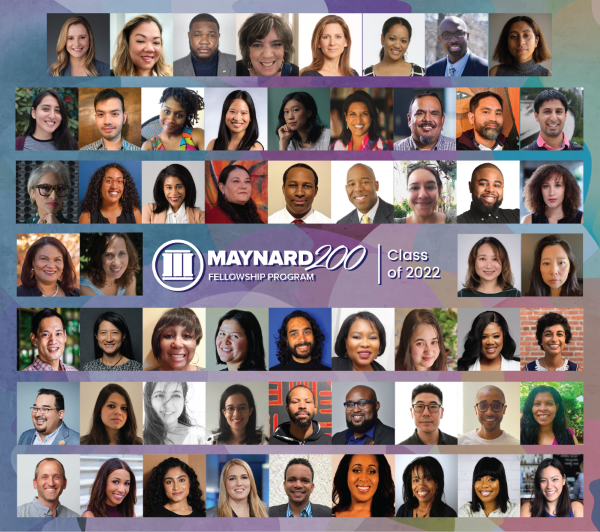
OAKLAND, CA (May 25, 2022): The Robert C. Maynard Institute for Journalism Education, a nonprofit dedicated to expanding diversity in the news media and dismantling structural racism in newsrooms, announced today the recipients of its 2022 Maynard 200 Fellowship. The fellowship is on track to meet its 2023 goal of cultivating 200 media leaders dedicated to advancing diversity, equity, inclusion and belonging in journalism. The program is supported by the Google News Initiative, the Craig Newmark Philanthropies, The Hearthland Foundation, and The McClatchy Foundation. The Fox Corporation is a sponsor for the 2022 program.
“We look forward to welcoming the Maynard 200 class of 2022, especially as we return to in-person training at our university host site– the USC Annenberg School of Communication and Journalism,” said Odette Alcazaren-Keeley, Maynard 200 director. “Our customized curriculum across four tracks, propels the professional acumen of storytellers, frontline editors and managers, newsroom leaders and entrepreneurs, amplifies their diverse voices, and builds allyship grounded in equity and belonging. This is pivotal especially now, in chronicling the crises of our time.”
The expanded 2022 cohort will bring together 57 journalists for two weeks of in-person training, plus additional virtual webinars throughout the summer. In the fall, fellows will be paired with industry experts in relevant disciplines in their area of interest, to receive one year of one-to-one mentorship through October 2023.
“Earlier generations of Maynard Institute program alumni have ascended to the highest levels of American journalism. We have great hopes that graduates of Maynard 200 will have similar accomplishments,” said Evelyn Hsu, co-executive director of the institute.
Fellows are affiliated with a mix of mainstream, ethnic, local community and niche media, as well as entrepreneurial ventures. The 2022 Maynard 200 cohort includes:
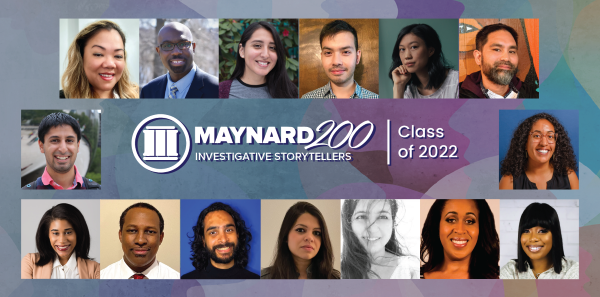
Investigative Storytelling Fellows pictured (clockwise from top left) include Lenn Almadin-Thornhill, P. Kenneth Burns, Iridian Casarez, Stefanos Chen, Jessica Chou, Paresh Dave, Emily Elena Dugdale, Amber Ferguson, William J. Ford, Tekendra Parmar, Alison Saldanha, Romita Saluja, TaMaryn Waters, Aallyah Wright.

Editors and Managers Fellows pictured (clockwise from top left) include Kristin Bender, Jasmine Brown, Corinne Chin, Michael Cruz, Brandon T. Harden, Alexandria Hasenstab, Bourree Lam, Yuri Nagano, Ngoc Nguyen, Patricia Peart, Beena Raghavendran, Joe Ruiz, Brianna Tucker, Neeti Upadhye, Denise Watson, Christina Yao Lee.

Executive Leadership Fellows pictured (clockwise from top left) include Christine Brouwer, Laura Janelle Downey, Larry Graham, Renée Mendoza Haran, Miranda Kennedy, Victor Lim, Marla Jones-Newman, Manuel McDonell Smith, Ben Trefny, Marcus Vanderberg, Jill Van Why, Stephanie Wu.

Media Entrepreneurship Fellows pictured (clockwise from top left) include Liz Alesse, Quinton R. Arthur, Angelica Cabral, Arcynta Childs, Priya David Clemens, Nancy Flores, Melba Newsome, Emilya “Eming” Piansay, Shaneen Quarles, Mariela Santos-Muñiz, Rasheed Shabazz, Corey Takahashi, Michael Tennant, Lisa D. Tinsley.
Read the bios for the 2022 Maynard 200 Fellows.
The Maynard 200 program continues to strengthen the institute’s long-standing partnership with USC Annenberg, bound by a shared commitment to accelerate the career advancement of the next generation of media professionals.
For more than 40 years, the Maynard Institute has fought to push back against the systemic lack of diversity in the news industry through training, collaborations and convenings. Founded by Robert C. Maynard, the Institute promotes diversity and antiracism in the news media through improved coverage, hiring and business practices. We are creating better representation in America’s newsrooms through our Maynard 200 fellowship program, which gives media professionals of color the tools to become skilled storytellers, empowered executives and inspired entrepreneurs. Visit Maynard Institute to learn more.
For more information about the Maynard 200 Fellowship, please reach out to:
Maynard 200 Director, Odette Alcazaren-Keeley at okeeley@mije.org.
Watch this space for more information on how to manage YOUR donor portal with BlueLena and FundraiseUp!
We’re partnering with the Kansas City Defender for Black Philanthropy Month! August is Black Philanthropy Month! Founded in…
The inaugural cohort of Fire Up Fellows represent the power and potential of diverse news in the State…

The Associated Press, The Ida B. Wells Society for Investigative Reporting and The Maynard Institute for Journalism Education today announced plans to work together to improve diversity in newsrooms and news reports through journalistic and leadership training and more inclusive storytelling.
The Inclusive Journalism Initiative is an effort by the organizations to move the news industry toward a comprehensive plan for smarter and more expansive coverage of race and systemic inequality.
The initiative will accelerate the work of all three groups to grow the number and caliber of training opportunities for news leaders and aspiring investigative editors from underrepresented communities.
AP will enhance its own inclusive storytelling effort, launched in 2020, within the news agency and in customer newsrooms in the U.S. through new training.
“Inclusive newsrooms benefit from well-trained news leaders equipped with the right skills for significantly addressing the inequalities that, like every aspect of our culture, have impacted journalism through the years,” said AP Vice President and Head of News Audience Amanda Barrett, who along with Deputy Managing Editor Sarah Nordgren was responsible for building the initiative. “The collaboration announced today sets in motion a journalism future we all can be proud of.”
“The glaring and persistent lack of diversity, equity and belonging across journalism has deeply eroded the credibility of this craft, particularly in the eyes of communities of color,” said Maynard Institute Co-Executive Director Martin G. Reynolds. “Most mainstream news organizations lack the training and capacity to connect with new and emerging audiences. This initiative will help to address this challenge by enabling us to offer our Fault Lines diversity framework training to AP member newsrooms that may otherwise not have access to it. Our goal is to help these outlets create better journalism and to rethink their approach to organizational culture.”
“This initiative is about a fundamental shift in the way we do news in this country,” said Ida B. Wells Society Director Rhema Bland. “It’s an acknowledgement that the health and survival of this industry and in turn our democracy hinges on an expansive, comprehensive culture change.”
The Inclusive Journalism Initiative is funded by The Hearthland Foundation, Nathan Cummings Foundation and the Reva & David Logan Foundation.
Goals of the Inclusive Journalism Initiative include:
The funding for the initiative will be administered through the Maynard Institute and through Journalism Funding Partners, which helps support news organizations through fiscal sponsorship. Reynolds is also a member of the Reva & David Logan Foundation’s board of directors and recused himself from the vote to fund the initiative.
The Associated Press is an independent global news organization dedicated to factual reporting. Founded in 1846, AP today remains the most trusted source of fast, accurate, unbiased news in all formats and the essential provider of the technology and services vital to the news business. More than half the world’s population sees AP journalism every day. Online: www.ap.org
The Ida B. Wells Society for Investigative Reporting is a news trade organization dedicated to increasing and retaining reporters and editors of color in the field of investigative reporting. Founded in 2016 by veteran journalists Nikole Hannah-Jones, Ron Nixon, and Topher Sanders, the organization seeks to provide free and low-cost training, skills-building, and support for journalists of color pursuing investigative work. The Society is open to journalists of all backgrounds who support the mission and work of the organization. Since its founding, it has served more than 2,000 journalists through its programming. For more information, visit idabwellssociety.org.
The Robert C. Maynard Institute for Journalism Education has been fighting for antiracism and belonging in journalism since 1977. The institute was founded to promote diversity and antiracism in the news media through improved coverage, hiring and business practices. We challenge the systemic lack of diversity in the news industry through training, collaborations and convenings. Through programs like the Maynard 200 fellowship, the institute is working to create better representation in America’s newsrooms. Visit maynard.institute to learn more.
Contact
Lauren Easton
Global Director of Media Relations and Corporate Communications
The Associated Press
212-621-7005
leaston(at)ap(dot)org
Nicole Meir
Media Relations Manager
The Associated Press
212-621-7536
nmeir(at)ap(dot)org
Watch this space for more information on how to manage YOUR donor portal with BlueLena and FundraiseUp!
We’re partnering with the Kansas City Defender for Black Philanthropy Month! August is Black Philanthropy Month! Founded in…
The inaugural cohort of Fire Up Fellows represent the power and potential of diverse news in the State…