News / Blog
The Business Case for DEIB Training in Journalism
DEIB training isn’t just a nice-to-have workplace initiative. Diversity in the media directly influences the quality, accuracy, and…




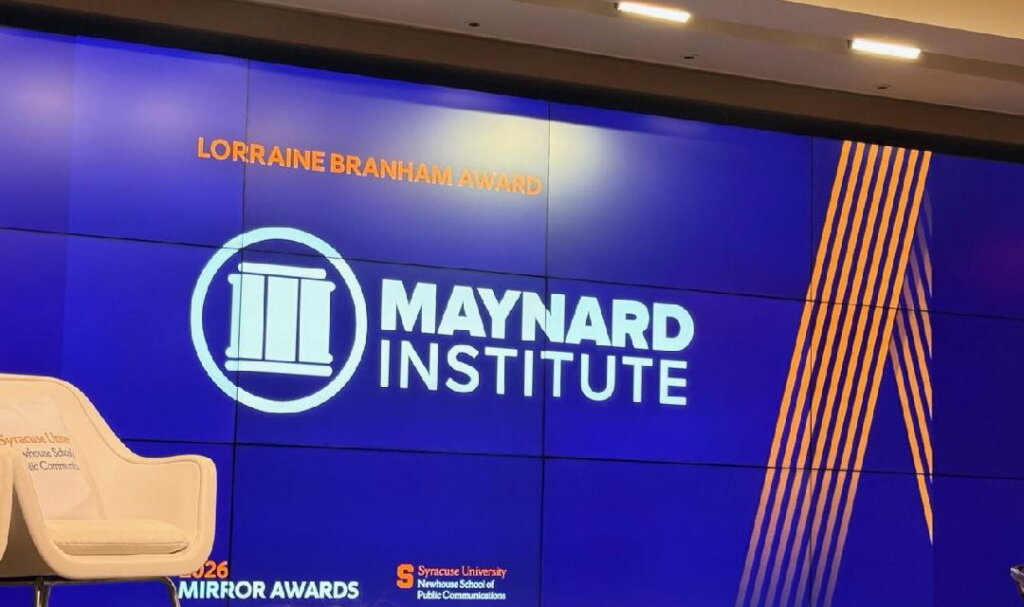
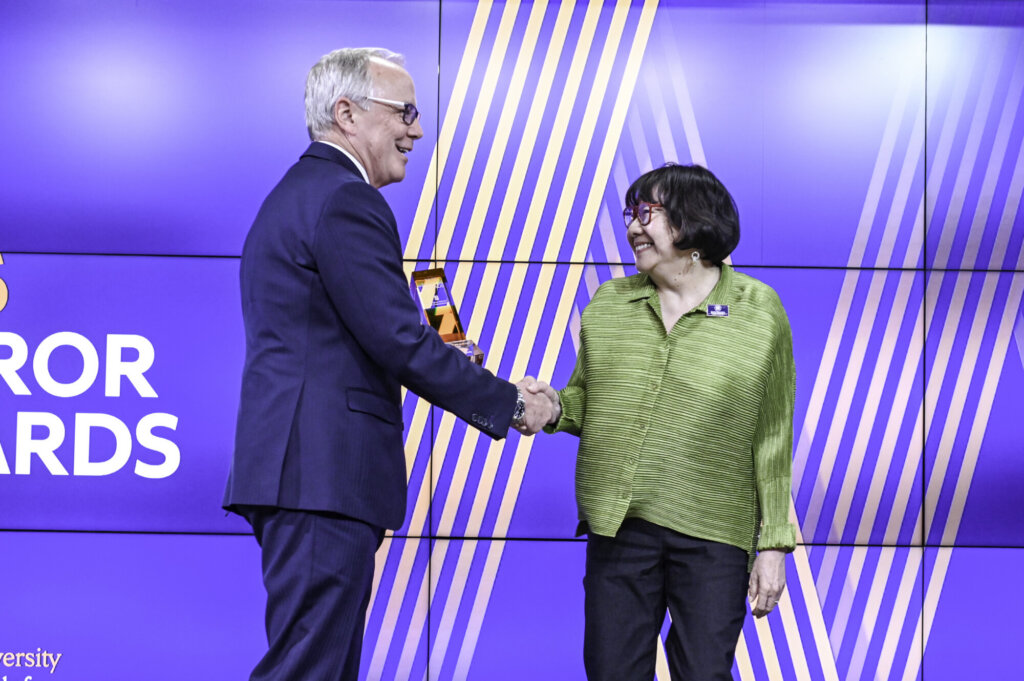
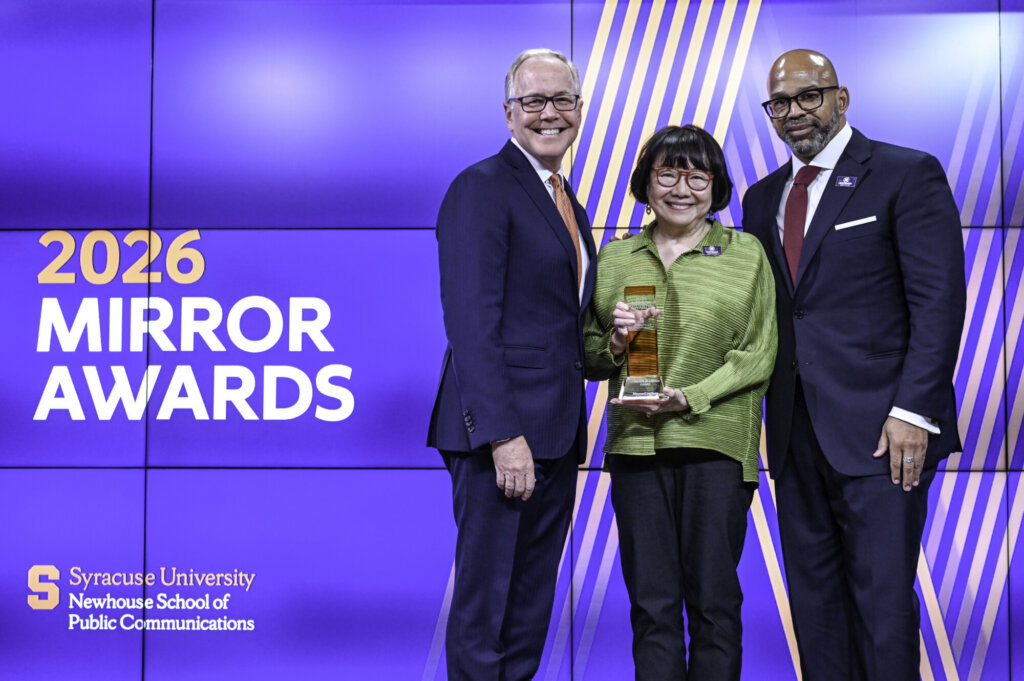
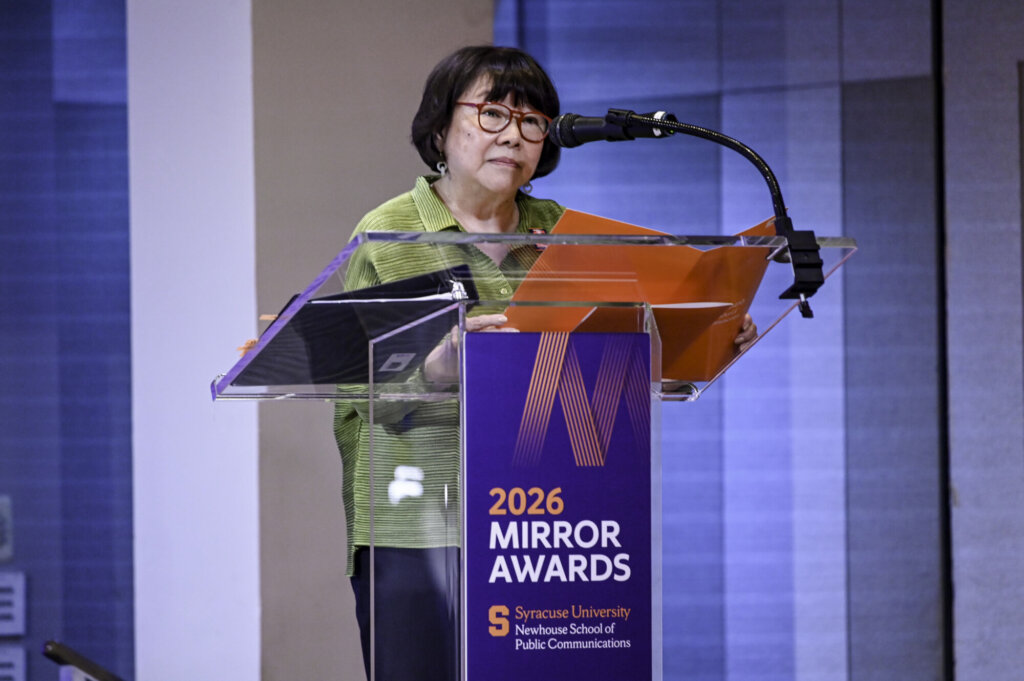
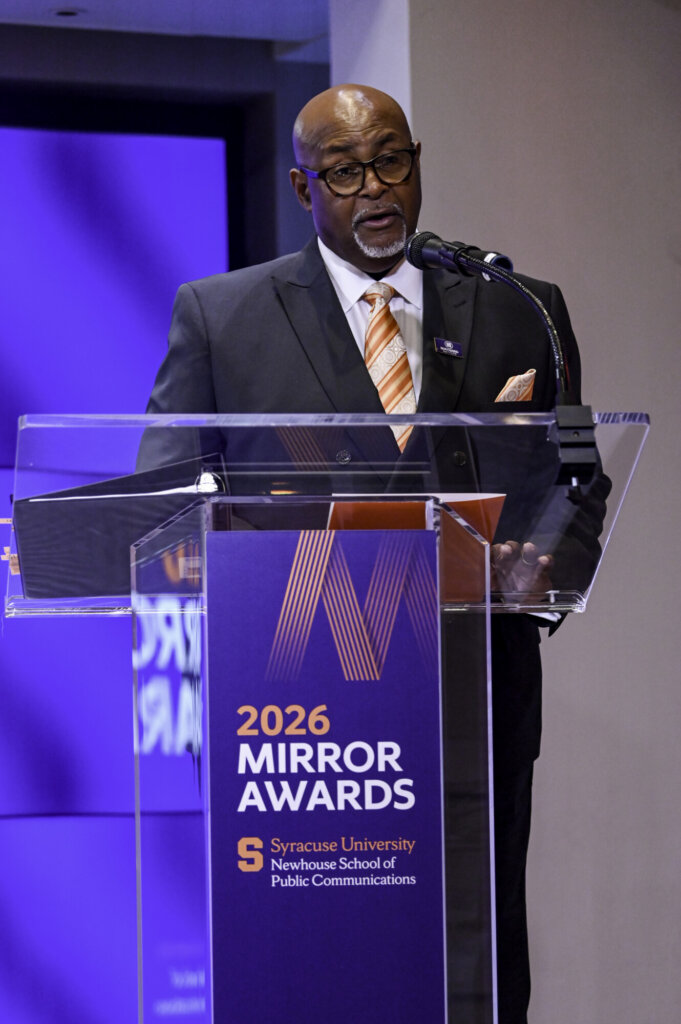
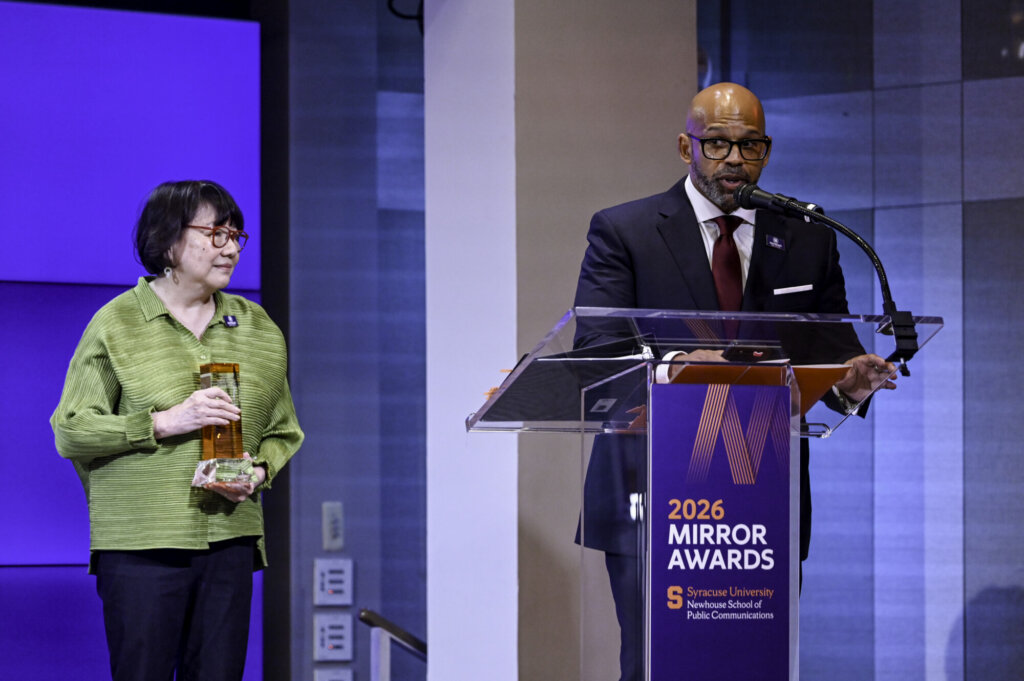
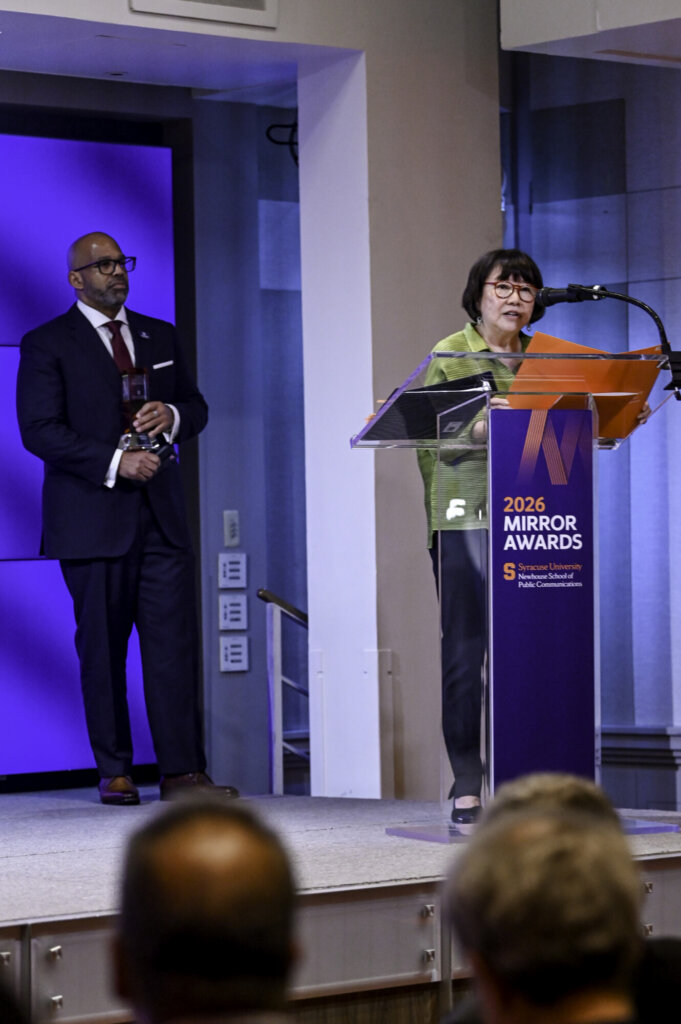
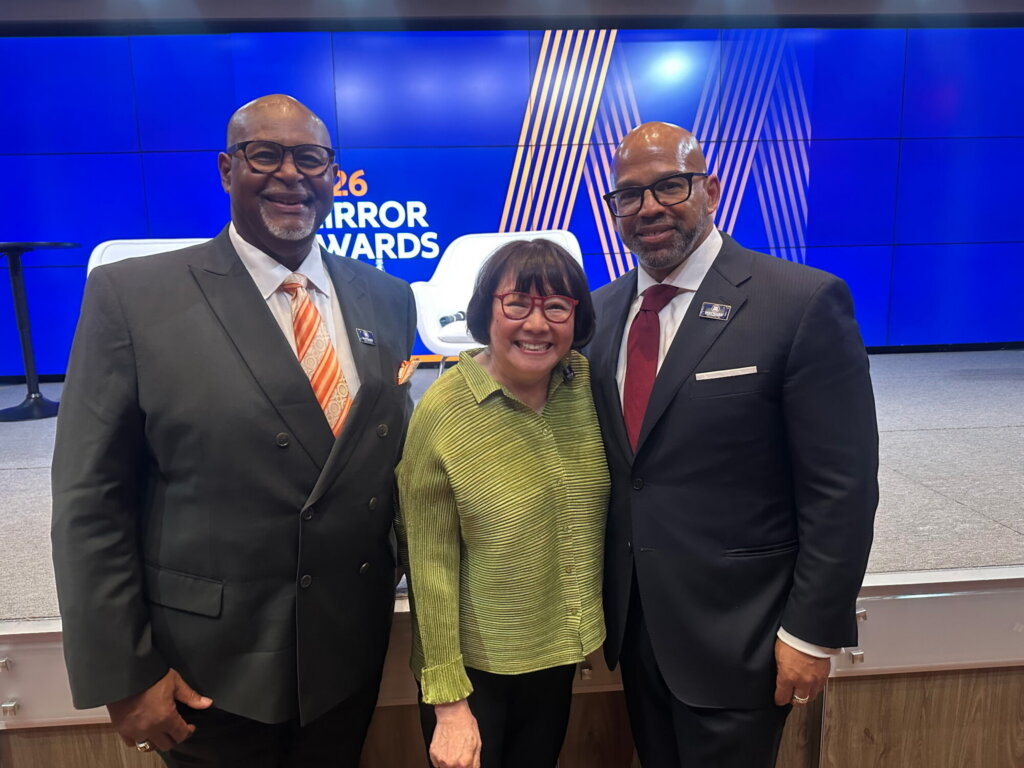
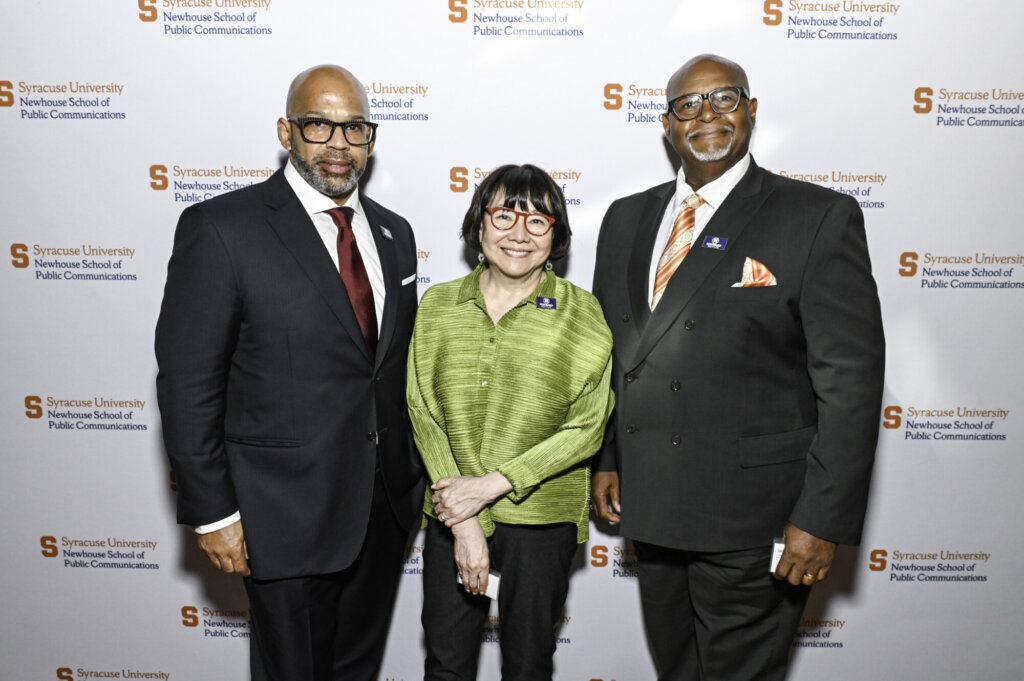
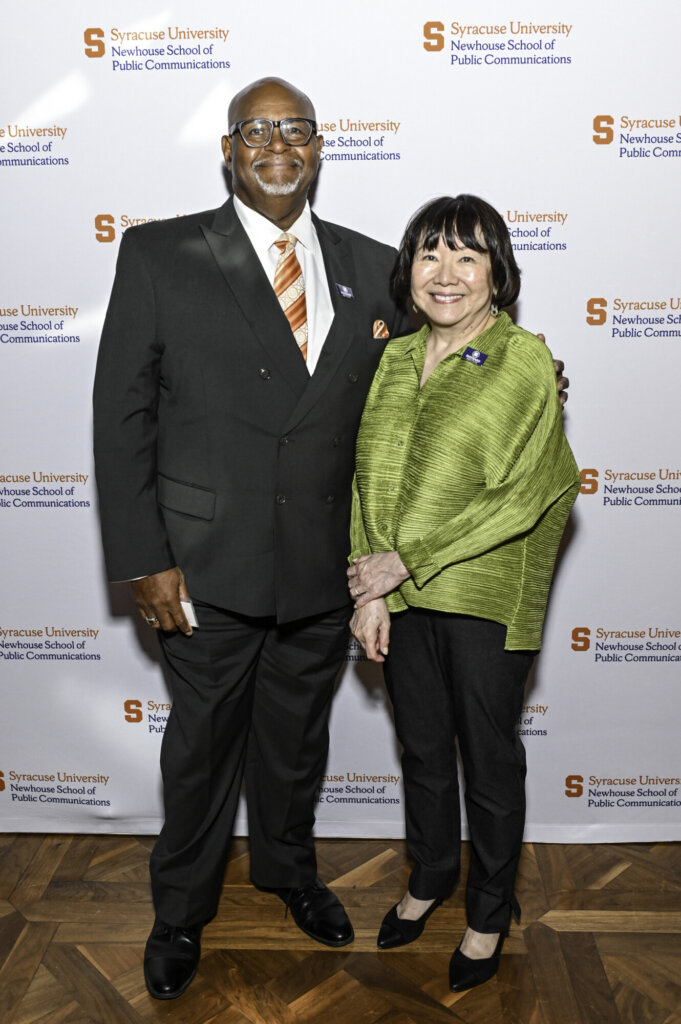
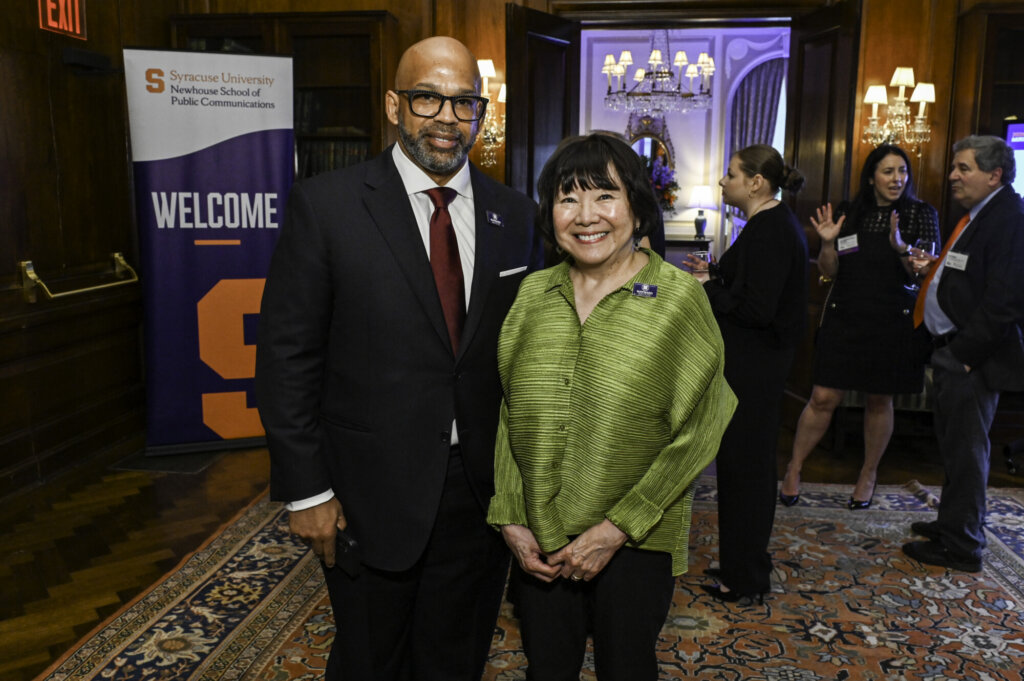
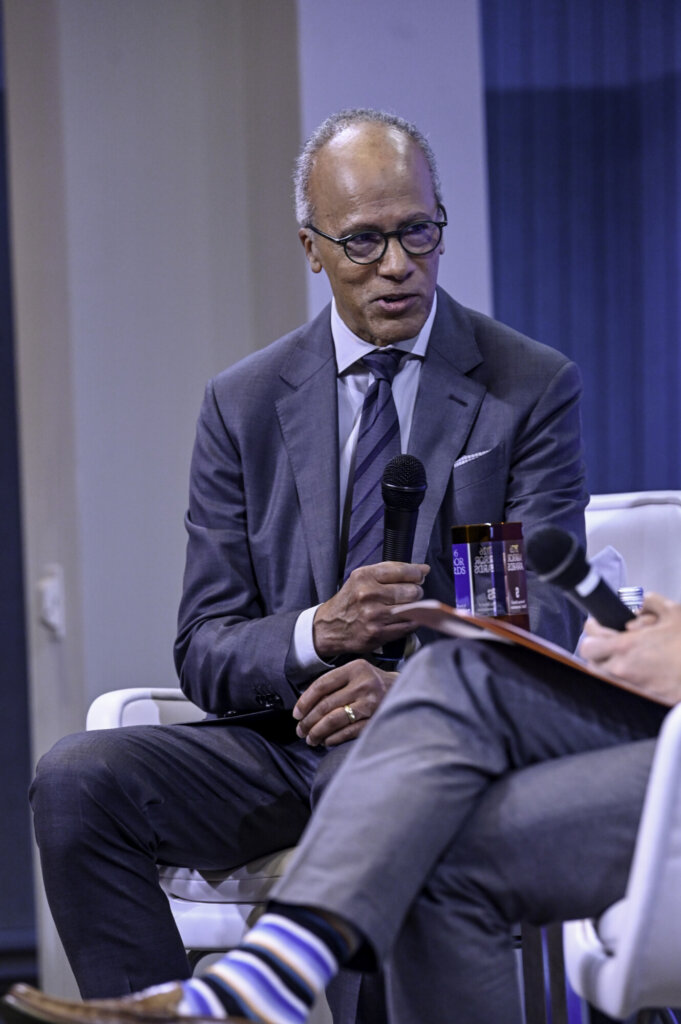
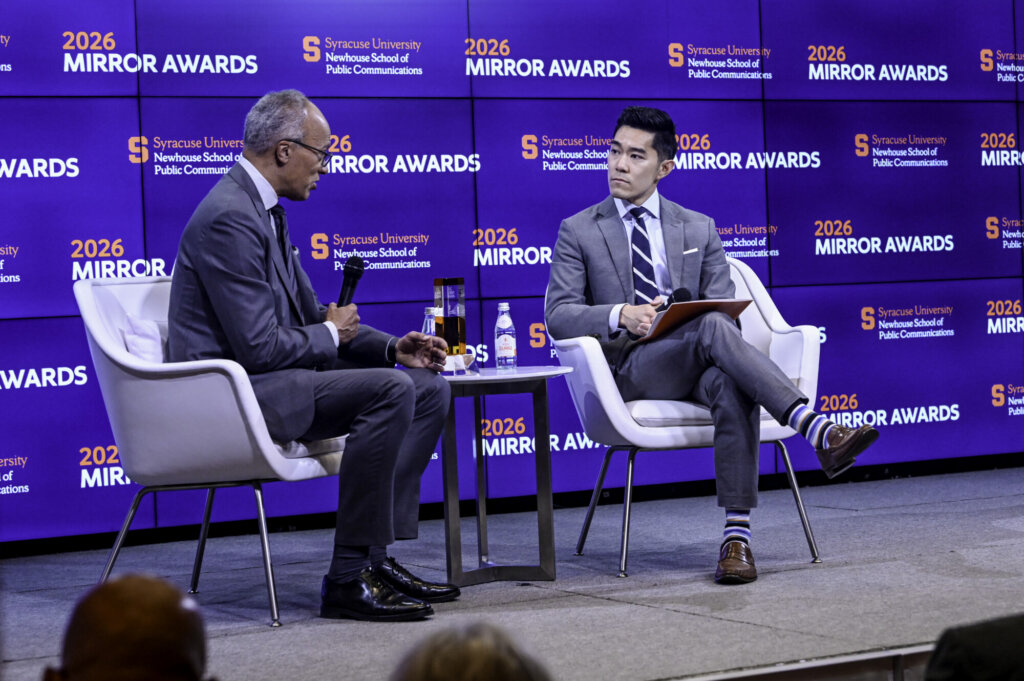
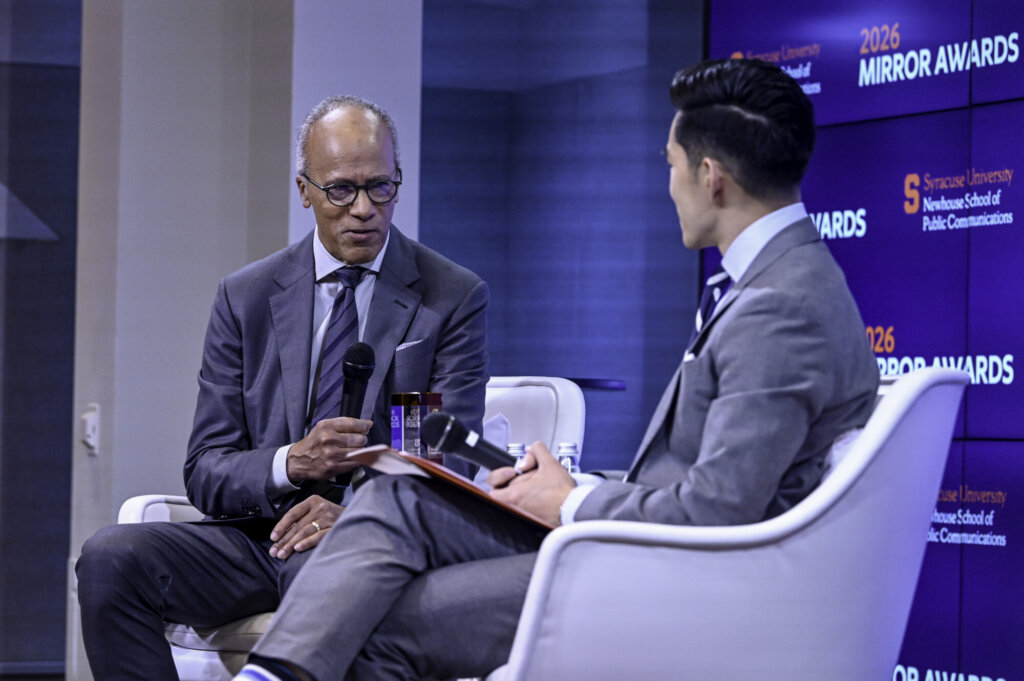
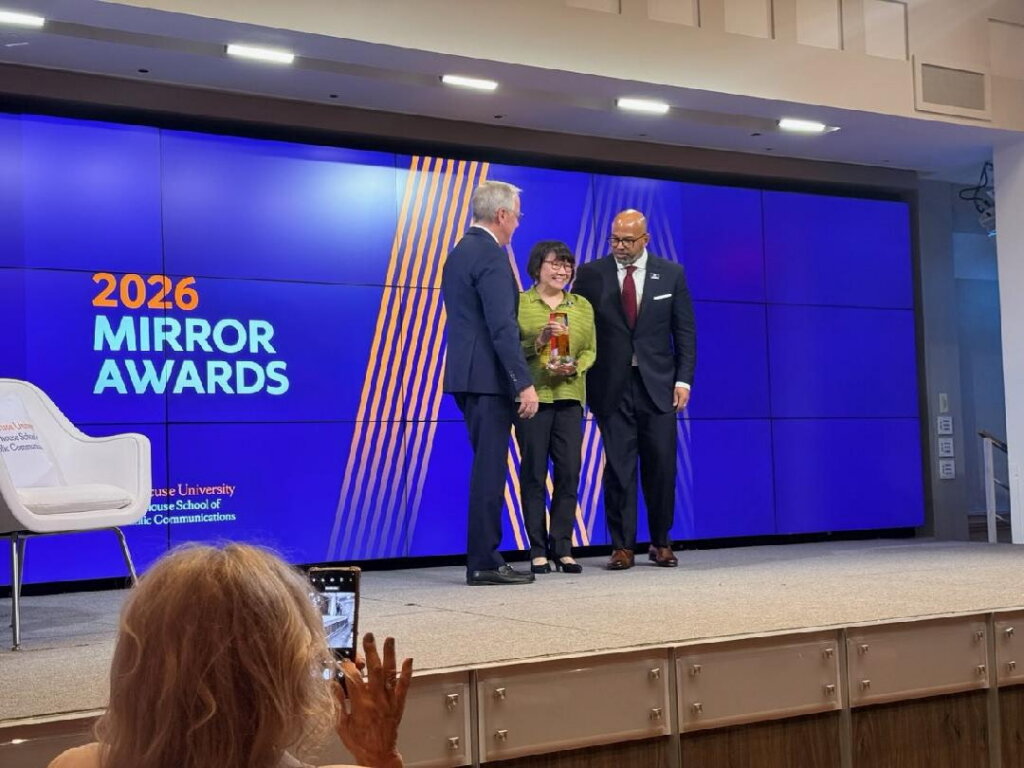
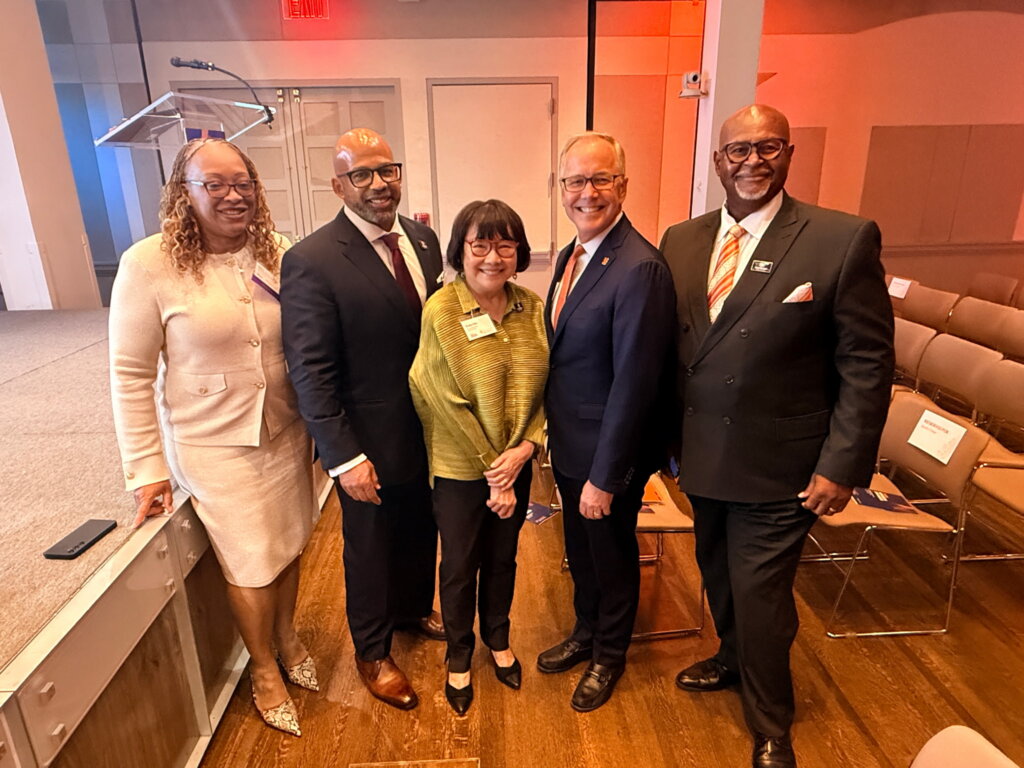
On Tuesday, May 19, 2026 the Maynard Institute was honored to receive the Lorraine Branham Award from Syracuse University’s Newhouse School of Public Communications. Named for former Newhouse dean and Maynard alum Lorraine Branham, who attended the Summer Program for Minority Journalists in 1977 before the Institute received its first official name, the award “recognizes a media organization that has worked to promote inclusion, diversity, equity and accessibility in the news media over the previous year.”
Maynard Institute Board Chair John X. Miller spoke at the awards, and later wrote on the experience of attending the ceremony and reception hosted by Syracuse University.
“It was my honor and privilege to represent the Maynard Institute and introduce Evelyn and Martin at the Mirror Awards, where they accepted the Lorraine Branham Award on behalf of the Institute,” Miller wrote after the awards ceremony.
“Being recognized on the national stage as an organization that continues the work of inclusion, equity and truth-based journalism acknowledges Maynard’s decades-long commitment to expand the community of journalists who aspire to live up to the words and aspirations of Bob Maynard and the founders.
It was a milestone moment for Maynard. In my remarks as the award presenter, I lauded Martin and Eveyln’s stewardship, vision, leadership, adaptability and humanity as they help carry forward Maynard’s mission with urgency and purpose.
As board chair, I am very appreciative of the recognition because it champions the Institute’s persistent work. I share congratulations with the staff and board, too, because the award acknowledges your dedication.
Thank you to the Newhouse School of Public Communications for the Lorraine Branham Award, presented at a fantastic event where NBC News’ Lester Holt was among the six honorees, as the recipient of the Fred Dressler Leadership Award.”
On accepting the Lorraine Branham Award, Co-Executive Director Evelyn Hsu recalled founders Bob and Nancy Maynard, and Bob’s daughter and Institute President Dori J. Maynard.
“We stand on the shoulders of our founders, including Bob Maynard and Nancy Hicks Maynard,” Hsu said. “And we carry deep appreciation for the leadership of our former president, Dori Maynard, who left us far too soon just over a decade ago. I know Dori would have been proud to see the Institute receive an award named for Lorraine Branham, a Maynard graduate whose life and work reflected the power of this legacy.”
Hsu expounded on carrying forward the legacy of the founders, and the generational mantle carried forward by Maynard Institute faculty, staff, fellows and trainees.
“That work has never belonged to one person or one generation. It has been carried by mentors, trainers, editors, reporters, board members, funders and alumni who kept showing up because they believed journalism matters — and because they believed who gets to shape journalism matters, too.”
Co-Executive Director Martin G. Reynolds spoke on past and future visions of belonging in news.
“Nearly 50 years ago, the founders of the Institute believed something simple and profound: the beacons of news in this country should reflect the full diversity of the nation. That mission has always mattered. But it meets this moment with particular urgency,” Marting G. Reynolds said, referencing recent attacks on diversity not only as a practice, but as an ideal and as a reality in America.
“…this honor feels like more than recognition. It is a deeply appreciated act of affirmation for our board, our staff, and especially our graduates, who remain the most powerful reflection of our legacy. Because this work has never been only about who is represented inside newsrooms. It is also about whether the people in our communities are seen fully, heard clearly, and understood for who they are.”
Reynolds hit on the most desired outcome of representation in news: true belonging and investment in communities, and investment in the belonging of each individual within the collective.
“Our hope is that our shared humanity will prevail — and that corrosive attempts to divide us will be met by stories that reveal the beauty, complexity and authenticity of the person beside you.
They do belong. And you belong. Because we belong.”
DEIB training isn’t just a nice-to-have workplace initiative. Diversity in the media directly influences the quality, accuracy, and…
*This article references Maynard Institute programming and interviews Maynard Institute training participants and faculty, including Brenda Verano, who…
Photos by Jennifer Shaevitz, SLO Media Creations.
by Alice Finno, Maynard Institute reporting intern
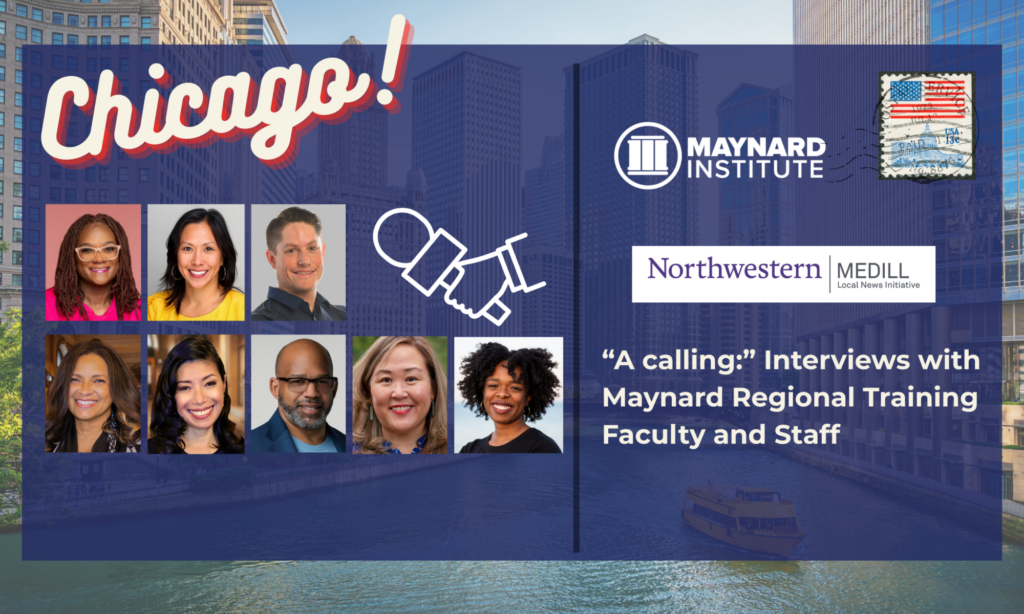
This post contains promotional material for the Maynard Regional Training Series in Chicago.
The Maynard Institute will host a free training for entry- and mid-level editors and managers in Chicago, Illinois, on June 4 through 5, as part of its regional training series.
In partnership with Northwestern University’s Medill School of Journalism, Media and Integrated Marketing Communications, the training will provide coaching and mentoring to help editors and managers working in print, broadcast and digital platforms navigate the complexities of newsroom leadership. Northwestern will cover the standard registration fee on behalf of registrants. Two meals will be provided each day, and limited discounted hotel rooms will be available.
Anyone from the Chicago regional area is invited to attend the training. Registration is open until Tuesday, May 26. Anyone with questions can contact Maynard Regional Training Series Director Odette Alcazaren-Keeley.
Award-winning journalists and Medill professors will lead workshops and discussions together with Maynard Institute faculty.
Martin Reynolds, co-executive director at the Maynard Institute, said that people often start managerial positions without receiving any training, especially when transitioning from a reporter role to a manager or editor position.
However, Reynolds said, only one in ten people have the skills to be a successful manager, according to Gallup, a research and polling organization. During the Chicago training, Reynolds will hold a session about “The Manager’s Mindset” and core aspects of leadership roles, including authority, influence and empathy.
“Having empathy and compassion for your people is really one of the elements that I think is essential,” Reynolds said. “If you don’t have that, it’s very difficult to be an effective manager, a good manager, where your colleagues will thrive under your leadership.”
Mei-Ling Hopgood, journalism professor at Northwestern, will hold a session on using AI with integrity, where participants will discuss newsrooms’ standards and practices when using large language models, such as ChatGPT and Gemini.
“They’re going to be part of newsrooms, they’re going to be part of our workflow, but to be able to say aloud — or to have in writing — this is my philosophy, these are the values that are guiding my use, is very important,” Hopgood said, adding that she hopes people will leave the session having a sense of the guiding principles they want to follow when using AI.
Deborah Douglas, director of the Medill Solutions Journalism Hub, will hold a session called “Complicating the Narrative,” where she will teach people a deep listening technique used in interviewing developed by journalist Amanda Ripley, who currently partners with Maynard alum Hélène Biandudi Hoffer at Good Conflict, guiding and facilitating communication by reimagining conflict “to help people listen and be heard in times of profound disagreement.”
“In a time of deep polarization and shrinking trust, I want to introduce a deep listening technique that models deep listening so that people feel heard and so that they feel safe enough to open up and give us the real answer, not just the surface level answers that people tend to give,” she said.
At the training, Mackenzie Warren, interim executive director of the Medill Local News Initiative, will also present the findings of a study about how Chicago gets its news. The researchers surveyed 1,101 adults in the Chicago metropolitan area and examined consumer behavior, obtaining insights about audiences’ evolving habits and interests.
Warren said the survey focused on 14 counties and included urban, suburban and rural communities in proportions roughly mirroring the United States’ population while also taking race, class and socio-economic status into account to have a representative index.
“I feel somewhat confident in using it as a directional information about how the United States as a whole is getting local news,” he added.
Warren also shared that the Medill Local News Initiative is designed to help the local news ecosystem thrive and highlighted the correlation between positive performance in local news and in democratic norms.
“Without trusted local journalism, it’s not as possible for ordinary people to make good decisions in their lives,” he said.
Doris Truong, deputy director of the Fire Up Entrepreneurship Program at the Maynard Institute, will lead a session on listening and identifying personal values. Truong will talk about interviewing people you disagree with without expressing judgement.
“When you’re talking to sources, it’s really important for them to understand that you’re just trying to understand them, not trying to change their minds,” she said. “You may end up having to interview somebody that you can say ‘I don’t agree with this, but I really want to help my audience understand your perspective.’”
Felecia Henderson, senior director of strategic initiatives at the Maynard Institute, will hold a session about navigating difficult conversations, providing useful steps managers can follow and then role-playing scenarios.
“When you’re a manager, you really have to find a way to strike the right tone, the right setting, the right approach. And a lot of people don’t know what that is,” Henderson said.
Henderson added that when people finish a regional training, they become part of the Maynard Communities of Practice, a program that connects people working in the same field and provides continuous training across different curriculum tracks.
Odette Alcazaren-Keeley, director of the Maynard Regional Training and Communities of Practice Programs, shared that the training will include a roundtable with news leaders from the region to talk about the state of the media in the region.
Alcazaren-Keeley said what participants always appreciate about the programs is sharing the room with other journalists who face the same challenges and be able to learn from each other.
“What we hope is that when they leave, they feel they are not alone, that they have us, and they have each other, and they grow the community with us: they become part of the Maynard family that endures,” she said.
Jasmine Barnes, program manager at the Maynard Institute, said she enjoys creating the vision for a Maynard training and thinking about all the details that will enhance the participants’ experience.
“I’m really hoping that the Chicago training can be a really good opportunity for Northwestern’s network and broader community, as well as some Maynard alumni and some folks who haven’t really been involved with either of those institutions to meet and to really talk about the region and the unique challenges and opportunities that are present in Chicago,” she said.
Mackenzie Warren expressed his excitement for having frontline editors and leaders in journalism come together for the training.
“There’s going be a room full of people who have signed on to this mission and dedicated themselves to this profession that’s more than a profession, it’s a calling,” Warren said.
“Our contributions to journalism will outlast ourselves if we do it right — I’m really encouraged that there’s a room full of people, the next generation of people, who see themselves that way and see this as not just their job, but their mission, and are invested in themselves to get better at their craft.”
They do belong. And you belong. Because we belong.”
DEIB training isn’t just a nice-to-have workplace initiative. Diversity in the media directly influences the quality, accuracy, and…
*This article references Maynard Institute programming and interviews Maynard Institute training participants and faculty, including Brenda Verano, who…


By Celeste Barker Bright for Nonprofit Megaphone
In an era when public trust in news is both more fragile and more essential than ever, how stories are told matters just as much as the stories themselves. For journalism employers, investing in diversity, equity, inclusion, and belonging (DEIB) training is a powerful way to strengthen reporting, build audience trust, and create newsrooms where every voice contributes to more accurate and impactful storytelling.
Diversity, equity, and inclusion training, or DEI training, helps organizations build workplaces where people of all identities and backgrounds are fairly represented, treated, and supported in contributing fully. DEI training programs focus on improving awareness around the experiences of nonwhite and noncisgender male workers. This helps to reduce both conscious and unconscious bias and create systems that ensure equitable access to workplace opportunities and resources.
Many organizations now emphasize DEIB, which adds a critical fourth pillar of social equity: belonging. Belonging goes beyond representation and fairness. It reflects whether employees actually feel accepted, valued, and psychologically safe enough to contribute authentically. Without belonging, even diverse and equitable workplaces may struggle with disengagement or high turnover when employees don’t truly feel included.
In other words, DEI creates access and opportunity, while belonging ensures people feel connected and empowered once they are there. For news media organizations and the American public media as a whole, where storytelling depends on authentic voices and perspectives, that distinction is especially important.
DEIB training isn’t just a nice-to-have workplace initiative. Diversity in the media directly influences the quality, accuracy, and impact of reporting. Research and industry guidance consistently show that inclusive representation in media outlets produces stronger journalism and more sustainable organizations.
A diverse and inclusive newsroom is better equipped to cover stories that concern all American communities and the challenges they face. When journalists reflect a broader range of lived experiences, coverage becomes more representative and less likely to overlook or misinterpret marginalized perspectives.
Inclusive practices help journalists ask better questions, build trust with sources, and avoid harmful stereotypes. DEIB training equips staff with the tools to recognize bias in sourcing, framing, and language, leading to more accurate and nuanced reporting.
Trust is a core currency in journalism, and DEIB training plays a significant role in strengthening it. When audiences see themselves reflected fairly in coverage, they are more likely to engage with and trust a news outlet. That translates to positive company reputations and ratings in very real ways.
Inclusive journalism fosters stronger relationships with communities, particularly those historically underrepresented or misrepresented in media. By improving cultural competency and awareness, DEIB training helps newsrooms build credibility and deepen audience connections.
Organizations that invest in DEIB often benefit from greater creativity and innovation. Forbes explains that diverse teams bring a wider range of ideas, perspectives, and problem-solving approaches, which can lead to better decision-making and more innovative content strategies.
In the fast-changing media landscape, adaptability is essential. DEIB training encourages open dialogue, collaboration, and inclusive leadership practices that help teams respond more effectively to new challenges and opportunities.
Employees who feel valued and included are more likely to stay and contribute at a high level. DEIB-focused environments improve morale, job satisfaction, and overall performance.
For journalism employers, this translates into lower turnover and a more stable workforce. Given the demanding nature of newsroom work, fostering a sense of belonging can help prevent burnout and ensure that talented journalists remain engaged and committed.
Bias in journalism can lead not only to misinformation but also to reputational damage and loss of public trust. DEIB training helps staff identify unconscious biases and understand how they may influence reporting decisions. Structured DEI workshops provide practical tools for addressing bias, improving communication, and fostering accountability. This is especially important in journalism, where ethical standards require fairness, accuracy, and sensitivity.
DEIB training also shapes leadership practices. Inclusive leaders are better equipped to manage diverse teams, support equitable advancement, and create transparent decision-making processes. Organizations that prioritize DEIB develop healthier workplace cultures characterized by trust, collaboration, and shared purpose. In newsrooms, this can lead to stronger editorial alignment and a more cohesive mission.
While internal efforts are valuable, many news organizations stand to gain the most from working with third-party DEIB specialists who bring expertise, structure, and objectivity to the process.
Organizations such as the Maynard Institute for Journalism Education provide tailored training specifically designed for media professionals. Their programs address the unique challenges of journalism, such as inclusive sourcing, equitable storytelling, and newsroom culture. External partners bring proven frameworks and up-to-date best practices that may not exist internally.
Third-party consultants can offer an unbiased perspective on workplace culture and practices. External experts can identify gaps, measure progress, and recommend data-driven strategies for improvement. This objectivity is particularly valuable in journalism organizations, where internal dynamics and hierarchies may make it difficult to address sensitive issues openly.
External partners can design training programs that align with an organization’s size, goals, and audience. Partnering with experts can strengthen broader diversity and inclusion strategies, including hiring and retention efforts. For news organizations with multiple teams or locations, scalable training ensures consistency while allowing for customization based on local needs.
DEIB is not a one-time initiative. It requires ongoing commitment and continuous improvement. External consultants can help organizations move beyond one-off workshops to develop long-term strategies that embed DEIB principles into daily operations. Outsourcing enables companies to build sustainable programs with clear goals, metrics, and accountability structures — all without guesswork or strain on company staff.
For journalism employers, this means creating a newsroom culture where inclusive practices aren’t just passively or abstractly encouraged, but actively and concretely integrated into every aspect of reporting, editing, and leadership. By investing in DEIB training and partnering with experienced organizations, news media employers can strengthen both their workplace culture and the quality of their journalism.
The Maynard Institute inspires and powers the national, collaborative drive for DEIB in news media. Our antiracism training programs have helped create decades of news industry trailblazers, all of whom belong to the “Maynard Family”: a community of deep caring and intergenerational support for journalists of color. Programs by the Maynard Institute are open to all applicants, and the Maynard Institute is committed to addressing the under-representation of people of color and other historically disadvantaged groups in media-related professions.
The Maynard Institute’s Fault Lines® Culture Shift Program gives media professionals the tools to recognize and address biases that shape news coverage. Rooted in the Fault Lines® framework, our program helps organizations move far beyond performative DEI efforts.
Instead, we use intentional DEI practices — built on nearly 50 years of DEI training in media spaces — that are proven to create inclusive workplaces that connect with diverse communities. Fill out our interest form to Register to bring Maynard’s Fault Lines® training to your company today!
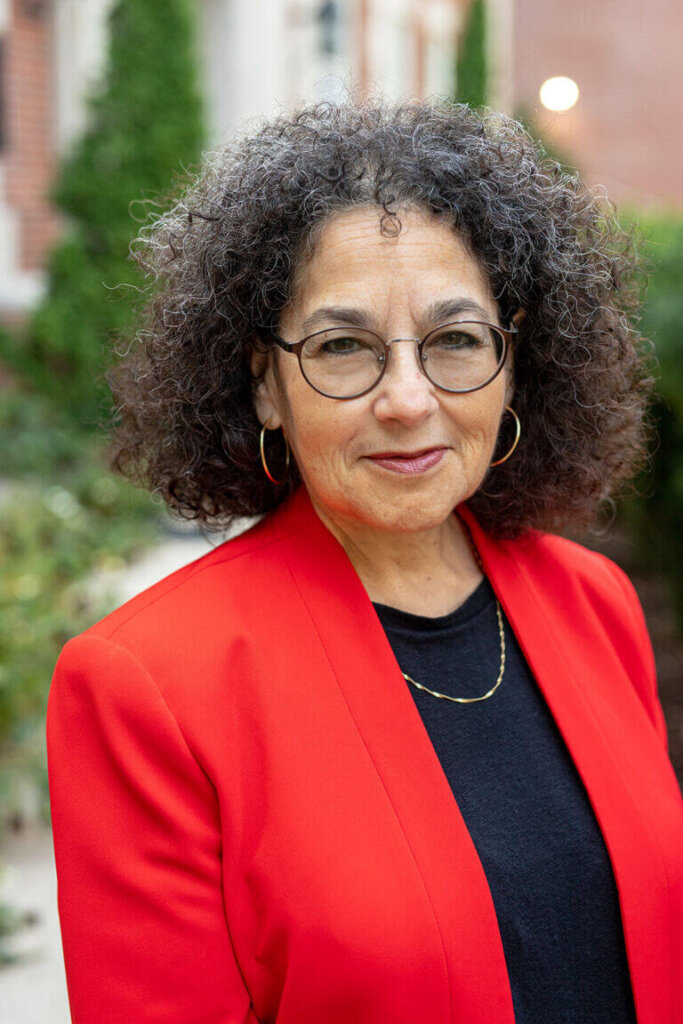
After passing away suddenly in Washington, D.C. on March 20, Diana R. Fuentes is being remembered across the nation as an indomitable journalist, a dedicated editor and educator, a steadfast mentor and a fierce advocate for journalists and journalism.
Executive Director of Investigative Reporters and Editors (IRE), Fuentes began her more than 35-year-long career in journalism in her hometown of Laredo, Texas, where she served as editor of the Laredo Morning Times.
“Whether she was representing IRE at events across the country or engaging with our international and student members, her dedication to our mission was clear. She worked tirelessly to make investigative training accessible and was also a passionate defender of press freedom and journalist safety,” IRE Board President Josh Hinkle said in a statement released March 20.
“In light of the challenges we face today, she reminded us that ‘we have a constitutionally protected right — and deep responsibility — to keep the people informed, and we will not stop.’ Those words from Diana — shared in a recent statement of support for journalists arrested for their protest coverage — resonate now more than ever.”
Many in the journalism community and her home state of Texas expressed shock at her unexpected passing, as well as the deep loss of a friend and teacher so integral to the journalism community.
“We are saddened to share the passing of a giant in our industry. One of our leaders, mentors and dear friends, Diana ‘DeeDee’ Fuentes has passed away. It is a shock to many of us and we are processing it just as you are,” San Antonio Association of Hispanic Journalists stated in a Facebook post.
IRE will be closed Friday, March 27 as the staff takes time off to attend her funeral.
“Texas journalism — and the national investigative journalism community — has lost a giant. Whether she was fighting for open records, coaching a young reporter, or leading a national journalism organization dedicated to accountability, she did so with a rare combination of tenacity, grace, and unwavering integrity. She taught us that the story matters, but the people behind the stories matter more,” Texas Managing Editors posted to Facebook.
Oakland Voices director and Maynard alum Rasheed Shabazz expressed gratitude to Fuentes as well as sorrow at her passing in an emailed statement.
“I finally met Diana Fuentes in real life last year at the NABJ Conference during an investigative journalism panel. It was an honor to share a stage with her. I am grateful for all the work she did to support young and emerging investigative journalists and I wish I had more time to learn from her. Thank you, Diana,” Shabazz said.
IRE has posthumously nominated Fuentes to be inducted into its Ring of Honor at this year’s IRE Conference, taking place June 18-21. The Ring of Honor is a “new initiative celebrating members who have made a significant contribution to the organization and to investigative journalism.” Those who wish to do so can donate to the campaign in Fuentes’ honor.
“Our contributions to journalism will outlast ourselves if we do it right — I’m really encouraged that there’s…
*This article references Maynard Institute programming and interviews Maynard Institute training participants and faculty, including Brenda Verano, who…
Diana R. Fuentes died last week, this post is about her work in journalism and those who miss her.
The arrests of journalists Georgia Fort and Don Lemon for reporting on a protest set a dangerous precedent for press freedom. Bearing witness is not a crime. Reporting at moments of civic tension — especially where government power and community response intersect — is core to journalism’s role in a democracy, and the First Amendment exists to protect precisely this work.
Through our Fault Lines® framework, we know the risk is not evenly shared. Journalists working at the intersections of race, immigration, power, and community — often independent or community-based reporters — are the first to feel the chilling effect when newsgathering is criminalized.
If they are pushed out, the voices and communities journalism has worked to include are pushed out too. We stand with the National Association of Black Journalists and the wider journalism community in condemning these arrests and calling for the protection of journalists’ constitutionally protected rights.
They do belong. And you belong. Because we belong.”
DEIB training isn’t just a nice-to-have workplace initiative. Diversity in the media directly influences the quality, accuracy, and…
*This article references Maynard Institute programming and interviews Maynard Institute training participants and faculty, including Brenda Verano, who…

The third round of the Maynard Regional Training Series – hosted by the Bob Schieffer College of Communication at Texas Christian University (TCU) in Fort Worth – brought a powerful close to the inaugural program, after dynamic convenings of media professionals in Detroit and Chapel Hill, North Carolina.
At each training site, Maynard faculty sought to give frontline editors and mid-level managers tools they could immediately use to manage teams and coverage in a rapidly evolving landscape that’s shaped by industry upheaval and accelerating AI evolution.
The bespoke curriculum provided eight sessions and coaching from a distinguished faculty of news executives and academics, covering topics such as:
Participating in the two-day workshop were two TCU students and 18 full-time journalists who work in a variety of editing roles representing the Fort Worth Report, The Dallas Morning News, Fort Worth Star-Telegram, La Prensa de Houston, The Associated Press, Bloomberg Industry Group, The Oklahoman Media Company, Gannett and USA Today Network, TCU-Schieffer College and TCU 360 Media.
“I’m really thankful to have participated in this year’s Maynard Regional Training in Texas,” wrote Maya Earls, deputy team lead/environment and energy at Bloomberg Law
(Bloomberg Industry Group), in a LinkedIn post. “This program included great sessions on how to be a better manager and editor, and provided space to ask the big questions about AI and how we as journalists evolve for the moment.”
Maynard Regional Training and Communities of Practice Director Odette Alcazaren-Keeley opened the training, saluting the long-standing relationship with TCU Bob Schieffer College of Communication’s Dean Kristie Bunton, Ph.D; Jean Marie Brown, associate professor of professional practice and student media director; and John Tisdale, Ph.D., associate professor and chair of the journalism department.
“As a college named for an award-winning, longtime journalist, our TCU Bob Schieffer College of Communication is happy to provide a regional home for the Maynard Regional Training Series,” Dean Bunton said. “Our democracy needs well-trained journalists to lead newsrooms effectively and ethically in reporting news that is vital to citizens.”
Alcazaren-Keeley welcomed the participants, citing their impactful work and acknowledging their organizations’ investment in their career growth.
“We were invigorated by the latest outstanding journalists in the Maynard Regional Training – members of the next generation of news leaders who reflected the diversity of the Texas media ecosystem and beyond.They expressed appreciation for the skills they gained, coaching and conversations they engaged in, and affirmed they are applying these toolkits to their work,” said Alcazaren-Keeley.
Felecia D. Henderson, Maynard senior director of strategic initiatives, echoed that sentiment, reflecting on the impact across all three training programs.
“At each regional training, we saw mid-level editors and managers embrace new strategies for leadership, learn to conduct tough conversations, and explore how AI is reshaping journalism,” Henderson said. “These sessions weren’t just about skills; they were about building confidence and community. It was inspiring to see participants leave ready to lead with clarity and purpose.”

Professor Jean Marie Brown kicked off the training with “Leaning Into Your Fault Lines®,” focused on Maynard’s signature Fault Lines® framework, which helps editors understand how their biases – unconscious and conscious – inform the ways they manage news coverage. She also facilitated the workshop “Managing Time while Building Genuine Relationships.”
One participant wrote when surveyed: “I appreciated the candid discussion about Fault Lines. It made me step back and consider all the different fault lines that exist in my life and how those show up daily as a manager.”
The Manager’s Mindset: Stepping into your Leadership Role
Martin G. Reynolds, Maynard Institute Co-Executive Director
Maynard Co-Executive Director Martin G. Reynolds led the session “The Manager’s Mindset”, focused on what editors and managers need to consider when stepping into leadership roles.
“It’s exciting to provide management training to editors — many of whom have had limited access to the kind of sustained support that helps them grow as leaders,” said Martin G. Reynolds, Maynard Institute co-executive director, who leads the Manager’s Mindset session for each Regional Training cohort. “Managing is about helping others thrive and fueling the success of the whole organization. In a moment of transformation and uncertainty for journalism, the quality of managers often determines whether innovation thrives or fades — and whether morale improves or erodes. Our program helps editors build the awareness, tools, and community they need to lead with care and confidence.”
“I loved learning about the different manager archetypes because I noticed pieces of myself in each of them. I consider myself a bridge builder more than anything else, but I could benefit from being more of a disruptor.”
Regional Training Series Participant


Coach and consultant Maria Carrillo led two workshops: Ethical Editorial Decision Making and Coaching for Story and Building Trust.
In “Ethical Editorial Decision-Making,” Carrillo led discussions with trainees highlighting real-world news coverage ethical dilemmas. She said this session showed that our moral code can help us to make decisions when we are faced with tough calls, which happens often in any newsroom.
“My hope is that the editors in these classes walk away feeling empowered to make tough decisions and to execute more powerful stories,” Carillo said.
Carrillo also facilitated the workshop “Coaching for Story & Building Trust” where she shared lessons about developing relationships and trust with reporters as well as best practices for vetting ideas and executing stronger stories.
“This was another session where I learned a lot about being both an effective leader and editor. I’ve already used Maria’s suggestion to edit side-by-side with members of my team. When I can’t do that, I’m being better about following up with them about major edits I’ve made to their projects. Before this session, I’d often edit without providing much feedback – but I now see that my team can’t learn to grow and develop confidence if I don’t show them how they can improve.”
Regional Training Series Participant

Tom Huang centered this workshop on story focus, introducing five questions that will help editors and reporters focus their stories and identify underlying themes. He used the movie Titanic to illustrate how stories can have a central theme and secondary themes. An interactive exercise helped participants understand how stories can often have strong emotions lying beneath the surface.
“I hope the editors in the class took away the idea that they can and should coach their reporters and discuss what their stories are truly about. Most stories should just be told simply and in a straightforward way. But some stories deserve a little more time in exploring themes and meaning. That’s the fun part of storytelling,” Huang said.
“I love Tom. He’s incredibly passionate about journalism and storytelling, and he only wants to make our industry better. I realize that’s true of all the speakers and panelists, but Tom’s session made us pause and take a step back, something that doesn’t often happen in the fast-paced environment of a newsroom.”
Regional Training Series Participant
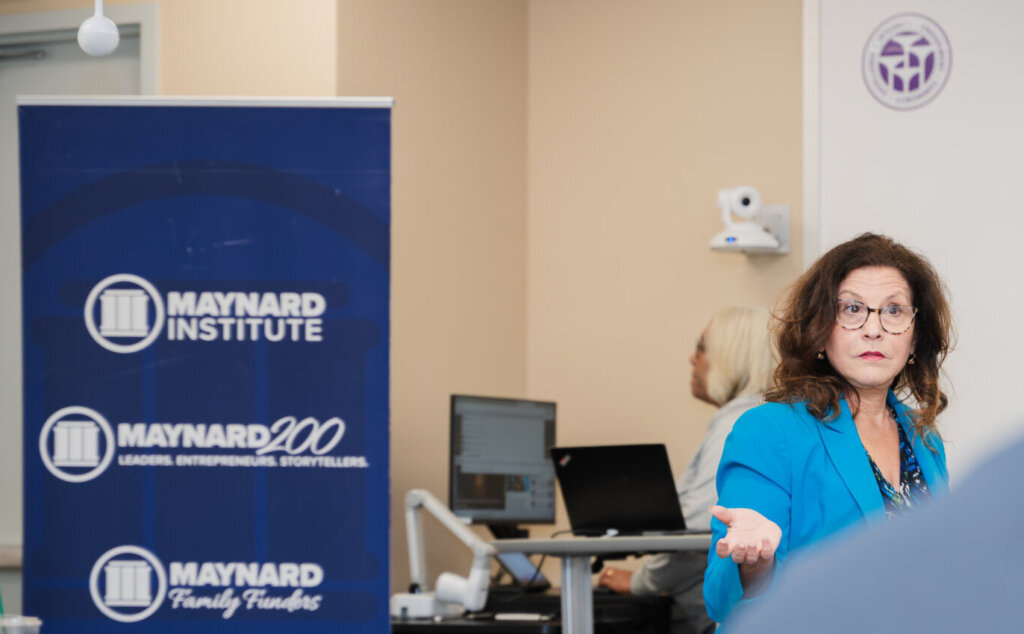
In the workshop “AI: Best Practices and Ethics,” Professor Marisa Porto explored how AI is transforming newsrooms, focusing on ethics and innovation. Participants discussed real-world examples and practical ways to use AI that is grounded in journalistic values.
“I hope participants left ready to use AI in their news organizations with purpose and transparency, guided by a commitment to public trust,” Porto said.
“It was interesting (and a bit concerning) to see how some newsrooms around the world use AI. I also appreciated the questions she encouraged us to ask about purpose, disclosure, oversight, review and impact. This will benefit me in my role as we explore more ways to utilize AI tools in our newsroom.”
Regional Training Series Participant

This workshop led by audience engagement consultant and newsroom management expert P. Kim Bui was centered on her observation that newsrooms are now multi-generational and each generation has its own working style. In this interactive workshop, she examined how today’s managers and leaders cross generational differences to lead more empathetic and valuable newsrooms.
“It is always such a joy to work with others in the Maynard family to create better workplaces for us all in turbulent times,” Bui said. “Attendees always approach tough problems with deep solutions as well as humor and hope.”
“Kim’s presentation gave me insight into how to be a more collaborative and effective leader beyond my team. As soon as I left Maynard, I created my own version of Kim’s employee Q&A to give to my direct reports and a recent new hire. I’m excited to see how it helps me be a better manager.”
Regional Training Series Participant

The regional roundtable of news leaders highlighted the state of Texas media and each editors’ perspectives on building a culture of courage and integrity in newsrooms in defense of democracy. Executives of legacy, nonprofit, ethnic and local media discussed challenges that news organizations are facing, including in covering federal and state policies impacting their audiences.
They shared innovations and approaches that are crucial in this era of political division. The panel was moderated by professor, author and Maynard board member Dr. Dorothy Bland.
Panelist Evelyn Castro of La Prensa de Houston, who also participated in the training, shared with her LinkedIn network that “The Maynard Institute for Journalism Education continues to set the standard for leadership, collaboration, and integrity in journalism. [I am] grateful for the opportunity to learn, share, and connect with so many passionate newsroom leaders committed to truth and community.”
Participants in the regional training programs are automatically eligible to access the benefits of the peer-to-peer learning and coaching hub, the Maynard Communities of Practice.
Program director Alcazaren-Keeley said the insights shared by trainees during session conversations and office hours consultations drive the impact of each training.
They value the space to be seen, heard and supported, and give that support to each other.
She sees the training programs embodying hope as the industry forges forward.
“The program is vital in helping journalists unlock their full leadership potential, to navigate this inflection point in our history and the tide of AI disruption. Our newest journalism cohort carries the professional advancement and movement-building legacy of the Maynard Institute. Together we bring our collective mission of integrity and courage to the future,” Alcazaren-Keeley said.

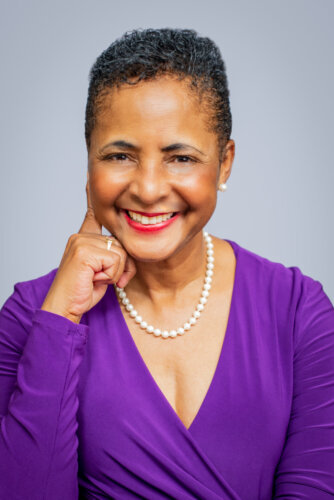
Board Member

Director Maynard Regional Training Series and Maynard Communities of Practice
okeeley@mije.org
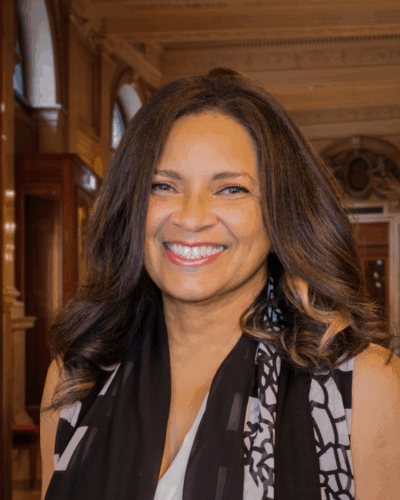
Senior Director of Strategic Initiatives
fhenderson@mije.org
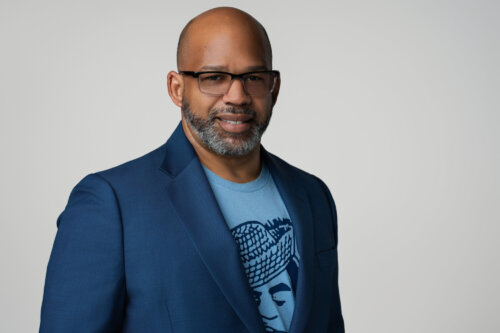
Co-Executive Director, Revenue and External Affairs
mreynolds@mije.org

Associate professor of professional practice, Department of Journalism at TCU Bob Schieffer College of Communication

Consultant / Coach

Assistant Managing Editor, The Dallas Morning News

Knight Chair in Local News and Sustainability, UNC Chapel Hill Hussman School of Journalism

Media Consultant

Panelist

Panelist

Panelist

Panelist
For more than 45 years, the Maynard Institute has fought to push back against the systemic lack of diversity in the news industry through training, collaborations and convenings. We are creating better representation in U.S. newsrooms through our programs which give media professionals the tools to become skilled storytellers, empowered executives and inspired entrepreneurs.
For more information about the Regional Training Series, please reach out to Odette Alcazaren-Keeley, Maynard Regional Training Series Director at okeeley@mije.org.
The Maynard Regional Training Series is a new training program advancing the Maynard Institute’s efforts to expand the diversity pipeline in news media and dismantle structural racism in its newsrooms. It is designed for and serves the next generation of frontline managers and editors in order to advance their career growth and leadership power in newsrooms and organizations.
Maynard Institute programs are open to all. We are committed to addressing the under-representation of people of color and other historically disadvantaged groups in media-related professions.
This professional development program provides customized training courses, resources and 1:1 mentorship by industry professionals, to fellows who have represented a wide spectrum of racial, gender and geographic backgrounds. The Maynard Institute’s new training programs are supported by the John S. and James L. Knight Foundation, the Ford Foundation, Craig Newmark Philanthropies, and The Hearthland Foundation.
For more information about the Maynard Regional Training Series, please reach out to:
Director of Maynard Regional Training and Communities of Practice, Odette Alcazaren-Keeley at okeeley@mije.org.
They do belong. And you belong. Because we belong.”
DEIB training isn’t just a nice-to-have workplace initiative. Diversity in the media directly influences the quality, accuracy, and…
*This article references Maynard Institute programming and interviews Maynard Institute training participants and faculty, including Brenda Verano, who…
A recap of the Maynard regional training in October. The article explains each session in-depth and gives quotes from faculty and participants.
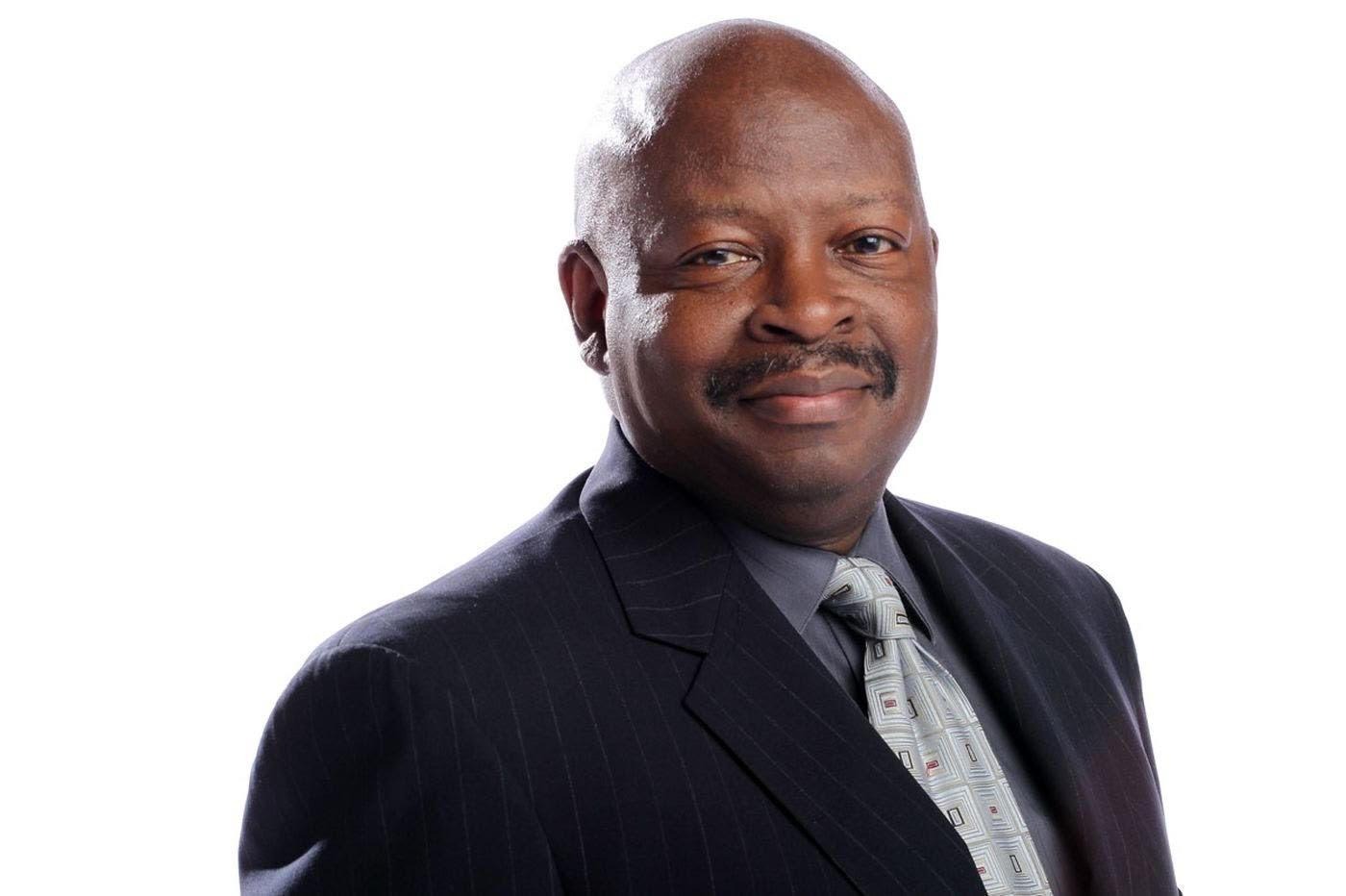
We are heartbroken at the loss of our friend, Michael Days.
Michael’s connection to the Maynard Institute spans decades. He was an exceptional teacher, a generous mentor to up-and-coming professionals, and a wise strategic adviser to the institute’s leaders.
His positive approach uplifted all of us during stressful times. It was a gift to be in his presence.
Michael mentored so many. He was officially matched with Martin as a mentor by Evelyn at the conclusion of the 2005 Maynard Media Academy at Northwestern University. They stayed connected ever since and spoke just last month.
This loss hits so close to home for both of us. We are deeply saddened and send our condolences to Michael’s family and to all who knew and loved him.
-Evelyn Hsu and Martin G. Reynolds
They do belong. And you belong. Because we belong.”
“Our contributions to journalism will outlast ourselves if we do it right — I’m really encouraged that there’s…
Photos by Jennifer Shaevitz, SLO Media Creations.
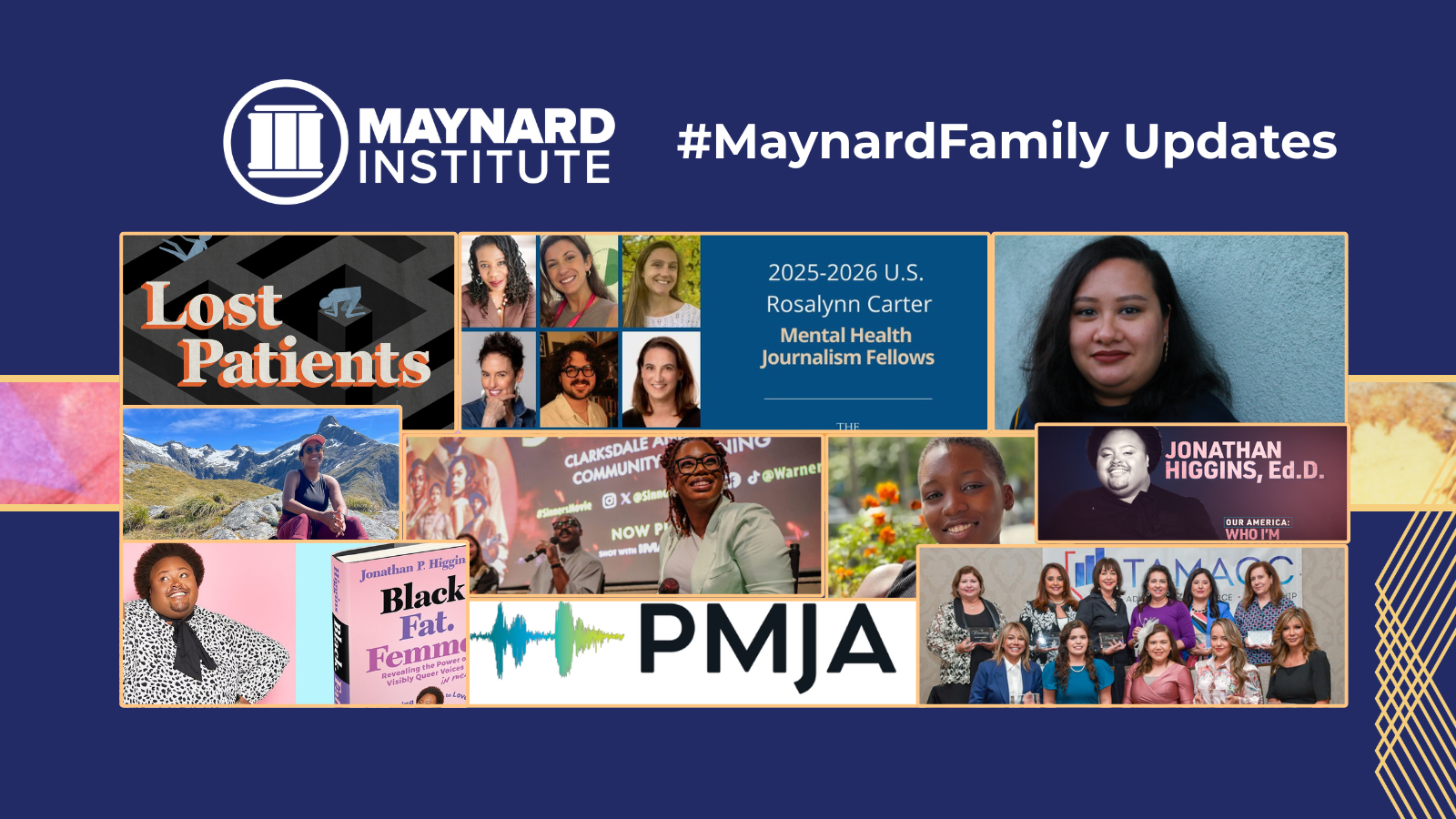
Every so often we get to highlight the incredible ongoing work and accomplishments of our Maynard Institute alumni and faculty, and for the first time we’re touting their achievements on our new website!
Maynard Institute faculty and alumni from our legacy programming continue to amaze us with their impactful work, their effect on their colleagues and peers, and the way they continue to shape journalism and the news.
Here are just some of the many achievements, awards, and career transitions of our extended network of Maynard Family.
Jahna Berry (Maynard 200 class of 2019), Chief Operating Officer at the Center for Investigative Reporting, received the 2025 NLGJA: The Association of LGBTQ+ Journalists Leadership Award. The award recognizes those who have positively affected their newsrooms, increasing diversity and improving news coverage of the LGBTQ+ community. Berry will be presented with the award at the NLGJA: The Association of LGBTQ+ Journalists’ annual National Convention, taking place in Atlanta from Sept. 4-7.
Helina Selemon (Maynard 200 class of 2023) was awarded a National Press Foundation grant for Environmental Justice Reporting. Helina and fellow reporter Jordan Gass-Pooré will receive $10,000 for their four-part multimedia project investigating the human and economic toll of extreme heat on communities of color in New York City. “Their stories will explore efforts to expand mitigation and adaptation efforts to communities most in need, spotlight the systemic issues driving these deadly outcomes, and provide evidence-based responses that can be used to address them.” Their solutions-oriented reporting on one of the nation’s “most intense urban heat islands” are the actionable climate journalism that creates lasting community benefit.
Lottie Joiner Maynard (200 class of 2021) became a Carter Center Mental Health Journalism Fellow. Fellows “receive training and mentorship to responsibly report on a variety of topics related to mental health and substance use disorders.” As a freelance/independent journalist, Lottie will use this fellowship to “explore the link between response to stress and childhood trauma, including what stress looks like for Black women — at work, at home and in the community, and Black women’s response to that stress.”
In a landscape of rampant medical racism and the defunding of health data science, Lottie’s reporting on this topic is critically important to Black women’s health in America.
Kaila Philo (Maynard 200 class of 2023) became an African American Cultural Heritage Action Fund Fellow working with the National Trust for Historic Preservation. This fellowship supports work surrounding the preservation of Black history and culture in the United States, helping fellows develop and implement innovative approaches to preservation. Past cohorts have created documentary photography exhibitions, work supporting HBCUs, published work, and the preservation of historical sites.
Sudeep Reddy joined MSNBC as their Washington Bureau Chief after having been at Politico for 8 years as Managing Editor in North America. The Maynard 200 Mentor led a staff of 150 journalists at Politico and “launched dozens of new products, including newsletters, podcasts, live events and digital offerings; guided strategy and operations for Politico Playbook during the first Trump administration; and built the newsroom’s first audio team from the ground up,” Scott Matthews, senior VP of newsgathering for MSNBC, said in a memo to staffers. Reddy will report to Matthews and work with Erin Zimmerman, vice president of newsgathering.
P. Kenneth Burns (Maynard 200 Class of 2022) was awarded First Place for an Education Feature from the Public Media Journalists Association for his story on Princeton High students building a STEM project to preserve an Indigenous Guatemalan Language.
The article profiled students at Princeton High School utilizing AI and applied technology to save one of the world’s disappearing languages, and using their findings to enter the Samsung Solve for Tomorrow STEM Competition. Over 7,000 languages are currently being spoken in the world, but as many as 90% of them could disappear over the next century.
Esmy Jimenez (Maynard 200 Class of 2018) won yet another award for Lost Patients. A podcast, Lost Patients is “a deeply-reported, six-part docuseries examining the difficulties of treating serious mental illness through the lens of one city’s past, present and future.” Produced by KUOW and The Seattle Times, “with real-life testimonials from patients, families, and professionals on the front lines,” Lost Patients is solutions-oriented journalism that seeks to remedy a health system that is, itself, sick.
Dr. John Paul Higgins (Maynard 200 Class of 2018) was featured in ABC’s Our America series. On the heels of the successful release of their book “Black. Fat. Femme. Revealing the Power of Visibly Queer Voices in Media and Learning to Love Yourself” in March, Higgins embarked on a speaking tour and joined the ABC feature to highlight diversity within the LGBTQIA+ Community.
“I think representation is important to me because I didn’t have it when I was a kid,” they said in the special. “When I was growing up, I felt very isolated and alone in many of my own experiences. And so, when you start to feel like you’re the only person that’s going through something, you oftentimes feel like no one is truly going to understand your walk or what you’re going through.”
Angela Dennis (Maynard 200 Class of 2023) won three Golden Press Card Awards from the East Tennessee Chapter of the Society of Professional Journalists, First Place in General Reporting (Digital Only) for her story on the tragic burning of Elnathan Hall, a historic building on the campus of Black Knoxville College, First Place in Sports Reporting for a feature story on NFL prospect Zack Dobson and his struggle after losing his brother to gun violence, and Second Place in General Reporting for her story on Muslims who said their religious freedom was violated by the Sheriff’s office after University of Tennessee arrest during a protest against the genocide in Gaza.
Emily Elena Dugdale (Maynard 200 Class of 2022) became Managing Editor of the LA Public Press. After having utilized her investigative prowess at LAist, The Guardian, ProPublica, NPR and the LA Times covering the carceral system and law enforcement misconduct, Dugdale will turn her talents towards crafting a newsroom and investigative coverage that reflects the diversity of LA.
“Many newsrooms claim to want to write for a young, local BIPOC audience — LA Public Press not only does that, but the newsroom actually reflects what LA looks and feels like,” Dugdale said in the article by the LA Public Press announcing her role change. “There’s something not only special, but deeply necessary about a journalism organization full of people who are from the communities they write about.”
Michelle Zenarosa (Maynard 200 Class of 2023) also moved up in the LA Public Press, and is the new Editor In Chief of the local publication. After nearly three years as Deputy Editor at Reckon News, Zenarosa is excited to serve her home city and the “thousands of stories” that make up LA.
“Los Angeles isn’t just where I work—it’s home. I grew up here with parents who, together with their collective 15 siblings, are scattered across every corner of LA County. This means I know the city not just as a journalist, but as someone whose family is woven into its fabric,” Zenarosa said in an LA Public Press article.
Juan Michael Porter II (Maynard 200 Class of 2024) started a new position as the Communications Lead and Spokesperson at U.S. PLHIV Caucus. The group is made up of networks of people living with HIV (PLHIV), and works to abolish systems of oppression and center the experiences of people living with HIV.
Juan has been a vocal advocate for people living with HIV, and has documented his own experiences living with HIV and navigating the still-rampant stigma surrounding the medical condition, which often serves to denigrate or criminalize people living with HIV or AIDS, especially Black and gay men. Juan is the perfect fit for an agency that advocates for human rights and dignity for people often faulted for contracting a medical condition.
Nancy Flores (Maynard 200 Class of 2022) won a “Texas Women Making a Difference” award from the Texas Association of Mexican American Chambers of Commerce for her work as publisher of Austin Vida. Nancy revived Austin Vida in 2020 in the midst of the COVID-19 pandemic, reimagining the digital Latinx news and culture site to amplify, inform and celebrate the Latinidad of the Austin community with culturally-competent news that centers the voices of nuestra gente,” the Latinx audience that makes up about 33% of the population of Austin, Texas.
Since Nancy took the helm, Austin Vida has also won the 2023 Best Latino Media Award from HABLA (Hispanic Business Advocates Business Leaders of Austin) and was a 2023 Finalist for Product of the Year from LION (Local Independent Online News Publishers) Local Journalism Awards.
Aallyah Wright (Maynard 200 Class of 2022) brought Sinners to Clarksdale and interviewed director Ryan Coogler, and became an Obama Foundation USA Leader.
After community organizer Tyler Yarbrough penned an open letter to the cast and crew of Sinners, the groundbreaking horror film set in Clarksdale, Mississippi and helmed by visionary director Ryan Coogler, Clarksdale native Aallyah joined in the efforts to bring the film to the town that gave it place. Although Sinners, which broke box office records shortly after its release in April, was set in Clarksdale, the Mississippi Delta town doesn’t have a movie theater, and residents would need to travel nearly 80 miles to see the film.
Their efforts paid off, and the cast and crew paid a visit to Clarksdale. Sinners was shown in multiple free screenings for several audiences of 1500 people at the Clarksdale Civic Auditorium and Aallyah, working for Capital B, hosted the Q&A session in her home town.
For this and her constant dedication to reporting on marginalized and majority-Black communities in the rural South, Aallyah became an Obama Foundation USA Leader. The program “for emerging leaders working in government, civil society, and the private sector who have demonstrated a commitment to advancing the common good,” connects cohorts of people working to make change in their communities, amplifying their impact.
Maynard 200 faculty and Maynard Communities of Practice Storytellers Community Co-Lead Advisor Aaron Glantz is once again working with the Guardian, investigating issues related to Trump administration policies and veterans. In August, Aaron published a piece abortion bans through the department of Veterans Affairs which would not include exemptions for rape or incest. This month, Aaron wrote about veterans decrying the arrest of a former Army sergeant after a protest against ICE, as well as the Trump administration rolling back federal efforts to combat human trafficking, threatening decades of progress in the fight against sexual slavery, forced labor, and child sex trafficking.
Aaron’s work highlights issues facing veterans and active-duty service members and those within the armed services who face challenges due to gender discrimination.
Maynard alumni and faculty continue to make us proud with their contributions to the field of journalism and to their communities, broadening our understanding of diversity, equity, and inclusion in the tapestry of American news.
They do belong. And you belong. Because we belong.”
“Our contributions to journalism will outlast ourselves if we do it right — I’m really encouraged that there’s…
Photos by Jennifer Shaevitz, SLO Media Creations.
Some Maynard alumni and faculty have recently won awards, changed jobs and done impactful work.
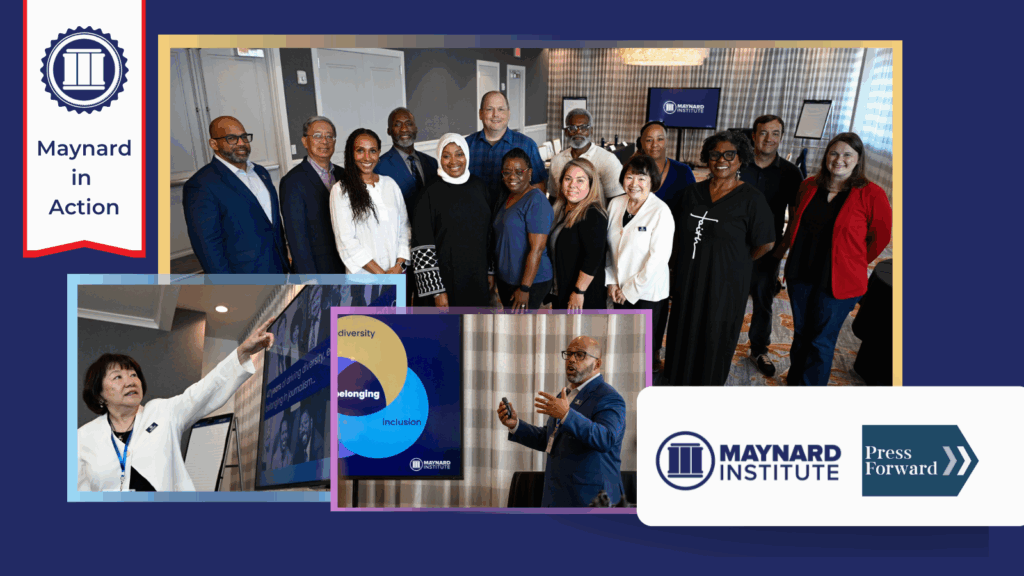
A group of small news publishers, all grantees of Press Forward, met in Kansas City, Missouri last month for the launch of a six-month training and mentorship program focused on strengthening local journalism. The two-day program was led by Maynard Institute Co-Executive Directors Evelyn Hsu and Martin G. Reynolds and marked the launch of “Reigniting Local News: Building Community and Democracy.”
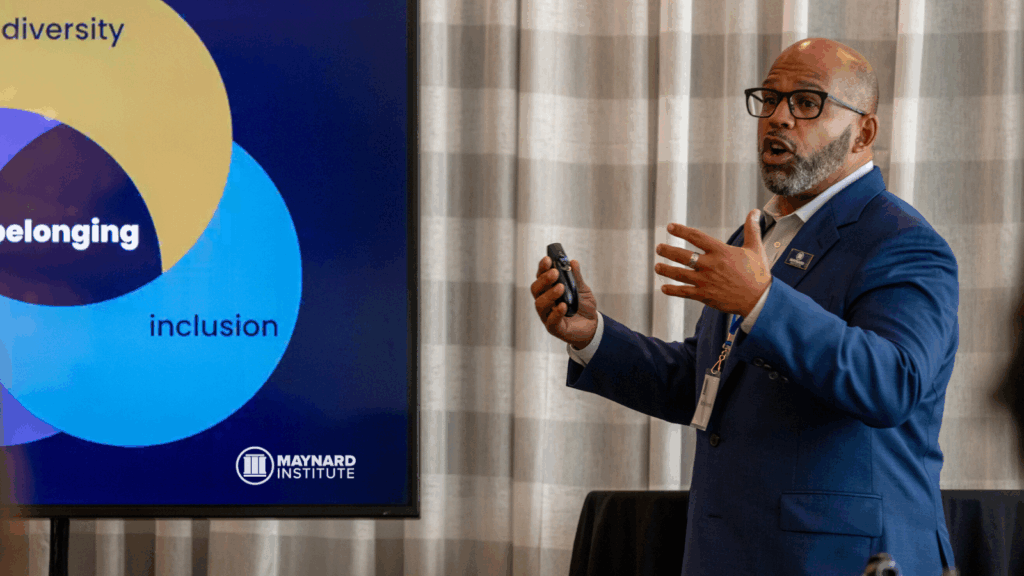
This training was the first of a six-month long relationship that will continue through group calls and mentoring sessions, culminating in another two-day, in-person training at the close of the program.
This cohort represents the efforts of community driven media in the South and Midwest. Attendees included Dustin Bartholomew of the Fayetteville Flyer, Samuel Jason Cole and Courtney Cole of the Excelsior Citizen, Safiyyah El-Amin and Talibdin El-Amin of the St. Louis Argus, Dana James and Mary Smith-Johnson of Black Iowa News and Maria Ramirez of Te Lo Cuento News.
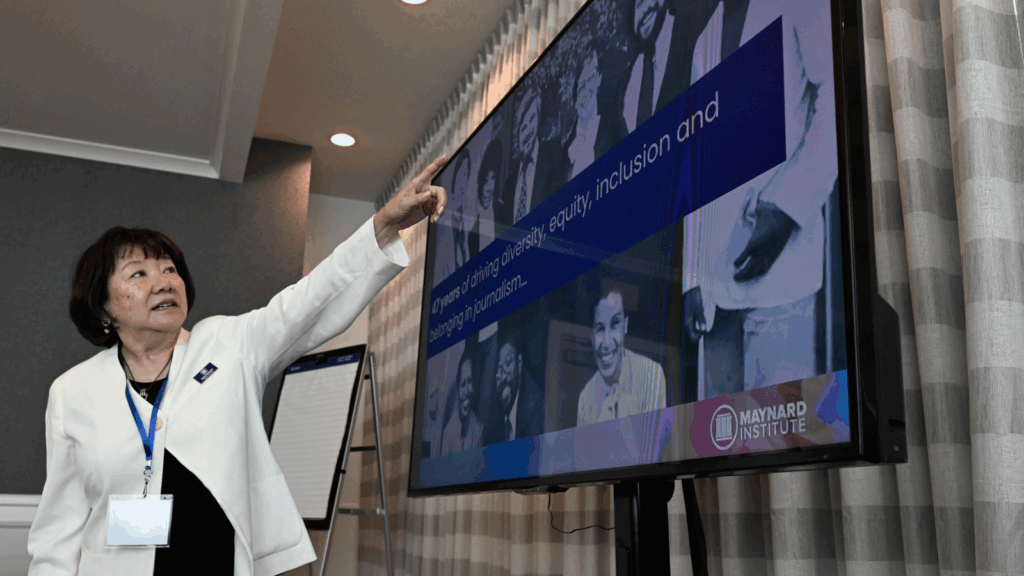
Participants said they arrived expecting “professional development,” but left with a “deeper sense of purpose and community,” alongside sessions that addressed the challenges “we face daily”—from business model sustainability to community trust and editorial decision-making.
Our faculty included Caesar Andrews, Professor and Leonard Distinguished Chair in Media Ethics and Writing at the Reynolds School of Journalism at the University of Nevada at Reno, Lisa Armstrong, Assistant Professor at the UC Berkeley Graduate School of Journalism, Ryan Kellett, 2025 Nieman-Berkman Klein Fellow, Harvard University,
A day was devoted to building revenue and audience with sessions led by Fran Scarlett, principal of Scarlett Ink Media. Mentoring sessions were led by Maynard Institute board member and consultant Dickson Louie.
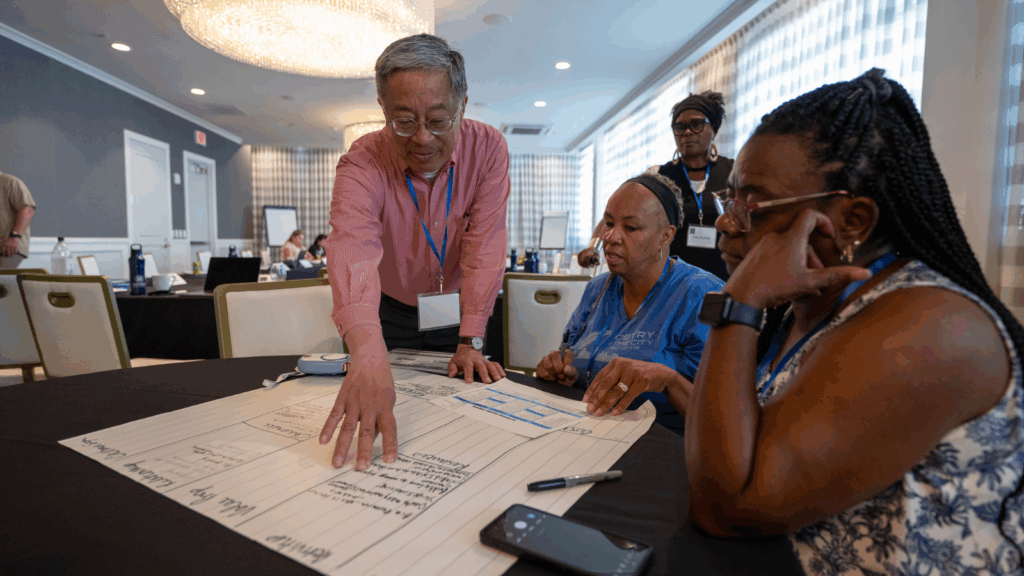
“We are grateful to our incredible faculty and the intrepid Press Forward grantees who keep residents in their communities informed and engaged, and look forward to a fulfilling six months of continued mentorship and support,” said Co-Executive Director Evelyn Hsu, who designed the program.
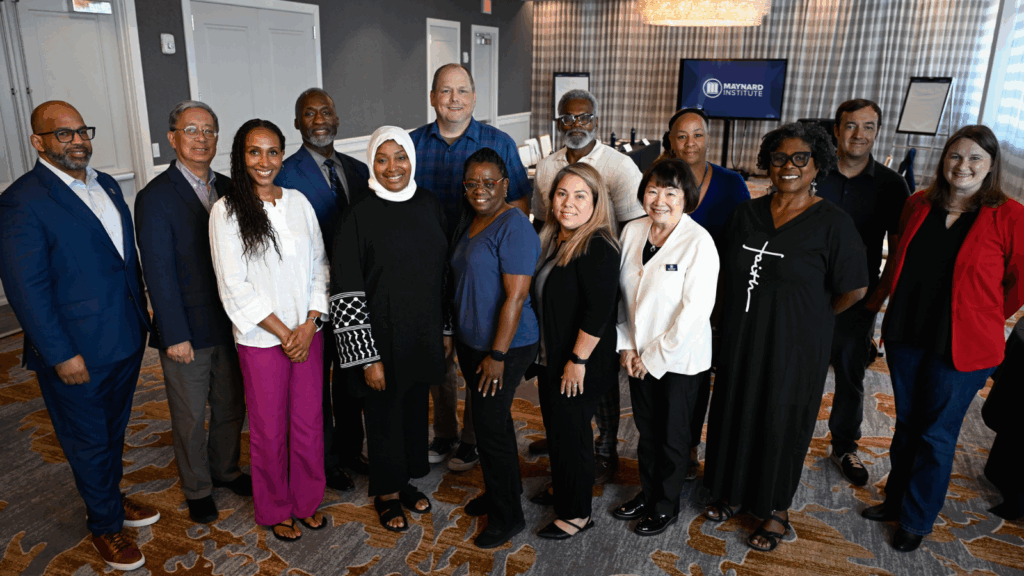
“What stayed with me was the depth and diversity of this group—not just where they’re from, but who they are. Journalists of different races, faiths, and lived experiences, all deeply rooted in their communities,” said Martin G. Reynolds, Maynard Institute co-executive director. “This isn’t just about mentorship or training—it’s about investing in what journalism must become to truly reflect and serve the needs of the society we live in. Being together in this moment—sharing space, ideas, and purpose—was meaningful not just for them, but for us too.”
They do belong. And you belong. Because we belong.”
“Our contributions to journalism will outlast ourselves if we do it right — I’m really encouraged that there’s…
Photos by Jennifer Shaevitz, SLO Media Creations.