News / Blog
Public trust, journalism and democracy: Odette Alcazaren-Keeley brings Maynard mission to 2026 Thomson Reuters Trust Conference
“It was a privilege to have served as a delegate representing the Maynard Institute at this year’s Trust…


By Celeste Barker-Bright for Nonprofit Megaphone. This post is promotional content for the Maynard Institute.
Giving Tuesday is a global movement built on shared humanity and radical generosity. This year it falls on Dec. 1, 2026, and millions of people will take part, ideally turning one-day giving into a lasting habit.
Donors hoping to heal American society at the highest levels have an especially strategic place to give: the institutions that shape what Americans know about one another. Journalism nonprofits that make the news industry more inclusive, trusted and sustainable don’t advance just one cause. They strengthen the foundation under every cause.
Below are just a few excellent reasons to support journalism organizations this December and throughout the year.
News organizations are the lens through which Americans perceive themselves and the world, and the nonprofits that support their growth and keep them accountable are vital. Here are some of the major cracks in that looking-glass, and how journalism nonprofits with top-notch training programs are repairing them.
Journalism can only act as a watchdog for democracy if the people doing the reporting, and the stories they choose, reflect the realities of the public they serve. Homogeneous newsrooms struggle to see the barriers facing communities outside their experience, and incorrect or one-sided narratives slip through with less scrutiny. Inclusive newsrooms ask better questions, build trust with sources, avoid stereotypes and expose audiences to a real range of perspectives, which counters echo chambers.
The Maynard Institute has driven this shift since 1977, when Robert C. Maynard and a cohort of news leaders spanning race, class and sexual orientation co-founded the Institute for Journalism Education. Its Fault Lines® training helps journalists recognize the biases that shape coverage. It also continues to sustain Maynard Alumni through the Maynard Communities of Practice, a community of peer support and continued mentorship for journalists, contributing to diversity in journalism as a whole.
When local outlets close, communities lose the reporting on school boards, public safety and city hall that keeps residents informed and officials accountable. News deserts let misinformation and corruption spread, deepen polarization, erode trust in institutions and leave marginalized communities unheard.
Maynard responds through the California Local News Editing Fellowship, part of the Propel Initiative and California Local News Fellowship in partnership with UC Berkeley Journalism. This program places former reporters transitioning into editorial roles in local newsrooms for two years with Maynard’s training and mentoring.
Reporters who cover violence, disaster and unrest often absorb secondary trauma, anxiety and burnout, and a culture of toughness discourages them from seeking help. Journalists of diverse backgrounds and from targeted demographics may also cover trauma in their own communities, endure online abuse and work in unwelcoming newsrooms. Freelancers, increasingly common where staff newsroom positions have closed, often have no safety net at all.
Maynard meets these needs as they arise. When immigration enforcement created a crisis for reporters, it convened a rapid-response dialogue on legal protections, newsroom safety planning and reporter self-care. The Maynard Institute also convened a panel discussion on the state of Queer News and sustainable solutions for LGBTQIA+ community coverage. Healthy journalists produce better journalism.
Nonprofit newsrooms as a whole are experimenting boldly to survive. The Salt Lake Tribune dropped its paywall so cost wouldn’t block access, and most subscribers stayed on as donors. Texas Public Radio and the San Antonio Report merged into the city’s largest nonprofit newsroom. Chicago Public Media is building neighborhood platforms that connect residents with community resources.
Maynard adds to this work with business strategy, leadership and entrepreneurship support for community-based outlets through its Fire Up Entrepreneurship Program. The Fire Up Entrepreneurship Program, as part of the Propel Initiative, is training eight news organizations in revenue, audience, product and community with a focus on ensuring sustainability. Participants work with experts in business, audience strategy and other topics and receive a grant disbursed over the seven-month program duration to implement and develop sustainability strategies.
The payoff is measurable in civic life. Research on five statewide nonprofit newsrooms found that their readers largely trust them, know more about government and local affairs and are more likely to take part in civic activities, from attending public meetings to considering a run for office.
That points to a brighter, more equitable and more just country: one where every community sees itself fairly represented, where residents have the information to shape decisions that affect them and where the journalists serving them are supported rather than burnt out. Trust in the press ultimately depends on whether people feel seen by it. Organizations like Maynard are working to make sure they do, making it among the best places to donate on Giving Tuesday.
This Giving Tuesday, consider:
A gift to journalism is a gift to every issue that depends on an informed public.
The Maynard Institute for Journalism Education was founded in 1977 by Robert C. Maynard and a cohort of news leaders representing diverse perspectives across the fault lines of race, class, geography, generation, gender and more. Ever since, our newsroom transformation and other training programs have helped create decades of news industry trailblazers, all of whom belong to the “Maynard Family” — a community of deep care and intergenerational support for journalists of diverse beats and backgrounds.
Strong journalism depends on journalists who have the tools, opportunities and support to thrive. This Giving Tuesday, partner with the Maynard Institute to help develop diverse leaders and strengthen how news organizations reflect and serve their communities. Please consider giving today!
“It was a privilege to have served as a delegate representing the Maynard Institute at this year’s Trust…
Over 2.5 days in Pasadena in late October, the cohort worked with experts in audience, community and product.…
Communities depend on healthy newsrooms and well-supported journalists to access reliable information, stay informed and participate in civic…
Communities depend on healthy newsrooms and well-supported journalists to access reliable information, stay informed and participate in civic life. But strong journalism requires more than skilled reporters and editors. It also depends on the professionals who help journalists do their jobs well.
That’s why the Maynard Institute’s work extends beyond training journalists to supporting the people who help newsrooms thrive.
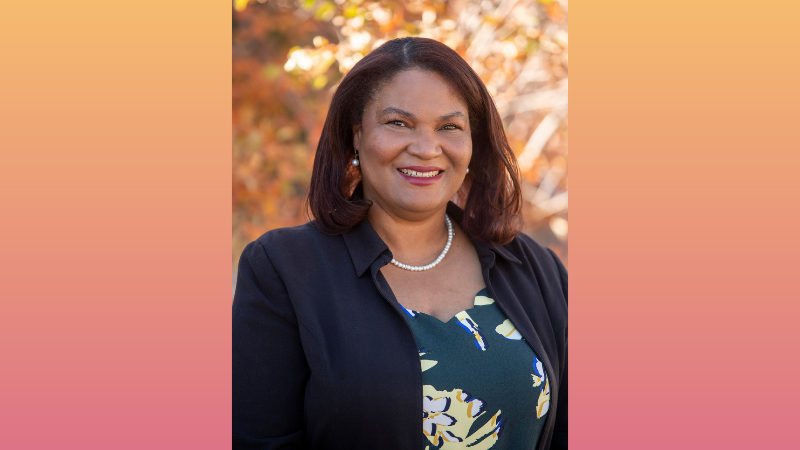
Marla Jones Newman, a 2022 Maynard 200 Fellow, is one example of that impact.
As vice president of people and culture at the Center for Investigative Reporting (CIR), home to Mother Jones and Reveal, Newman leads human resources for an organization producing investigative journalism that exposes wrongdoing, holds institutions accountable and informs the public.
As an HR professional, Newman entered the Maynard 200 Fellowship with a perspective not always represented in journalism leadership programs.
The experience helped her better understand the industry and the journalists she supports.
“Maynard definitely deepened my knowledge of journalism,” Newman said. “I feel more confident when talking with journalists about how they can utilize HR better.”
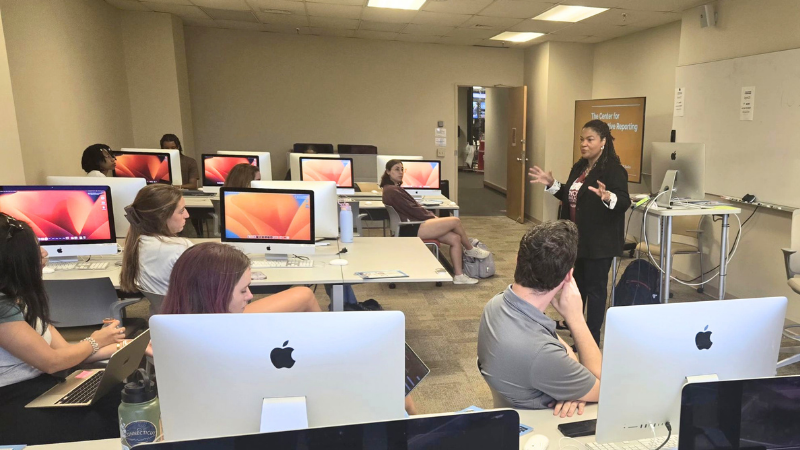
She’s since shared her expertise at conferences hosted by NABJ, Investigative Reporters and Editors (IRE) and NLGJA, participating in discussions about newsroom mental health, workplace inclusion, managing up and HR practices.
Newman hopes to encourage more HR professionals to participate in journalism conferences, where they can better understand newsroom challenges and share knowledge that helps journalists succeed. She’s also brought her expertise back to Maynard through its Propel Regional Training Series in Burbank, CA.
Her work demonstrates how Maynard’s investment in one professional can extend to colleagues and newsrooms across the industry.
For Newman, Maynard’s impact didn’t end when her fellowship concluded.
She’s continued her professional development through the NABJ Leadership Academy, CUNY’s Nonprofit News Business Certificate program and Stanford University’s Executive Program for Nonprofit Professionals. She also maintains relationships with fellow alumni and participates in the Maynard Communities of Practice.
“Connections and friends matter,” Newman said.
Now, as a founding member of The Maynard Collective, Maynard’s new alumni giving circle, Newman is helping sustain opportunities for future journalism leaders.
Launching ahead of Maynard’s 50th anniversary in 2027, the Collective brings alumni together to support tuition-free leadership training, professional development and lasting professional connections. Membership begins at $25 per month or $300 per year.
Newman believes developing future journalists is a shared responsibility.
“It is everyone’s responsibility to grow the ranks of journalists as well as develop them,” she said. “This is the greatest gift a media leader can give to the sustainability of future journalists.”
Her story illustrates the lasting value of investing in people. Maynard’s training helps professionals strengthen their organizations, share their expertise and build relationships that extend well beyond the fellowship.
And through alumni-led initiatives like The Maynard Collective, those who benefited from Maynard’s investment are helping create opportunities for the next generation.
“It was a privilege to have served as a delegate representing the Maynard Institute at this year’s Trust…
Strong journalism depends on journalists who have the tools, opportunities and support to thrive. This Giving Tuesday, partner…
Over 2.5 days in Pasadena in late October, the cohort worked with experts in audience, community and product.…
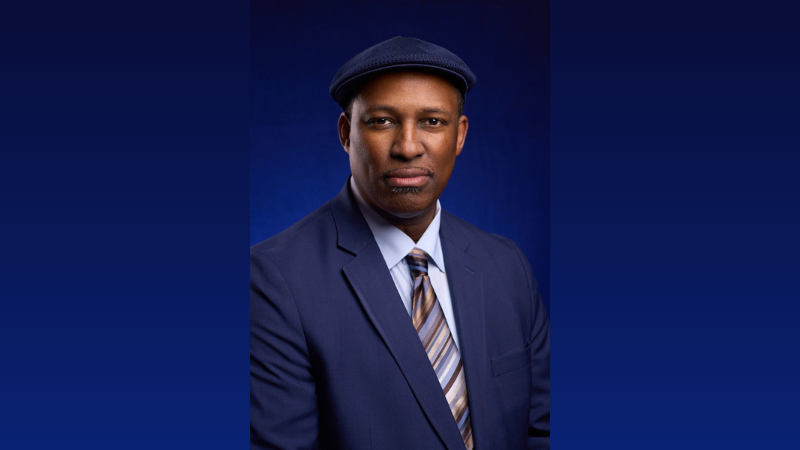
Four years after completing the Maynard 200 Fellowship, William J. Ford is covering Maryland’s statehouse, explaining state politics to television and radio audiences and helping more Black journalists find pathways into political reporting.
As a reporter for Maryland Matters, Ford covers education, criminal justice reform and other issues considered during Maryland’s annual legislative session. Outside the newsroom, he serves on the National Association of Black Journalists Political Task Force, encouraging aspiring journalists to pursue political reporting at the local, regional and state levels.
The lessons and relationships Ford gained through Maynard continue to show up across that work. A reporting technique he learned remains part of his approach to journalism, an exercise during the fellowship shaped how he thinks about representation in political reporting and members of his cohort remain part of his professional community.
“The Maynard Institute will become a part of your life,” he added. “The lessons to be learned come not only from the instructors presenting information on how to improve your reporting, but also from the individuals in your cohort.”
Ford’s story shows how an investment in a journalist can extend into the reporting communities receive, the professional relationships journalists rely on and the opportunities they help create for others.
Ford described the 2022 Maynard 200 Fellowship as a “mini-graduate level course” that encouraged him to look more deeply at his reporting.
During an investigative journalism session, former Associated Press editor Ron Nixon encouraged fellows to collect pieces of information through everyday reporting and revisit them for larger stories. The advice broadened Ford’s idea of what investigative reporting could look like. A story did not have to exceed 1,000 words to matter, he recalled. If the reporting brought wrongdoing or injustice to light, it could help the public.
“That was solid advice that I still try to do,” Ford said.
The fellowship also pushed Ford to think more intentionally about who gets to cover government. During an exercise led by journalist Aaron Glantz, he examined representation among reporters covering Maryland’s legislature.
That concern now carries into Ford’s work with the NABJ Political Task Force, where he helps encourage more Black journalists to pursue political reporting at the local, regional and state levels.
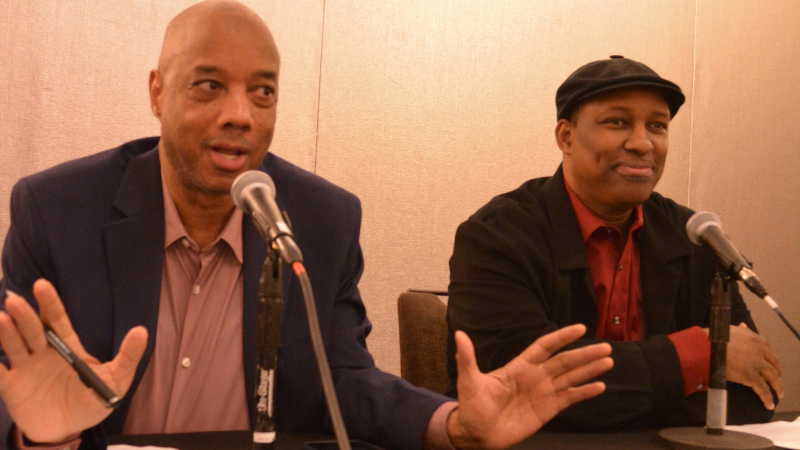
In August 2026 at the National Association of Black Journalists Convention in Atlanta, Ford received the task force’s Chairperson’s Award — announced by task force chair and fellow 2022 Maynard alum Brianna Tucker. Ford will now serve as the task force’s vice chair.
“When our task force chair Brianna Tucker … announced my name, my mouth fell to the floor,” Ford said. “To receive that from my peers truly made me blush.”
Tucker is one of several members of his Maynard cohort Ford remains connected to.
He pointed to Aallyah Wright, who reports on the rural South for Capital B; Stefanos Chen at The New York Times; and Kenny Burns, who works in radio. He also talked about investigative journalist Monique “Mo” Madan, who launched her own newsletter after being laid off and continues to offer advice to other journalists.
Ford has watched members of the cohort change jobs, navigate layoffs, pursue new opportunities and continue supporting one another.
“I’ve gained an extended family through Maynard,” he said. “We all have different backgrounds, experiences and beliefs. However, you can meet people who know other people in your journalism careers and realize we can make a difference as best we can. Maynard helps make that happen.”
Maynard 200 sunsetted in 2024 after graduating more than 200 journalists, but Ford’s experience shows how the investment continues.
The reporting lessons he learned remain part of his work. The questions about representation raised during the fellowship carry into his efforts to help more Black journalists pursue political reporting. And the people he met through Maynard remain part of his professional network.
That impact extends beyond Ford: through reporting that helps Maryland residents understand state government, conversations on television and radio that bring that reporting to wider audiences, and his work helping other journalists find pathways into political reporting.
“For all the donors, thank you for supporting the Maynard Institute,” Ford said. “The programs offered teach people about the profession, which in turn can be used in a newsroom. That’s power right there.”
When asked what gives him hope about the future of journalism, Ford pointed to people who continue to believe in the profession and added:
“The Maynard Institute. Simple as that.”

By Celeste Barker Bright for Nonprofit Megaphone
In an era when public trust in news is both more fragile and more essential than ever, how stories are told matters just as much as the stories themselves. For journalism employers, investing in diversity, equity, inclusion, and belonging (DEIB) training is a powerful way to strengthen reporting, build audience trust, and create newsrooms where every voice contributes to more accurate and impactful storytelling.
Diversity, equity, and inclusion training, or DEI training, helps organizations build workplaces where people of all identities and backgrounds are fairly represented, treated, and supported in contributing fully. DEI training programs focus on improving awareness around the experiences of nonwhite and noncisgender male workers. This helps to reduce both conscious and unconscious bias and create systems that ensure equitable access to workplace opportunities and resources.
Many organizations now emphasize DEIB, which adds a critical fourth pillar of social equity: belonging. Belonging goes beyond representation and fairness. It reflects whether employees actually feel accepted, valued, and psychologically safe enough to contribute authentically. Without belonging, even diverse and equitable workplaces may struggle with disengagement or high turnover when employees don’t truly feel included.
In other words, DEI creates access and opportunity, while belonging ensures people feel connected and empowered once they are there. For news media organizations and the American public media as a whole, where storytelling depends on authentic voices and perspectives, that distinction is especially important.
DEIB training isn’t just a nice-to-have workplace initiative. Diversity in the media directly influences the quality, accuracy, and impact of reporting. Research and industry guidance consistently show that inclusive representation in media outlets produces stronger journalism and more sustainable organizations.
A diverse and inclusive newsroom is better equipped to cover stories that concern all American communities and the challenges they face. When journalists reflect a broader range of lived experiences, coverage becomes more representative and less likely to overlook or misinterpret marginalized perspectives.
Inclusive practices help journalists ask better questions, build trust with sources, and avoid harmful stereotypes. DEIB training equips staff with the tools to recognize bias in sourcing, framing, and language, leading to more accurate and nuanced reporting.
Trust is a core currency in journalism, and DEIB training plays a significant role in strengthening it. When audiences see themselves reflected fairly in coverage, they are more likely to engage with and trust a news outlet. That translates to positive company reputations and ratings in very real ways.
Inclusive journalism fosters stronger relationships with communities, particularly those historically underrepresented or misrepresented in media. By improving cultural competency and awareness, DEIB training helps newsrooms build credibility and deepen audience connections.
Organizations that invest in DEIB often benefit from greater creativity and innovation. Forbes explains that diverse teams bring a wider range of ideas, perspectives, and problem-solving approaches, which can lead to better decision-making and more innovative content strategies.
In the fast-changing media landscape, adaptability is essential. DEIB training encourages open dialogue, collaboration, and inclusive leadership practices that help teams respond more effectively to new challenges and opportunities.
Employees who feel valued and included are more likely to stay and contribute at a high level. DEIB-focused environments improve morale, job satisfaction, and overall performance.
For journalism employers, this translates into lower turnover and a more stable workforce. Given the demanding nature of newsroom work, fostering a sense of belonging can help prevent burnout and ensure that talented journalists remain engaged and committed.
Bias in journalism can lead not only to misinformation but also to reputational damage and loss of public trust. DEIB training helps staff identify unconscious biases and understand how they may influence reporting decisions. Structured DEI workshops provide practical tools for addressing bias, improving communication, and fostering accountability. This is especially important in journalism, where ethical standards require fairness, accuracy, and sensitivity.
DEIB training also shapes leadership practices. Inclusive leaders are better equipped to manage diverse teams, support equitable advancement, and create transparent decision-making processes. Organizations that prioritize DEIB develop healthier workplace cultures characterized by trust, collaboration, and shared purpose. In newsrooms, this can lead to stronger editorial alignment and a more cohesive mission.
While internal efforts are valuable, many news organizations stand to gain the most from working with third-party DEIB specialists who bring expertise, structure, and objectivity to the process.
Organizations such as the Maynard Institute for Journalism Education provide tailored training specifically designed for media professionals. Their programs address the unique challenges of journalism, such as inclusive sourcing, equitable storytelling, and newsroom culture. External partners bring proven frameworks and up-to-date best practices that may not exist internally.
Third-party consultants can offer an unbiased perspective on workplace culture and practices. External experts can identify gaps, measure progress, and recommend data-driven strategies for improvement. This objectivity is particularly valuable in journalism organizations, where internal dynamics and hierarchies may make it difficult to address sensitive issues openly.
External partners can design training programs that align with an organization’s size, goals, and audience. Partnering with experts can strengthen broader diversity and inclusion strategies, including hiring and retention efforts. For news organizations with multiple teams or locations, scalable training ensures consistency while allowing for customization based on local needs.
DEIB is not a one-time initiative. It requires ongoing commitment and continuous improvement. External consultants can help organizations move beyond one-off workshops to develop long-term strategies that embed DEIB principles into daily operations. Outsourcing enables companies to build sustainable programs with clear goals, metrics, and accountability structures — all without guesswork or strain on company staff.
For journalism employers, this means creating a newsroom culture where inclusive practices aren’t just passively or abstractly encouraged, but actively and concretely integrated into every aspect of reporting, editing, and leadership. By investing in DEIB training and partnering with experienced organizations, news media employers can strengthen both their workplace culture and the quality of their journalism.
The Maynard Institute inspires and powers the national, collaborative drive for DEIB in news media. Our antiracism training programs have helped create decades of news industry trailblazers, all of whom belong to the “Maynard Family”: a community of deep caring and intergenerational support for journalists of color. Programs by the Maynard Institute are open to all applicants, and the Maynard Institute is committed to addressing the under-representation of people of color and other historically disadvantaged groups in media-related professions.
The Maynard Institute’s Fault Lines® Culture Shift Program gives media professionals the tools to recognize and address biases that shape news coverage. Rooted in the Fault Lines® framework, our program helps organizations move far beyond performative DEI efforts.
Instead, we use intentional DEI practices — built on nearly 50 years of DEI training in media spaces — that are proven to create inclusive workplaces that connect with diverse communities. Fill out our interest form to Register to bring Maynard’s Fault Lines® training to your company today!