News / Blog
Introducing: The First Fire Up Cohort
Fire Up is made possible by a budget allocation from the State of California and is part of…


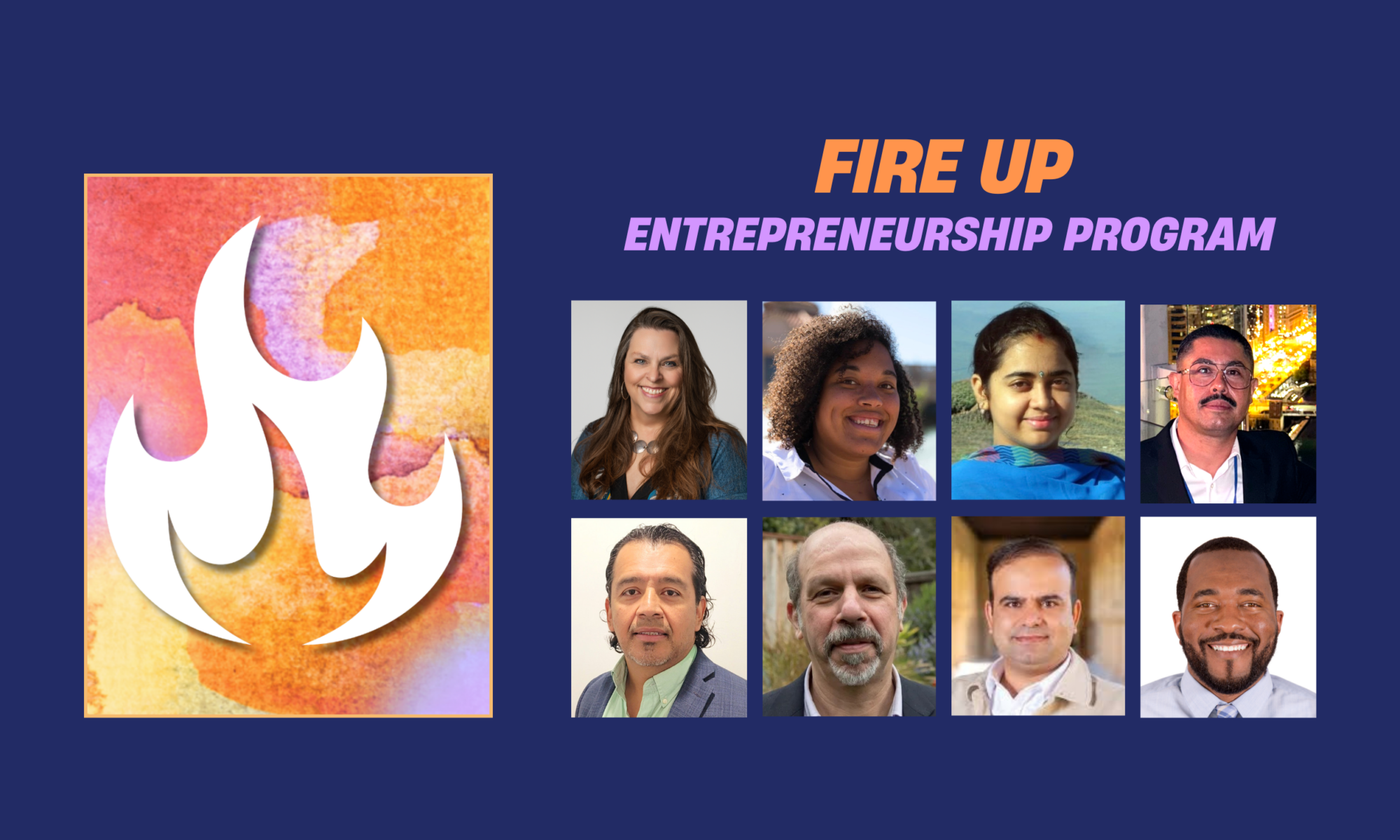
The Fire Up Entrepreneur Program, as part of the Propel Initiative, is training eight news organizations in revenue, audience, product and community with a focus on ensuring sustainability. Participants will work with experts in business, audience strategy and other topics.
The inaugural cohort of Fire Up Fellows represent the power and potential of diverse news in the State of California. Covering various beats, ethnic communities, geographical areas and language groups, the Fellows are using the program as an opportunity to expand their reach, create lasting sustainability and deepen their coverage to better serve their audiences.
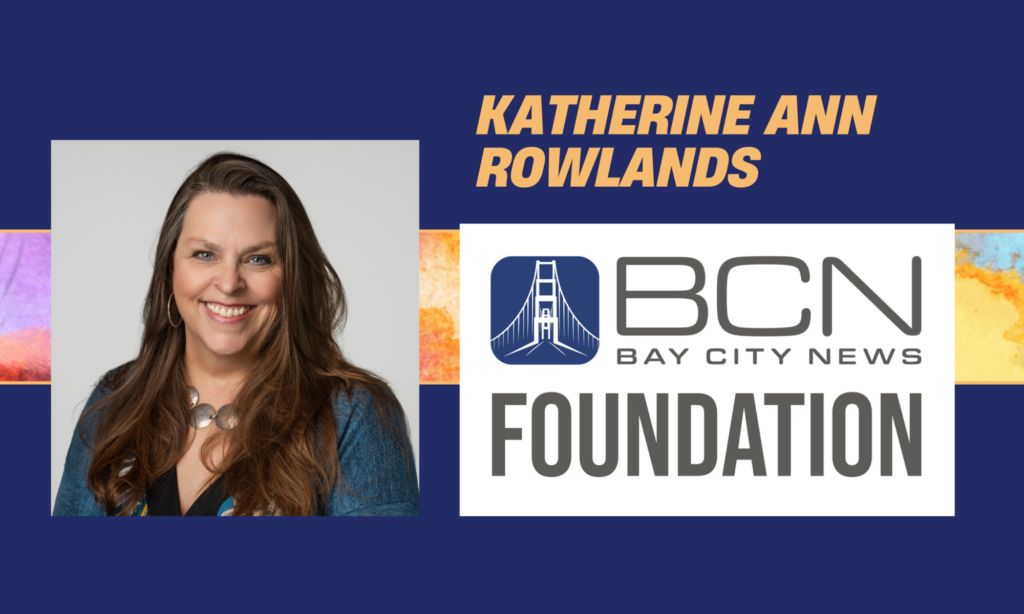
Rowlands is a longtime champion of local journalism. Bay City News, a regional news service she bought in 2018, has expanded to cover 13 counties, supplying trustworthy, original journalism for the media ecosystem, from TV and radio to newspapers to start-up digital outlets in the greater Bay Area. Its nonprofit affiliate, which publishes free content at LocalNewsMatters.org, has trained 60 paid interns, adopted transformative technology and published thousands of stories that would otherwise not be told.
Through Fire Up, Rowlands will develop Bay City News Labs to examine how to track bot traffic at the Cloudflare or WordPress plugin level to quantify and audit how intellectual property is being utilized by AI companies. What Bay City News learns could lead to revenue, block exploitation or monetize assets with the right partners. The takeaways will be shared publicly with the news ecosystem.

Mapp (she/her/akaónha) is a Kanien’kehá:ka (Mohawk). She is a Daylight San Diego co-founder and journalist who has covered Indigenous communities, caregiving, senior care, social justice, art, music, travel, food and culinary traditions since 2005. Prior to Daylight, she worked for The San Diego Union-Tribune, inewsource, Times of San Diego, North Coast Current, Indian Time and The People’s Voice. She was the outstanding graduate for the School of Journalism and Media Studies at San Diego State University in 2019.
Daylight San Diego’s audience increasingly relies on social media and alternative formats for news. Through Fire Up, Daylight San Diego seeks to revamp its newsletter ecosystem to increase engagement, grow sponsorship revenue and strengthen sustainability. By January 2027, Daylight aims to reduce video skip rates, achieve consistent engagement and generate 10 percent of organizational revenue through newsletter-related sponsorships and ads.

Lava has developed expertise in digital publishing, audience growth and revenue strategy through programs with Google News Initiative, LION Publishers and Newspack. She completed three years of training with Dan Oshinsky on newsletter growth and engagement. At India Currents, she manages communications and operations related to advertising sales and plays an active role in website development and digital transformation initiatives.
India Currents will launch Rooted in Care, a podcast connecting South Asian immigrants to trusted resources on aging, women’s health, mental health and civic engagement. Featuring experts, community leaders and service providers. The podcast will offer practical, culturally relevant guidance while leveraging partnerships with agencies and nonprofits to expand community reach.
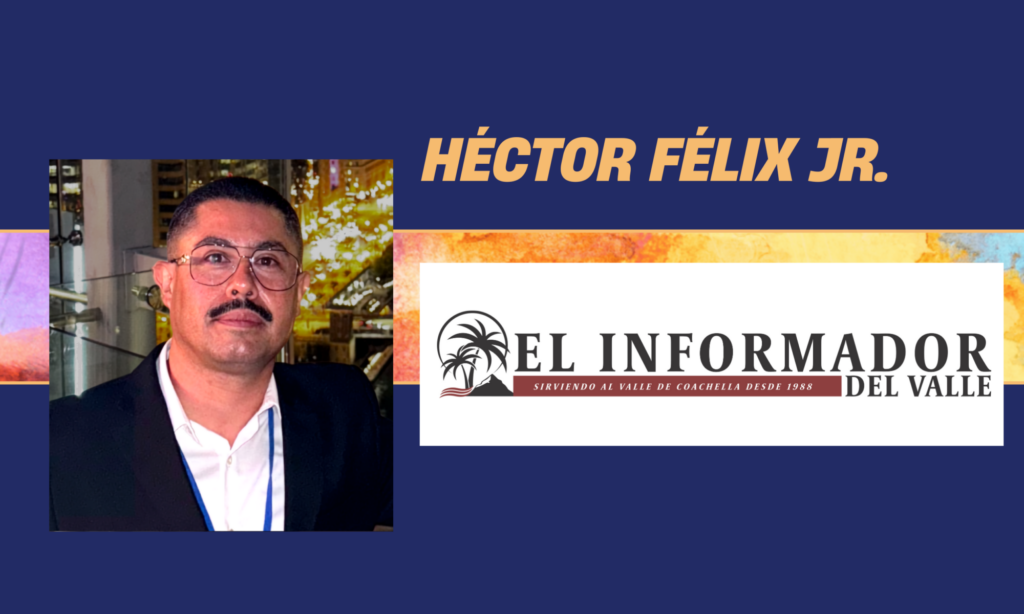
From a young age, Félix immersed himself in all aspects of the family business, El Informador del Valle. As a teenager, he gained hands-on experience in newspaper sales, reporting, photography, videography, graphic design and weekly distribution. His early involvement laid the foundation for his leadership and continued commitment to community journalism.
El Informador will do research within the community and with potential sponsors to determine the best ways to heighten ad visibility. These experiments will provide a way for El Informador del Valle to continue to uplift important stories without succumbing to outdated business models.
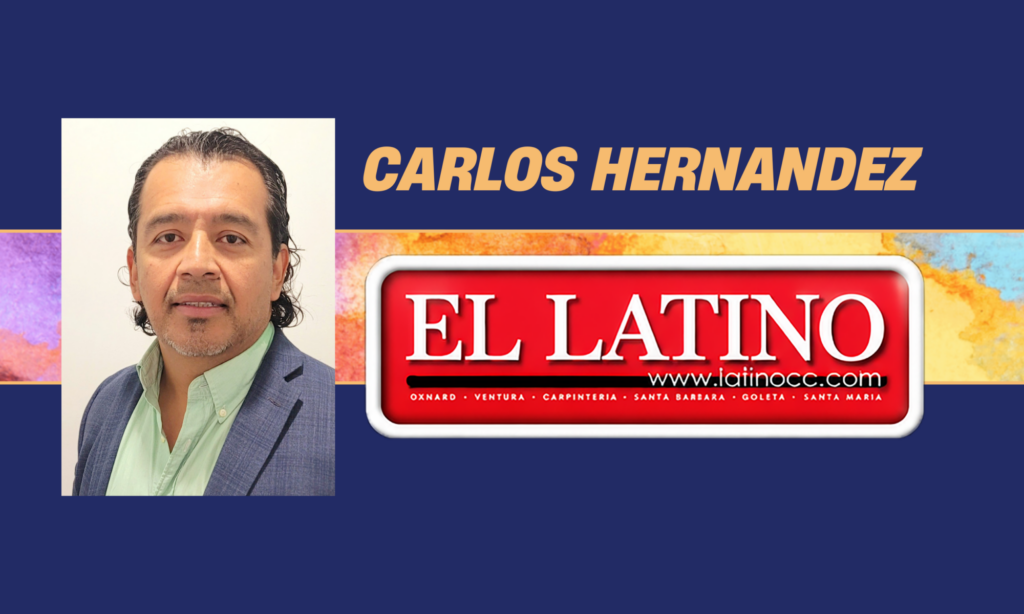
Hernandez is an award-winning journalist, editor and publisher with extensive experience in Spanish-language and bilingual media on the East and West coasts. He is the editor and publisher of El Latino Central Coast Newspaper, a trusted bilingual outlet serving Latino and immigrant communities across Ventura, Santa Barbara and San Luis Obispo counties. Hernandez is committed to strengthening bilingual journalism and expanding El Latino’s role as a bridge between the local society and the Latino community.
El Latino’s “Digital Forward” project pushes its editors beyond reliance on print ads. With new revenue opportunities, the outlet continue to serve Central Coast bilingual communities for free. We’ll expand service journalism for immigrants, especially around health, immigration, education and civic information while building long-term sponsorship and digital engagement strategies.

As MindSite News launches its Bay Area bureau, Waters returns to his roots in Bay Area community journalism. In the 1980s, he was editor of the Tenderloin Times, which reported extensively on mental health. His journey since has largely focused on covering health and mental health through a social justice lens.
The Bay Area has no dedicated mental health news outlet, and MindSite can fill this gap while boosting its sustainability by opening new revenue streams. To ensure the coverage reaches communities most in need, MindSite will tap into established relationships with community-based service and advocacy organizations.
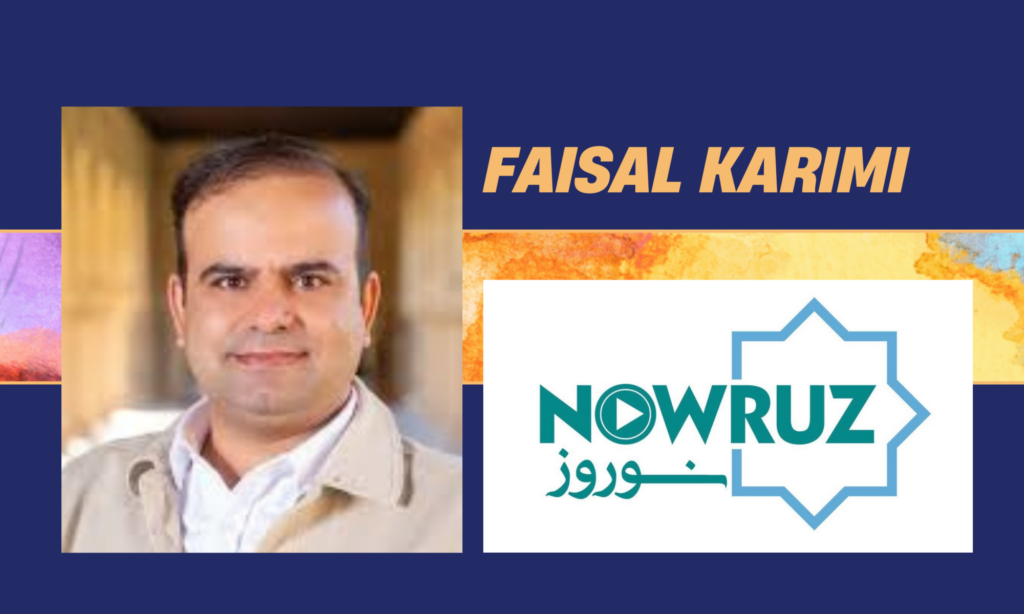
Karimi is a senior journalist, journalism educator and media entrepreneur with more than two decades of experience. He is the founder and director of Nowruz Media, a multilingual California-based community newsroom serving Afghan immigrants, and he founded the Afghanistan Institute for Research and Media Studies. He is an alumnus of the John S. Knight Journalism Fellowship at Stanford University and currently teaches journalism at Sacramento State University.
Nowruz Media will develop the Nowruz Community Hub, a multilingual resource desk for Afghan immigrants in California. Through Farsi/Dari, Pashto and English explainers, guides, WhatsApp, newsletters and community listening, Nowruz provide trusted information to drive civic engagement and increase public safety while building a stronger audience and revenue model.

Luckey is the editor of Observer Group Newspapers of Southern California, a Black press institution founded in 1977 that serves Bakersfield, Los Angeles and the San Joaquin Valley. Born and raised in Bakersfield, Luckey grew up inside the newsroom under the founding family’s mentorship before stepping into leadership. A Kern County Black Chamber of Commerce honoree, he is modernizing the organization’s digital presence while preserving its century-long commitment to Black community journalism.
Black community stories are buried by algorithms and missed by legacy outlets, so Observer Group Newspapers is launching News Observed, a mobile platform to let Black Southern Californians submit reports on their own neighborhoods. Observer Group will create a pipeline with editorial oversight and plan to publish at least 50 community-contributed stories before January 2027.
Fire Up is made possible by a budget allocation from the State of California and is part of…
On Tuesday, May 19, 2026 the Maynard Institute was honored to receive the Lorraine Branham Award from Syracuse…
DEIB training isn’t just a nice-to-have workplace initiative. Diversity in the media directly influences the quality, accuracy, and…

The Robert C. Maynard Institute for Journalism Education is proud to announce the inaugural cohort for the Fire Up Entrepreneurship Program, which starts this month in Oakland.
The cohort consists of eight California-serving newsrooms. Each will receive seven months of training in revenue, audience, product and community plus mentorship on their proposed project and a $20,000 grant. Project ideas range from surfacing untold Black stories to ensuring free bilingual news in the Central Coast to mitigating AI threats to audience traffic.
Fire Up is part of the Propel Initiative to strengthen California’s multi-lingual media ecosystem, ensuring long-term sustainability of local public service journalism for underserved localities.
The eight cohort news organizations are Bay City News Foundation, Daylight San Diego, India Currents, El Informador del Valle, El Latino Central Coast, MindSite News, Nowruz Media and Observer Group Newspapers of Southern California.
The first cohort will convene July 29 in Oakland, California for the program’s orientation and kickoff.
Bay City News Foundation is working to mitigate the threat of AI technology undercutting audience traffic.
Daylight San Diego will build on its local journalism startup presence and grow audience through alternative news formats.
India Currents is expanding its reach as a vital civic connector through a podcast for South Asian immigrants to be shared by strategic partners.
El Informador del Valle will experiment with different ways to attract advertisers in a community that relies on print, using the Fire Up program to identify successful and sustainable approaches.
El Latino Central Coast will reinforce the importance of free bilingual news as a bridge to Central Coast immigrants while growing its digital presence.
MindSite News seeks to broaden Bay Area reporting into the under-covered topic of navigating mental health disparities.
Nowruz Media will create a multilingual resource hub for Afghan immigrants in California, the U.S. state with the largest Afghan diaspora population.
Observer Group Newspapers of Southern California plans to surface untold Black stories through a community platform to reach and expand Black audiences.
For detailed information about the proposed projects as well as the Fire Up Fellows, click here.
Fire Up is made possible by a budget allocation from the State of California and is part of the Propel Initiative to support local news, with the goal of safeguarding democracy and encouraging civic engagement by giving all citizens access to quality journalism. The journalism organizations in this cohort serve audiences statewide, including 26 bipartisan Assembly districts and 12 bipartisan Senate districts.
The inaugural cohort of Fire Up Fellows represent the power and potential of diverse news in the State…
On Tuesday, May 19, 2026 the Maynard Institute was honored to receive the Lorraine Branham Award from Syracuse…
DEIB training isn’t just a nice-to-have workplace initiative. Diversity in the media directly influences the quality, accuracy, and…

By Andrea Lampros, Communications Director, UC Berkeley Journalism. Originally published by UC Berkeley Journalism.
California is reinforcing its role as the national leader in rebuilding local journalism, approving a $15-million investment in reporting and editing fellowships and newsroom leadership training and sustainability initiatives in the state budget signed by Gov. Gavin Newsom last week.
This funding supports the UC Berkeley Journalism-based California Local News Fellowship— the nation’s largest publicly funded journalism initiative — and the Maynard Institute’sPropel Initiative, a groundbreaking leadership and newsroom sustainability effort led in collaboration with American Community Media, California Black Media and Latino Media Collaborative.
The budget also includes $10 million for the Civic Media Program, funded by the state, which will be matched by a minimum $10-million contribution by Google.
“California has long led the nation in creating opportunity for its millions of residents. This model of funding independent local journalism and newsroom sustainability is yet another way California is showing leadership, especially at a time when the dark clouds of authoritarianism and the scourge of disinformation are threatening to undermine freedom of the press,” said Michael D. Bolden, dean of UC Berkeley Journalism. “Lawmakers have shown a steadfast commitment to local transparency and accountability and to democracy itself. They realize that the public good requires a resolute investment in trustworthy news and information.”
The California Local News Fellowship and Propel Initiative together provide a national model at a time of crisis for journalism, a period marked by an unprecedented rise in news desertsand the plunging number of local journalists per capita.
“California’s lawmakers have again recognized that everything we care about in our local communities — from affordable housing to excellent education to safeguarding the environment — is enabled by robust local journalism,” said former state Sen. Steve Glazer who championed the local news fellowship with $25 million in state funding in 2022.
Glazer retired from the Senate in 2024 but has continued to be deeply engaged in supporting renewed funding for local journalism.
This year, legislative leadership for the state’s investment was provided by Senate President Pro Tempore Monique Limón (D-Santa Barbara), Sens. Ben Allen (D-Santa Monica), Catherine Blakespear (D-Encinitas), Melissa Hurtado (D-Bakersfield), John Laird (D-Santa Cruz) and Assembly Speaker Robert Rivas (D-Salinas), Assemblymembers David Alvarez(D-San Diego), Marc Berman (D-Menlo Park), Jesse Gabriel (D-Encino), Buffy Wicks (D-Oakland) and Lori D. Wilson (D-Suisun City). Many other legislators stepped up to support the funding.
The California Local News Fellowship program led by journalist Monica Campbell has nearly 70 early-career reporting fellows currently serving communities from Shasta County to the Inland Empire. To date, 110 fellows have produced more than 10,000 stories to help keep Californians informed about important issues, such as immigration, housing, education, and more. The latest funding ensures that fellows will serve California communities through 2029.
Fellows and partner newsrooms are independent, competitively selected and based in counties that currently account for approximately 90 percent of California’s population. State funding has supported four cohorts of full-time, two-year reporting fellows, editing fellowships and new health reporting fellowships, which also receive support from the California Health Care Foundation.
The Propel Initiative complements the California Local News Fellowship by helping community and ethnic media organizations become stronger, more resilient and financially sustainable. Led by the Robert C. Maynard Institute for Journalism Education in partnership with American Community Media, California Black Media and Latino Media Collaborative, Propel invests in the organizations that collectively serve more than 20 million Californians with trusted local news and information.
“This investment by lawmakers affirms a simple truth: Journalists, storytellers and news organizations serving California’s diverse communities must have the capacity to provide the trusted information people need to make informed decisions, hold institutions accountable and participate fully in civic life,” said Martin G. Reynolds, co-executive director of the Maynard Institute. “More than support for journalism, this is a commitment to ensuring every Californian — regardless of where they live or the language they speak — has access to trusted news and information.”
Through Propel, participating news organizations and media professionals receive training, technical assistance, and strategic support to strengthen editorial leadership, newsroom management, and storytelling through regional institutes, management development, and peer learning; build organizational capacity through technical assistance in audience engagement, business development, legal and journalism safety and operational best practices; create sustainable revenue through the Fire Up Entrepreneurship Program and the Community Media Marketplace, a first-of-its-kind statewide platform that helps community and ethnic media organizations compete collectively for major public and private advertising campaigns.
The 2026-2027 state funding will fund a fifth cohort of reporting and editing fellows, while continuing the Propel Initiative — extending California’s strategy to strengthen local journalism statewide.
“This renewed investment is a vote of confidence in the vital role that ethnic and community media play in keeping California informed, connected and represented. We’re grateful for the continued Propel partnership and committed to building on the momentum it represents.”
—Jaya Padmanabhan, Executive Director of American Community Media
“The tireless advocacy and coordinated effort of this coalition over the last several weeks showed lawmakers the true, undeniable power of the community press. This $15 million renewal is a crucial victory for information equity, ensuring our newsrooms can continue reporting on the ground where it matters most. Looking ahead, this isn’t just a budget win for today — it is a vital launchpad for building a sustainable, long-term ecosystem for ethnic media across California.”
—Julian Do, Co-Director of American Community Media
“This investment is a testament to the value California’s leaders place on the role local newsrooms and community advocates play in our civic life. I’m grateful to Governor Newsom, lawmakers, our coalition partners, and supporters across state government for fighting side by side with us to secure the funds necessary to strengthen California’s media infrastructure and keep trusted local information flowing to the people who need it most.”
—Regina Brown Wilson, Executive Director of California Black Media
“Sustaining Latino and news media serving communities of color is a non-negotiable public infrastructure necessity. Alongside our partners at California Black Media, American Community Media, and the Maynard Institute, we extend our deepest thanks to Governor Newsom, Speaker Rivas, Pro Tem Limón, Senators Laird, Pérez, Hurtado, Glazer, Allen, and Assemblymembers Alvarez, Wicks and Wilson. This historic victory ensures that trusted newsrooms reflecting and serving California’s diverse population can continue their essential work.”
— Arturo Carmona, President of the Latino Media Collaborative
The inaugural cohort of Fire Up Fellows represent the power and potential of diverse news in the State…
Fire Up is made possible by a budget allocation from the State of California and is part of…
On Tuesday, May 19, 2026 the Maynard Institute was honored to receive the Lorraine Branham Award from Syracuse…

by Alice Finno, Maynard Institute reporting intern
This post contains promotional material for the Maynard Regional Training Series in Chicago.
The Maynard Institute will host a free training for entry- and mid-level editors and managers in Chicago, Illinois, on June 4 through 5, as part of its regional training series.
In partnership with Northwestern University’s Medill School of Journalism, Media and Integrated Marketing Communications, the training will provide coaching and mentoring to help editors and managers working in print, broadcast and digital platforms navigate the complexities of newsroom leadership. Northwestern will cover the standard registration fee on behalf of registrants. Two meals will be provided each day, and limited discounted hotel rooms will be available.
Anyone from the Chicago regional area is invited to attend the training. Registration is open until Tuesday, May 26. Anyone with questions can contact Maynard Regional Training Series Director Odette Alcazaren-Keeley.
Award-winning journalists and Medill professors will lead workshops and discussions together with Maynard Institute faculty.
Martin Reynolds, co-executive director at the Maynard Institute, said that people often start managerial positions without receiving any training, especially when transitioning from a reporter role to a manager or editor position.
However, Reynolds said, only one in ten people have the skills to be a successful manager, according to Gallup, a research and polling organization. During the Chicago training, Reynolds will hold a session about “The Manager’s Mindset” and core aspects of leadership roles, including authority, influence and empathy.
“Having empathy and compassion for your people is really one of the elements that I think is essential,” Reynolds said. “If you don’t have that, it’s very difficult to be an effective manager, a good manager, where your colleagues will thrive under your leadership.”
Mei-Ling Hopgood, journalism professor at Northwestern, will hold a session on using AI with integrity, where participants will discuss newsrooms’ standards and practices when using large language models, such as ChatGPT and Gemini.
“They’re going to be part of newsrooms, they’re going to be part of our workflow, but to be able to say aloud — or to have in writing — this is my philosophy, these are the values that are guiding my use, is very important,” Hopgood said, adding that she hopes people will leave the session having a sense of the guiding principles they want to follow when using AI.
Deborah Douglas, director of the Medill Solutions Journalism Hub, will hold a session called “Complicating the Narrative,” where she will teach people a deep listening technique used in interviewing developed by journalist Amanda Ripley, who currently partners with Maynard alum Hélène Biandudi Hoffer at Good Conflict, guiding and facilitating communication by reimagining conflict “to help people listen and be heard in times of profound disagreement.”
“In a time of deep polarization and shrinking trust, I want to introduce a deep listening technique that models deep listening so that people feel heard and so that they feel safe enough to open up and give us the real answer, not just the surface level answers that people tend to give,” she said.
At the training, Mackenzie Warren, interim executive director of the Medill Local News Initiative, will also present the findings of a study about how Chicago gets its news. The researchers surveyed 1,101 adults in the Chicago metropolitan area and examined consumer behavior, obtaining insights about audiences’ evolving habits and interests.
Warren said the survey focused on 14 counties and included urban, suburban and rural communities in proportions roughly mirroring the United States’ population while also taking race, class and socio-economic status into account to have a representative index.
“I feel somewhat confident in using it as a directional information about how the United States as a whole is getting local news,” he added.
Warren also shared that the Medill Local News Initiative is designed to help the local news ecosystem thrive and highlighted the correlation between positive performance in local news and in democratic norms.
“Without trusted local journalism, it’s not as possible for ordinary people to make good decisions in their lives,” he said.
Doris Truong, deputy director of the Fire Up Entrepreneurship Program at the Maynard Institute, will lead a session on listening and identifying personal values. Truong will talk about interviewing people you disagree with without expressing judgement.
“When you’re talking to sources, it’s really important for them to understand that you’re just trying to understand them, not trying to change their minds,” she said. “You may end up having to interview somebody that you can say ‘I don’t agree with this, but I really want to help my audience understand your perspective.’”
Felecia Henderson, senior director of strategic initiatives at the Maynard Institute, will hold a session about navigating difficult conversations, providing useful steps managers can follow and then role-playing scenarios.
“When you’re a manager, you really have to find a way to strike the right tone, the right setting, the right approach. And a lot of people don’t know what that is,” Henderson said.
Henderson added that when people finish a regional training, they become part of the Maynard Communities of Practice, a program that connects people working in the same field and provides continuous training across different curriculum tracks.
Odette Alcazaren-Keeley, director of the Maynard Regional Training and Communities of Practice Programs, shared that the training will include a roundtable with news leaders from the region to talk about the state of the media in the region.
Alcazaren-Keeley said what participants always appreciate about the programs is sharing the room with other journalists who face the same challenges and be able to learn from each other.
“What we hope is that when they leave, they feel they are not alone, that they have us, and they have each other, and they grow the community with us: they become part of the Maynard family that endures,” she said.
Jasmine Barnes, program manager at the Maynard Institute, said she enjoys creating the vision for a Maynard training and thinking about all the details that will enhance the participants’ experience.
“I’m really hoping that the Chicago training can be a really good opportunity for Northwestern’s network and broader community, as well as some Maynard alumni and some folks who haven’t really been involved with either of those institutions to meet and to really talk about the region and the unique challenges and opportunities that are present in Chicago,” she said.
Mackenzie Warren expressed his excitement for having frontline editors and leaders in journalism come together for the training.
“There’s going be a room full of people who have signed on to this mission and dedicated themselves to this profession that’s more than a profession, it’s a calling,” Warren said.
“Our contributions to journalism will outlast ourselves if we do it right — I’m really encouraged that there’s a room full of people, the next generation of people, who see themselves that way and see this as not just their job, but their mission, and are invested in themselves to get better at their craft.”
The inaugural cohort of Fire Up Fellows represent the power and potential of diverse news in the State…
Fire Up is made possible by a budget allocation from the State of California and is part of…
— Arturo Carmona, President of the Latino Media Collaborative

By Alice Finno, Reporting Intern
As Immigration and Customs Enforcement increased activity in recent months, journalists across newsrooms began having difficult conversations about balancing transparency in coverage with protecting their sources.
In January 2025, El Tímpano, a Bay Area newsroom that reports on Latino and Mayan immigrants, published guidelines to better protect immigrant sources and the communities it covers, focusing on three key areas: ensuring informed consent, limiting identifying details, and increasing in-person engagement. The policies seek to balance the dangers of exposing immigrants’ stories with the benefits journalism provides.
For instance, Miriam Jordan, an immigration reporter for the New York Times, revealed in 2018 that President Trump employed undocumented workers in his properties, identifying two immigrant women with their full names and photographing them. One of them, Victorina Morales, made numerous media appearances after the story was published, applied for asylum, and received a work permit, but months later, she found out her case had been referred to a court for removal proceedings, as reported by the Columbia Journalism Review.
During the first Trump administration, immigration reporters told CJR they were more inclined to grant anonymity to undocumented sources and explain the potential consequences of being quoted in a story.
El Tímpano’s guidelines recommend that reporters make greater efforts to explain the risks of participating in stories and how content may be shared, so immigrant sources can make fully informed decisions. This includes telling sources about the risks of speaking with journalists, which could include being identified and contacted by ICE, Customs and Border Protection, the Department of Homeland Security or other law enforcement.
Drawing from material by Define American and PublicSource.org, El Tímpano also tells sources that when reporters reach out for a story, they should clearly state what news outlet they work for, what story they are working on, ask whether the source is willing to speak, answer any questions they might have and clarify at the beginning of the interview if the conversation is on the record, on background, off the record or anonymous. El Tímpano explains to sources where and how the story will appear online.
Sources can decide how much of their name and identifying information is included in the piece. At the same time, El Tímpano has chosen to reduce the amount of identifying information it uses, selecting from details such as first and last name, initials, age, city of residence, job, country of origin, and other information, avoiding the use of more than three identifiers.
If sources ask for additional protection, the outlet says it will honor their request by using only their initials or a pseudonym. It will only ask for last names and citizenship status when this information is essential and store information with robust security measures.
El Tímpano notes that its journalism is rooted in a close connection with the community and prioritizes maintaining trust with the community, ensuring its reporting is neither extractive nor harmful. The outlet’s journalists also avoid including the names of sources’ family members, especially if they have a different legal status, and filming or taking photos at locations that might reveal the source’s home or work location.
The publication also emphasizes more face-to-face reporting and an increased presence in the East Bay, while avoiding publicizing the locations of these interactions to protect participants. Overall, El Tímpano argues that journalism can counter dehumanization and bridge social divides, reminding readers that undocumented people are entitled to respect.
The Los Angeles Public Press also published strategies to navigate media interviews during ICE raids last July amid an increase in ICE operations in Los Angeles. The publication tells immigrant sources that sharing their story can amplify their voice and highlight critical issues, but it can also put them at risk.
With the increased press attention on immigrant communities due to immigration enforcement, the outlet highlights that many people are speaking to journalists for the first time without knowing how to protect themselves. It advises individuals to verify reporters’ identities, ask questions about the story, and set boundaries before agreeing to interviews, including deciding how much identifying information they want to share.
Sources can decline questions that feel uncomfortable and be as specific or vague as they like when sharing information, with the understanding that anything they disclose could potentially become public. The LA Public Press guidelines emphasize that sources may end the conversation at any time, as well as decline to have the interview recorded or photos taken, unless they are in a public space or during a protest, in which case people can wear masks, sunglasses, or hats if they want to conceal their identity.
The guide also warns against reporters who use leading questions or push a narrative, highlighting that sources can voice their concerns if they see that happening and assert their own point of view. They can also ask clarifying questions or information about how the article is going to be used to make sure the reporters will handle the story and their community with care.
Brenda Verano, a journalist who has been covering social justice and immigration at CALÓ News, said that even her newsroom had conversations about how to keep sources safe when immigration raids and protests started happening in Los Angeles.
For example, Verano said that the newsroom decided not to publish photos of street vendors during protests or to blur faces to avoid exposing people’s identity in case they didn’t have a legal status. In other instances, she said sources who weren’t used to speaking with the press mentioned during an interview that they were undocumented, so she talked with them about it to make sure they were okay with that information becoming public and discussing what she would include in the article.
“We also made that agreement of if people say that they don’t want to be on record, or if they don’t want to use their full name, that is totally okay, and we will respect that,” Verano said. She would also try to meet people in person and make sure sources felt safe, she said, interviewing them in Spanish and explaining what she was working on.
Verano attended the Maynard Institute’s Propel Regional Training in San Luis Obispo at the end of April and said she was still thinking about some of the sessions, such as A.C. Thompson’s session on investigative journalism and Andrés Cediel’s session on immigration coverage and imperiled civil rights. Verano said Cediel’s session also made her realize it’s okay to consider taking a break from covering immigration. As someone from a mixed-status household, Verano said the topics she has been reporting on feel very personal.
“It takes a lot of mental and emotional strain on you, but I think that’s also what helps you connect with the fewer sources to a greater extent,” she said.
Verano said she has also taken measures to protect herself as a journalist, such as letting people know where she is when covering a protest, making her social media private, and using Signal to communicate with sources and other journalists.
Michelle Zenarosa, former editor-in-chief at LA Public Press, wrote about the impact that covering immigration has had on reporters and how the newsroom had to rethink how to protect its journalists due to the increased risks they faced, from personal threats to rubber bullets and arrests. They quickly realized the need for safety training and started to collaborate with reporters across different newsrooms.
“When local journalists can’t safely document what’s happening in your community, you lose the ability to hold power accountable. And right now, that’s the calculation we’re all making,” wrote Zenarosa.
Andrés Cediel, visiting professor at Arizona State University and one of the speakers at the Propel training, said that journalists need to be careful about protecting themselves and sources at the same time. Today, journalists are frequently facing attacks by the government, he added. One of them is Mario Guevara, a Salvadoran journalist who was covering a “No Kings” rally last June when he was arrested and detained by ICE for livestreaming their activity.
Guevara was in the country legally with a path to receiving a green card through his son, who is a U.S.-citizen, but he was still deported to El Salvador.
“Whenever, as a journalist, you’re doing reporting that involves some level of trauma or vulnerability, it’s really important to be paying attention to how that’s affecting you personally, and sometimes doing reporting that is too close to your own trauma can be especially difficult,” Cediel said in an interview.
Cediel also highlighted the critical role journalists play in documenting what is happening during a period of crisis and how their reporting and the evidence collected could eventually lead to more accountability.
“When this administration is no longer in power, at that time, there will be an opportunity to hold those actors responsible for any potential crimes they committed,” Cediel said. “For that to happen, we need to be documenting those abuses now.”
Cediel said he hopes the Propel training inspired journalists to recommit to the mission of documenting what happens in their communities. “All this work is building towards a higher mission and goal,” he said.
*This article references Maynard Institute programming and interviews Maynard Institute training participants and faculty, including Brenda Verano, who works at CALÓ News. CALÓ News is a central initiative of the Latino Media Collaborative, a Propel Partner of the Maynard Institute.
The inaugural cohort of Fire Up Fellows represent the power and potential of diverse news in the State…
Fire Up is made possible by a budget allocation from the State of California and is part of…
On Tuesday, May 19, 2026 the Maynard Institute was honored to receive the Lorraine Branham Award from Syracuse…

At the International Journalism Festival, Black journalists and allies created a space rooted in Black diasporic experience — and opened a wider conversation about belonging, solidarity and journalism’s global blind spots.
By Martin G. Reynolds, photos and video by Sara Lemlem, founder, dotzmedia.com.
PERUGIA, Italy — Journalism gatherings often claim to wrestle with the future of the field. But too often, the people most practiced at seeing power clearly — Black journalists, Black media leaders and other journalists of color — remain peripheral to the rooms where that future is being imagined.
That tension was at the heart of Black Beyond Borders: A Global Town Hall on Journalism, Identity, and Resistance, convened by URL Media and the Robert C. Maynard Institute for Journalism Education during the International Journalism Festival in Perugia, Italy April 15-18.
At a moment when Black journalists, Black media and Black communities are facing intensifying attacks on multiple fronts, Black Beyond Borders created something both urgent and restorative: a space for candor, connection and collective imagination across the African diaspora.
The town hall brought together journalists, media leaders, scholars and others from across countries and cultures to ask a set of questions that felt both immediate and enduring: What does it mean to be a Black journalist in this moment? How are race, identity, belonging and truth being challenged or weaponized globally? And what becomes possible when we build stronger relationships, sharper analysis and deeper solidarity across borders?
The gathering was rooted in Black diasporic experience, but it was not insular. The room included colleagues from across journalism and philanthropy, as well as people who did not identify as part of the Black diaspora. The design was intentional: center Black journalists and Black experience, while welcoming a broader mix of voices committed to understanding, connection and the possibility of something more for all of us.
The roots of the idea trace back to last year’s festival, when Sara Lomax of WURD Radio and URL Media, film festival curator Karen McMullen, and I joined a panel titled “Am I Black Enough For You,” moderated by Coda Story CEO and Editor-in-Chief Natalia Antelava. The conversation raised important questions about Black American identity and experience, but it also prompted audience concerns about framing, power and racial dynamics. As Lomax later put it, the critique was blunt — and fair.
In the months that followed, conversations continued with Press Forward Canada Executive Director Vicky Mochama, – no affiliation with Press Forward in the United States – URL Media and others about how to create a more intentional space at this year’s festival. A larger gathering for Black women journalism leaders required more time and funding, and a proposed follow-up panel was not selected. Meanwhile, conversations in the Black Perugia Dinner WhatsApp Group made clear that other pitches from Black journalists had also been declined.
Taken together, those absences raised a larger question: How can journalism conferences, convenings and festivals claim to wrestle with the future of journalism while still too often treating Black expertise and experience as peripheral?
What began as a smaller idea evolved into a broader side event, developed with Mochama, URL Media and the Maynard Institute, centering Black voices from across the diaspora.
Held at Il Birraio in Perugia, Black Beyond Borders was intentionally designed not as a traditional panel, but as a town hall. Though unable to attend, Lomax offered a reflection I read at the start of the event, grounding the gathering in urgency and shared purpose.
The setting mattered.
Perugia, with its tight streets and sweeping views of Umbria’s rolling green hills, surrounds your senses with history. Nestled between Rome and Florence in the landlocked but lushly adorned landscape of Central Italy, the city is Umbria’s capital. It is a vivacious hill town of universities and artists, home to the Eurochocolate Festival, with stunning architecture and centuries-old travertine limestone underfoot. Its uneven cobblestones require an easeful pace — the kind reflected in a mother and daughter strolling arm in arm down Corso Vannucci, the wide pedestrian street at the heart of the city.
The evening opened with a scene-setting exchange featuring Garry Pierre-Pierre, director of partnerships at URL Media and founder of The Haitian Times; Seada Nourhussen, editor-in-chief of OneWorld Magazine in Amsterdam; and Mochama of Press Forward Canada — each bringing perspectives shaped by distinct national and professional realities.
From there, the conversation opened to the room.
Attendees sipped wine and compared notes across regions. They reflected on how anti-Blackness and exclusion take shape in different media systems and explored what stronger alliances might look like editorially, relationally and economically.
Many spoke from the experience of being the only person of color in their newsroom or institution, navigating both hypervisibility and isolation. Nourhussen, for example, spoke from the experience of being the only top Black editor in the Netherlands. Her presence underscored both the power of representation and the isolation that can come with being the only one.
The openness of the town hall, the range of voices in the room, and the willingness to move between personal experience and structural critique created something more expansive: a space not only for conversation, but for recognition, alignment and possibility.


It also became clear that frustrations about exclusion from the festival were not limited to Black journalists. Others shared similar experiences of rejected pitches, reinforcing the need for spaces where those who are structurally sidelined can come together honestly, without flattening their realities.
One attendee, a journalist from outside the United States, put it plainly: he and others in his circle had also been frustrated by pitches and perspectives that had not found a place in the formal festival program. But, he said, it was the Black journalists from the United States who decided to do something about it.
I found that observation deeply affirming, especially in a moment when Black people and other communities of color in the U.S. are facing renewed attacks through policy, politics and public rhetoric. To hear global colleagues say that the Black struggle in the United States continues to inspire marginalized people fighting for visibility in their own countries was both humbling and energizing.
It reminded me that the struggle our ancestors carried — and the one we continue to carry — has never stopped at national borders. The fight to be seen, heard and fully recognized matters not only for us, but for others searching for language, courage and strategy in their own struggles for visibility.
What emerged was not a single narrative, but a layered exchange about shared struggle, difference and possibility — and a living example of the Maynard Institute’s commitment to reaching across Fault Lines® of race, class, gender, generation, geography and other elements of identity. That commitment traces back to Robert C. Maynard, one of the Institute’s nine founders, who believed journalism could connect people across difference.
The idea of connection across difference was not abstract. It was voiced directly by the people in the room.
“Black people are too sparse in media, which means our experiences often have to be tied to a diasporic understanding to carry weight,” Nourhussen said. “At the same time, Black American media professionals can deepen their understanding of global Blackness by working with European, African and Latin American colleagues. That’s where BBB can become a global Black media network.”
Mochama connected the moment to a longer history.
“Mary Ann Shadd Cary, the first woman editor of a newspaper in North America, was a Black American who founded her paper in Canada,” she said. “Our experiences are connected, even if our realities vary. The scale of our ambitions is matched only by the depth of our challenges, but we can take them on together.”
Pierre-Pierre offered this perspective after the event about the energy in the room.
“It sparked a much-needed conversation for journalists who often find themselves as the only person of color in their spaces, navigating isolation,” he said. “We easily could have continued for another hour.”
Among those in the room was Jaldeep Katwala, director of the Sir Lenny Henry Centre for Media Diversity at Birmingham City University in the United Kingdom.
“The power of this gathering was that it happened both despite and because of the International Journalism Festival,” Katwala said. “It was a conversation that deserved a larger stage. I found my people at this event.”
That sense of finding one another — across geography, identity and experience — lingered with me. While Black Beyond Borders was shaped in part by what didn’t happen, it ultimately became something that likely could not have taken shape within the confines of the festival’s regular format.
Even the music spoke to that sense of connection. Curated by Nadia Campbell-Mitchell, Maynard’s development director, sounds of the Black diaspora floated through the venue, past distressed-style chairs and a spiral staircase that led to a lower level where other groups were holding conversations of their own.
Our gathering became an opportunity to build something more connected and more responsive to the realities people were carrying with them into the room — across countries, across systems and across different experiences of exclusion and belonging.
This was one of the most uplifting experiences of my professional life. What happened that night felt like the continuation of something that began modestly — a dinner last year, then a WhatsApp group — and is now evolving into something more intentional and ambitious.
As people joined the Black Beyond Borders community that night, it began to take shape as a growing network rooted in Black experience and sustained by solidarity.
Nourhussen mentioned that after coming to the festival numerous times, she would often see clusters of attendees of color gathered together, frustrated by what she described as a lack of inclusion and a sense that who they were was not fully seen or represented.
Not this time, Nourhussen said. When she passed people on the street who had attended our town hall, she was greeted with smiles and thank-yous for a space to connect, to tell their own stories and to be seen.
That is belonging beyond borders.
We are now exploring what it might look like to take Black Beyond Borders to other countries and communities, not as a one-time gathering, but as an evolving network of journalists in conversation across borders. So if this speaks to you, reach out. Let’s have a conversation.
Because what Perugia made clear is that when we gather with intention, we don’t just respond to the moment; we expand what becomes possible. We show what happens when Black people hold space for ourselves and, in doing so, open space for us all.
Martin G. Reynolds is co-executive director of the Robert C. Maynard Institute for Journalism Education. A former editor-in-chief of The Oakland Tribune, he co-founded Oakland Voices and was among the editorial leaders of the Chauncey Bailey Project. He is also a professional lyricist whose work includes a live album recorded in Havana, Cuba, with Mingus Amungus.
The Robert C. Maynard Institute for Journalism Education works to advance diversity, equity, and belonging in news media through training, leadership development, and innovative programs that support journalists of color and strengthen inclusive storytelling across the industry.
The inaugural cohort of Fire Up Fellows represent the power and potential of diverse news in the State…
Fire Up is made possible by a budget allocation from the State of California and is part of…
On Tuesday, May 19, 2026 the Maynard Institute was honored to receive the Lorraine Branham Award from Syracuse…
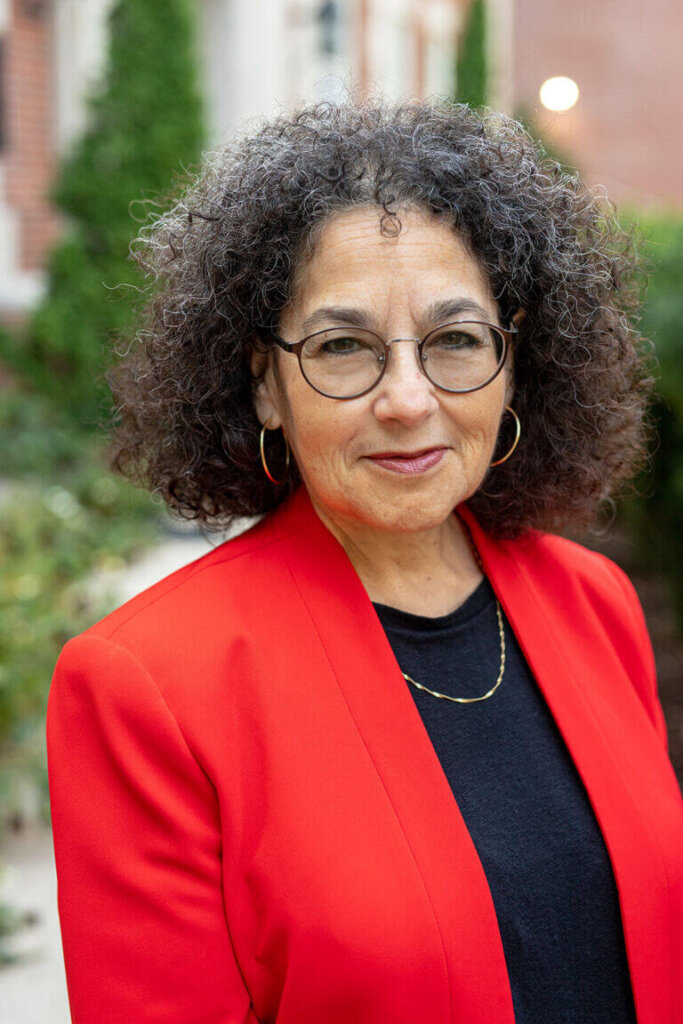
After passing away suddenly in Washington, D.C. on March 20, Diana R. Fuentes is being remembered across the nation as an indomitable journalist, a dedicated editor and educator, a steadfast mentor and a fierce advocate for journalists and journalism.
Executive Director of Investigative Reporters and Editors (IRE), Fuentes began her more than 35-year-long career in journalism in her hometown of Laredo, Texas, where she served as editor of the Laredo Morning Times.
“Whether she was representing IRE at events across the country or engaging with our international and student members, her dedication to our mission was clear. She worked tirelessly to make investigative training accessible and was also a passionate defender of press freedom and journalist safety,” IRE Board President Josh Hinkle said in a statement released March 20.
“In light of the challenges we face today, she reminded us that ‘we have a constitutionally protected right — and deep responsibility — to keep the people informed, and we will not stop.’ Those words from Diana — shared in a recent statement of support for journalists arrested for their protest coverage — resonate now more than ever.”
Many in the journalism community and her home state of Texas expressed shock at her unexpected passing, as well as the deep loss of a friend and teacher so integral to the journalism community.
“We are saddened to share the passing of a giant in our industry. One of our leaders, mentors and dear friends, Diana ‘DeeDee’ Fuentes has passed away. It is a shock to many of us and we are processing it just as you are,” San Antonio Association of Hispanic Journalists stated in a Facebook post.
IRE will be closed Friday, March 27 as the staff takes time off to attend her funeral.
“Texas journalism — and the national investigative journalism community — has lost a giant. Whether she was fighting for open records, coaching a young reporter, or leading a national journalism organization dedicated to accountability, she did so with a rare combination of tenacity, grace, and unwavering integrity. She taught us that the story matters, but the people behind the stories matter more,” Texas Managing Editors posted to Facebook.
Oakland Voices director and Maynard alum Rasheed Shabazz expressed gratitude to Fuentes as well as sorrow at her passing in an emailed statement.
“I finally met Diana Fuentes in real life last year at the NABJ Conference during an investigative journalism panel. It was an honor to share a stage with her. I am grateful for all the work she did to support young and emerging investigative journalists and I wish I had more time to learn from her. Thank you, Diana,” Shabazz said.
IRE has posthumously nominated Fuentes to be inducted into its Ring of Honor at this year’s IRE Conference, taking place June 18-21. The Ring of Honor is a “new initiative celebrating members who have made a significant contribution to the organization and to investigative journalism.” Those who wish to do so can donate to the campaign in Fuentes’ honor.
The inaugural cohort of Fire Up Fellows represent the power and potential of diverse news in the State…
Fire Up is made possible by a budget allocation from the State of California and is part of…
— Arturo Carmona, President of the Latino Media Collaborative