News / Blog
Announcing: The Maynard Institute is partnering with BlueLena.
Watch this space for more information on how to manage YOUR donor portal with BlueLena and FundraiseUp!


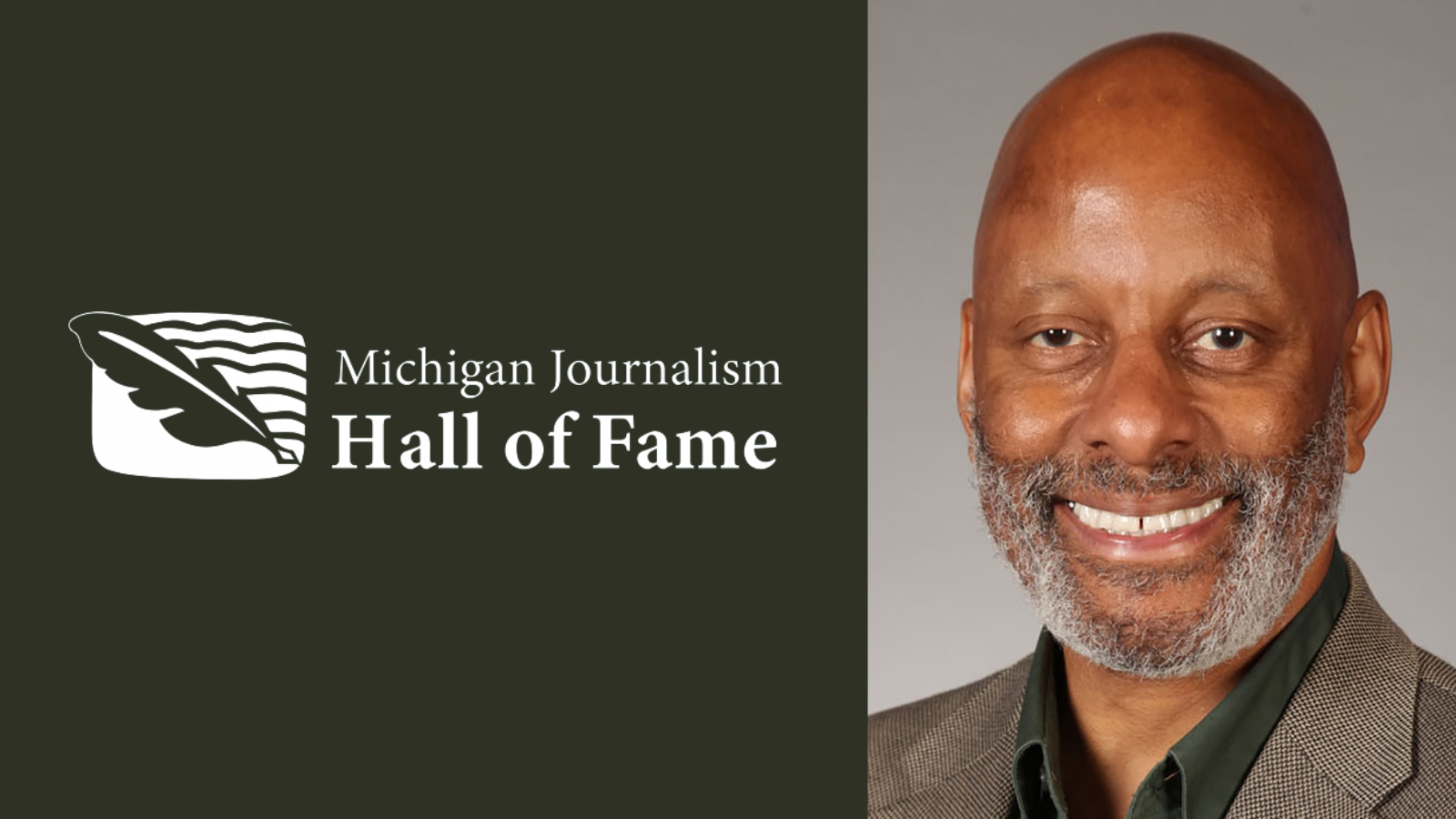
On April 23, former Detroit News assistant managing editor and Maynard Institute instructor Walter T. Middlebrook Jr. was inducted into the Michigan Journalism Hall of Fame.
Middlebrook’s long-spanning journalism career includes roles at the Minneapolis Star, the St. Paul Pioneer Press and Dispatch, New York Newsday, The New York Times, USA Today and two stints at The Detroit News. He is currently the Foster Professor of Practice at Penn State University’s Donald P. Bellisario College of Communications.
At the ceremony, Middlebrook — a 1982 graduate of the Maynard Institute’s Editing Program for Minority Journalists — was lauded for his role in helping to make newsrooms more diverse. After graduating from the editing program, he assisted the Institute for several years as an instructor.
In addition to Middlebrook’s work with the Maynard Institute, he was a former president of the Detroit chapter of the Society for Professional Journalists and a regional director of the National Association of Black Journalists. Middlebrook is a longtime board member of the Detroit-based Rosa Parks Scholarship Foundation, an organization that provides scholarships to deserving students who may be unable to afford college otherwise.
In a short biography prepared ahead of the Hall of Fame ceremony, Michigan State University journalism professor Joe Grimm wrote, “Middlebrook has been a champion of diversity with national recognition for identifying, recruiting and developing journalists, particularly people of color, women and others from populations historically underrepresented in newsrooms.”
From 2007-2009, Middlebrook served as The Detroit News’ director of recruiting and community affairs. From 2009-2018, he served as assistant managing editor. Previously, he worked at Newsday, where, among other roles, he was director of Times Mirror Corp.’s Metpro/Editing program that trained minority editing candidates.
Martin G. Reynolds, co-executive director of the Maynard Institute, said he was thrilled to see Middlebrook receive such a high honor. “Walter Middlebook embodies so much of what the Maynard Institute stands for,” Reynolds said. “He’s a true champion for diversity and cares deeply about the craft of journalism. We couldn’t be more proud to see a Maynard alumni and former trainer receive this well-deserved award.”
Maynard Institute’s cultural competency director Felecia D. Henderson met Middlebrook in 1987 when he was an editor at The Detroit News and she was a fellow in the Editing Program for Minority Journalists at the University of Arizona. “To call my instructor ‘colleague’ was a huge blessing when Walter returned to The Detroit News,” says Henderson, a former assistant managing editor at the newspaper. “His leadership was invaluable to the organization during a period of considerable change. Fast-forward a decade, as a member of the Michigan Journalism Hall of Fame committee, it was an honor to support Walter’s induction and ensure his journalistic legacy will be lasting.”
Being inducted into the Michigan Journalism Hall of Fame is the latest honor in Middlebrook’s career. In 2018, he was given a Lifetime Achievement Award by the Detroit Chapter of the Society of Professional Journalists. In 2015, he was recognized with a College of Communication Distinguished Alumni Award from Boston University in 2015. And in 2010, he received the Spirit of Diversity Award from Wayne State University.
Maynard Institute professional development programs have the goal of fueling the pipeline of journalists of color into the newsrooms of America. One of the Maynard Institute’s core programs, the Maynard 200 Fellowship provides advanced training and mentorship to mid-career journalists of color for promoting their career growth and expanded leadership roles.
Watch this space for more information on how to manage YOUR donor portal with BlueLena and FundraiseUp!
On Tuesday, May 19, 2026 the Maynard Institute was honored to receive the Lorraine Branham Award from Syracuse…
“Our contributions to journalism will outlast ourselves if we do it right — I’m really encouraged that there’s…

Thi Bui and Momo Chang on stage at Chapter 510. Photo credit: Brandy Collins, Oakland Voices alum ’19
On May 11, Oakland Voices alums gathered for an inspiring talk with Oakland-based author and illustrator, Thi Bui. Bui is best known for her graphic novel, The Best We Could Do, which debuted in 2017 and received many accolades including a 2017 National Book Critics Circle Award nomination. The novel tells the story of her family’s journey from Vietnam as refugees to the United States. Bui imparted powerful lessons for Oakland Voices correspondents about accessible storytelling and navigating cultural institutions that may not value the perspectives of immigrant authors and audiences.
Bui is also a children’s book illustrator, including a collaborative project between herself and her son, and Pulitzer Prize Winner author Viet Thanh Nguyen and his son, titled Chicken of the Sea. She also illustrated poet Bao Phi’s children’s book, A Different Pond. Her most recently illustrated book is Finding Papa, written by Angela Pham Krans, which was released in February.
Bui is working on her next graphic novel, focusing on immigration detention and deportation, to be published by One World, Random House.
The event was held at Chapter 510, a nonprofit organization based in Oakland that focuses on youth poetry, writing, and publishing. The organization was previously located on Telegraph Avenue, and reopened in the new space in Old Oakland in 2021 during the pandemic. The event was kicked off with an introduction by Oakland Voices Co-Director Momo Chang, and then Oakland Voices alum Marabet Morales Sikahall, program and community manager at Chapter 510.
Bui was a founding teacher at Oakland International High School, serving Oakland’s newly arrived immigrants and refugees. She worked on The Best We Could Do, which she shares was a decade-long process, while raising a young child during school holidays and weekends.
Oakland Voices and the Maynard Institute purchased copies of The Best We Could Do from Eastwind Books of Berkeley, which were then given to alumni members at the event. Bui stayed to sign everyone’s books. Catering was provided by Cafe Gabriela in downtown Oakland.
During the event, Bui connected with alumni members on many topics, from researching a topic, to writing and storytelling. Many members were also curious about book publishing.
One rumor she wanted to clear up right away is that she had art and drawing experience previous to making The Best We Could Do. Bui has a degree in art, including being a teaching assistant in figure drawing as an undergraduate. “I drew a lot!” she told the Oakland Voices audience. She was mostly self-taught in comics drawing and sought out mentors in this field.
When sharing how her fine arts degree influenced her success as a graphic novelist, Bui was frank about the lack of support she received from some professors. She shared how her work was often critiqued as “too narrative.”
Moreover, when she tried to defend her artwork as an expression of her identity as an Asian American, her professor dismissed her by saying, “Why should I care about your Asian American identity?”
Since that time, Bui said that the fine art world has begun to embrace more accessible art forms such as graphic novels as well as voices of underrepresented communities of color.
Her story reinforced just how valuable programs like Oakland Voices are to lifting up storytellers from diverse backgrounds.
Check out the Oakland Voices website for an in-depth Q&A and photo gallery from the event coming soon.
Oakland Voices emerged from a partnership between the Oakland Tribune and the Maynard Institute for Journalism Education. Oakland Voices connects correspondents with more than a dozen media professionals to teach correspondents. Participants work individually and in teams, creating content for the Oakland Voices website, which can also be published elsewhere. The collaborative, applied learning approach means correspondents quickly become aware of their power and responsibility as storytellers, and as members of the media.
The latest cohort of new Oakland Voices correspondents began the 6-month program in May 2023. If you want to support their success, donate to the Maynard Institute today!
Watch this space for more information on how to manage YOUR donor portal with BlueLena and FundraiseUp!
We’re partnering with the Kansas City Defender for Black Philanthropy Month! August is Black Philanthropy Month! Founded in…
The inaugural cohort of Fire Up Fellows represent the power and potential of diverse news in the State…
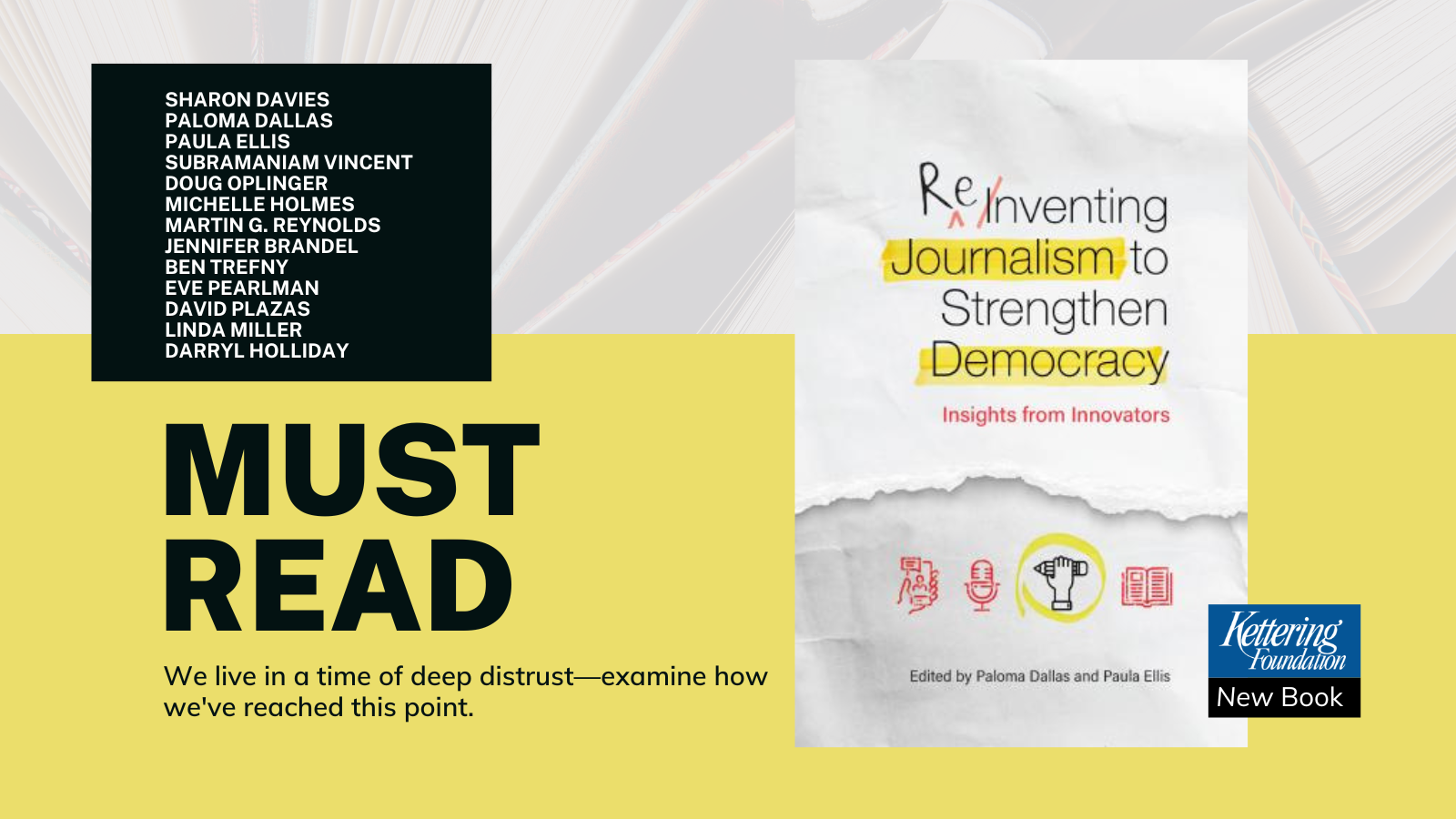
NEW BOOK RELEASE — From the Kettering Foundation website: We live in a time of deep distrust―of each other, the media, and institutions of all kinds. In this volume of essays, innovative journalists from newspapers, public radio, civic media groups, and new media collectives examine how we’ve reached this point. The loss of newspapers and fracturing of the information ecosystem have weakened our sense of a shared identity, but many people have long felt excluded, misrepresented, and unable to see themselves and their experiences reflected in news reporting. These essays highlight opportunities that are emerging as old practices give way to the new demands of an engaged, diverse, and restive public. They call on us to create a more inclusive democratic narrative that better captures the rich diversity of our nation and its complicated history.
Martin G. Reynolds, “Dismantling Systemic Racism in News”
During the summer of 2020, the killings of George Floyd and Breonna Taylor sent shockwaves across America. Newsrooms and the journalists in them also felt the shock. Martin Reynolds, former managing editor and editor in chief of the Oakland Tribune and co-executive director of the Robert C. Maynard Institute for Journalism Education, was one of them. Even though he saw himself “in Floyd, in Taylor, and in the faces of countless other people of color who had been slain by police,” his initial instinct was to maintain his objectivity and to frame these events through the lens of a media professional and not a Black man with a Black son. Reynolds examines this experience and suggests some ways the dismantling of systemic racism in newsrooms might begin.
Read more about the other essays on the Kettering Foundation website and get your copy today!
We’re partnering with the Kansas City Defender for Black Philanthropy Month! August is Black Philanthropy Month! Founded in…
The inaugural cohort of Fire Up Fellows represent the power and potential of diverse news in the State…
Fire Up is made possible by a budget allocation from the State of California and is part of…

The POLITICO Journalism Institute (PJI) announced its 10th cohort in partnership with the Maynard Institute and American University. The program is designed to provide hands-on training and experience for college students interested in pursuing a career in political journalism.
One of the primary goals of PJI is to promote diversity in the field of political journalism, and the Maynard Institute has been a longstanding and critical partner of the program. The program seeks to attract students from a wide range of backgrounds and experiences. In particular, PJI aims to encourage students from underrepresented communities to apply.
The program is highly competitive, with only a select group of students chosen each year from a large pool of applicants. Students who are accepted attend an intensive two-week training course at American University in Washington, D.C. and the POLITICO newsroom in Arlington, Va., where they learn about the intricacies of political journalism from some of the best in the field. This year, some students will participate from POLITICO’s bureaus in Sacramento, Calif., and New York City.
“The Maynard Institute is proud to be a founding and continuing partner in the POLITICO Journalism Institute as it increases opportunities for students who represent a cross-section of this country and the full range of its colleges and universities,” said Evelyn Hsu, institute co-executive director. “Congratulations to our alums and partners on this 10th anniversary.”
PJI has been highly successful in helping students launch careers in political journalism. Many graduates of the program have gone on to work at major news outlets, including POLITICO itself. Others have landed jobs at newspapers, magazines, and broadcast media organizations across the country.
Overall, the POLITICO Journalism Institute is a valuable resource for aspiring political journalists who are looking to gain real-world experience and learn from some of the best in the business. By providing students with the skills, knowledge, and connections they need to succeed, PJI, American University and the Maynard Institute are continuing to shape the future of political journalism in the United States and beyond.
Based in Washington, DC:
Based in California:
Based in New York:
Read the POLITICO press release.
For 45 years, the Maynard Institute has fought to push back against the systemic lack of diversity in the news industry through training, collaborations and convenings. Founded by Robert C. Maynard, the Institute promotes diversity and antiracism in the news media through improved coverage, hiring and business practices. We are creating better representation in U.S. newsrooms through our programs , which gives media professionals of color the tools to become skilled storytellers, empowered executives and inspired entrepreneurs. Visit the Maynard Institute website to learn more.
Watch this space for more information on how to manage YOUR donor portal with BlueLena and FundraiseUp!
We’re partnering with the Kansas City Defender for Black Philanthropy Month! August is Black Philanthropy Month! Founded in…
The inaugural cohort of Fire Up Fellows represent the power and potential of diverse news in the State…

The Maynard Institute joins Arizona State University’s Walter Cronkite School of Journalism and Mass Communication in congratulating the latest winners of the Shaufler Prize in Journalism. Momo Chang, the Maynard Institute’s Oakland Voices Co-Director, participated on the panel of judges. Winners in the professional and student categories will be recognized on March 23 during an awards ceremony at the Cronkite School. The event will also be streamed as a Cronkite Live special event via YouTube.
The top prize in the 2022 Shaufler Prize in Journalism professional category has been awarded to Aydali Campa of Inside Climate News for the three-part series titled “The Superfund Site Next Door: Toxins and Mistrust in Atlanta.” Second place in the professional category was awarded to writer Jamie Smith Hopkins of the Center for Public Integrity, and a podcast team with Transmitter Media for “The Wealth Vortex,” a longform story and an accompanying five-episode podcast. The data based investigation from the Center for Public Integrity titled “Cheated at Work” received third place.
The top prize in the student journalism category went to “Mega Billions: The Great Lottery Wealth Transfer,” produced by the Howard Center for Investigative Journalism at the University of Maryland.
An honorable mention designation was awarded to the New York Times for “Overlooked No More,” a series of obituaries about remarkable people from underrepresented communities whose lives and deaths previously went uncovered by the Times.
The Shaufler Prize was established by Paul B. Anderson, the principal & CEO of Workhouse Media in Seattle, Washington to honor his late friend, Ed Shaufler, who died in late 2020. Shaufler cared deeply about promoting understanding of underrepresented people. The prize recognizes America’s best journalism advancing the understanding of stories and issues related to underserved people in society, such as communities of color, immigrants and LGBTQ+. Cash awards range from $2,000 to $10,000 across two categories of student journalism and professional media.
Entries were judged by journalism professionals and educators. Judges for the 2022 Shaufler Prize:
Judges considered how well the submissions provided in-depth coverage of issues affecting communities of color, immigrants or LGBTQ+. Winning submissions went beyond the ordinary in conveying the challenges experienced by underserved communities. Read more about the award eligbility and criteria on the Cronkite School website.
For 45 years, the Maynard Institute has fought to push back against the systemic lack of diversity in the news industry through training, collaborations and convenings. Founded by Robert C. Maynard, the Institute promotes diversity and antiracism in the news media through improved coverage, hiring and business practices. We are creating better representation in U.S. newsrooms through our programs , which gives media professionals of color the tools to become skilled storytellers, empowered executives and inspired entrepreneurs. Donate to support our programs.
Watch this space for more information on how to manage YOUR donor portal with BlueLena and FundraiseUp!
We’re partnering with the Kansas City Defender for Black Philanthropy Month! August is Black Philanthropy Month! Founded in…
The inaugural cohort of Fire Up Fellows represent the power and potential of diverse news in the State…

Do you live in Oakland and have a story to tell? The Maynard Institute for Journalism Education is now accepting applications for Oakland Voices, a six-month program designed to empower Oakland residents through newswriting, photography, and community storytelling. The 2023 program is hybrid model, with both in-person meetings and virtual instruction via Zoom, plus a planned in-person graduation celebration, as public health conditions allow. Correspondents will receive a $1,000 stipend for participation and completing assignments. No previous media experience required.
DEADLINE EXTENDED: Applications are due by Sunday, April 16, at 11:59 PM PDT.
Oakland Voices correspondents are trained in digital media storytelling — writing blogs and online pieces, taking photos, shooting video, and using social media to discuss issues that matter most in their communities. Correspondents also learn journalism ethics and editorial decision-making, interview basics, and story craft. They use those tools to report on a wide range of issues highlighting the triumphs and challenges of life in Oakland, including community heroes and heroines, health and wealth disparities, and more.
Online applications must by submitted by Sunday, April 16, 2023, at 11:59 PM PDT. Applicants must be an Oakland resident over 18 years old with access to a stable internet connection via computer or mobile device in order to participate in virtual meetings. Students in their senior year of high school are eligible and unhoused residents, low-income, and community members of color are encouraged to apply. A Google account is necessary to access the online application form. Visit the Oakland Voices website to learn more about the program requirements and submit your application.
Maynard Institute programs are open to all. The Institute is committed to addressing the under-representation of people of color and other historically disadvantaged groups in media-related professions, and so we make special efforts to recruit individuals from these groups for our programs. For questions about sponsoring an Oakland Voices correspondent or donating to the program, contact us to learn more.
Founded in 2010, Oakland Voices emerged from a partnership between the Oakland Tribune and The Maynard Institute for Journalism Education. Oakland Voices connects correspondents with more than a dozen media professionals to teach correspondents. Participants work individually and in teams, creating content for the Oakland Voices website. This content may also be published by program partners such as The Oaklandside or KALW Public Radio. The collaborative, applied learning approach means correspondents quickly become aware of their power and responsibility as storytellers, and as members of the media.
Rasheed Shabazz and Momo Chang serve as Co-directors of the Oakland Voices program. Martin Reynolds co-founded Oakland Voices and is co-executive director of the Maynard Institute. Evelyn Hsu is co-executive director of the Maynard Institute and contributes the training curriculum of the program.
Multiple cohorts of Oakland residents have completed the Oakland Voices program. Check out a summary listing of all the correspondents by project years since 2010.
Interested in meeting some Oakland Voices alums before applying? Co-Director of Oakland Voices Alumni program, Momo Chang will be a panelist at the next Culture Makers event dedicated to local journalists on Thursday, March 23 at the New Parkway Theater in Oakland, California. Learn more about the event. Space is limited. Registration required.
Watch this space for more information on how to manage YOUR donor portal with BlueLena and FundraiseUp!
We’re partnering with the Kansas City Defender for Black Philanthropy Month! August is Black Philanthropy Month! Founded in…
The inaugural cohort of Fire Up Fellows represent the power and potential of diverse news in the State…

FOR IMMEDIATE RELEASE — Oakland, Calif. (February 17, 2023): The Robert C. Maynard Institute for Journalism Education, a nonprofit dedicated to expanding diversity in the news media and dismantling structural racism in newsrooms, announced today the news organizations selected to participate in the Equity and Belonging Newsroom Transformation Program are The Gazette in Cedar Rapids, Iowa, and GBH News in Boston.
The pilot program, funded by the John S. and James L. Knight Foundation, pairs news organizations with consultants who have a wealth of experience training journalists on diversity, equity, inclusion and belonging (DEIB) issues. The goal is to help transform workplace structures, organizational cultures and news coverage to be more inclusive and reflective of the United States.
“With this pilot, we’re trying to see if we can operationalize the concept of belonging,” said Martin G. Reynolds, co-executive director of the Maynard Institute. “This is very challenging work because it requires an individual and collective unwinding of internalized biases and perceptions that have made news organizations toxic places for so many, particularly people of color. We see this work as a journey. What’s exciting about working with The Gazette and GBH News is that each organization is starting at a different place along this journey and we are excited to work with our consulting teams to help them make significant progress.”
Celebrating its 140th year in continuous operation, The Gazette is an employee-owned newspaper with 30,000 daily subscribers. Based in Cedar Rapids, the second-largest city in the state of Iowa with a population of 138,000 residents, The Gazette also covers Iowa City, which is home to the University of Iowa. The communities range from a mix of industrial employees and a sizable refugee population from Sudan.
“We are focused on local enterprise news that looks to solutions rather than just pointing out problems,” said Zack Kucharski, executive editor and employee owner of The Gazette. “We know that we can improve in representation on the staff and in coverage practices to best reflect the diversity of our community, while also working to give these populations a voice and build trust.”
The Gazette, which has participated in previous diversity programs, applied to the Maynard Institute’s pilot program to gain momentum in order to transform their newsroom culture and business practices. As part of the pilot program’s embedded consultant model, The Gazette will be paired with a group of DEI experts based in Southern California, from CRB Global & Rich Diversity Consulting.
“We are excited to take a team-wide approach, as there are challenges across many of the topical areas that we cover, and we need everyone thinking about this,” Kucharski said.
“Working to build norms and benchmarks and have consistent practices will also allow us to measure progress, and that’s an important piece of making this part of the culture of the organization,” he said.
Similarly, GBH News is invested in sustained cultural change. Located in Boston, GBH is the leading multiplatform creator for public media in the United States as the largest producer of content for PBS and partner to NPR and PRX. The vision of GBH News, which reaches more than 400,000 people weekly across all platforms, is to transform into one cohesive, audience-focused news organization by creating an anti-racist, radically inclusive and culturally responsive newsroom without walls to better serve an increasingly diverse and curious population. A team of DEI consultants who represent Global Equity Collective will help GBH News work toward that goal.
“We re-envisioned our beat structure to create distinct local stories of the day in collaboration with a wider audience,” said Lee Hill, executive editor for GBH News. “By 2027, our newsroom will closely mirror the city of Boston, which is rapidly changing demographically. Internally, we have to ensure that we are culturally responsive. We created two working groups focused on equitable professional development and belonging.
“In 2022, GBH News began a mandatory Source Diversity Survey,” Hill said. “As part of this, our journalists ask each person we interview questions about their race, gender, age, location to ensure that GBH News becomes more infused and informed by the diverse communities we serve.”
Felecia D. Henderson, director of cultural competency at the Maynard Institute, said the Equity and Belonging Newsroom Transformation Program will provide an opportunity to meet each news organization where they are in their current cultural journey and lead them toward sustainable, equitable change.
“We are excited to partner with The Gazette and GBH News to give them the tools that will have lasting impact inside their organizations and with their communities,” Henderson said.
For 45 years, the Maynard Institute has fought to push back against the systemic lack of diversity in the news industry through training, collaborations and convenings. Founded by Robert C. Maynard, the Institute promotes diversity and antiracism in the news media through improved coverage, hiring and business practices. We are creating better representation in U.S. newsrooms through our programs , which gives media professionals of color the tools to become skilled storytellers, empowered executives and inspired entrepreneurs. Visit the Maynard Institute website to learn more.
CONTACT:
Felecia D. Henderson
Director of Cultural Competency, Maynard Institute
fhenderson@mije.org
Martin G. Reynolds
Co-Executive Director, Maynard Institute
mreynolds@mije.org
Read the press release on PRWeb.
We’re partnering with the Kansas City Defender for Black Philanthropy Month! August is Black Philanthropy Month! Founded in…
The inaugural cohort of Fire Up Fellows represent the power and potential of diverse news in the State…
Fire Up is made possible by a budget allocation from the State of California and is part of…

OAKLAND, CA (January 30, 2023): The Maynard Institute for Journalism Education, a nonprofit dedicated to expanding the diversity pipeline in the news media and dismantling structural racism in its newsrooms, is accepting applications for its cornerstone Maynard 200 Fellowship. The professional development program provides cutting-edge training and year-long mentorship for storytellers, editors and managers, leaders and media entrepreneurs of diverse backgrounds.
The 2023 program will kick off in-person on June 26th at Bob Schieffer College of Communication at Texas Christian University (TCU) in Fort Worth, Texas. Maynard 200 fellows will benefit from tuition-free training and mentorship, plus lodging and travel expenses will be covered by the Maynard Institute.
The program will continue throughout the summer with a series of virtual webinars. A second week of training will be held virtually over Zoom the week of October 23rd. Fellows will then be paired with industry veterans and experts in relevant disciplines in their area of interest to receive one year of one-to-one mentorship through October 2024.
This year’s program will consist of a cohort size of 30 fellows. Applicants can apply to one of four curriculum tracks designed for investigative storytellers, executive leaders, frontline editors and managers and media entrepreneurs and product developers. Applications are due by 11:59 PM PDT on March 31, 2023. Screening will begin after the application deadline and will continue through April.
Maynard 200 has been supported by Craig Newmark Philanthropies, Google News Initiative, and The Hearthland Foundation. The Fox Corporation is a returning sponsor for the 2023 program as well.
For more information and guidance on the application process, as well as COVID-19 safety protocols for the in-person training sessions, please visit Maynard 200 program updates for 2023.
For more than 45 years, the Maynard Institute has fought to push back against the systemic lack of diversity in the news industry through training, collaborations and convenings. Founded by Robert C. Maynard, the Institute promotes diversity and antiracism in the news media through improved coverage, hiring and business practices. We are creating better representation in America’s newsrooms through our Maynard 200 fellowship program, which gives media professionals of color the tools to become skilled storytellers, empowered executives and inspired entrepreneurs.
Maynard 200 is the cornerstone fellowship program advancing the Maynard Institute’s efforts to expand the diversity pipeline in news media and dismantle structural racism in its newsrooms. It is designed for and serves the next generation of media leaders, storytellers, editors and entrepreneurs, in order to advance their career growth and leadership power in newsrooms and organizations. The professional development program provides customized training courses, resources and 1:1 mentorship by industry professionals, to fellows who have represented a wide spectrum of racial, gender and geographic backgrounds.
The deadline to apply for Maynard 200 is March 31, 2023. Read more about the program and apply today!
See the latest press release on PR Newswire. For more information about sponsoring the Maynard 200 Fellowship or program eligibility, please reach out to:
Maynard 200 Director, Odette Alcazaren-Keeley at okeeley@mije.org.
Watch this space for more information on how to manage YOUR donor portal with BlueLena and FundraiseUp!
We’re partnering with the Kansas City Defender for Black Philanthropy Month! August is Black Philanthropy Month! Founded in…
The inaugural cohort of Fire Up Fellows represent the power and potential of diverse news in the State…

We are proud that the staff of the Maynard Institute is committed to advocating for racial equity in journalism and beyond. In addition to their work and service to the Maynard Institute mission, our organization’s team members have a positive impact across the industry and their communities. In this spirit, we congratulate Co-Executive Director, Evelyn Hsu and Maynard 200 Fellowship Program Director, Odette Alcazaren-Keeley on their recent achievements.
The Maynard Institute congratulates Co-Executive Director Evelyn Hsu for her election as Vice President of the Society of Professional Journalists (SPJ) Foundation board of directors. The Society of Professional Journalists Foundation (formerly Sigma Delta Chi Foundation) is a 501(c)(3) charity with a mission to perpetuate a free press as a cornerstone of our nation through their educational programs and by supporting other journalism organizations that benefit SPJ members. Hsu was elected Vice President in October for a term beginning in 2023.
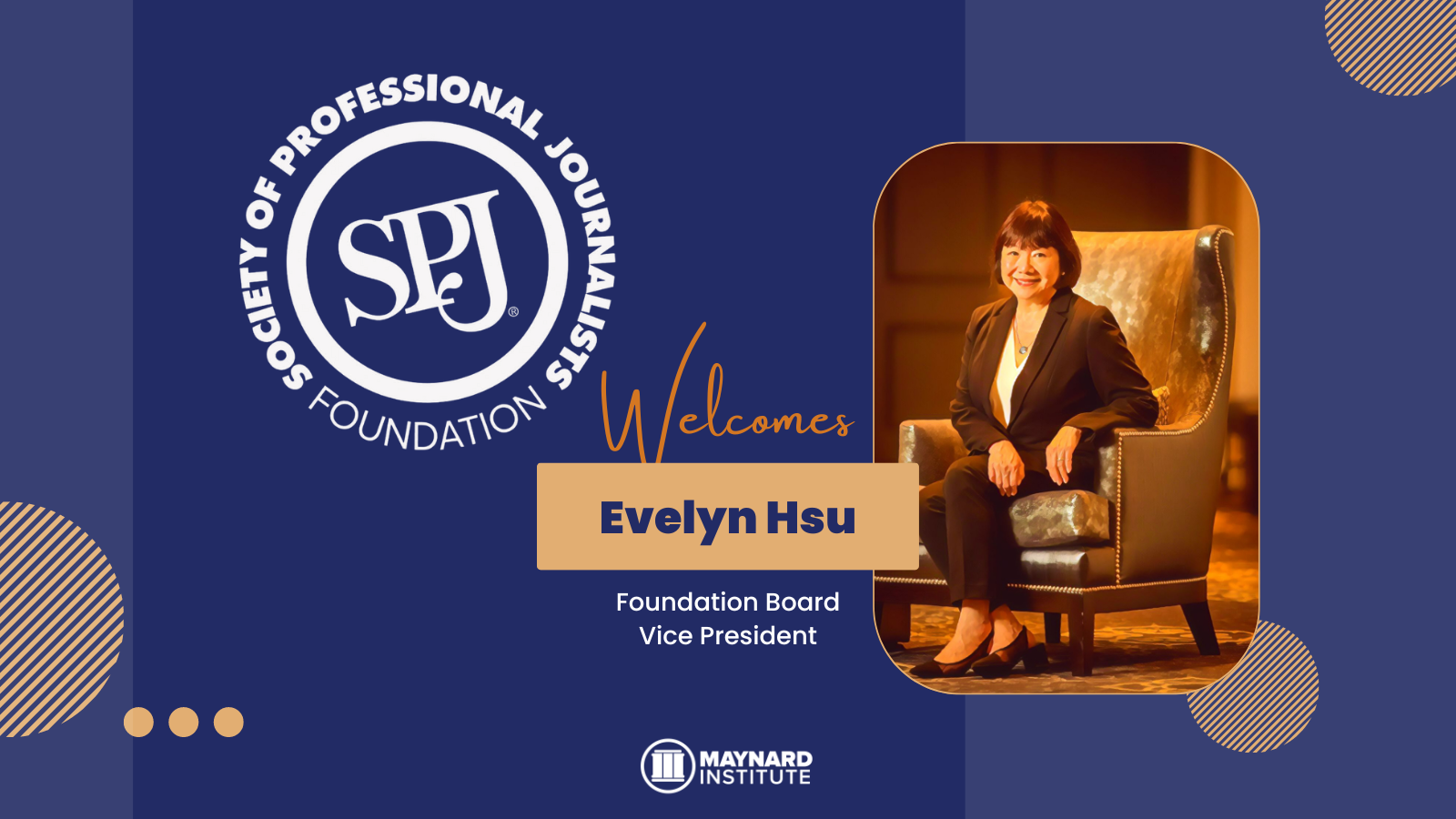
Evelyn Hsu was elected Vice President to SPJ Foundation Board in October 2022. Photo by Ray Chavez.
The SPJ Foundation grants primarily support advocacy for freedom of the press and SPJ members directly but also provide support to organizations that advance the SPJ mission. Grant requests are first reviewed by the Foundation Grants and Awards Committee and then their recommendations are sent to the SPJ Foundation Board of Directors for their review and selection. Read more about the SPJ Foundation’s signature programs.
On November 21, 2022, the Society of Professional Journalists, Northern California chapter (SPJ NorCal) announced the recipients of their 37th annual Excellence in Journalism Awards. Maynard 200 Fellowship Program Director, Odette Alcazaren-Keeley received the board award for Unsung Hero. SPJ NorCal has hosted the annual awards banquet every fall for more than three decades to highlight extraordinary contributions of journalists based in the San Francisco Bay Area, Sacramento, and cities and towns throughout the region.

Odette Alcazaren-Keeley received the SPJ NorCal Unsung Hero Award in November 2022. Photo by Michelle Felix.
From the press release:
The board honors Odette Alcazaren-Keeley with the Unsung Hero award. As director of the Maynard 200 Fellowship with the Maynard Institute for Journalism Education, she has built one of the most powerful incubators for journalists of color in the country. She is also president and founding partner of the strategic, multicultural media consultancy Global MediaX. Alcazaren-Keeley’s career commitment to lifting all voices is exemplified in her own words, that we can “heal our democracy together, regardless of and respecting each others’ differing beliefs.”
We often use the term Maynard Family to refer to our extended network of founders, program alumni, staff, faculty, and supporters. Hsu and Alcazaren-Keeley are not the only industry leaders affiliated with the Maynard Institute recognized by professional membership associations. Many of our board members and staff are doing important work that aligns with the institute’s core values.
You can read more about the backgrounds and work of the Maynard Institute staff and board members on our website. For the latest Maynard Family updates, be sure to check out our blog and subscribe to our newsletter. Join the Maynard Family and Donate today!
Watch this space for more information on how to manage YOUR donor portal with BlueLena and FundraiseUp!
On Tuesday, May 19, 2026 the Maynard Institute was honored to receive the Lorraine Branham Award from Syracuse…
“Our contributions to journalism will outlast ourselves if we do it right — I’m really encouraged that there’s…

Our latest video coincides with the launch of the Maynard Institute end-of-year fundraising campaign. Watch the brief 2-minute video to learn about the Institute’s mission. Find out makes our programs worthy of your support and donate today! Filmed during the June 2022 session of the Maynard 200 Fellowship program at USC Annenberg School for Communication and Journalism, this video includes interviews with Maynard Institute staff as well as Maynard 200 faculty and leaders in the media industry.
“We have a tremendous history that inspires us,” said Evelyn Hsu, Co-Executive Director of the Maynard Institute. In the wake of Kerner Commission report, a diverse group of journalism founded the Institute in 1977 to challenge the excuses of legacy media for racist hiring practices and news coverage. By providing training programs to journalists of color, the Institute helped ensure that newsrooms could no longer claim a lack of qualified candidates for hire. Since its founding, the impact of our programs stretches beyond hiring practices to journalims itself. “With our graduates who are editors, we can see changes in coverage,” Hsu added.
Co-Executive Director Martin Reynolds said, “We have an obligation to push journalism to understand the impact that it has had when it is perpetuating systemic racism. These institutions—if they are truly going to be seen as worthy of informing a diverse society—they have to get this right.”

Maynard 200 Guest Lecturer and AP Vice President Ron Nixon
Maynard’s staff, faculty and volunteers worktirelessly to provide journalists the skills needed to thrive in the industry through opportunities like the Maynard 200 Fellowship, the Oakland Voices community journalism program, Fault Lines diversity trainings, events and more. This is essential work, but it wouldn’t be possible without supporters like you.
The Maynard Institute was founded in 1977 to promote diversity and antiracism in the news media through improved coverage, hiring and business practices. We challenge the systemic lack of diversity in the news industry through training, collaborations and convenings. Through programs like the Maynard 200 fellowship, we are creating better representation in America’s newsrooms. The institute offers a range of tuition-free professional development and training programs. The institute also provides consulting services and trainings to help news organizations reach their full potential as equitable, productive and financially sustainable organizations.
We are able to do this work thanks to the generous support of funders and supporters like you! Your tax-deductible donation directly impacts the careers of journalists while supporting the institute’s mission to promote diversity, equity, inclusion and belonging in the news media. Donate today!
Watch this space for more information on how to manage YOUR donor portal with BlueLena and FundraiseUp!
We’re partnering with the Kansas City Defender for Black Philanthropy Month! August is Black Philanthropy Month! Founded in…
The inaugural cohort of Fire Up Fellows represent the power and potential of diverse news in the State…