News / Industry News
Remembering Mia Navarro, Graduate of the Summer Program for Minority Journalists, 1979.
“She launched the Spanish-language website Brennan En Español, a monthly newsletter, and as she put it, was ‘dedicated…


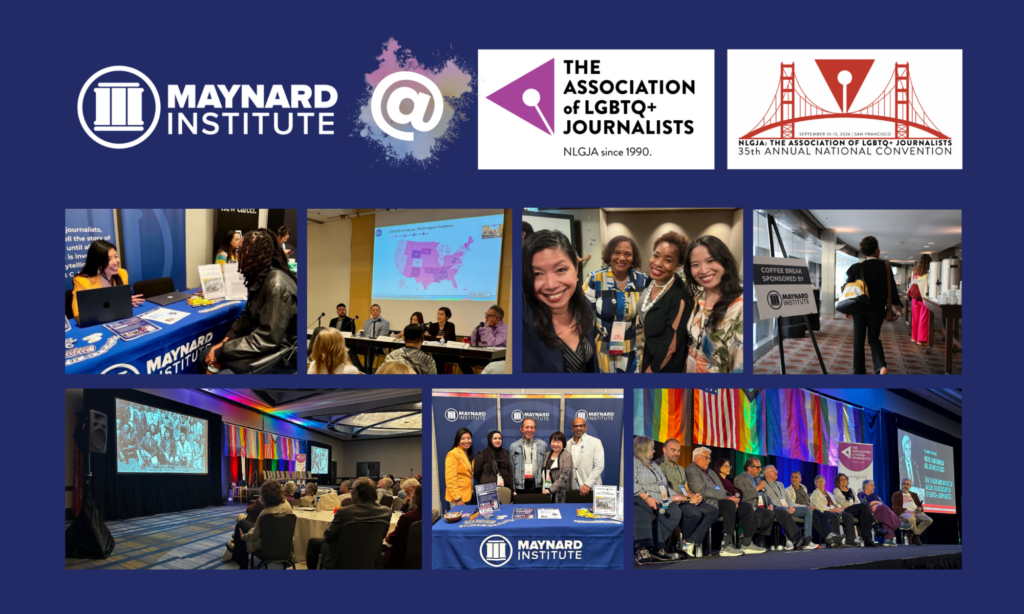
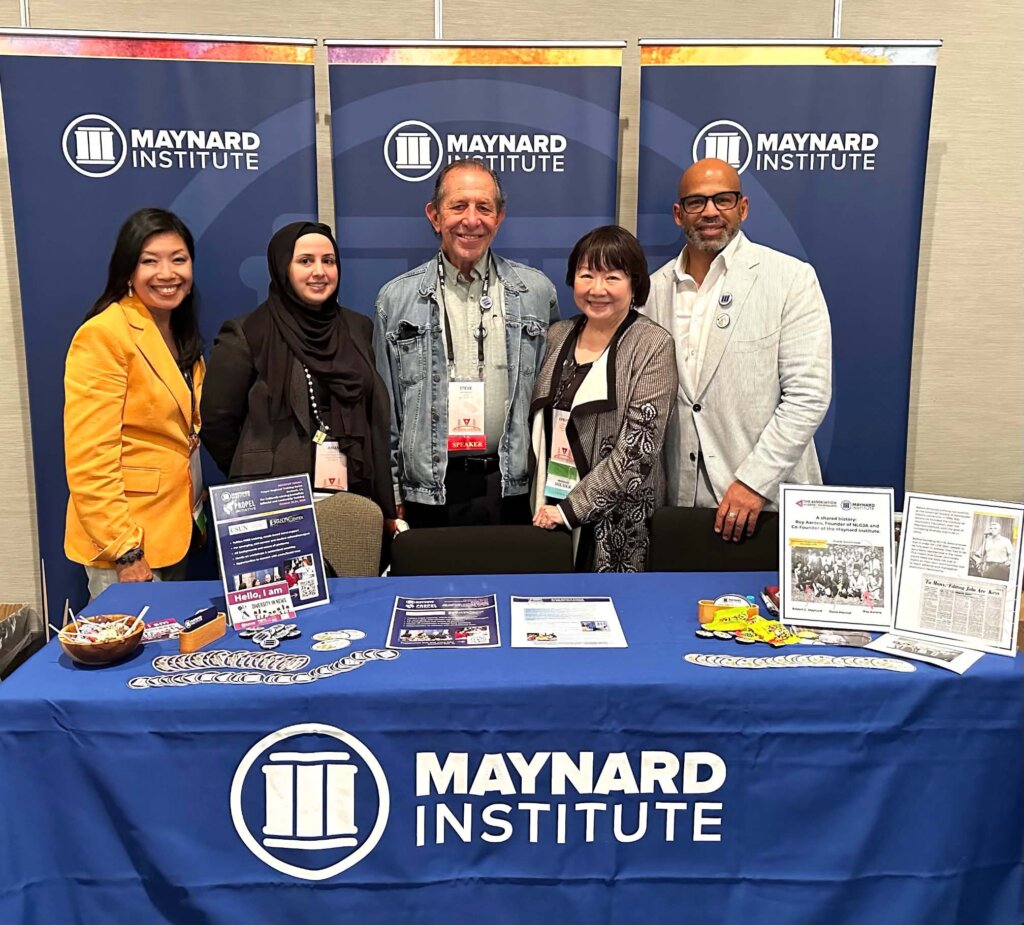
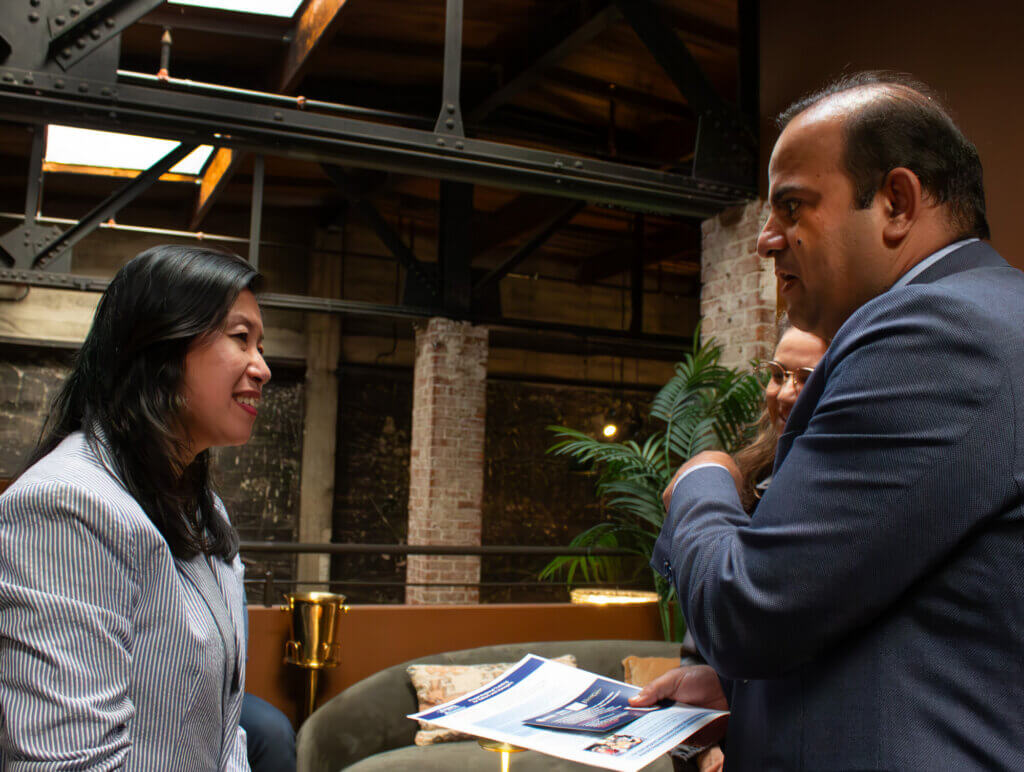
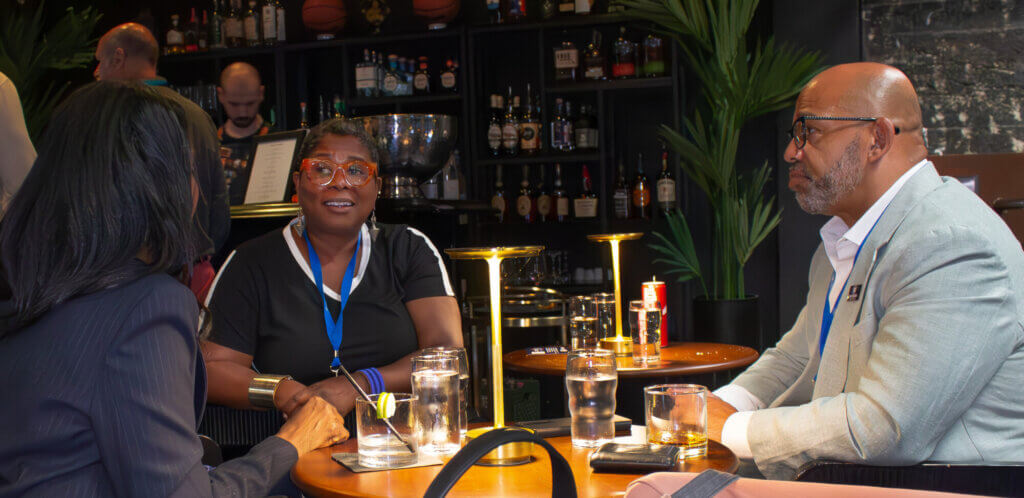
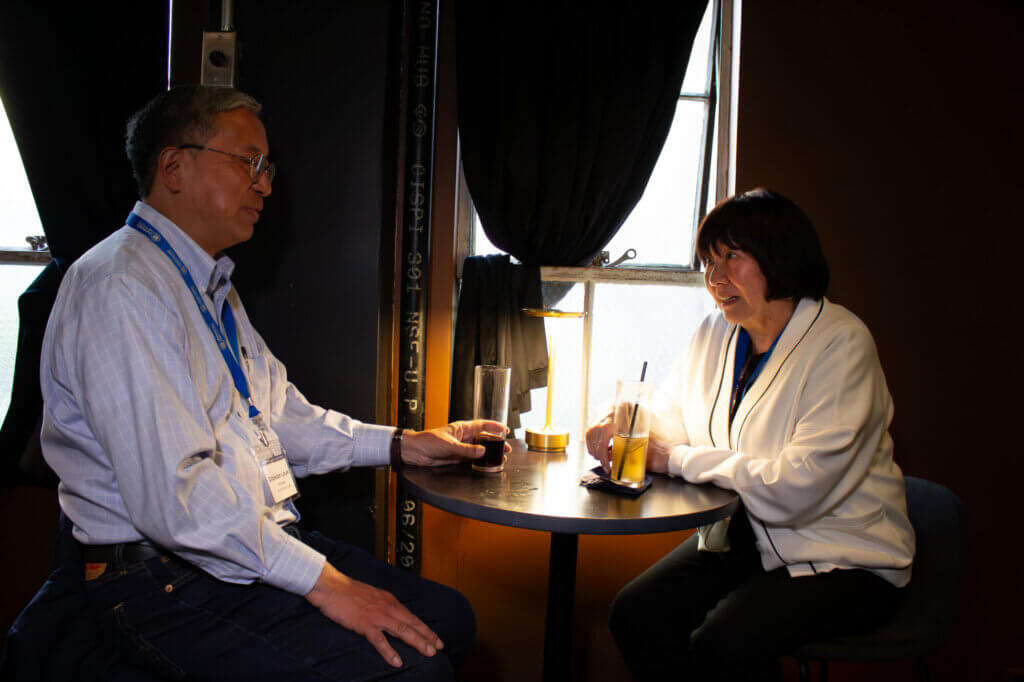
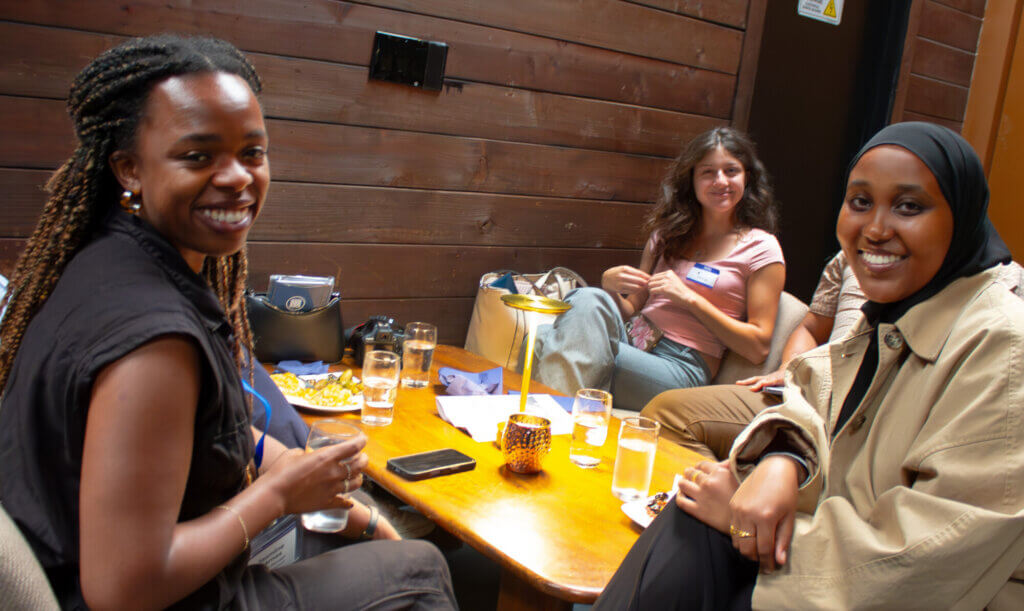
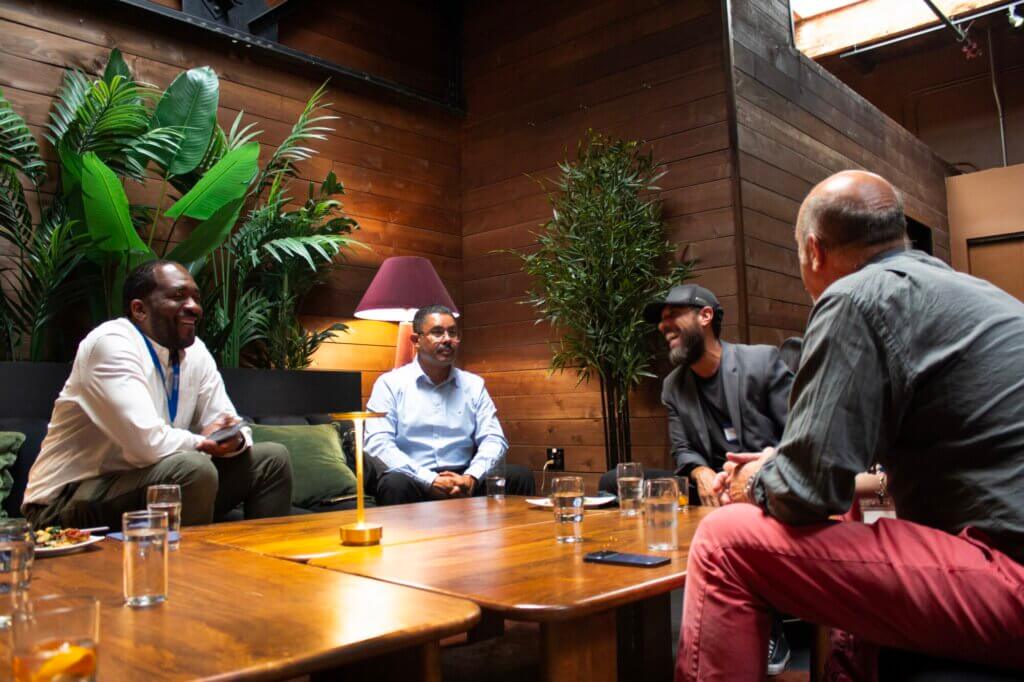
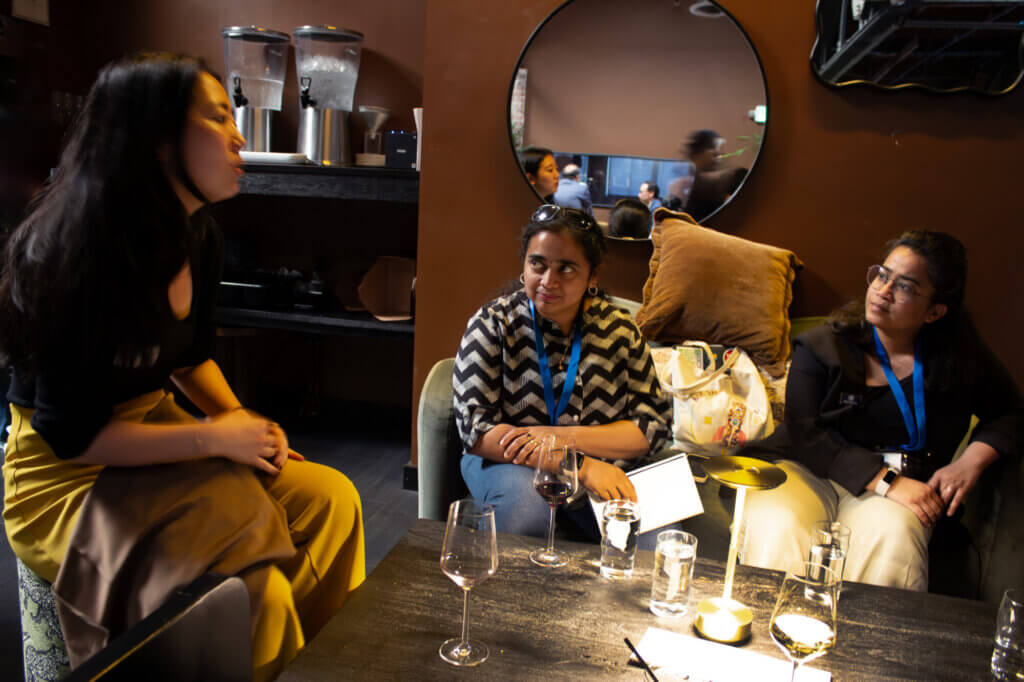
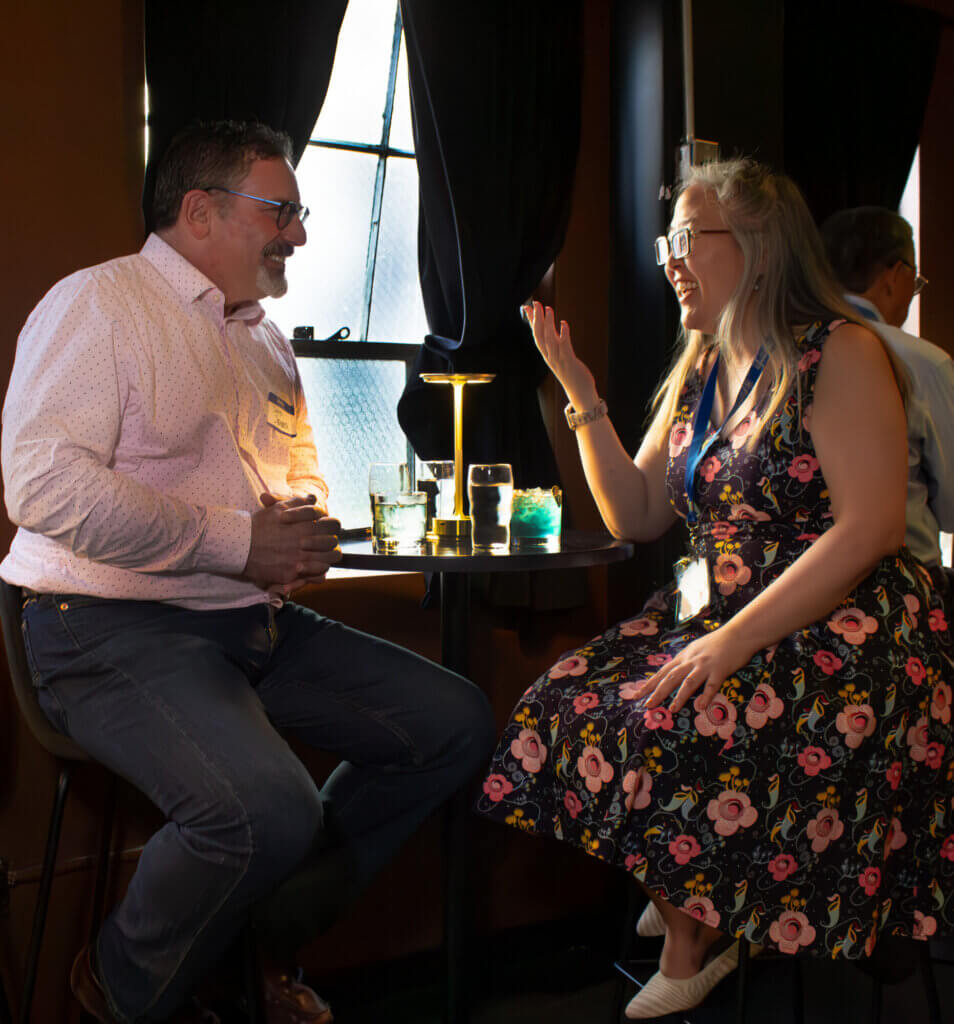
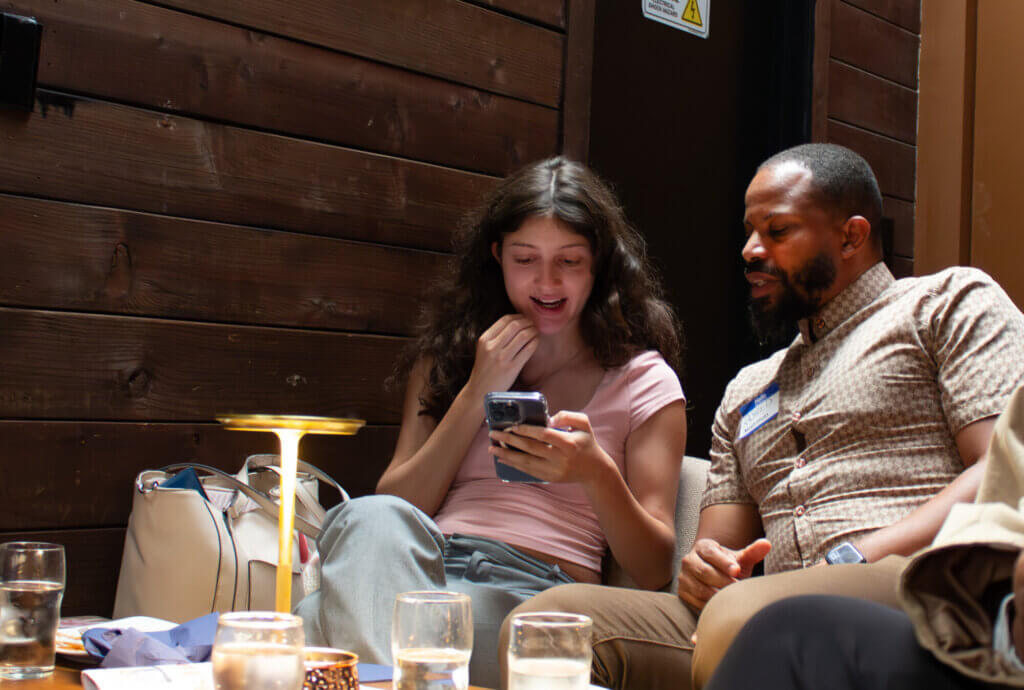
Last week the Maynard Institute traveled to San Francisco for NLGJA’s 2026 35th annual convention.
The team caught up with Maynard Institute Co-Founder Steve Montiel, Maynard Program alumni, and colleagues from across the journalism industry.
Programs Director and Director of the Propel Regional Training Series and Maynard Communities of Practice Odette Alcazaren-Keeley invited editors and managers to the Propel Regional Training in Burbank in October.
Community Engagement Manager Amani Hamed reunited with Tre’vell Anderson and K Petrin of the Trans Journalists association, and Jireh Deng of the AAJA LGBTQIA_ affinity group, who contributed to a panel for the Maynard Institute in June.
The Maynard Institute also sponsored afternoon coffee at the impeccably executed convention, attended panels led by subject matter experts, journalists, editors and newsroom managers.

The Maynard Institute would like to offer our enthusiastic congratulations to The Association of LGBTQ+ Journalists/NLGJA for the impressive lineup of panelists, experts and editors who staffed illuminating panels on everything from intersex inclusion in journalism, using your own voice in reporting, and practical safety for LGBTQ+ journalists.
K Petrin and Jireh Deng, seen in a webinar on Queer News hosted by the Maynard Institute in June, joined Guardian reporter Lex McMenamin and Assistant Manager for Verite News Drew Costley on coverage of trans and gender-expansive communities.
Maynard Alumni Marla Jones-Newman (VP, People and Culture, Reveal from The Center for Investigative Reporting) and Jahna Berry (Chief Operating Officer, The Center for Investigative Reporting) educated convention attendees on optimizing resumés for AI alongside Leonor Ayala Polley and Sonali Kohli of URL Media.
The impressive full lineup of panels and sessions is too extensive to reprint but can be found here.
Between sessions, the convention offered multiple opportunities for journalists to meet and build community during brown-bag lunch gatherings and coffee breaks, as well as receptions and after-conference Night-Out gatherings on the city.
The expo hall offered a wide range of reporting resources and tools, job connections and resources for Queer and Trans reporters.
The Maynard Institute team attended a screening of “Here I am, World, All of Me, At Last,” the documentary chronicling the story of Maynard Institute co-founder and NLGJA co-founder Roy Aarons and the rise of NLGJA and its stunning effect on journalism, culture and policy.
Maynard Institute Co-Founder Steve Montiel spoke beside a line-up of journalists who remembered Aarons and were interviewed in the film about their heroic efforts to co-found and steward NLGJA during the height of the AIDS crisis in America.
The emotional screening illustrated just how far coverage, policy and cultural acceptance surrounding LGBTQIA+ people has come, while the following panel confirmed just how much work remains during a time when queer and trans rights and press freedom are under consistent attack by local, state and federal administrations and hate crimes are on the rise.
Beyond remembering Roy Aarons as a man of many talents with a larger-than-life personality, panelists remembered the legacy of a man who fought tirelessly for queer liberation and diversity in journalism.
“She launched the Spanish-language website Brennan En Español, a monthly newsletter, and as she put it, was ‘dedicated…
Fill out our interest form and register to bring Maynard’s Fault Lines® training to your company today!
“This wouldn’t have been possible without the extraordinary faculty, who are giving their time and talent to help…
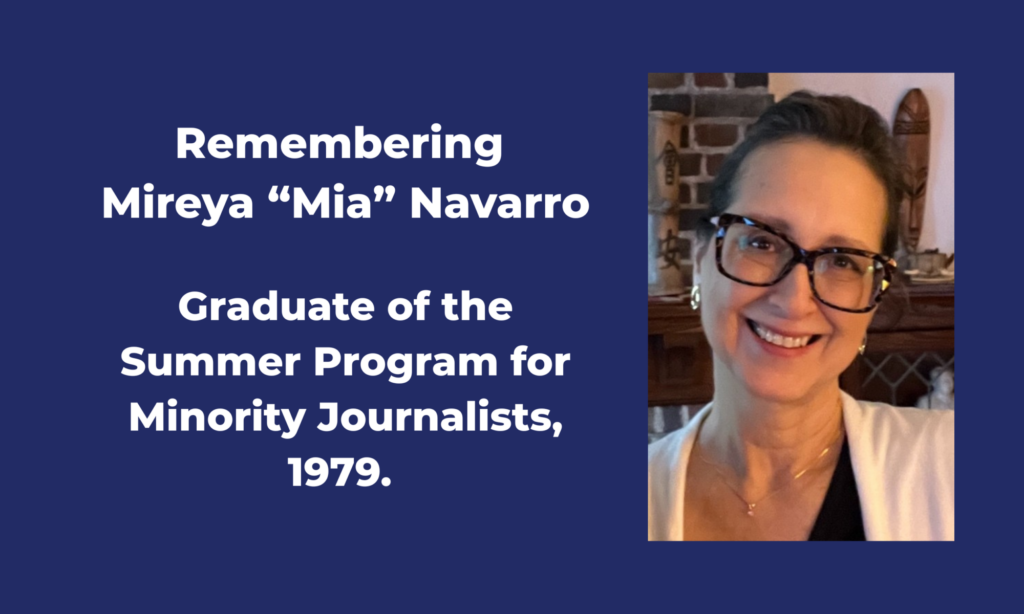
Mia Navarro, former reporter for the New York Times and Editor-In-Chief of Brennan en Español at the Brennan Center for Justice, passed away this week after a long battle with breast cancer.
Navarro was a classmate of Maynard Institute Co-Executive Director Evelyn Hsu at the Summer Program for Minority Journalists in 1979.
“Mia was a classmate in the institute’s summer-long journalism ‘boot camp,’ the Summer Program for Minority Journalists. Her talent, ability and knowledge were obvious from the first day,” Hsu wrote.
Navarro was remembered across social media platforms by friends and family and by the various outlets and professional organizations she worked for.
Friend and colleague Maite Junco wrote on Facebook: “We are heartbroken by the unexpected passing of our beloved friend Mireya Navarro, a fun-loving world traveler, fantastic cook and dancer, who journeyed in this world with impeccable taste and elegance. In the early 1990s, I’m pretty sure she was the only Puerto Rican woman reporter in the New York Times, elevating to the mainstream a gamut of hard and soft news stories, from women with AIDS to the ravages of hurricanes, from immigration to stepdogs and making traditional mallorcas.
She built a beautiful life with her husband Jim Sterngold.”
Junco also shared more information from Sterngold, who wrote, “I write to share the heartbreaking news that my wife, Mia Navarro, passed away yesterday after a 9-year battle with breast cancer. Mia was, through and through, a journalist and had a distinguished 28-year career at The New York Times.
She was very devoted to the paper, loved her years there, loved her close friends and colleagues and loved that she could contribute to the journalism on many important topics, from AIDS and the environment to 9/11 and public housing in New York. She wrote an article in the Times series, “How Race Is Lived in America,” which won a Pulitzer in 2001. She worked in Metro, was the Miami Bureau Chief for 5 years and worked in the Los Angeles bureau of the Times after we married so she could join me there.
Mia had a wonderful post-Times career, too. She joined the Brennan Center for Justice at the NYU Law School as a senior media person then conceived, designed, built and then ran, as Editor in Chief, Brennan’s Spanish-language website, Brennan en Español. Her innovation significantly expanded Brennan’s reach into a community heavily impacted by the social justice issues Brennan illuminates and fights for.
And a brief comment for those of you – perhaps all – surprised to learn that Mia was fighting cancer for so many years. Mia made a decision after she was diagnosed that she desperately wanted to live the life she wanted to live, on her terms, without having to constantly answer for her disease with friends. She knew this was uncommon and would perhaps be unpopular – and she respected others who chose differently – but she reflected deeply and felt this was the path to the best life she could enjoy under the circumstances. She lived on her terms.”
Sterngold added that there will not be a funeral, but that details on a memorial service were forthcoming.
The Brennan Center wrote through LinkedIn: “It is with a very heavy heart that we share the news that Mia Navarro, our beloved colleague and the trailblazing editor in chief of Brennan en español, has passed. She has spent the last 8 years at the Brennan Center working to expand access to the democratic process to Latino communities, a cause she cared deeply about. We’re all heartbroken to lose her and will miss her brilliance, humor, kindness, humility, leadership, and friendship. We will continue to work towards her vision of an inclusive, diverse, multilingual democracy.”
Chancellor Félix V. Matos Rodríguez, Chancellor of CUNY posted to Facebook, lauding Navarro’s coverage of the AIDS epidemic and her service as a role model for younger Latinx journalists.
“Saddened to learn of the passing of journalist Mireya Navarro after a long battle with cancer. A fellow Puerto Rican, she was a trailblazer at The New York Times in the early 1990s, covering the AIDS epidemic, the Caribbean and Central America before expanding her reporting to other beats. Through her pioneering work and example, she helped open doors for Latino journalists who followed,” Rodríguez wrote.
“After 28 years at the Times, she joined the Brennan Center for Justice at NYU Law, where she served as Editor-in-Chief of their Spanish-language website. She also shared her passion for journalism as an adjunct at the Craig Newmark Graduate School of Journalism at CUNY, where she created and taught a course on environmental reporting.
My heartfelt condolences to her husband, Jim Sterngold, a former CUNY Senior Advisor to the Chancellor, and to her colleagues, students, friends, and loved ones.”
Navarro was also remembered by NAHJ in a post that declared Navarro “a devoted champion of inclusive journalism, the Spanish-language and social justice in many forms.”
“A proud Boricua from the island, she also wrote fun features such as a story on the mallorca, a sweet, puffy, Puerto Rican pastry, and the ongoing debate between those who dance salsa on the two, versus those who dance old-school, on the one,” Former NAHJ President Evelyn Hernandez said.
“She launched the Spanish-language website Brennan En Español, a monthly newsletter, and as she put it, was ‘dedicated to informing the Latino community about issues of democracy and justice. We will remember her con cariño y orgullo.”
We’re partnering with the Kansas City Defender for Black Philanthropy Month! August is Black Philanthropy Month! Founded in…
The inaugural cohort of Fire Up Fellows represent the power and potential of diverse news in the State…
Fire Up is made possible by a budget allocation from the State of California and is part of…
By Celeste Barker-Bright for NonProfit Megaphone. Contains promotional content for the Maynard Institute.
The term “Fourth Estate” isn’t exactly a household concept, but it should be — now more than ever.
The Fourth Estate refers to the news media. It’s been part of our democracy so long that it originally described the printing press before expanding to cover broadcast and digital journalism as well.
This term is most commonly invoked to describe the news media’s civic role as a watchdog over government, functioning alongside — and holding accountable — the three traditional branches of power.
In the U.S., this idea is closely tied to the First Amendment because it asserts that the press holds a stature comparable to the three constitutional branches of government, or the core democratic failsafes of checks and balances. That standing was earned, not granted: in the early years of our republic a bold, scrappy press played an influential role in denouncing colonial rule. Once the Bill of Rights protected press freedom in 1791, journalism became an assertive force in the young nation.
Importantly, the watchdog function isn’t a formal constitutional guarantee, but a role the press has claimed and sustained through practice. At the same time, few laws directly govern how American journalism is practiced; like so many other institutions in a capitalist society, the media is largely driven by market forces.
It also depends on a media-savvy public capable of judging accuracy, holding biased outlets accountable, and withdrawing their attention and advertising dollars in response. It thrives only when the public trusts it enough to sustain it, and that trust depends in large part on whether people feel seen and supported by it.
If the press’s core democratic function is to inform the public and hold power accountable, then who gets to do that reporting — and whose stories get told — determines how well democracy actually works. That means equitable and respectful media representation of minorities isn’t just a peripheral workplace concern; it directly answers the question of whether journalism can fulfill its constitutional purpose.
Healthy democracies require more than periodic voting. They depend on equality, meaning that every citizen has the right to be heard and be given equal consideration in shaping public policy. This in turn depends on equal access to social determinants of health, such as education, employment, housing, and freedom from discrimination. When the media doesn’t shine a light on unequal access, it’s much harder to address.
As one journalism professor from the Columbia Journalism Review put it, journalism is fundamentally about giving the public the truthful information needed to make rational, empathetic decisions in a democratic society — a mission that depends on having enough varied perspectives in the room to catch blind spots before they reach the public.
When newsrooms are homogeneous (primarily staffed and managed by one race, gender, or other demographic factor), they struggle to detect, much less report on, the barriers that keep some communities from that equal footing. A press that doesn’t understand, investigate, or report on those realities can’t support equality or, in turn, a true democracy. Diversity in the media helps to keep these obstacles to power and resources in check, addressing real democratic deficits.
Newsroom diversity isn’t just an equity issue — it’s a safeguard against journalism being weaponized. Diversity in media statistics from Columbia Journalism Review found that racial and ethnic minorities made up almost 40% of the US population but less than 17% of newsroom staff at print and online publications, and only 13% of newspaper leadership, as of 2017.
That imbalance has consequences. When editorial decision-making lacks diverse voices and perspectives, harmful or poorly vetted content can slip through with less scrutiny.
Greater representation in leadership roles, in particular, creates stronger accountability and stronger safeguards against exclusionary or poorly substantiated narratives making it into a published story.
Democracy is healthiest when citizens are exposed to a genuine range of perspectives rather than a narrow, filtered version of reality. Diversity, equity, inclusion, and belonging (DEIB) in media coverage are crucial to the health and functioning of a democracy because they ensure audiences have access to a wide range of perspectives, which strengthens civic engagement and helps hold power accountable across all parts of democratic society.
Journalism education plays a direct role here: students need to learn how to produce content that reflects society’s pluralism and reduces the risk of echo chambers by exposing audiences to differing opinions. Without that training, journalists are more likely to produce work — and news content — that lacks inclusivity.
Building diversity and inclusion in media outlets isn’t a one-time initiative — it’s an ongoing organizational commitment, but the payoff for both journalism quality and business sustainability is significant.
Hiring diverse staff is only the first step. Without belonging, even diverse and equitable workplaces can struggle with disengagement or high turnover when employees don’t truly feel included. Organizations should aim for a culture where diversity creates access and opportunity while belonging ensures people feel genuinely connected and empowered once they’re there.
The effects of representation in the media, along with genuine inclusion and belonging, show up directly in the newsroom’s output and its bottom line. When journalists reflect a broader range of lived experiences, coverage becomes more representative and less likely to overlook or misinterpret marginalized perspectives, while inclusive practices help journalists ask better questions, build trust with sources, and avoid harmful stereotypes.
That, in turn, translates into stronger reputations and ratings. Diverse teams also tend to perform better organizationally, bringing a wider range of ideas and problem-solving approaches that lead to better decision-making and more innovative content strategies.
In an industry facing declining trust and shrinking revenue, DEIB isn’t a distraction from journalism’s core mission — it’s a direct investment in the accuracy, credibility, and relevance that keep the Fourth Estate viable, and keep American democracy alive and well-informed.
The Maynard Institute inspires and powers the national, collaborative drive for DEIB in news media. Our culture-shiftantiracism training programs have helped create decades of news industry trailblazers, all of whom belong to the “Maynard Family”: a community of deep caring and intergenerational support for journalists of color. Programs by the Maynard Institute are open to all applicants, and the Maynard Institute is committed to addressing the underrepresentation of people of color and other historically disadvantaged groups in media-related professions.
The Maynard Institute’s Fault Lines® Culture Shift Program gives media professionals the tools to recognize and address biases that shape news coverage. Rooted in the Fault Lines® framework, our program helps organizations move far beyond performative DEI efforts.
Instead, we use intentional DEI practices — built on nearly 50 years of DEI training in media spaces — that are proven to create inclusive workplaces that connect with diverse communities.
Fill out our interest form and register to bring Maynard’s Fault Lines® training to your company today!
The Maynard Institute also sponsored afternoon coffee at the impeccably executed convention, attended panels led by subject matter…
“She launched the Spanish-language website Brennan En Español, a monthly newsletter, and as she put it, was ‘dedicated…
“This wouldn’t have been possible without the extraordinary faculty, who are giving their time and talent to help…
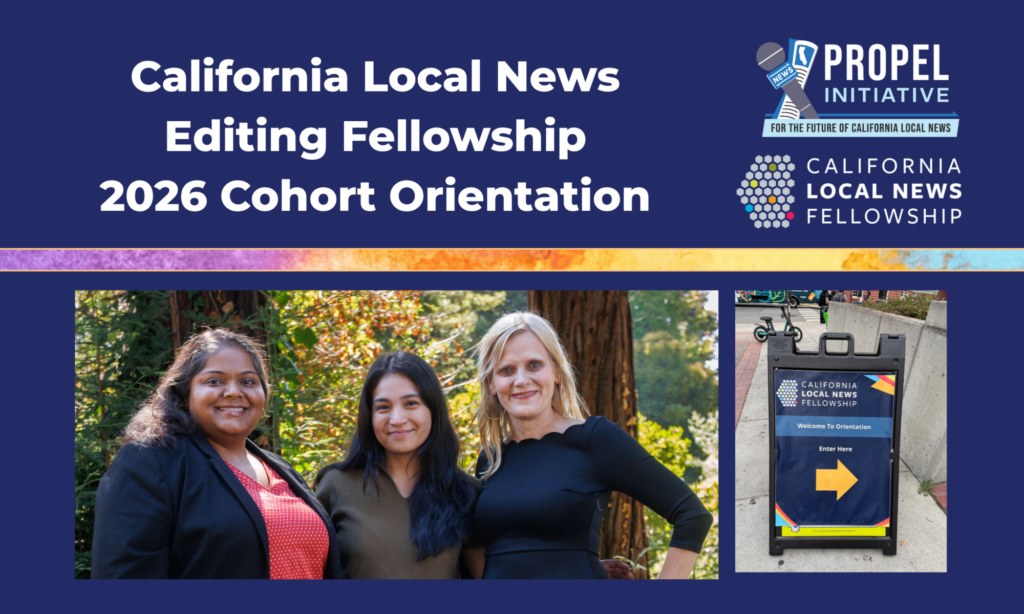
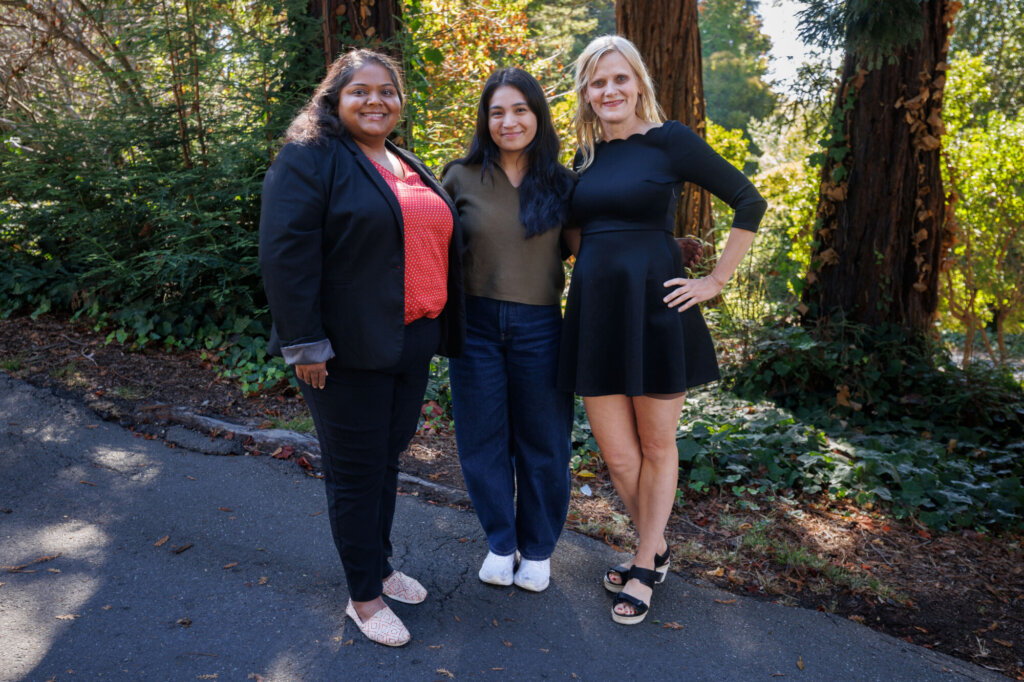
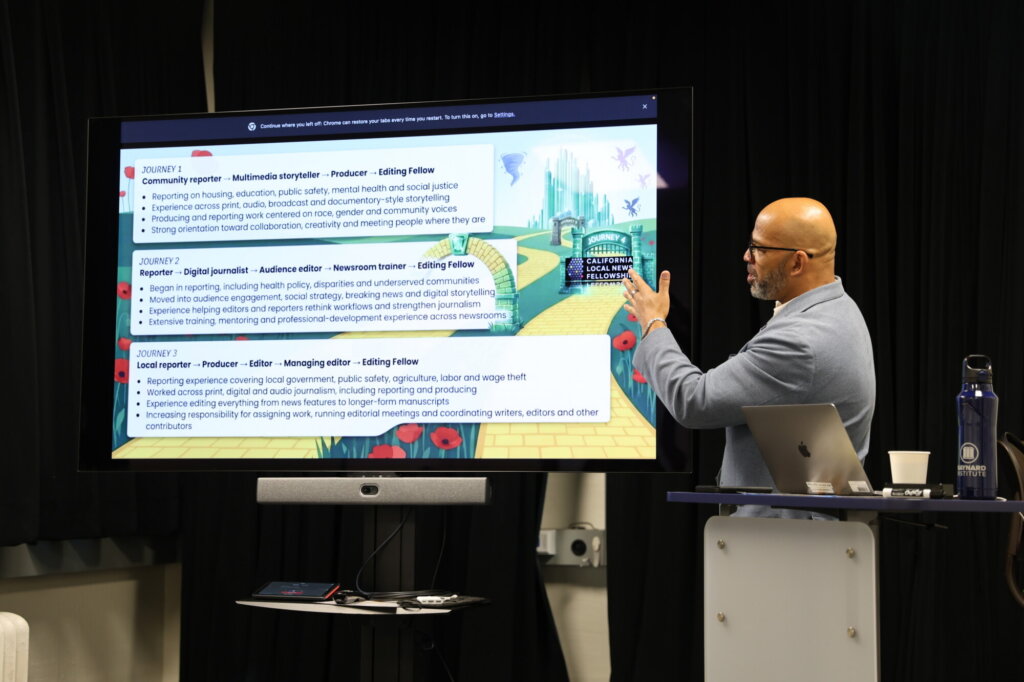
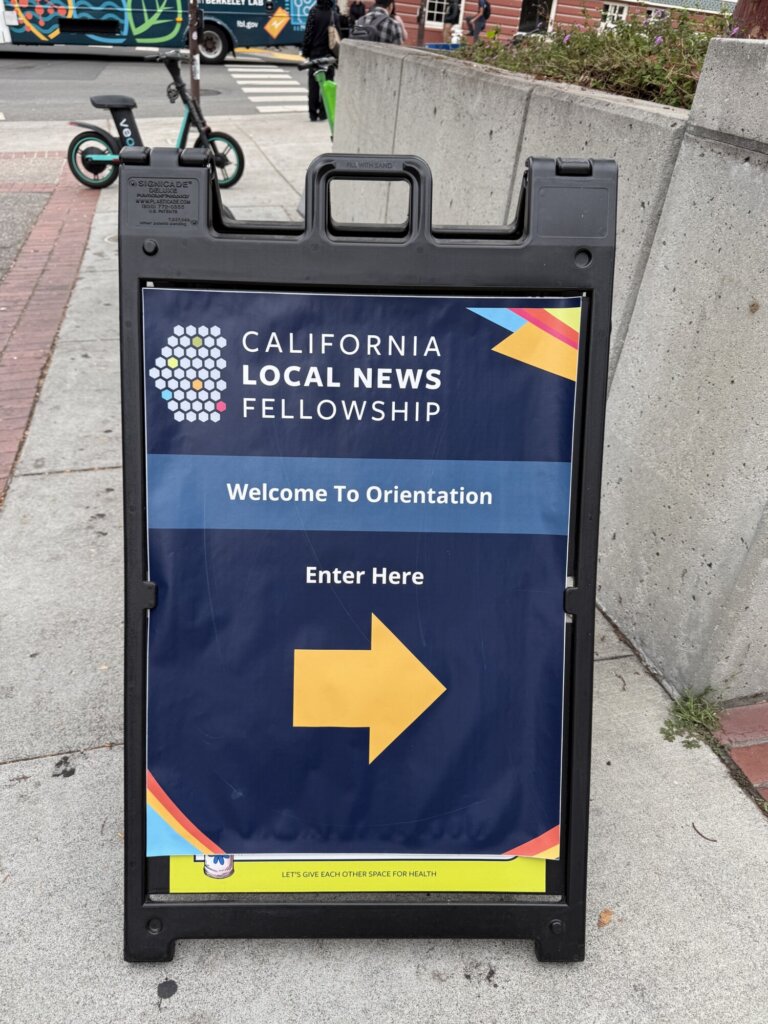
The California Local News Fellowship recently conducted orientation for its 2026 cohort of 35 journalists, who are reporting on critical issues in communities that have historically lacked sustained local news coverage. Three journalists are part of the pilot, one-year editing fellowship, a Maynard Institute partnership designed for early- to mid-career reporters or producers to move into editing roles.
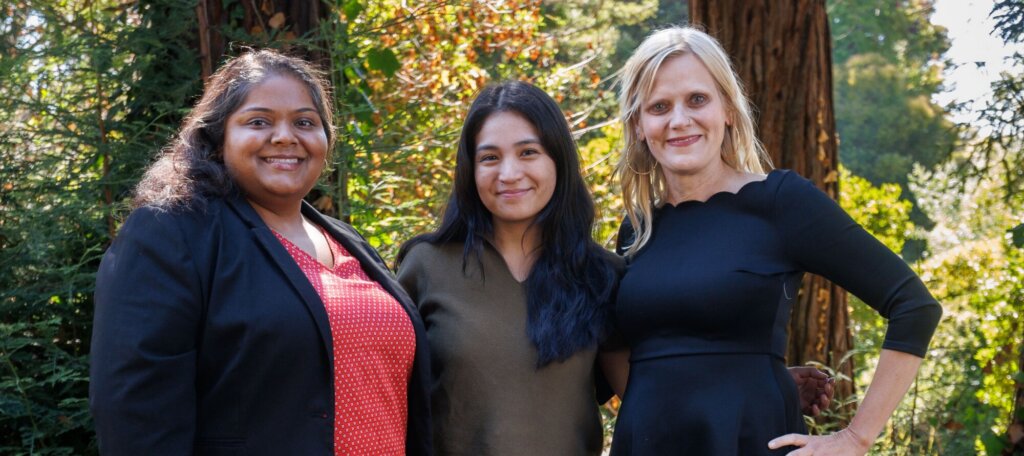
The fellows were selected from nearly 30 applicants from across California and around the world to work in newsrooms that were also independently selected. They receive a salary and benefits paid for by the state through the University of California, Berkeley, along with hands-on support from the UC Berkeley-based fellowship staff and through the Propel Initiative, led by the Maynard Institute.
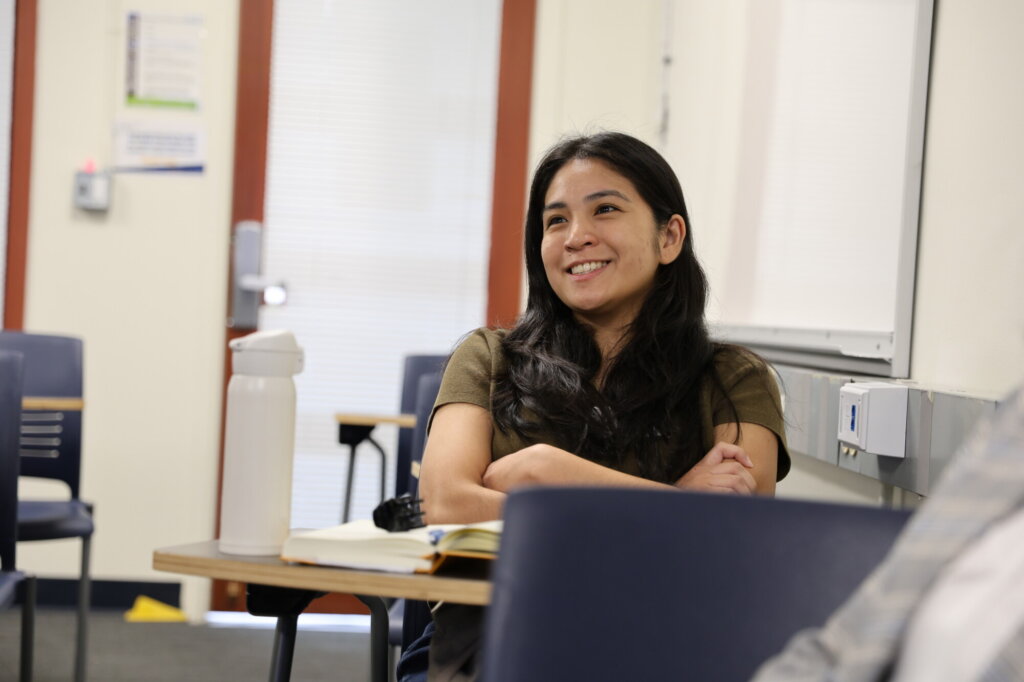
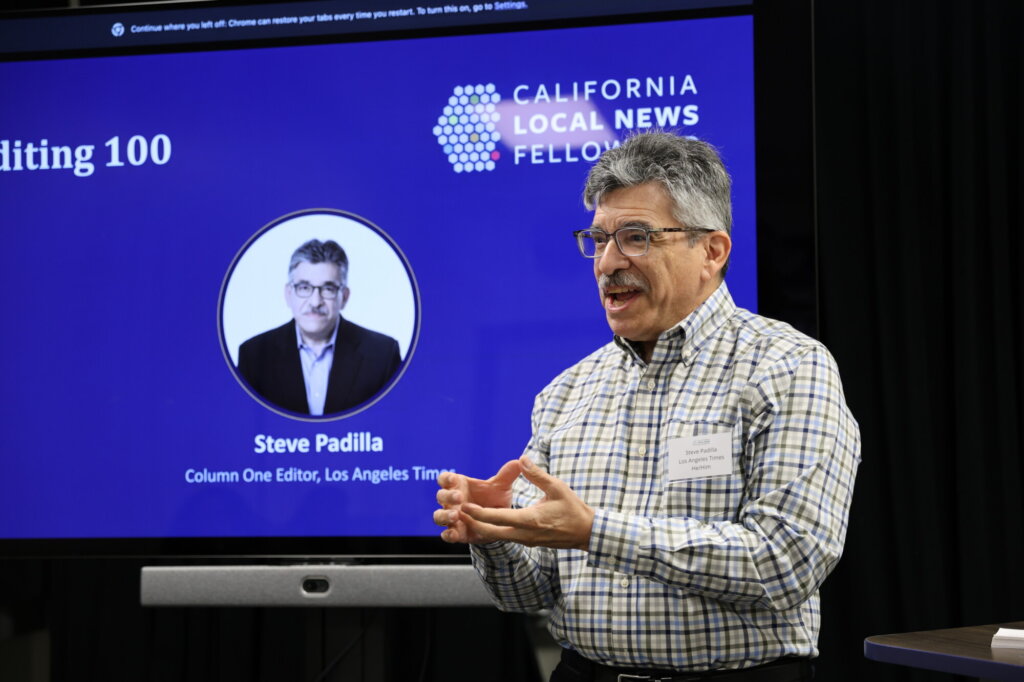
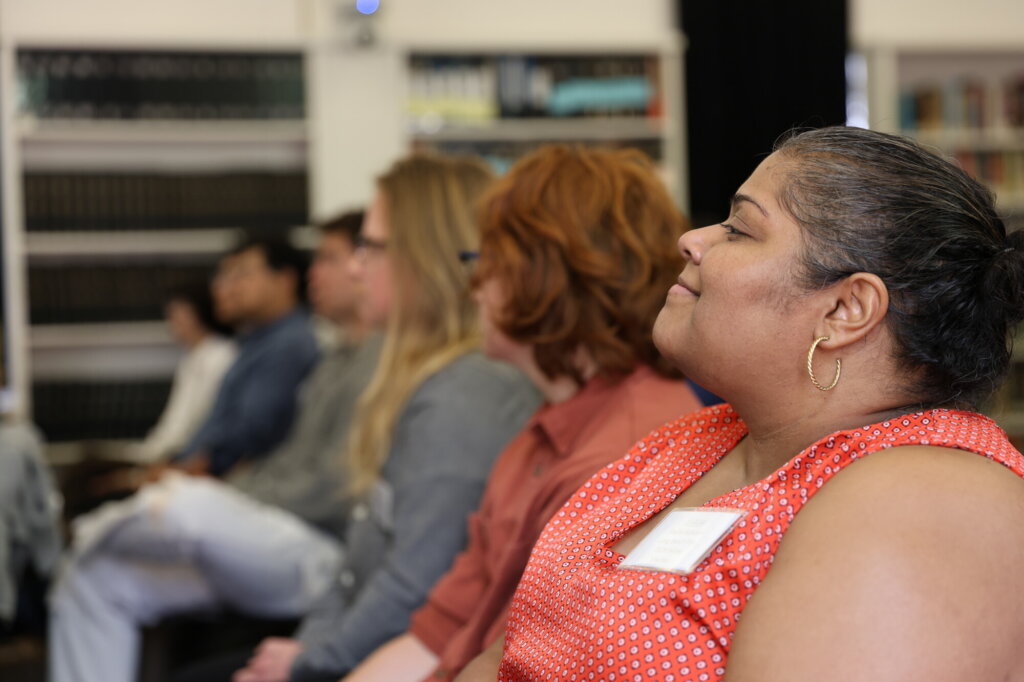
During the two-day orientation, the editing fellows participated in intensive training led by veteran editors and news leaders. The sessions focused on the critical skills editors need to manage people, edit content and navigate the evolving challenges of daily journalism.
The fellows developed skills in:
During the yearlong fellowship, the fellows will continue to receive training and mentorship in editing and leadership from Maynard Institute trainers.
“There is a strong need for good frontline editors in news organizations, and as a graduate of the Maynard Editing Program, it was important to design the curriculum with that in mind,” Felecia D. Henderson said. “Understanding what a new editor needs to know and what newsroom leaders expect of their editors are important. Rebecca Martin, newsroom cohort manager, and I want to equip the fellows with solid editing knowledge and tools.
“This wouldn’t have been possible without the extraordinary faculty, who are giving their time and talent to help ensure the editing fellows have a strong foundation.”
The Maynard Institute also sponsored afternoon coffee at the impeccably executed convention, attended panels led by subject matter…
“She launched the Spanish-language website Brennan En Español, a monthly newsletter, and as she put it, was ‘dedicated…
Fill out our interest form and register to bring Maynard’s Fault Lines® training to your company today!
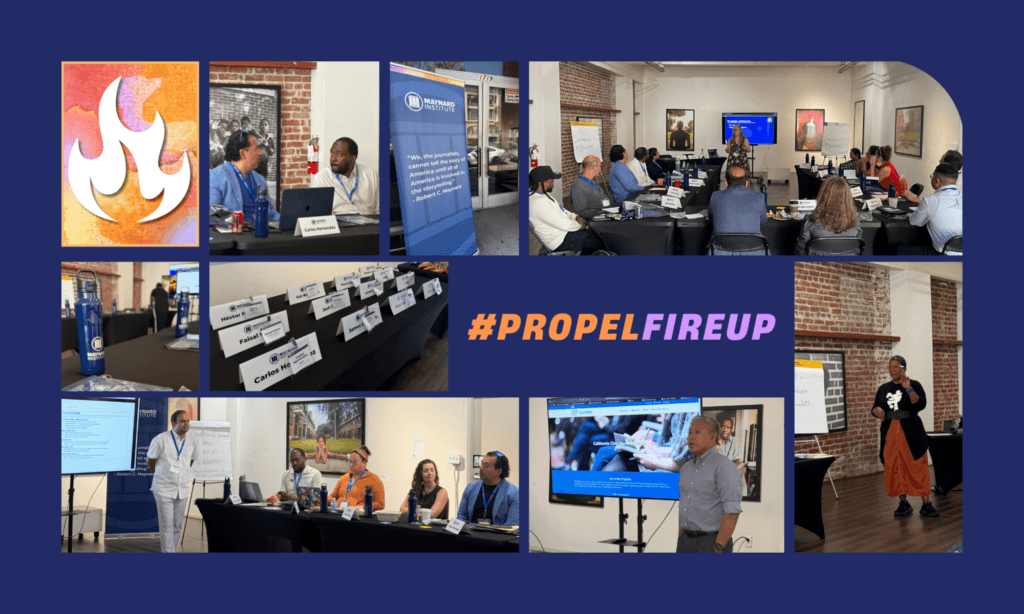
The Fire Up Entrepreneurship Program launched July 29 in Oakland with training designed to build new business models, help Fire Up Fellows dig into the value proposition of their work, and apply the Maynard Institute’s Fault Lines® framework to their journalism and understanding of audience.
Fellows inventoried their resources and revenue streams, and they learned to identify their key activities and key partners.
Doris Truong, deputy director of the Fire Up program, led a session on listening for values to deepen relationships.
“We started selecting this cohort in the spring, so it’s truly inspiring to see them come together for the first time,” Truong said. “By sharing their successes and obstacles, they realize they’re not alone and they can support each other despite their distinct audiences. We also learned a theme of commitment to community runs through this cohort.”
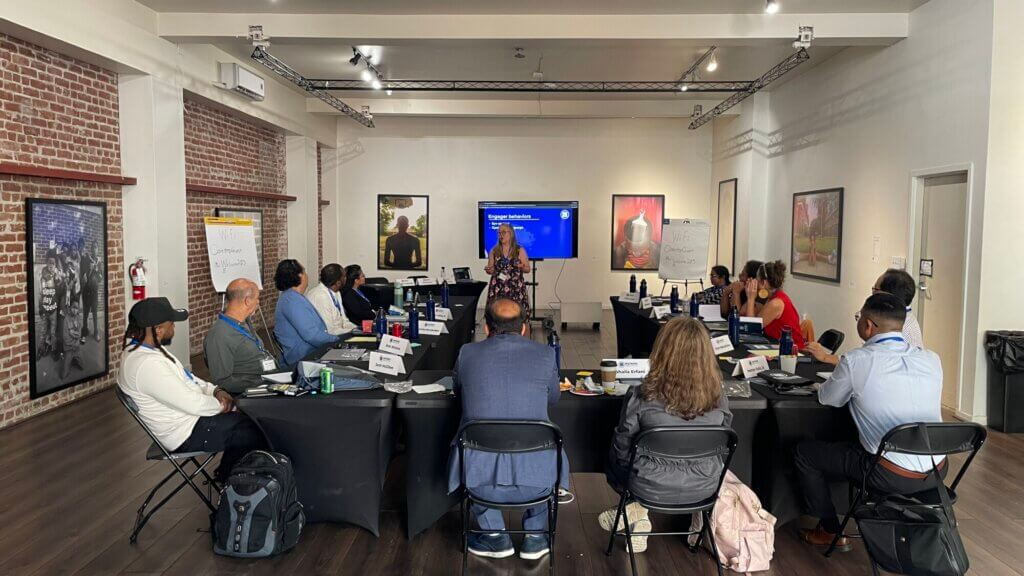
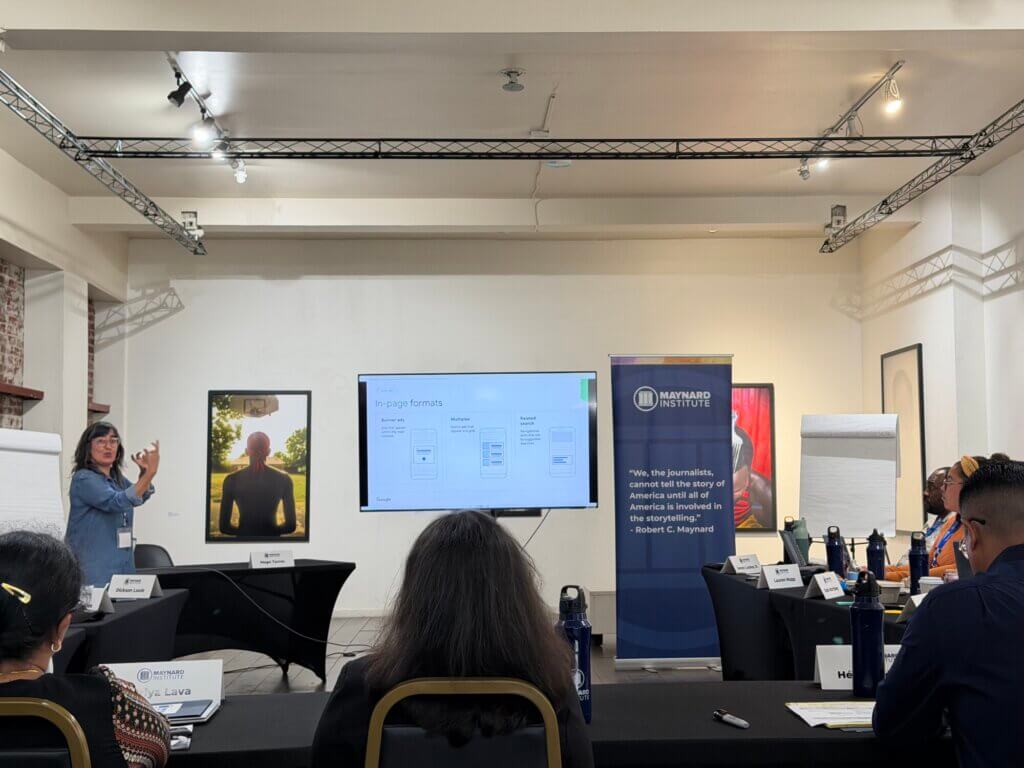
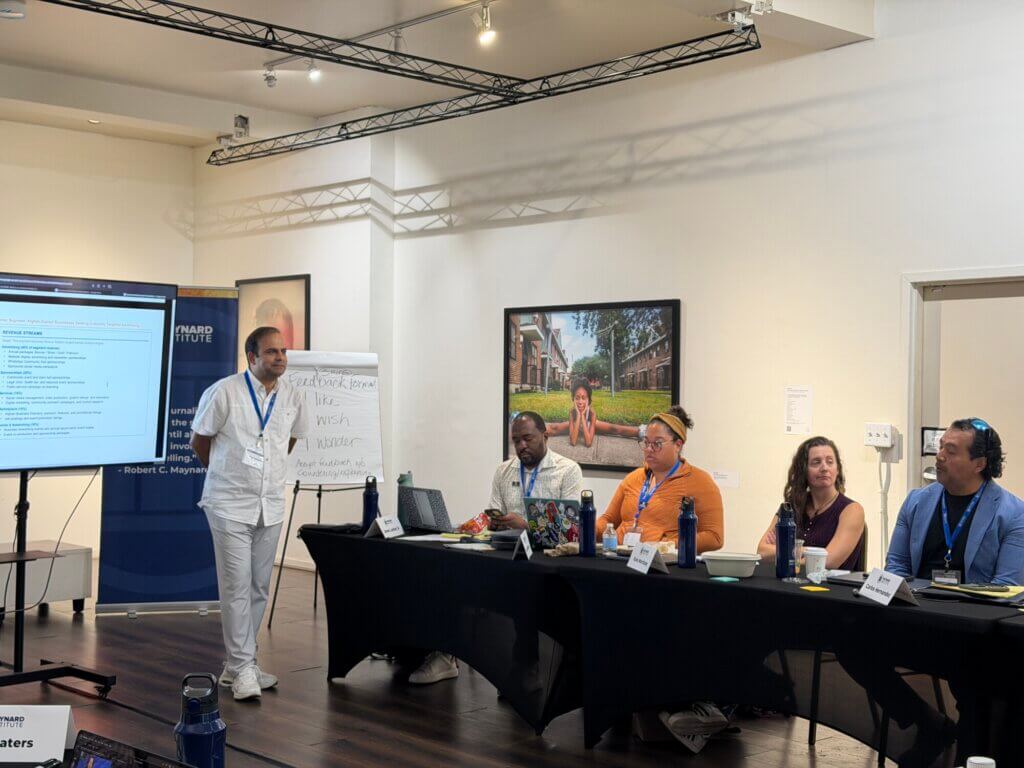
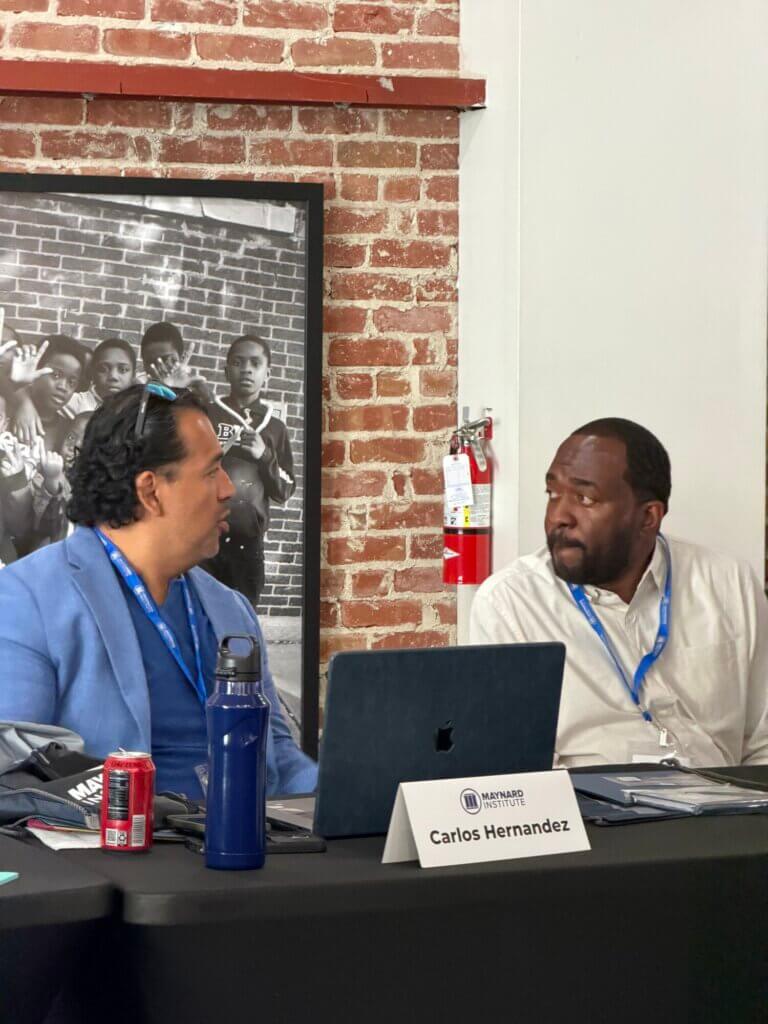
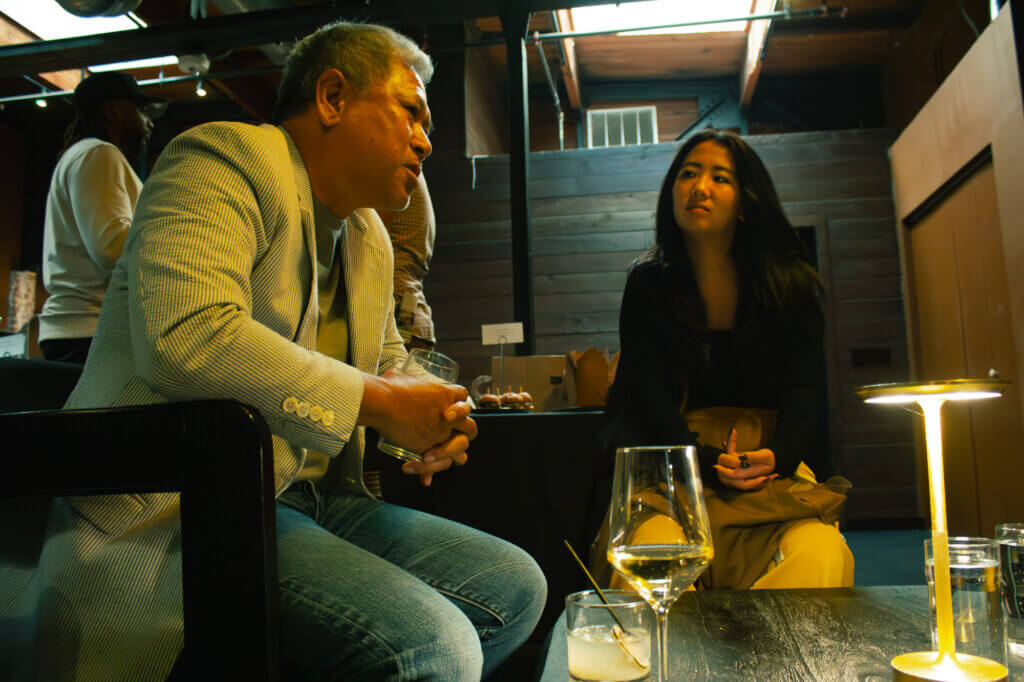
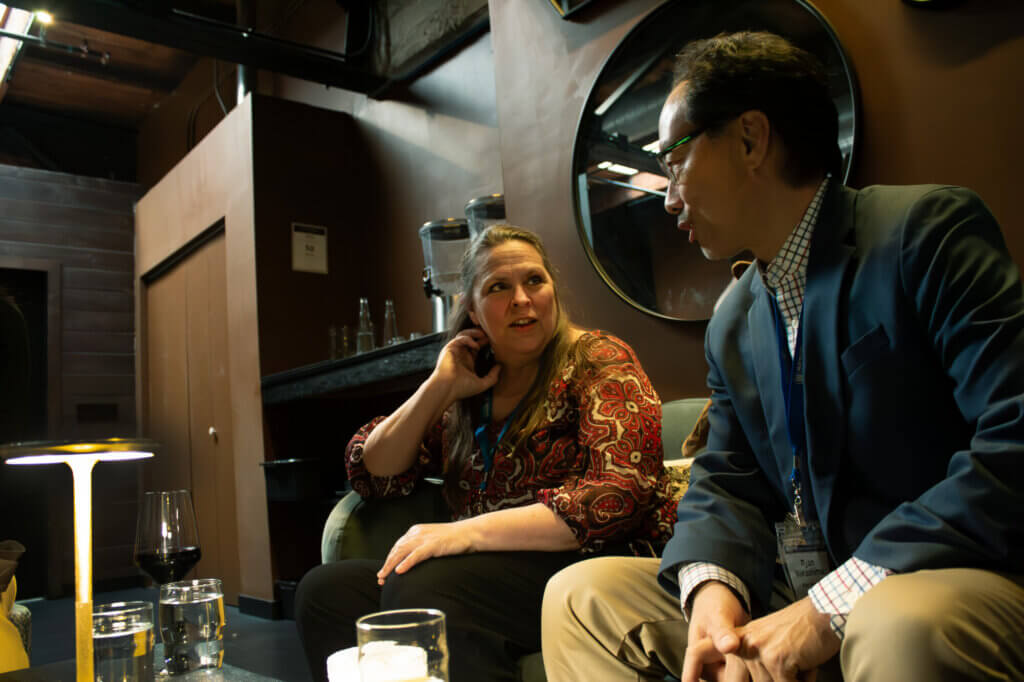
After an introduction to Maynard Institute history, Fire Up Fellows along with colleagues from their respective outlets attended a mixer with California Propel Local News Initiative partners and Bay Area journalists to discuss journalism and how to overcome industry challenges.
Héctor Félix Jr., publisher and president of El Informador del Valle, said the first few days of the Fire Up program were “a great, one-of-a-kind learning experience in an entrepreneurship program that fires up your business idea for success.”
Martin G. Reynolds, co-executive director of the Maynard Institute, said it was invigorating to open the program and to witness California’s investment in local news directly supporting publishers who serve vastly different communities.
“My session on the Fault Lines® and belonging was intended to show the Fellows that biases and blind spots don’t just create challenges within an organization,” Reynolds said. “They can also mean missed opportunities to build trust and deepen relationships with existing and new audiences, think more expansively about revenue opportunities and forge partnerships they otherwise might not have considered.”
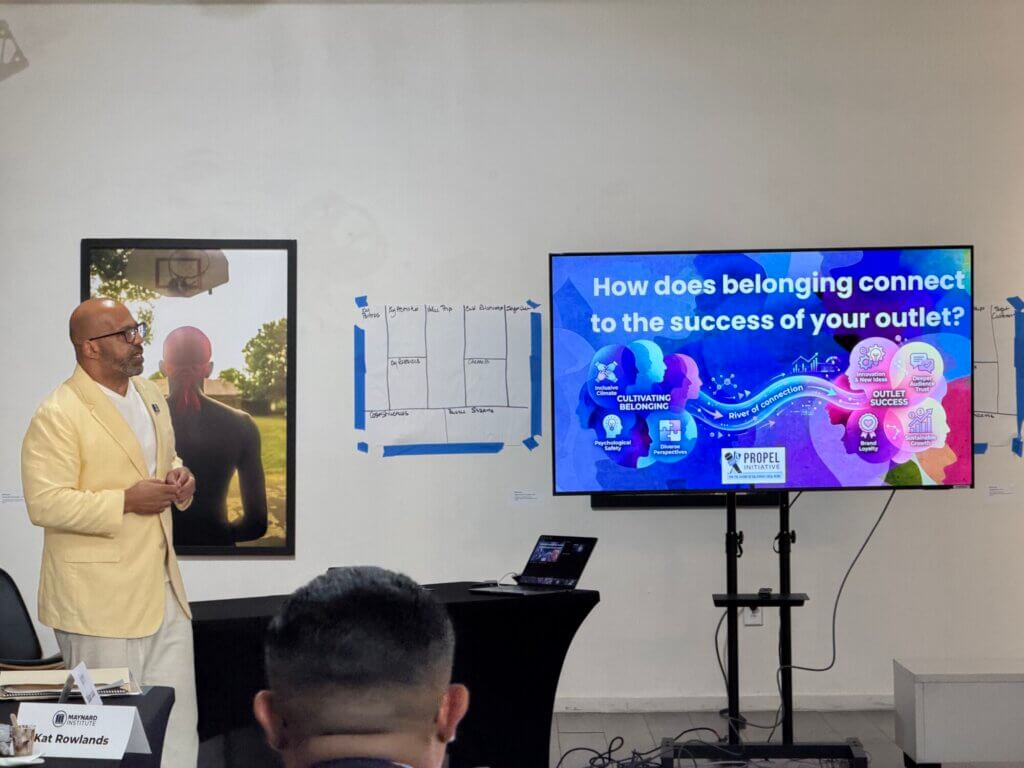
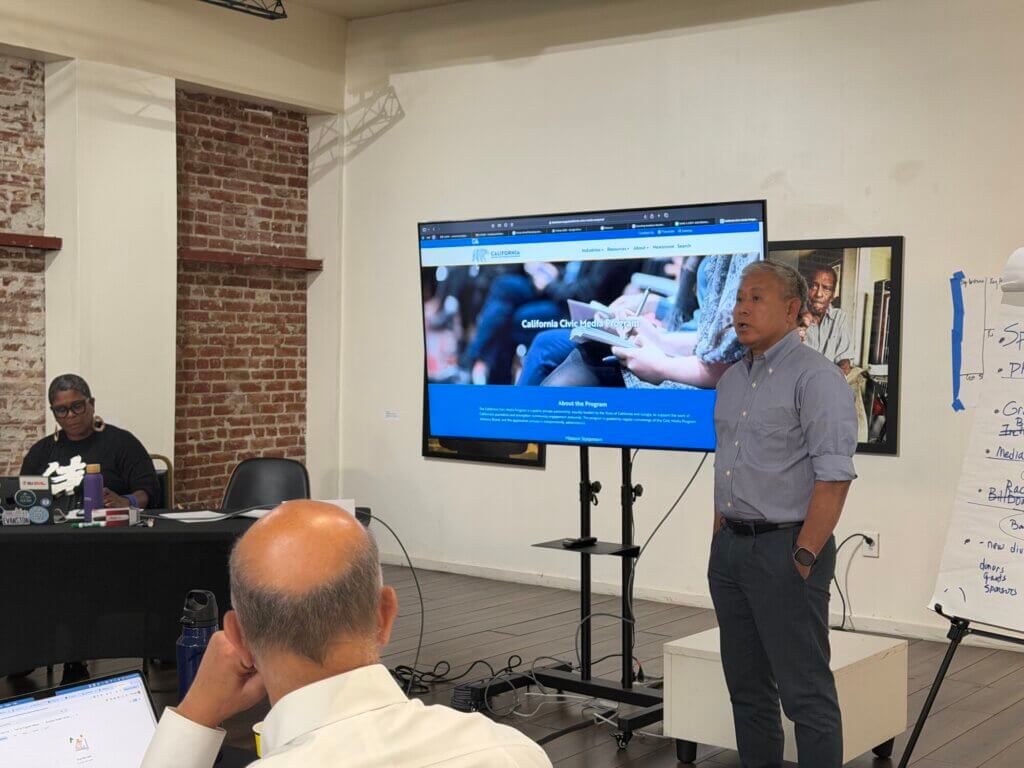
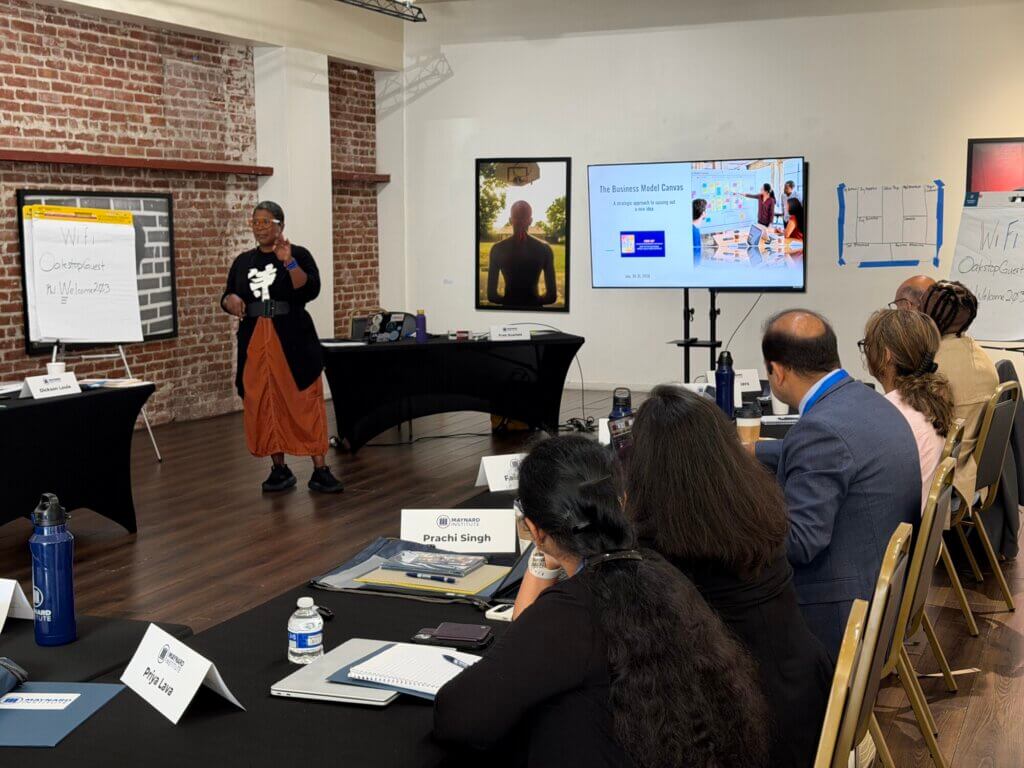
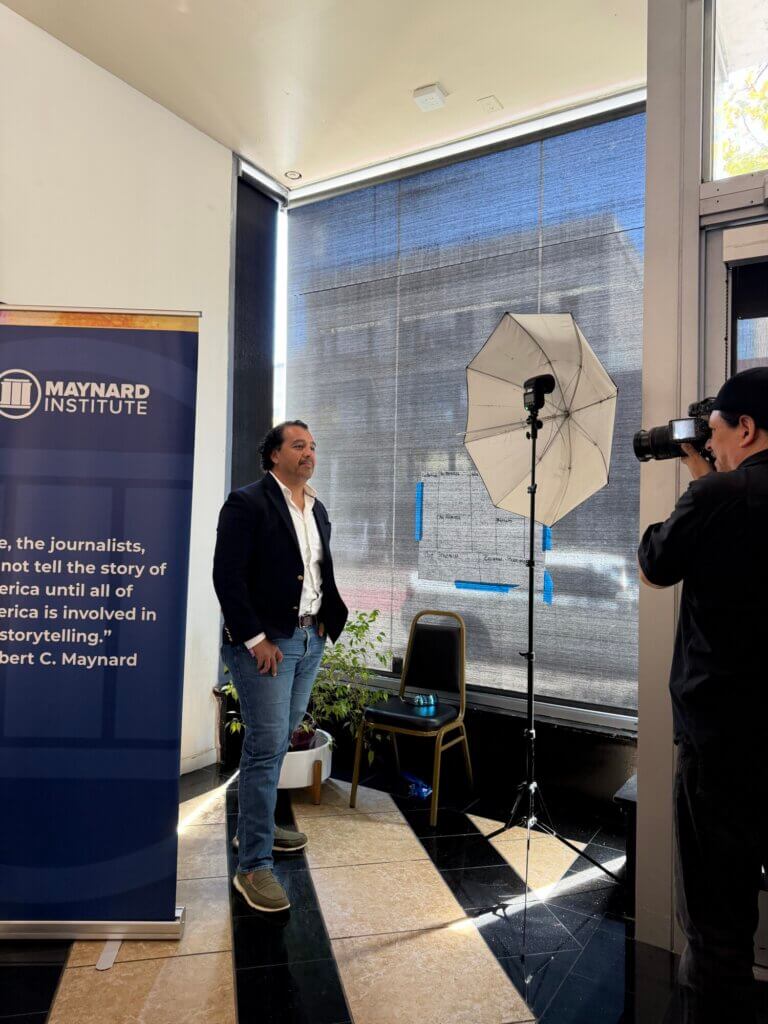
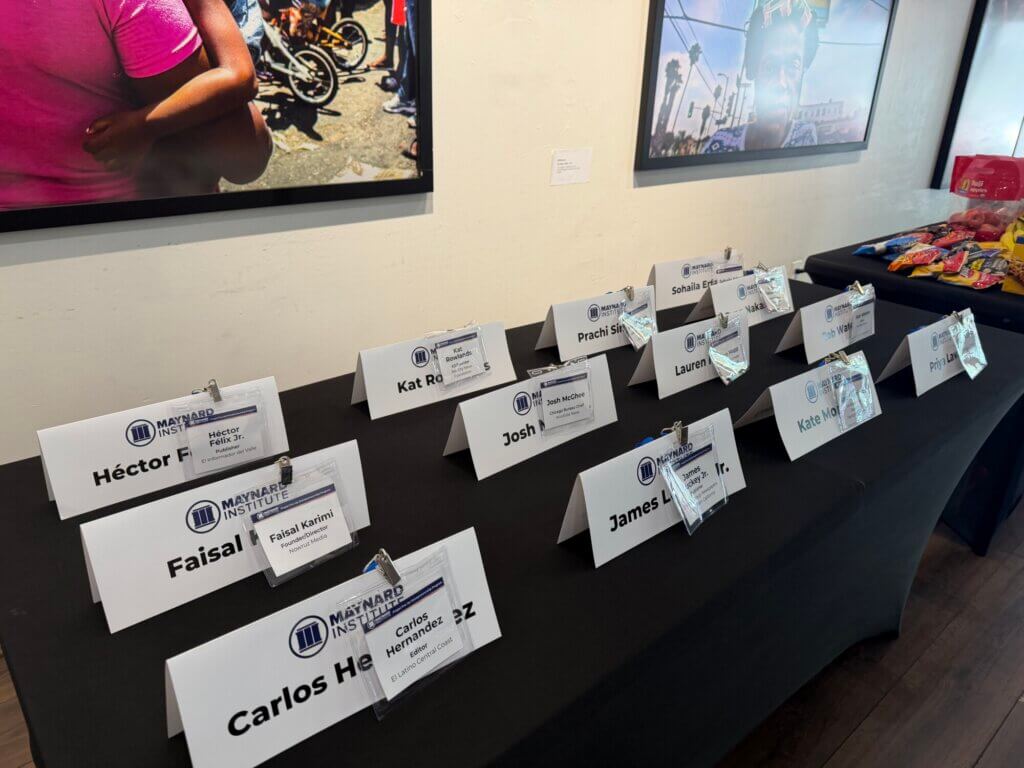
This initial training offered Fellows and their colleagues frameworks to consider different perspectives as entrepreneurs and as members of their communities.
“I appreciated the chance to review our business model and think more carefully about our audience, services, and revenue opportunities,” Faisal Karimi, founder and director of Nowruz Media, said. “… I also enjoyed learning from other media entrepreneurs and sharing our experiences and challenges.”
Fellows were asked to expand on existing business plans.
“The Oakland sessions were useful in a way most training isn’t,” said James Luckey Jr., publisher and editor of Observer Group Newspapers of Southern California. The trainers “didn’t let us map the whole business. They made us pick one new revenue stream, build [a model] and defend it in front of the room. That’s the part that stuck. I’ve sat through plenty of workshops where you leave with a nice worksheet and nothing to do on Monday. This wasn’t that.”
The Fire Up program, which provides each outlet with a $20,000 grant, continues through January with two additional in-person trainings and Zoom sessions on audience, community and product.
The Maynard Institute also sponsored afternoon coffee at the impeccably executed convention, attended panels led by subject matter…
“She launched the Spanish-language website Brennan En Español, a monthly newsletter, and as she put it, was ‘dedicated…
Fill out our interest form and register to bring Maynard’s Fault Lines® training to your company today!

By Celeste Barker Bright for Nonprofit Megaphone, contains promotional content for the Maynard Institute and additional reporting from Amani Hamed.
Journalists who cover war, crime, disaster and civil unrest are often the first witnesses to human tragedy. Yet the psychological cost of that work is only beginning to be recognized, and it’s not always limited to what we think of as conflict journalism. A growing body of research shows that the people who bring us the most critical news stories, including supporting newsroom staff, carry mental health burdens that go largely unacknowledged and untreated.
Much of the harm journalists absorb is indirect, yet no less powerful. Here’s how exposure to distressing events and content impacts media professionals.
Providing news coverage of shootings, interviewing survivors of violence, editing graphic footage or arriving in the aftermath of a crime can cause either secondary trauma or vicarious trauma in a news reporter. These are different but often overlapping stress responses to witnessing or hearing about someone else’s firsthand trauma.
These forms of trauma are common among frontline workers, and journalists — who repeatedly encounter the suffering of others — are no exception. This hidden but deeply harmful mental health crisis affects American journalists and their managers in ways that can cause a variety of challenges, including compassion fatigue, alcohol misuse, depression, anxiety and even suicidal ideation.
The most acute outcomes mirror those seen in soldiers and emergency responders. Journalists arrive at the same terrible scenes as first responders and can suffer post-traumatic stress disorder (PTSD) in the same way. Left unaddressed, trauma can erode a reporter’s ability to work and to sustain healthy personal relationships.
Prevalence data reinforces the concern: in 2022, for example, more than 60% of media professionals surveyed across several countries reported elevated anxiety, and journalists covering war and conflict showed significantly higher rates of PTSD, depression, and anxiety.
A 2025 survey of 463 journalists across Europe found that 60% of journalists surveyed had experienced some level of burnout.
In 2023, the UNC Hussman School of Journalism and Media released their “local news burnout report,” a survey of more than 500 local journalists by the Center for Innovation and Sustainability in Local Media.
Using the “Copenhagen Burnout Inventory,” a research questionnaire tool to physical and psychological fatigue, the UNC Hussman and Center for Innovation and Sustainability in Local Media report found that approximately 70% of journalists surveyed had experienced personal and work-related burnout, and 72% had thought about leaving their current job.
Journalists, who often view their career as more of a calling because of its benefit to society, then fall into a “vocational crisis:” do they stay in a profession where they have found their life’s mission, but are killing themselves to make ends meet? Or, do they leave journalism for marketing and trade making a difference for making enough money?
Others, like Maynard faculty member Leslie Rangel, have had to radically change their relationship to work in order to remain in journalism. Rangel faced burnout as a television journalist and started “The News Yogi” to help fellow journalists build resilience and find their center. (She will lead a workshop on Resilience and Balance, Strategies for Managing Burnout at the Propel Regional Training Series implemented by the Maynard Institute in Burbank in October.)
Burnout remains a problem in journalism, and as Rangel continues in journalism as Deputy Managing Editor of the Barbed Wire, she says these resilience practices are also lessons she’s applying to herself.
Not everyone is affected equally by the mental health challenges of covering distressing phenomena. Psychiatrist Anthony Feinstein, who has studied frontline journalists for two decades, has found that being a woman or having a prior history of mental illness increases the likelihood of PTSD symptoms. His research also points to a powerful protective factor: strong personal relationships act as a buffer against distress. Other historically marginalized groups can also be at increased risk for experiencing PTSD and other disorders.
Financial pressures across the media industry have reshaped who does stressful reporting and how. With advertising revenue collapsing and layoffs mounting, a growing share of media professionals now work in freelance journalist jobs. These contract reporters often lack the medical benefits, institutional resources and everyday camaraderie of a newsroom. Many also fear that admitting to trauma could cost them future assignments, leaving them first responders to tragedy without a safety net.
Perhaps the greatest barrier to getting mental health support is stigma. Journalism has long prized toughness and self-reliance, and many reporters worry that acknowledging pain will mark them as weak or unfit for the job. That reticence keeps people from seeking help even when support exists.
Experts argue the remedy is partly a matter of professional culture: newsrooms must normalize asking for help, treat self-care as seriously as fact-checking and encourage colleagues to check in on one another. Journalists who receive therapy typically fare measurably better than those who do not.
For journalists of color, these pressures are often compounded by burdens their white colleagues rarely face.
Covering racial violence can be uniquely painful when the victims share your identity. Black journalists who reported on the killings of George Floyd and others have described the strain of returning, day after day, to stories of Black death and injustice, with some dreading the morning news or needing to step away entirely.
That personal toll is heightened by disparities in care: only about one in three Black Americans who need mental health services receives them, and stigma within the community can further discourage help-seeking.
The challenges extend beyond the stories themselves. Minority journalists frequently confront targeted online abuse. Pew Research Center data indicates that roughly 27% of Black, 27% of Asian and 20% of Hispanic journalists report harassment based on race or ethnicity, compared with just 5% of white journalists.
Many also navigate predominantly white newsrooms that can feel unwelcoming, face pressure to constantly prove themselves or find themselves pigeonholed into covering only their own communities. Historical and collective traumas can add a further layer, turning a single assignment into a trigger for deeper generational pain.
Across the research, one theme recurs: news organizations have a moral obligation to protect the people they send toward danger or into distressing situations. That means education, accessible resources, trauma-informed leadership and attention to those most exposed. Healthy journalists, ultimately, produce better journalism — and the quality of the news depends on it.
The Maynard Institute for Journalism Education was founded in 1977 by Robert C. Maynard and a cohort of news leaders representing diverse perspectives across the Fault Lines of race, class, geography, generation, gender and more. Ever since, our newsroom transformation and other training programs have helped create decades of news industry trailblazers, all of whom belong to the “Maynard Family” — a community of deep care and intergenerational support for journalists of diverse beats and backgrounds.
In 2026, a budget allocation from the State of California continued support for the California Local News Fellowship, run through Berkeley Journalism, and the Propel Initiative, implemented by the Maynard Institute. The California Local News Fellowship places early-career reporters and editors in local California newsrooms in two-year fellowships. The Maynard Institute provides intensive skill-building, training and mentoring to California Local News Fellows.
By implementing the Propel Initiative and its associated programs the Propel Regional Training Series and the Fire Up Entrepreneurship Program, the Maynard Institute strengthens local journalism, training newsroom leaders to fortify a sustainable, diverse news ecosystem.
Together, the California Local News Fellowship and Propel Initiative programs support hundreds of newsrooms annually. Explore our programs or connect with us to see how we can help you or your organization navigate the biggest challenges in journalism today. If you’re able, consider supporting our work so we can continue to elevate the quality of journalism in the U.S. from every angle.
The Maynard Institute also sponsored afternoon coffee at the impeccably executed convention, attended panels led by subject matter…
“She launched the Spanish-language website Brennan En Español, a monthly newsletter, and as she put it, was ‘dedicated…
Fill out our interest form and register to bring Maynard’s Fault Lines® training to your company today!
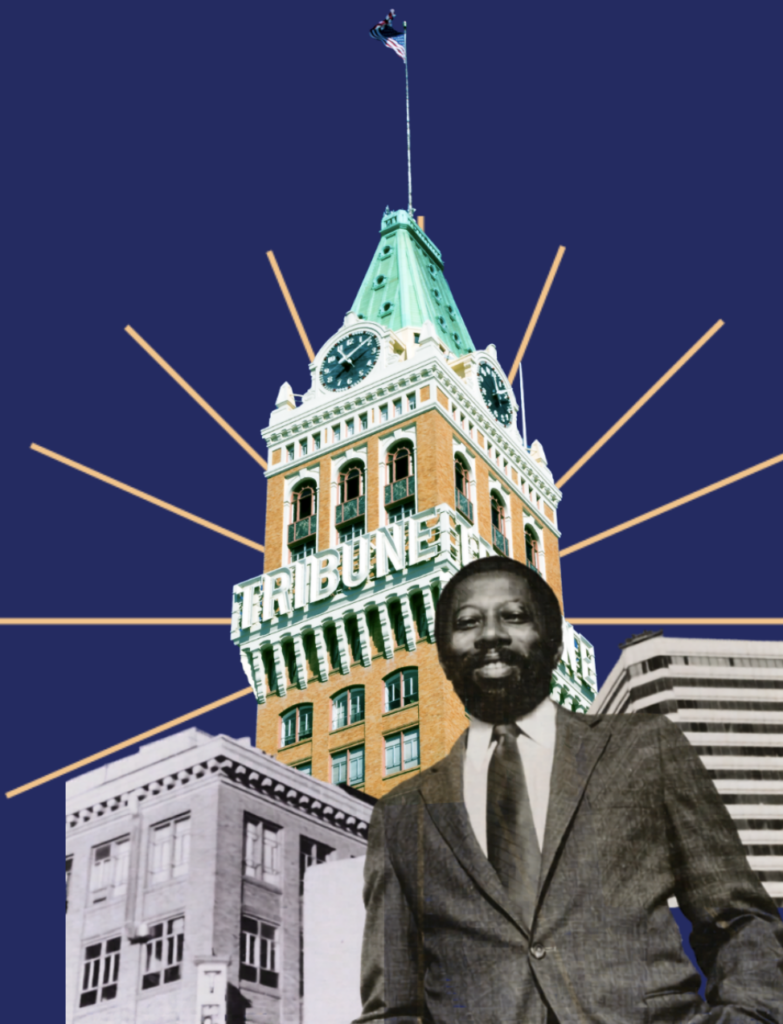
On Robert C. Maynard’s legacy on the occasion of his birthday

By Amani Hamed, Community Engagement Manager, the Maynard Institute
“It was once said by an eminent journalist that our business at best is ‘writing the first rough draft of history.’ The emphasis in that formulation is obviously on the word rough: in such a process, we are bound to be excessive when the circumstances are dramatic. But we have a responsibility that senators and mayors, police chiefs and attorneys general don’t have. That is the responsibility that accompanies the beleaguered blessings of the First Amendment. It is to be ever so restrained and thoughtful about the implications in the expressions of those with partisan interests in the stories we cover. Hyperbole has no place in the news.” – Robert C. Maynard, “No Place for Hyperbole,” 1973.
Today, Wednesday June 17, is Robert C. Maynard’s birthday. He was born on this day in 1937, and passed away after a long battle with cancer in 1993. Today, he would be 89 years old.
Looking back through the essays, articles and memoirs of Robert C. Maynard collected in the book “Letters to My Children,” compiled after his death by his daughter, Dori J. Maynard, it’s difficult not to view him as a sort of journalistic oracle.
Doubly difficult is the experience of looking through his predictions, his lamentations, his sharp critical analysis of an America struggling to limp into the television news revolution post-Jim Crow and realizing that not nearly enough has changed since his time.
His predictions and lamentations appear equally prescient; the things he predicted have come to pass. The things he mourned as symptoms racism, classism, sexism, geographical and generational bias have, in many ways, lingered.
I struggle to grasp what I would say to him to explain this moment and the things that have transpired since his death. How could I, as a journalist, convey to Robert C. Maynard the murder of George Floyd, the DEI renaissance amid the Black Lives Matter movement, the COVID-19 pandemic, the January 6th insurrection? How could I explain a second Trump administration, the defunding of public media, the attacks on our Civil Rights?
The shortest answer is that I couldn’t. I wouldn’t endeavor to explain. I would simply have him read the news.
Many of us read those more recent headlines as events unfolded. We watched those events tumble out on our television news or social media feeds. Some of us were the journalists recording events like the pandemic shutdown, the student encampments protesting genocide in Palestine, the ICE raids in Chicago and Minneapolis, and recorded them as that “first rough draft of history.”
The words Bob Maynard wrote decades ago may sting in how their truth reverberates, and the echo of the past sounds only too similar to the shrieking injustices of our present reality.
Though examining his words it is easiest to see the things that remain, the wounds our nation has not worked hard enough to heal, a deeper meditation reflects glimpses of the vision he sought to make real: a nation in which “all Americans have front-door access to the truth.” In which journalists of diverse backgrounds tell the stories of their communities, and give us all the tools to shape our nation’s future.
“The effect of this phenomenon is best viewed from two vantage points. I speak of the funeral homes and the emergency wards of the hospitals. It is in these places that the import of what we have allowed to happen can be fully appreciated.” – A Deadly Proliferation of Guns, 1988.
In the year 2025, mass shootings killed 358 people and injured at least 1,843 others. Even with gun violence on the rise in 1988, and Bob Maynard witnessing the dialogue (or lack thereof) between “urban” and “country” gun owners, the gun lobby, medical experts and grieving parents, I shudder to think what he would have made of Sandy Hook. Of Uvalde. Of Annunciation School in Minneapolis, or a Masjid in San Diego.
As a journalist and someone who believed in the power of good data and the shifting of perspective to cover all angles of a story, I think Bob would have appreciated the intense and thorough reporting done by the Washington Post on the damage done by AR-15s. Using crime scene photos and in-depth analysis from witnesses, surgeons and firearms experts, the Post also created shocking (and accurate) visualizations to illustrate the effect of an AR-15 on the human body.
Though the illustrations and use of crime scene photos may have been considered in poor taste, they gave the American public, or at least those who had not witnessed gun violence personally, a more complete understanding of a national epidemic.
“News value is easier to judge than fairness or taste because the picture must first meet the test of relevancy,” Maynard said in his 1973 essay Taste, Fairness, and News Value. “But there is another element in news value that is important. And that is freshness of approach. A picture might be of something of which we have all seen 100 photos. It might be a person, a monument, or a building, done in such a way as to arrest the eye and tell us something new about the subject.”
Though gun violence persists, journalists covering not only mass shootings but gender-based violence, suicides and accidental gun deaths are solutions-oriented, highly-skilled and trauma-informed.
One of them is Helina Selemon, Maynard 200 alum and the new Editing Fellow at The Trace, “the only team of journalists exclusively dedicated to reporting on our country’s gun violence crisis.”
“Many white Americans, including distinguished commentators, will tell you that race is no longer an issue in America. They say remedial programs are no longer needed. After all, they argue, discrimination is now against the law. But Americans of color will respond that racism is not so easily expunged.” – Racism, 1991.
After the murder of George Floyd in Minneapolis in May of 2020, a DEI renaissance of sorts was ushered in by protests against systemic racial injustice. Almost before the ink was dry on waves of policies on diversity, equity and inclusion, corporations had a change of heart. The government attacks on DEI initiatives were more pointed, less a chilling effect and more a swift blast of liquid nitrogen.
These cycles of adoption and abandonment of DEI principles and hiring practices were seen in the layoffs of journalists in places like the Los Angeles Times and Washington Post. Maynard 200 fellowship alumni Brianna Tucker and Amber Ferguson were affected by layoffs that disproportionately affected newer staff, women, Latinx and Black employees and LGBTQIA+ reporters.
Increasingly, a narrative is being fabricated that we live in a post-racism world, but even in 1991, Bob Maynard knew what journalists and people of color have known since 1865: laws and policies change and shift, but “racism is not so easily expunged.”
Thankfully journalists are also not so easily discouraged. No layoff could stop Amber Ferguson from being a girl with drive. Brianna Tucker is still reporting breaking news, this time for the Huffington Post. Other Maynard alumni report on intersections of life and race, the ever-present fault lines that Bob Maynard built his training methodology on. Emily Elena Dugdale reports for the LA Public Press on potential ICE intimidation at the polls, Aallyah Wright covers Black life in rural areas of the American South.
Racism persists, but so do the journalists Robert C. Maynard would never meet, but who nevertheless became his legacy.
“Most of the emphasis of the new technology has been on the production aspects of the business. The publishers and craft unions are in protracted discussions all across the land over the loss of jobs to machinery and the problem of which unions will have jurisdiction over which aspects of the new technology.” – Technology and the News, 1973.
When Bob Maynard wrote this in 1973, copy editors were still mandatory and valued staff, print journalism was alive and well, and digital photography was having a troubled infancy.
I wonder now what Bob Maynard would make of the havoc AI is wreaking on already fragile digital and media literacy, on our over-reliance on chatbots and our quick investment in stories and images fabricated (or hallucinated) by AI. That’s to say nothing of the jobs placed on the chopping block as journalists, illustrators, photographers and even editors are culled in favor of the bottom line.
I feel Bob would blanch at the flippancy and disdain with which certain AI proponents seem to regard not only the profession of journalism but the First Amendment. I also feel the work of Maynard alum-turned-faculty Ernesto Aguilar has done in AI-assisted reporting and AI reporting ethics could elicit a certain pride, as would the critical and community-focused reporting on AI by Maynard alumni TaMaryn Waters and Megha Satyanarayana.
Bob was skeptical of anyone who pushed new technology with little thought to how it would affect livelihoods and the craft and calling of journalism, but he was quick to adopt things that could be responsibly wielded by trained reporters with a solid understanding of journalistic ethics. After all, he was there when the Institute that would later bear his name implemented one of the first digital reporting training programs in the country when the internet was in its infancy and people were still asking Jeeves.
His words today read may read like stark warnings of the future he saw being shaped. The earliest of his essays quoted here is from 1973. As though to take up the struggle of influencing the future taking shape before him, he would co-found the Institute for Journalism Education four years after writing Technology and the News. Twenty years after writing it he would leave us, and the Institute would take him as its namesake.
Now, we labor in service of the next generation of journalists. The journalists Bob Maynard trained personally have witnessed and covered events and shaped our deeper understanding of their roots in our society and their effect on our communities. In his time, Black journalists didn’t report on police brutality and the “race riots” of the 1960s, LGBTQIA+ journalists were forced to report on the AIDS crisis from the closet, Asian-American journalists covering America’s war on Vietnam were rare and endangered. Today, terrible events still happen. Racism and homophobia remain entrenched in the systems that undergird this country’s foundations, misogyny and class disparity color our daily lives, attacks on press freedom abound.
But the journalists who have been trained by the Institute he co-founded since his death 34 years ago have changed the way we see, experience and change our world. Black reporters covered George Floyd. Latinx journalists cover ICE raids and concentration camps. Asian-American journalists covered COVID-19 and hate crimes against Asian community members. Trans journalists have crafted style guides that cover everything from pronouns to anti-trans legislation.
Robert C. Maynard may not have been able to destroy outright the systems of oppression he saw enduring, but he lived and died the way all great men do: leaving behind them work destined to remain unfinished, but having trained their successors to take up their tools in their absence.
Donating to the Maynard Institute helps newsrooms and professionals improve their reporting, workplaces, and the communities they serve.
The Maynard Institute also sponsored afternoon coffee at the impeccably executed convention, attended panels led by subject matter…
“She launched the Spanish-language website Brennan En Español, a monthly newsletter, and as she put it, was ‘dedicated…
Fill out our interest form and register to bring Maynard’s Fault Lines® training to your company today!
Maynard Institute’s training helped editors strengthen skills in ever-changing industry


By Vani Subramony, Master’s Student at Northwestern University’s Medill School of Journalism.
“We are in the city of Pope Leo, so we will have confession this morning!” exclaimed Martin Reynolds, co-executive director at the Maynard Institute, as he began his session about leadership. The room of editors, new and experienced, brightened as they eagerly began to share their “Why?” for becoming managers.
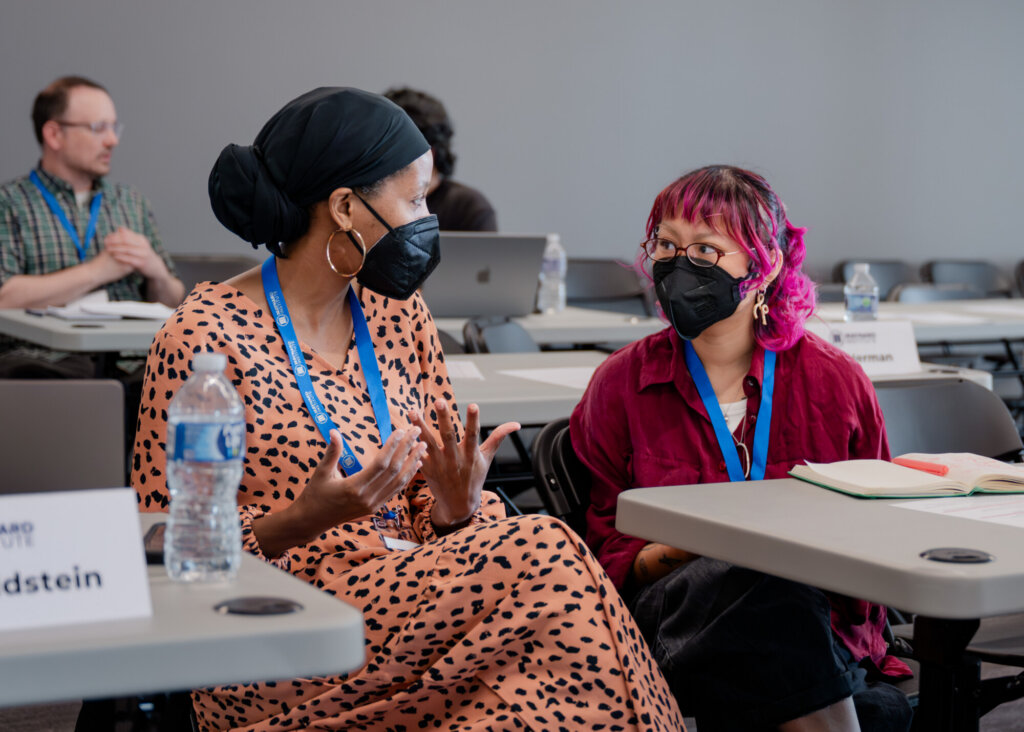
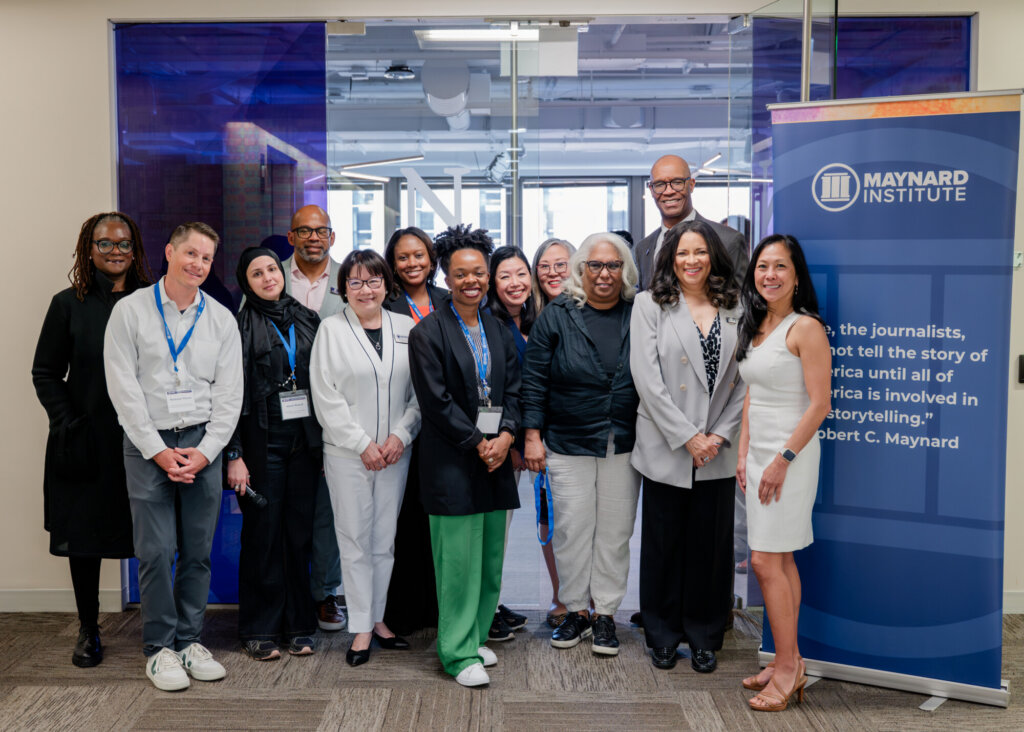
The Maynard Institute’s Regional Training Series found a home at Northwestern University’s Medill School in downtown Chicago in early June. The two-day program created space for news leaders to collaborate and practice management skills at a time of, what Maynard Regional Training Director Odette Alcazaren-Keeley described as, “imperiled Constitutional rights, volatility in our industry and assaults on journalism.”
The goal of the series, institute leaders said, is to train frontline editors and managers who are often thrust into their positions with very little assistance. Since 2025, the Maynard Institute has hosted training sessions across the country. The Chicago training drew nearly 50 journalists from a range of non-profit, for-profit and ethnic media.
Early in the day, Medill Dean Charles Whitaker spoke about the role of the university in creating a new generation of leaders at a time of tumult in the industry.
“At this time of incredible disruption and uncertainty in the industry, we thought we had an obligation to assert ourselves in the field,” he said. “Part of that is providing training and leadership to young and emerging leaders but also to established leaders that were also having a difficult time.”
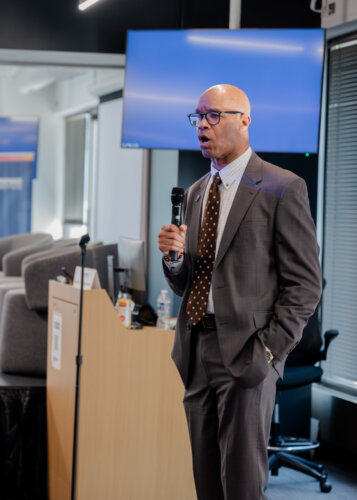
At this time of incredible disruption and uncertainty in the industry, we thought we had an obligation to assert ourselves in the field.
Dean Charles Whitaker
Program faculty, including Medill’s Mackenzie Warren, echoed this sentiment throughout the event, stating the importance of embracing the calling of journalism at this moment in history.
“There are a lot of reasons that people might suggest you not be a journalist today. It’s dangerous. You could be labeled an enemy of the state or an enemy of the people,” Warren said. “And yet, all of those reasons are why to be a journalist.”
Warren, interim executive director of Medill’s Local News Initiative, has been working with the Maynard Institute for more than 10 years. He said Medill shares the same core values as his collaborators at the institute.
“The health and wellness of our community is directly tied to the health and wellness of the information our residents have to make their choices – whether that’s voting, grocery shopping, schooling, health or parenting,” Warren said. “We want to make sure that every Chicagoan has access to trustworthy news and information.”
With his colleague Zach Metzger, director of the Medill State of Local News Project, Warren kicked off the training sessions by discussing the condition of local news across the country. On the second day, he moderated a panel of news leaders about the state of media. Executives from Block Club Chicago, Impremedia, Chicago News Weekly and sports media company The Bigs spoke about funding, audience expansion and what it’s like contributing to local news at this time in history.
“The panel was very invigorating, mainly because they talked about resources I had never heard of,” said Jacqualine Jarju, president and co-founder of the National Association of Black Journalist’s central and southern Illinois chapter. She said she came away with a lot of ideas about possible grant sources and future leadership trainings.
Another key moment for many attendees, like Jarju, was Jean Marie Brown’s session on the Fault Lines framework. Evelyn Hsu, co-executive director of the Maynard Institute, cited Fault Lines as a key way of understanding the different perspectives that guide journalism.
“Those perspectives are influenced by race, class, gender, generation, geography and sexual orientation,” Hsu said. “This should make us aware of our own blind spots and how that could influence how we cover a story.”
Brown, who is associate professor of professional practice and director of student media at Texas Christian University’s Bob Schieffer College of Communication, had each attendee write about their Fault Lines. She cited her childhood in Indiana, education at Medill and age as aspects of identity that she acknowledges when reporting.
“What reporting is supposed to do is reflect the audience and the community that is being served, and so today, we live in a nation that is multicultural and multi-ethnic,” Brown said. “Journalists need to go out and represent that in their reporting.”
Deborah Douglas, director of the Medill Solutions Journalism Hub and session presenter, also talked about the importance of diverse identities in the newsroom.
“Anytime the industry goes through a challenging time, whether that’s technological disruption or financial disruption, we’re affected especially through downsizing,” she said. “A lot of newsrooms haven’t valued the diverse perspectives that they lose when they downsize. Diversity is often the first thing to go.”
Also included in the two-day training were sessions on the use of artificial intelligence in the newsroom, project management, listening with integrity, navigating difficult conversations, managing big projects, and Reynolds’ workshop about management that invoked the Chicagoan pope.
Most striking about the training was the number of young editors in the room.
“Young journalists are incredibly passionate about this craft,” Alcazaren-Keeley said. “If we’re able to provide a sense of belonging this early on, if they see themselves reflected in the industry and know they have a community of support behind them, then we have succeeded in that part of our mission.”
One such journalist was Luis Velazquez, an editor for Cicero Independiente, a bilingual news organization in northern Illinois. Between sessions, Velazquez found himself collaborating with other editors and brainstorming ways to include more freelancers at the publication.
“It’s a universal experience that editors are put in a role where there’s no guidelines,” he said. “I’m very grateful for the Maynard Institute for providing these resources amongst other connections and networks that help reporters and newsrooms.”
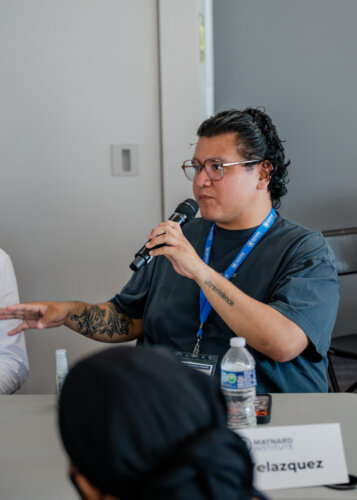
I’m very grateful for the Maynard Institute for providing these resources amongst other connections and networks that help reporters and newsrooms.
Luis Velazquez, an editor for Cicero Independiente
Taryn McFadden, the Chicago Reader’s culture editor, was also inspired to create positive change in the newsroom.
“We’ve had sessions about biases and how to show up in the workplace and be a good supervisor, and as a member of the younger generation, I strive to help our workplace become healthier, which helps us do better journalism,” she said.
McFadden said she sees great importance in capitalizing on diversity and identity in all newsrooms, including that of the Reader.
“Right now, there’s no separating politics and the state of the world from what we do all day, every day,” she said. “I see such a value in having a staff that can reflect the city back on itself.”
News Leaders Panel: State of the Media in the Region – Panelists: Jesús del Toro, director general, general manager and editor in chief, Impremedia; Laura Miller, managing editor, Chicago News Weekly; Terrence Tomlin, co-founder and editorial director, The Bigs; and Maple Walker Lloyd, vice president of partnerships, Block Club Chicago; and Mackenzie Warren, moderator.
Medill Research Briefing: Mackenzie Warren, interim executive director, Local News Initiative, Northwestern University Medill School, and Zach Metzger, director, Medill State of Local News Project
The Manager’s Mindset – Stepping into Your Leadership Role: Martin G. Reynolds, co-executive director, Maynard Institute
Identifying Personal Values – A Listening Exercise: Doris Truong, deputy director, Maynard Institute Fire Up Entrepreneurship Program
Fault Lines® in Motion: Jean Marie Brown, associate professor of professional practice, Bob Schieffer College of Communication, Texas Christian University
AI with Integrity – Shaping Values-Driven Practices: Mei-Ling Hopgood, Medill Charles Deering McCormick Distinguished Clinical Professor, William F. Thomas Professor of Journalism
Complicating the Narrative: Deborah Douglas, founding director, Medill Solutions Journalism Hub
Managing the BIG Story: Maria Carrillo, consultant and writing coach
Tension to Trust – Navigating Difficult Conversations: Felecia Henderson, senior director of strategic initiatives, Maynard Institute
The People Manager Balancing Act: Lisa-Ann Barnes, adjunct faculty, Northwestern University
Donating to the Maynard Institute helps newsrooms and professionals improve their reporting, workplaces, and the communities they serve.
The Maynard Institute also sponsored afternoon coffee at the impeccably executed convention, attended panels led by subject matter…
“She launched the Spanish-language website Brennan En Español, a monthly newsletter, and as she put it, was ‘dedicated…
Fill out our interest form and register to bring Maynard’s Fault Lines® training to your company today!
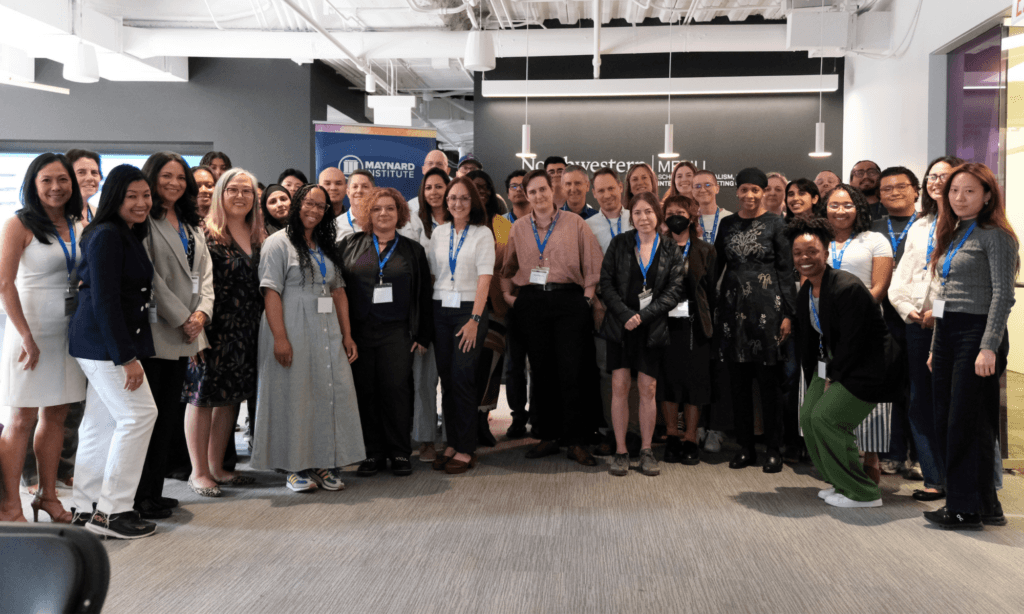
We would like to extend again our deep appreciation from our Institute leadership and entire team to our funders, partners, faculty and participants who attended the Maynard Regional Training in Chicago, in partnership with Northwestern University’s Medill School of Journalism, Media and Integrated Marketing Communications and the Medill Local News Initiative.
Thank you for sharing your expertise, insights and care that enriched our Maynard-Medill Regional Training curriculum last week. Your sessions built on each other’s frameworks and delivered great impact in our allyship with program co-creators Northwestern University’s Medill School of Journalism and the Medill Local News Initiative, with support provided by the Knight Foundation.
Your high-calibre teaching and customized coaching reinvigorate the journalism work of another exceptional cohort of frontline editors and mid-level managers serving Chicago’s diverse news ecosystem, the region, and across the country.
We were energized by the enthusiasm of our participants and the energy (and spectacular weather!) of the lovely city of Chicago.
We hope all participants will stay in touch by following us on social media and joining our Maynard Communities of Practice.
The Maynard Institute also sponsored afternoon coffee at the impeccably executed convention, attended panels led by subject matter…
“She launched the Spanish-language website Brennan En Español, a monthly newsletter, and as she put it, was ‘dedicated…
Fill out our interest form and register to bring Maynard’s Fault Lines® training to your company today!
Legislative leaders released a proposed 2026–27 California State Budget that excludes funding for the Propel Initiative and California Local News Fellowship.
Journalism, particularly small, local and ethnic media, are facing a crisis. These two important programs have helped local journalism not only stay open, but have created innovative programs to help sustain them in the future.
At a moment when immigrant communities and other historically underserved Californians need trusted information more than ever, these programs are helping strengthen local journalism across the state.
Through Propel, California made an investment in ethnic and community media outlets that collectively serve more than 20 million hard to reach Californians. That needs to continue. The Fellowship is strengthening local reporting and developing the next generation of journalists.
For many Californians—particularly immigrants, communities of color, rural residents, and those who rely on in-language news—ethnic media is the most trusted source of information. These outlets play an essential role in helping communities understand critical issues, access vital resources, and participate fully in civic life.
We are grateful for the Legislature’s groundbreaking support of the California Local News Fellowship beginning in 2022 and last year’s investment in Propel. Continued investment in local and ethnic media is an investment in informed communities, civic participation, and a stronger democracy. We remain hopeful that legislative leaders will renew the full $15 million investment in the final budget before June 30.
Signed,
Arturo Carmona, President, Latino Media Collaborative
Regina Brown Wilson, Executive Director, California Black Media
Jaya Padmanabhan, Executive Director, American Community Media
Julian Do, Co-Director, American Community Media
Martin G. Reynolds, Co-Executive Director, The Robert C. Maynard Institute for Journalism Education
Click here to read an op-ed in CalMatters by Martin G. Reynolds, Co-Executive Director of The Maynard Institute on the proposed state budget for California for the years 2026-2027.
The Maynard Institute also sponsored afternoon coffee at the impeccably executed convention, attended panels led by subject matter…
“She launched the Spanish-language website Brennan En Español, a monthly newsletter, and as she put it, was ‘dedicated…
Fill out our interest form and register to bring Maynard’s Fault Lines® training to your company today!