News / Blog
Announcing: The Maynard Institute is partnering with BlueLena.
Watch this space for more information on how to manage YOUR donor portal with BlueLena and FundraiseUp!


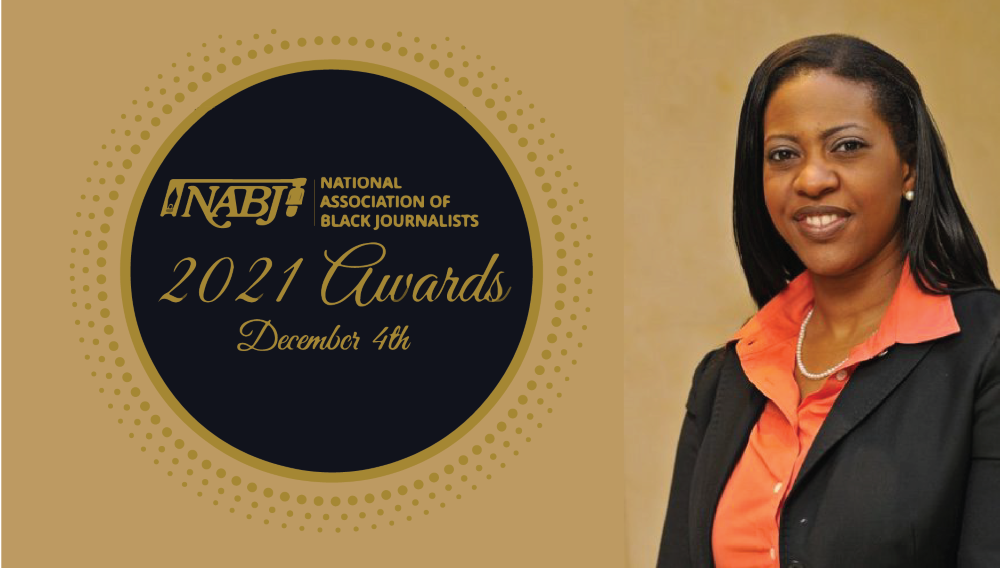
The Maynard Institute congratulates board member Aprill O. Turner for being named the Special Honors recipient of the 2021 Patricia L. Tobin Media Professional Award by the National Association of Black Journalists (NABJ). A seasoned public relations strategist with deep roots in the political world, Turner has led media strategy for several local and national political campaigns. Her expertise includes message development, media training, crisis communications and public affairs.
Patricia L. Tobin was a pioneering publicist, media entrepreneur, and co-founder of the National Black Public Relations Society. One of NABJ’s Special Honors, the Patricia L. Tobin Media Professional Award is given to an entrepreneur, public relations/advertising/marketing professional, or media owner that serves as a trailblazer in the media realm and is responsible for a positive impact of Black coverage and the media profession.
To be selected for this Special Honor, Turner is recognized through her work and service display a commitment to NABJ’s goal of fostering an exemplary group of professionals that honors excellence and outstanding achievements in Black journalism and outstanding achievement in the media industry as a whole.
“I am beyond honored to receive NABJ’s 2021 Pat Tobin Media Professional Award,” said Turner.
“NABJ member Pat Tobin of Los Angeles passed away in 2008. Tobin was president and CEO of Tobin and Associates, a prominent minority, woman-owned public relations firm. She was a dedicated activist for causes that impacted minorities, women and youth; and was co-founder of the National Black Public Relations Society.”
“It makes me proud to have had the opportunity to meet Pat Tobin and witness the large impact that she had. It also makes me proud to follow in her footsteps, especially in the love that we both have for public relations, seeing other Black professionals excel in it and how much we both love NABJ.” Aprill O. Turner, Maynard Institute board member and NABJ’s 2021 Patricia L. Tobin Media Professional Award Winner
NABJ inducted 8 new members into its Hall of Fame and awarded 14 Special Honors to Black journalists and communicators from around the world during a virtual awards ceremony December 4, 2021. The event streamed online and featured special guests, entertainment and interactive features. Read more about the 2021 NABJ award receipients.
NABJ offers innovative training, career advancement opportunities and advocacy initiatives for Black journalists and media professionals worldwide. The association’s annual awards honor the groundbreaking accomplishments of Black journalists and those who support the Black community in the media. Learn more about NABJ.
Watch this space for more information on how to manage YOUR donor portal with BlueLena and FundraiseUp!
On Tuesday, May 19, 2026 the Maynard Institute was honored to receive the Lorraine Branham Award from Syracuse…
“Our contributions to journalism will outlast ourselves if we do it right — I’m really encouraged that there’s…
The Associated Press announced new members of the senior News leadership team to ensure AP maintains its standing as the world’s preeminent fact-based news organization. Maynard Institute alum Amanda Barrett, previously AP’s Deputy Managing Editor, was promoted to Vice President and Head of News Audience in September 2021.
From the announcement:
“In this new role, Amanda will have a relentless focus on how AP’s news is consumed online, by consumers on AP News and customers on AP Newsroom, as well on social media. At the heart of Amanda’s job is the audience experience — those we reach through our customers and the audiences we are growing on our own platforms and social media accounts. Amanda will also continue to oversee the Nerve Center and play a leading role in AP’s diversity and inclusion efforts, with the goal of ensuring that these priorities are shared and implemented across News.”
We recently caught up with Amanda to congratulate her new role as AP’s Vice President and Head of News Audience. She reflected on the Maynard Institute’s programs that impacted her.
“I first encountered the Maynard Institute when I attended the Media Academy in 2009. Little did I know the profound effect Dori, Evelyn, Martin, and the program would have on my life. I learned so much about being a manager: how to have difficult conversations, how to solve complex business challenges. And I built friendships that I still depend on.” Amanda Barrett, VP and Head of News Audience, The Associated Press
In addition to the Maynard Academy, Amanda participated in the Maynard 200 Fellowship, one of the Institutes core programs that provides advanced training for mid-career journalists of color interested in leadership roles.
“Over the years, the Maynard mentorship never ended. Eventually, Evelyn asked me if I would be interested in a program that would help propel my career to another level and that turned out to be the Maynard 200. Executive coaches Virgil Smith and Caroline Ceniza-Levine were phenomenal, in addition to my mentor Susan Leath. I am so blessed to be a part of the Maynard family.” Amanda Barrett, VP and Head of News Audience, The Associated Press
Excerpt from feature originally published by AP:
“Barrett joined AP in New York in 2007 as a content coordinator, working with journalists across the company on interactive projects. She became deputy East editor in 2009, helping to establish a new regional desk in Philadelphia and lead AP’s coverage of 10 northeastern U.S. states.
Two years later, she returned to New York as city news editor, directing AP’s award-winning coverage of Hurricane Sandy and its aftermath. In 2015, she moved to the Nerve Center as planning and administration manager and assumed leadership in 2017.
Barrett has played a critical role in coordinating news coverage of many of the biggest stories of recent years, including hurricanes Harvey and Maria, the #MeToo movement and the 2018 Winter Olympics. Barrett also serves as a leader of AP’s race and ethnicity reporting team.
Before joining AP, Barrett worked at Newsday, where she led a team of interactive journalists and managed the NYNewsday.com and amNY.com websites. She previously worked as a sports editor at the Orlando Sentinel and at the Roanoke Times in her hometown of Roanoke, Va.”
Watch this space for more information on how to manage YOUR donor portal with BlueLena and FundraiseUp!
On Tuesday, May 19, 2026 the Maynard Institute was honored to receive the Lorraine Branham Award from Syracuse…
“Our contributions to journalism will outlast ourselves if we do it right — I’m really encouraged that there’s…

Chapter 510 & the Dept. of Make Believe is a youth writing center in Oakland, California, with a mission to help every young person in Oakland write with confidence and joy. Rooted in this mission, Chapter 510 believes that when kids and teens can confidently write, they transform themselves and their communities for the better. We can’t think of a better role for Oakland Voices correspondent Marabet Morales Sikahall than Chapter 510’s new Program & Community Manager.
With programs led by teaching artists within a supportive community of diverse volunteers and artists, Chapter 510 strives to increase the number of books written by QTBIPOC youth in the canon of literature and serve the evolution of all Oakland young writers so they can become stronger learners, meaning makers, and agents of change.
Similar to the literary project in San Francisco, 826 Valencia, also known as the Pirate Supply Store, Chapter 510 is located in Oakland with a retail store in the form of an interactive magical bureaucracy called the Dept. of Make Believe that provides youth with “Licenses to Dream” and more.
Oakland Voices is a nine-month program led by the Maynard Institute for Journalism Education that trains Oakland residents to tell the stories of their neighborhoods. The program emerged from a partnership with the Oakland Tribune and it connects Oakland Voices correspondents with more than a dozen media professionals. Participants work individually and in teams, creating content for OaklandVoices.us, which can also be published elsewhere. The collaborative, applied learning approach means correspondents quickly become aware of their power and responsibility as storytellers, and as members of the media.
We asked Marabet how Oakland Voices impacted her journey. “As a young writer I was hesitant about writing journalistic pieces because of a previous traumatic experience,” Marabet said, referring to a high school teacher who discouraged her from writing. “It was through the Maynard Institute’s support for Oakland Voices that I was able to become more confident in my community storytelling.”
“Oakland Voices has helped me become a stronger voice and provided the needed representation of the stories that I grew up with in East Oakland and the new ones, too. If anything, thanks to the Maynard Institute I can say that my community has grown even bigger by getting to know others who, like myself, want to uplift our beloved town.” Marabet Morales Sikahall, 2016 Oakland Voices alum and Chapter 510 Program & Community Manager
Marabet Morales Sikahall is a Guatemalan American writer from Oakland, California. She is an alumna from both Creative Writing programs at San Francisco State University and Berkeley City College, including the Literary Arts program at Oakland School for the Arts. Some of her writing has been featured in The Acentos Review, Acción Latina’s Tribute Chapook for Salvadoran writer, Roque Dalton, Harvard College’s Palabritas, and Oakland Voices. Additionally, her radio story in collaboration with local radio station, KALW and Oakland Voices aired on July 2019 for #MinorityMentalHealthAwarenessMonth. She is also the editor and founder of the literary journal, “Diaspora Baby Blues.”
You can check out Marabet’s Oakland Voices stories on the Oakland Voices website including her love letter to Oakland libraries.
Watch this space for more information on how to manage YOUR donor portal with BlueLena and FundraiseUp!
On Tuesday, May 19, 2026 the Maynard Institute was honored to receive the Lorraine Branham Award from Syracuse…
“Our contributions to journalism will outlast ourselves if we do it right — I’m really encouraged that there’s…
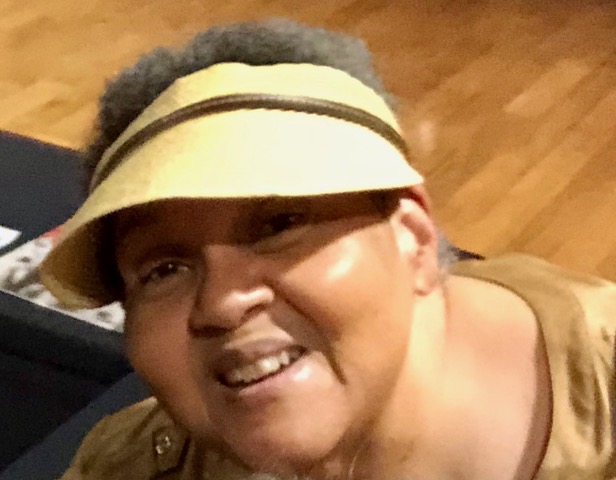
Mary Crystal “Chris” Cage
Mary Crystal “Chris” Cage, 65, passed away Saturday November 21, 2020 from complications due to congestive heart failure.
Chris moved back to Sacramento in 2005 after she developed congestive heart failure and was forced to disability retire. She still led a full life keeping in contact with many friends she made during the years. Most recently she served as a volunteer patient advocate with her health care provider, Sutter Health.
She enjoyed movies, especially Marvel action films, keeping up with politics and reading mystery novels, specifically police procedurals, a legacy of her police beat days. She also loved birds and kept a pair of budgies who passed last spring. She was active in two local bird clubs, volunteering for several activities.
Chris had an interesting career, starting as a police beat and education reporter for the Sacramento Bee. She moved to Washington DC and worked as a writer for the Chronicle of Higher Education, a national education journal, before securing a position in Public Affairs for Teachers College, which is part of the New York State University system in New York City. Chris retired after serving a brief stint in administration for the union representing the university professors of Teachers College.
She earned a bachelor’s degree in journalism from the California State University, Fresno. She is a 1979 alumnae of the Summer Program for Minority Journalists held at UC Berkeley.
She is survived by her niece, Sarah Cage and Sarah’s son Noah, who live in Sandy Hook, Connecticut.
Rest in peace, Chris.
Watch this space for more information on how to manage YOUR donor portal with BlueLena and FundraiseUp!
On Tuesday, May 19, 2026 the Maynard Institute was honored to receive the Lorraine Branham Award from Syracuse…
“Our contributions to journalism will outlast ourselves if we do it right — I’m really encouraged that there’s…
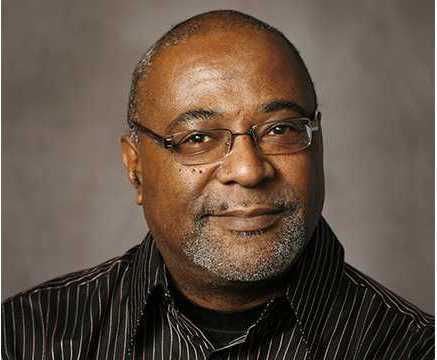
Eugene Kane
Eugene Kane, a longtime columnist for the Milwaukee Journal Sentinel and a graduate of the Maynard Institute’s Summer Program for Minority Journalists, died April 16 at the age of 63.
Kane was known for his award-winning column, Raising Kane, in the Milwaukee Journal Sentinel. He spent most of his career at the Sentinel after graduating from Temple University and the 1981 Maynard Institute reporter training program.
“I knew Gene for nearly 40 years and we became and remained really good friends for life,” said Kevin Merida, a senior vice president at ESPN, and member of the Maynard Institute’s board of directors.
“We entered this craft pretty much at the same time, filled with idealism and fire. That idealism, and determination, was fueled by the connection we shared as grads of the Summer Program for Minority Journalists. I left Milwaukee, but Gene stayed. Gene built a career for himself at the Milwaukee Journal Sentinel, the newspaper he started at and finished at after graduating from the Summer Program.”
“He became a decorated, award-winning columnist in a tough, racially segregated city,” said Merida. “Literally, a journalism Hall of Famer in Wisconsin, and among the best local columnists in the country. He was fierce and funny. and fearless. He took himself just seriously enough, but never too seriously. Lived life fully, playfully, with commitment to our craft–and with no apologies for being black.”
Kane discussed race unflinchingly in much of his work. James Causey, a Sentinel writer and colleague, emphasized that Kane didn’t back down from discussing the “the negative impact that racism has not just on people of color, but on a city he considered one of the most segregated in the country.”
As a journalist, he shared the voices of trusted sources with respect, while simultaneously calling on readers to change the way they thought or acted.
In an interview with “This Is Milwaukee,” Kane said, “For a lot of white people who read the Journal Sentinel, I was the only black person they really knew in a way…who was expressing opinions they didn’t hear anywhere else.”
Kane received many accolades for his writing including Best General Column from the Society of Professional Journalists and Best Commentary from the National Association of Black Journalists. He was inducted into both the Milwaukee Press Club Hall of Fame and the Wisconsin Media Hall of Fame.
Many fans, friends and colleagues celebrated his life and philosophy on social media, such as the current editor of the Milwaukee Journal Sentinel, George Standley who wrote simply, “Eugene encouraged us to always stand up for justice.”
Watch this space for more information on how to manage YOUR donor portal with BlueLena and FundraiseUp!
On Tuesday, May 19, 2026 the Maynard Institute was honored to receive the Lorraine Branham Award from Syracuse…
“Our contributions to journalism will outlast ourselves if we do it right — I’m really encouraged that there’s…
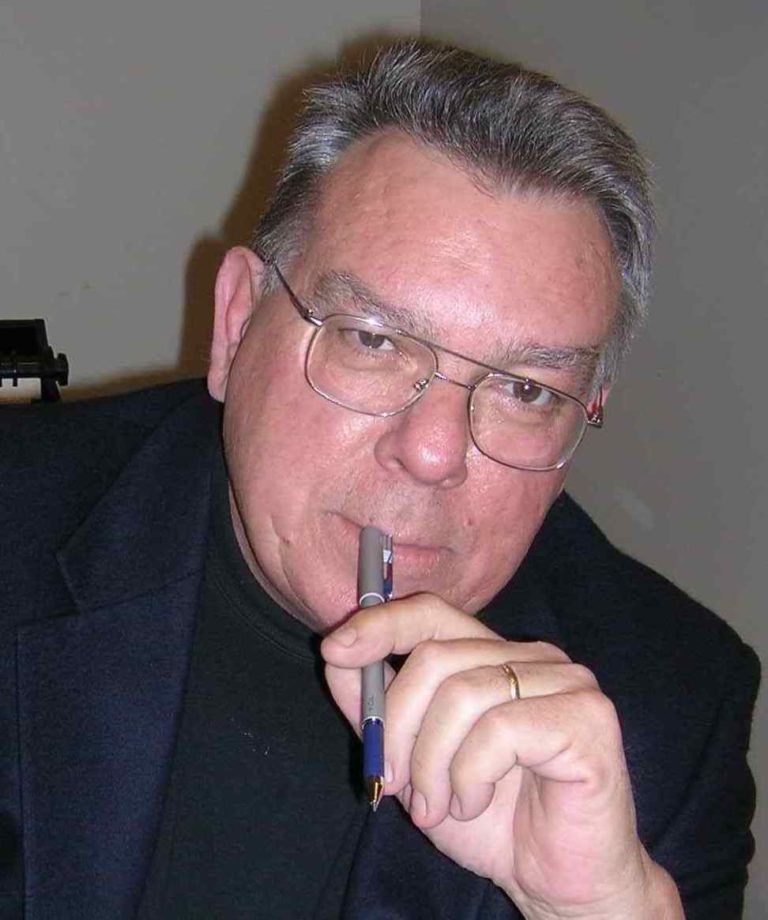
Richard S. Holden
Richard S. Holden wore many hats in his illustrious life – all of them well.
He was an editor extraordinaire. The first memory for most participants in the Maynard Institute’s Editing Program for Minority Journalists is that he had been the YOUNGEST-ever copy desk chief for the Wall Street Journal.
Then we’d learn about his work to help create and produce the Asian Wall Street Journal from Hong Kong.
He was a teacher. I met Rich in the summer of 1982 while attending the editing program. He was one of a small group of editors from across the country who would spend one to two weeks teaching in the program at the University of Arizona in Tucson. Their mission was to mold and create copy editors and future newsroom leaders out of the small group of journalists who had competed to get this training.
Finding the right words to describe Richard Holden is difficult. We met at the Editing Program for Minority Journalists at the University in Tucson, sponsored by the Maynard Institute, and became lifelong friends. He taught and mentored scores of editors from across the nation, some of whom later became top newspaper editors or publishers. I will miss Rich’s humor and his dedication to producing first-class journalism. – Frank O. Sotomayor, co-founder of the Maynard Institute for Journalism Education.
Rich was a mentor. The list of those he nurtured stretches from his days at the Journal to his years at the editing program. It exploded when he became director of what was then the Dow Jones Newspaper Fund and his active involvement in the American Copy Editor Society.
Rich was an advocate. He understood the need to diversify America’s newsrooms, and he pushed to the end that news coverage only gets better when organizations make a commitment to bring and keep minority journalists in the fold, and for those organizations to cover the issues in all communities.
At the Newspaper Fund, he became a voice for the young people trying to break into newsrooms. And hopefully, those young people would join in that advocacy.
But everyone who knew of him knows those facts. What most people don’t know or didn’t appreciate about Richard S. Holden were his loves.
The man loved a good joke, especially puns. There’s the joke about the frog at the bar that he enjoyed telling. And he had that laugh — a barrel-deep baritone – that was the envy of any wanna-be broadcaster. He always bragged about having a face for radio. And when he laughed, you laughed, even if the joke made no sense.
He loved him some University of Missouri and Army football. I never could understand such dedication. But you could always expect an update on those teams during any conversation in the season. And if there was a chance to get to one of their games (Rich and his wife, Mary-Anna, were Army season-ticket holders), he was there.
Rich was one of the faculty standouts at the Maynard Institute’s Editing Program for Minority Journalists in Tucson. I’m among the many beneficiaries of his wisdom, humor and good company in that summer program — and for numerous years after. I long to share one more drink and one more convo with him. – Abe Kwok, 1997 graduate of the Editing Program.
Math was another love. He would bring that passion to journalists who traditionally fear the subject and try to keep the issue at arm’s length. His “Afraid of Math, Take a Number” workshop was straightforward. Don’t be afraid to challenge the numbers, he urged. Make the math simple, and convert those terms through imaginable and relatable issues for the audience, he preached.
Rich had a love of the dapper. Maybe it was those stints in Southeast Asia. (He had served in Vietnam, and he learned fashion secrets during his years at the Asian Wall Street Journal.) The gentleman loved a finely tailored wool suit, with an even finer tie and pocket square. Oh, and the French cuffs, as I was reminded by another Maynard alum.
But Rich took dapper to another level. Always show up dressed to the nines, he advised. You can always take things off, but the first impression is what counts – a lesson that was shared every year in Tucson.
Rich loved WrestleMania. You read that right. The man would travel across the country to see the bouts. I still remember the times he flew into Detroit for those exhibitions, and then write a commentary column for the Journal.
Rich was one of the great champions of diversity who was passionate about changing things for the better. He was always supportive of our efforts and offered his wisdom, time and talent to mentor, advise and help many people, including me. And he had fun doing it! – Ron Recinto, former member of the national board of the Asian American Journalists Association
And there was those vices – booze and smoking. He loved a good whiskey. And he never turned down a good stogie (apologies to the purists) to complement those cigarettes. The locations are everywhere, the stories are many. If you knew Rich, you’ve got one.
It is because of all of those things that Rich Holden was so special to this Maynard grad.
He was always bigger than life – from that first meeting. The Vietnam War background and his having been a top editor at the Wall Street Journal. He had worked in China and learned the language. He had been director of the news fund and those “Dow Jones interns” are everywhere.
I had been a student and later would have the opportunity to sit beside him as an instructor for many years. I would bring him to my newsrooms to share his knowledge.
Over those years — the bond began that summer of 1982 — Richard S. Holden became one of a very small group that I call “the brothers I never had.”
He was family and I’m going to miss him. But I’ll have the memories.
There was the annual exchange of junk Christmas gifts. The Holdens were early recipients of the “Big Mouth Billy Bass” wall plaque, and gave me a “Buckmasters Deer Huntin’ ” game. (The overgrown collection of singing, dancing, chiming Christmas dolls/toys has become a staple in my home each year.)
When I moved to New York, I would take any opportunity to head out to the Holden home in New Jersey and use the opportunity to reestablish my Southern roots as we would tackle his house maintenance issues. Oh wait, it’s true. Rich, this bigger-than-life figure, was a complete klutz in the house.
It was my pleasure to work with Rich for 22 years. He was thoughtful, generous, fun-loving, a deft editor and determined to make news industry diversity more than a numbers game. Despite recent setbacks, he was upbeat and encouraging to the end. He can rest now. – Linda Shockley, managing director, Dow Jones News Fund.
Those visits became opportunities for me to practice the simple things – cutting the grass (Rich adored the diagonal cut of the Yankee Stadium outfield), cooking, barbecuing and throwing parties. (There was that huge hole in the stairway wall that was always there and a reminder of what can happen when you take a bad step. We never really tackled that one.)
But we did tackle carrying a six-foot sub sandwich on our shoulders one weekend through downtown Madison, much to the dismay of the local police. They apparently were tracking us to our car several blocks away. (Breaker! Breaker! We have a black and white team strolling through town with a giant sub. Stay alert!)
The consummate editor, teacher, mentor and advocate, Rich Holden never had a cross word for or about anyone. He affected the lives of many as reflected by the memories posted on Facebook. I hope everyone gets a chance to read them. As many wrote, he made us all better.
The industry lost a giant on April 15, 2020. And I lost a close, cherished friend.
Rest in peace, Richard S. Holden.
Walter T. Middlebrook, a 1982 graduate of the Maynard Institute’s Editing Program for Minority Journalists, was named the Foster Professor of Practice in the Donald P. Bellisario College of Communications at The Pennsylvania State University in March 2020. He left The Detroit News in January 2018 as an assistant managing editor after an extensive career that included stints at The New York Times, Newsday/New York Newsday, USA Today and the St. Paul Dispatch and Pioneer Press. He had been a business writer at the Pioneer Press when he came to Maynard to learn the skills of a copy editor, which led to positions as a newsroom manager.
The Maynard Institute’s Editing Program for Minority Journalists – later the Editing Program, then the Multimedia Editing Program – started with a pilot in 1979 and over three decades launched a generation of journalists, most of them journalists of color, into the management ranks of news organizations around the country. Like many Maynard programs, it was the first of its kind. Richard S. Holden taught in the editing program for more than 25 years, volunteering weeks of his time every summer. He was a lifelong mentor to many Maynard grads. – Evelyn Hsu
Watch this space for more information on how to manage YOUR donor portal with BlueLena and FundraiseUp!
On Tuesday, May 19, 2026 the Maynard Institute was honored to receive the Lorraine Branham Award from Syracuse…
“Our contributions to journalism will outlast ourselves if we do it right — I’m really encouraged that there’s…