News / Blog
The Business Case for DEIB Training in Journalism
DEIB training isn’t just a nice-to-have workplace initiative. Diversity in the media directly influences the quality, accuracy, and…




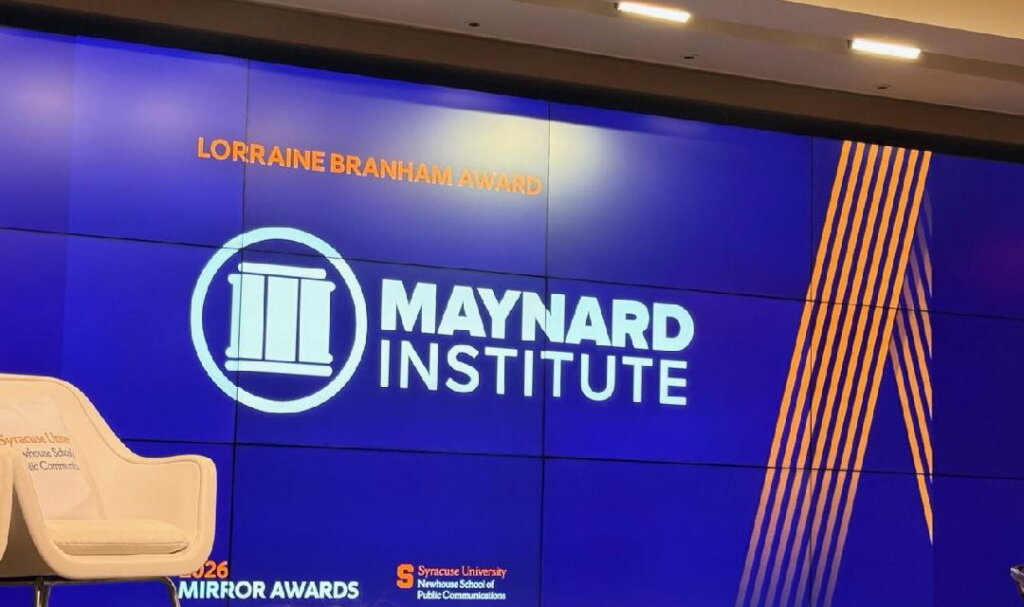
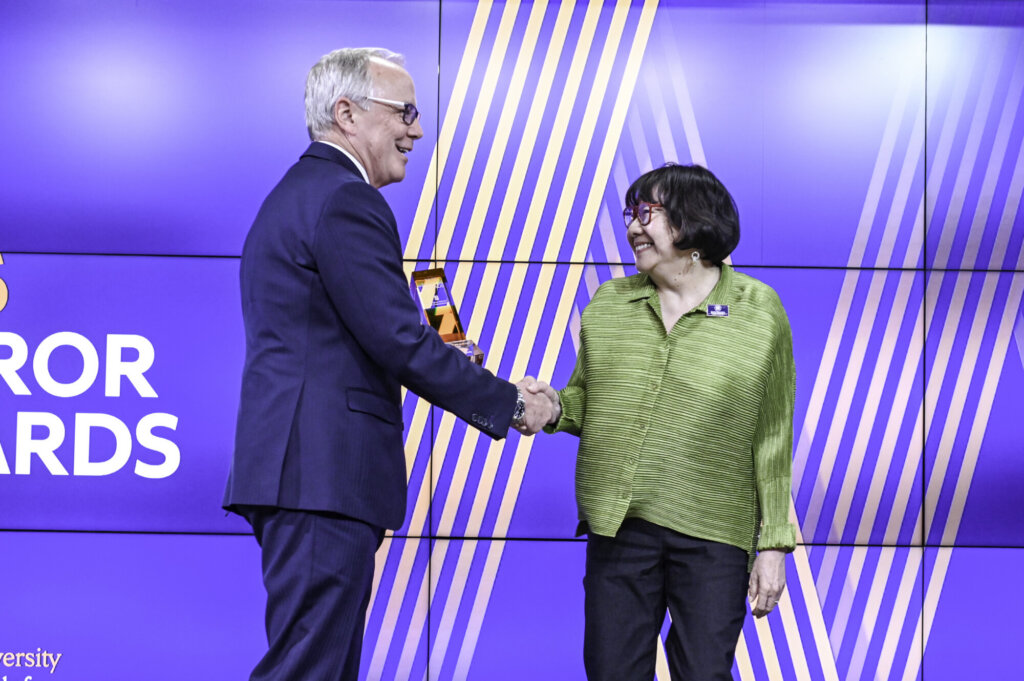
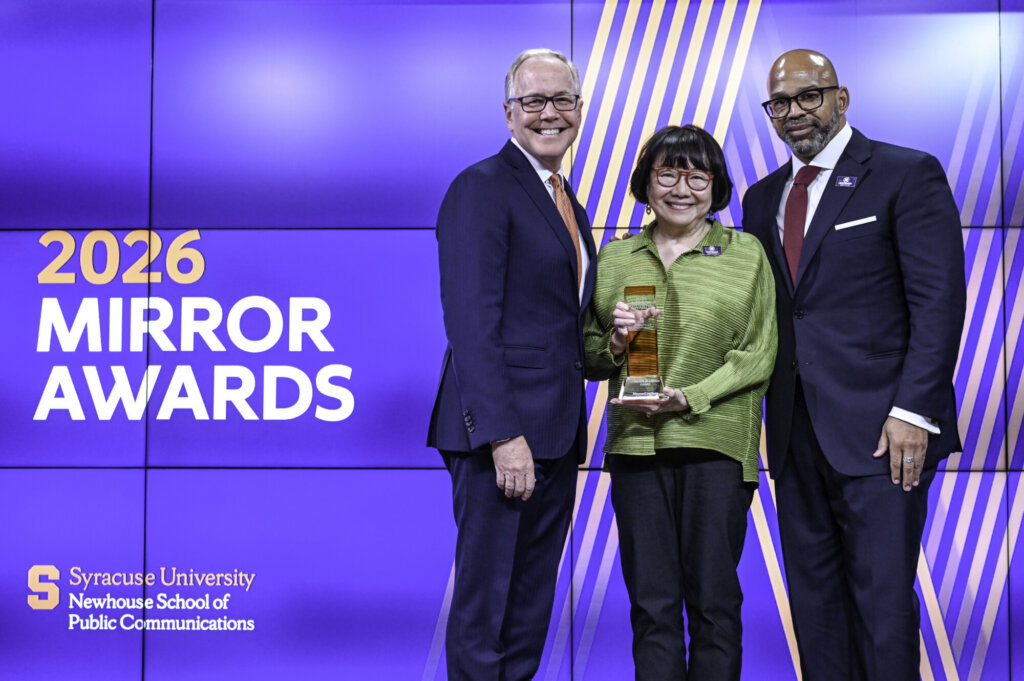
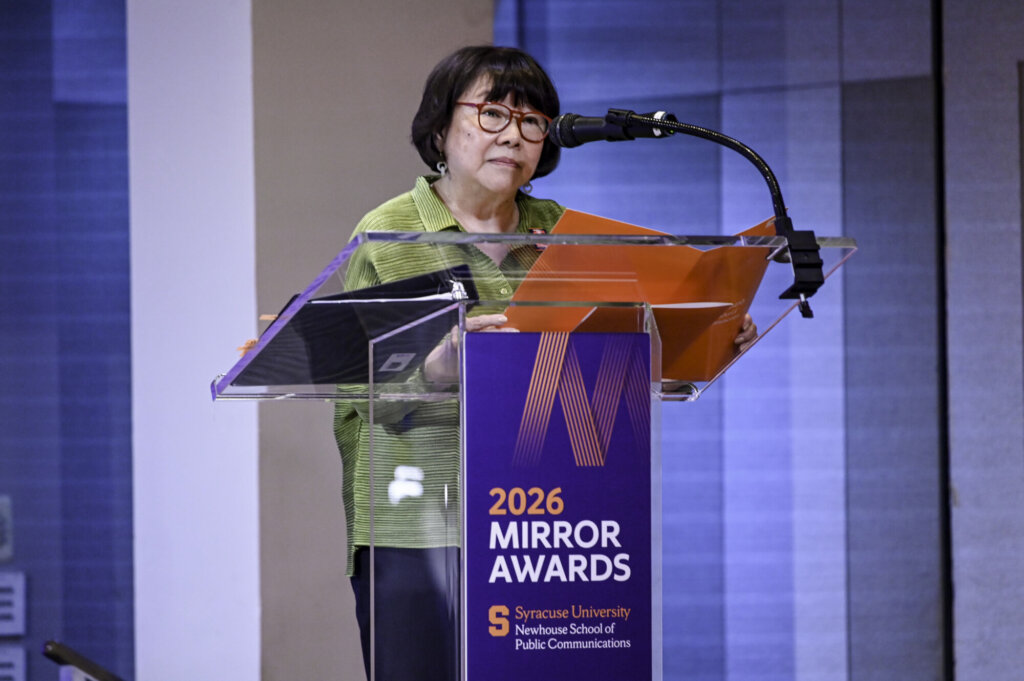
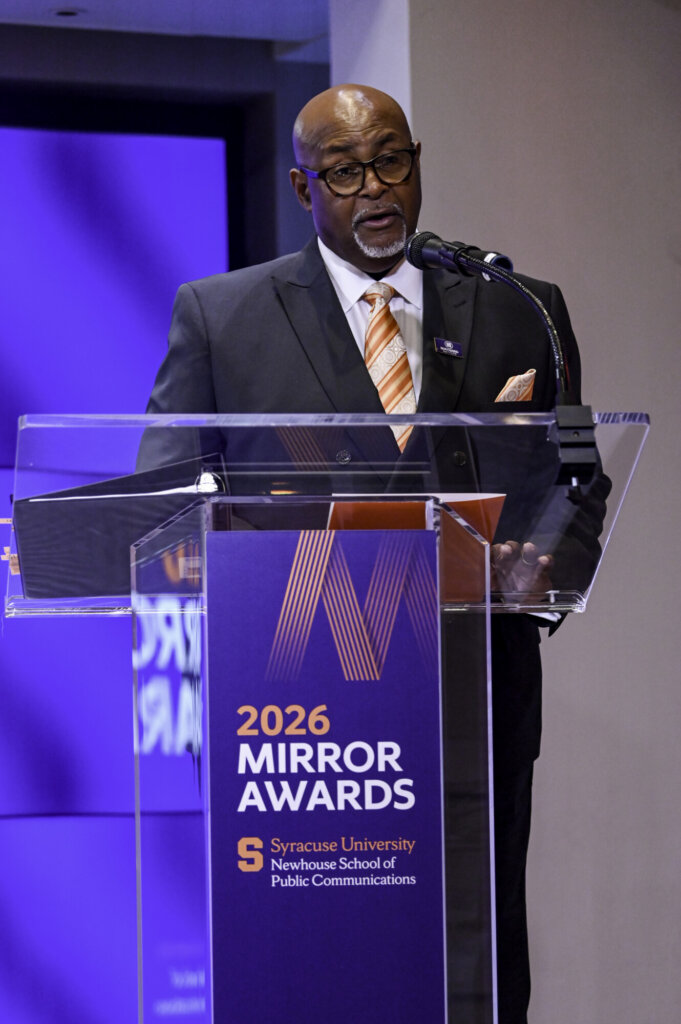
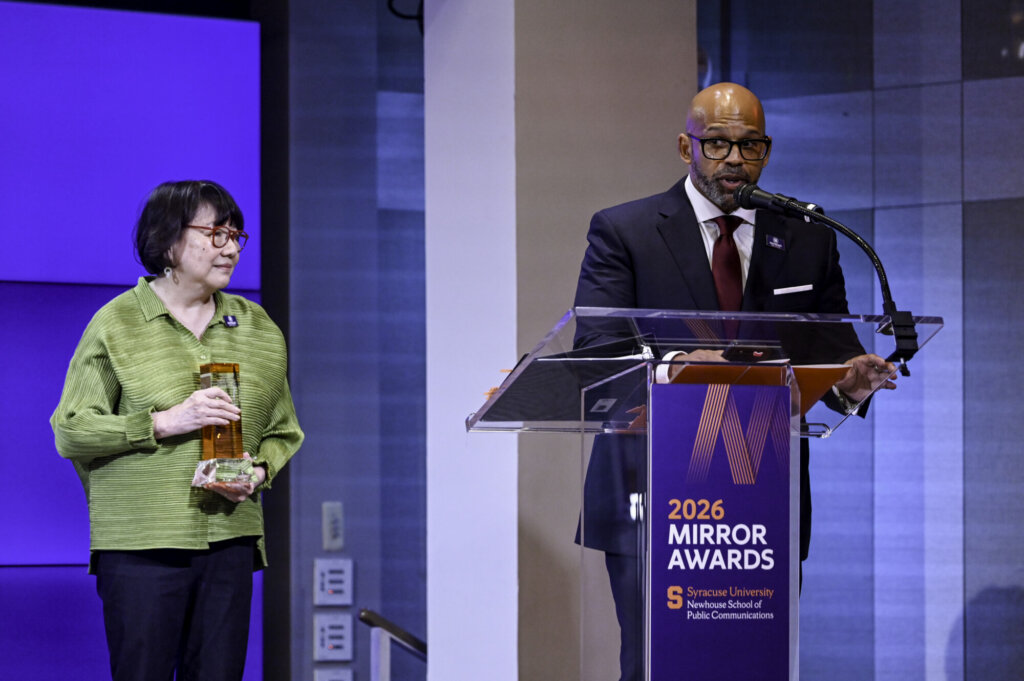
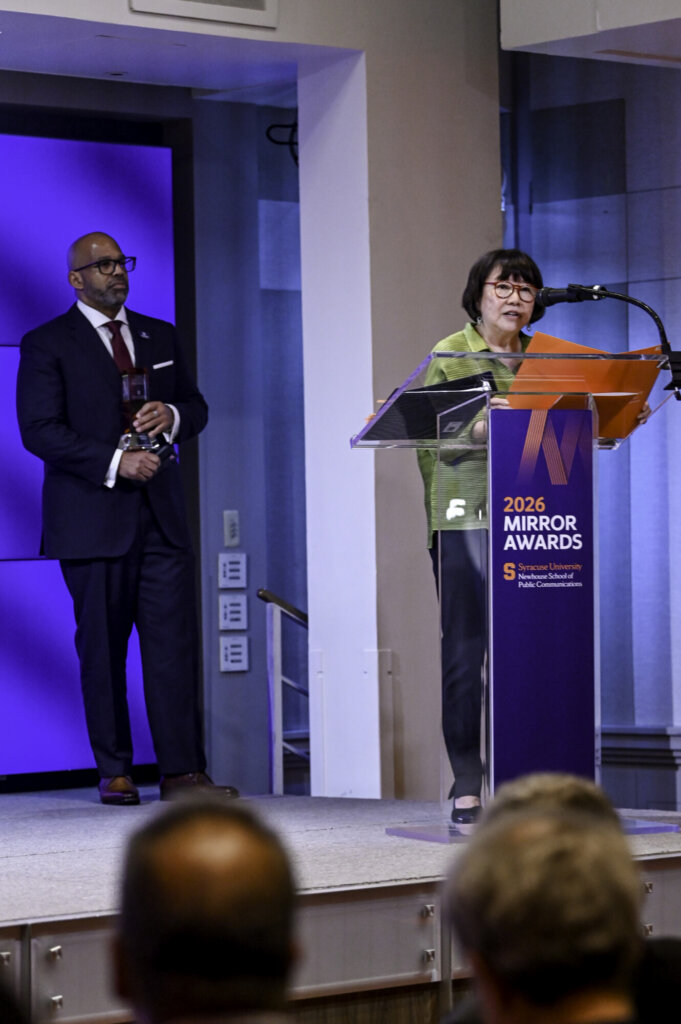
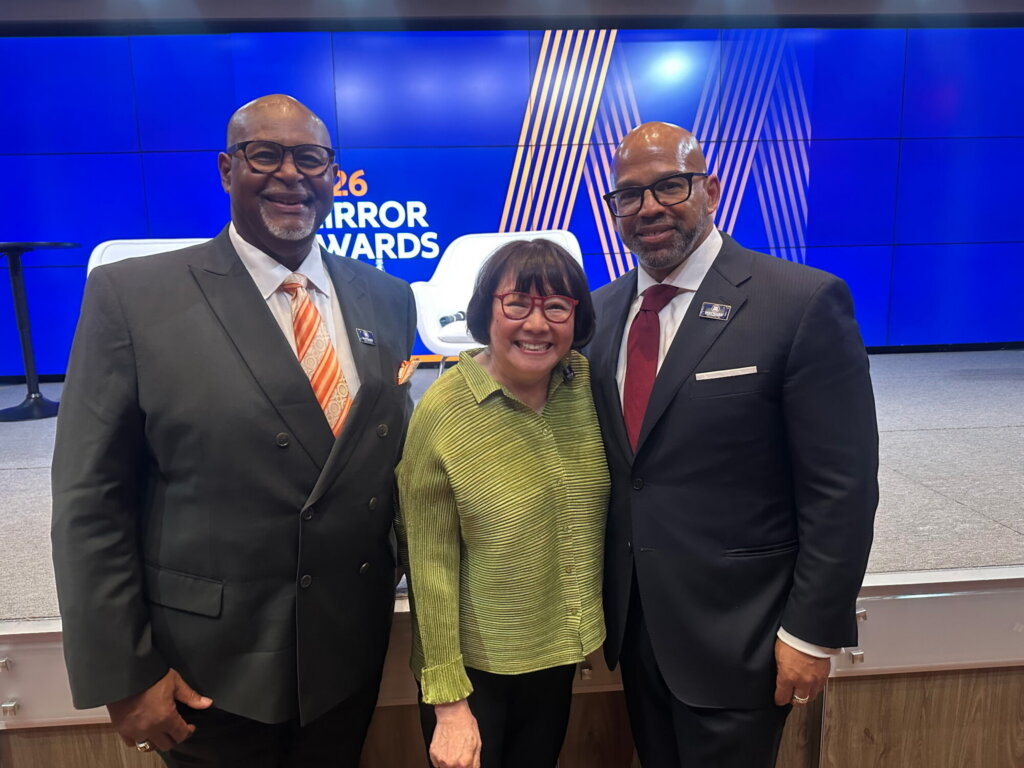
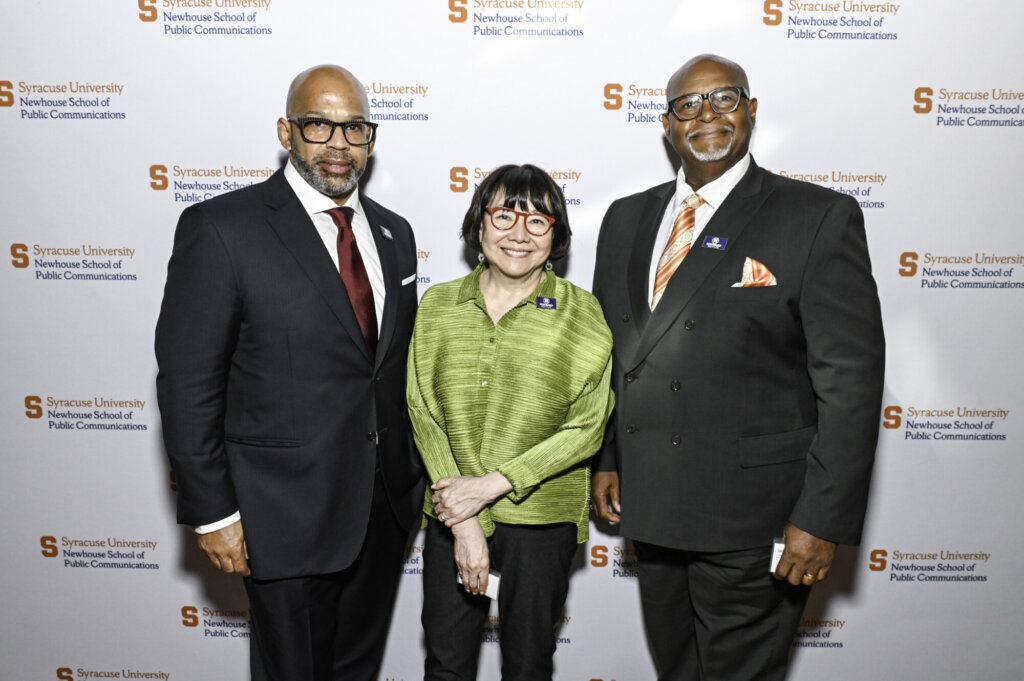
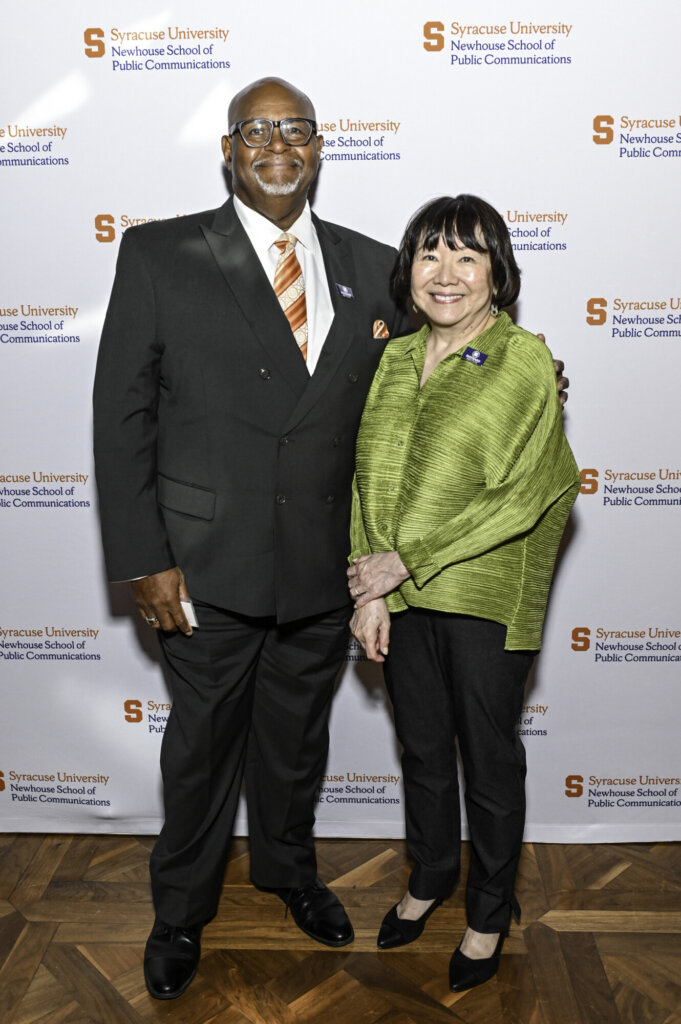
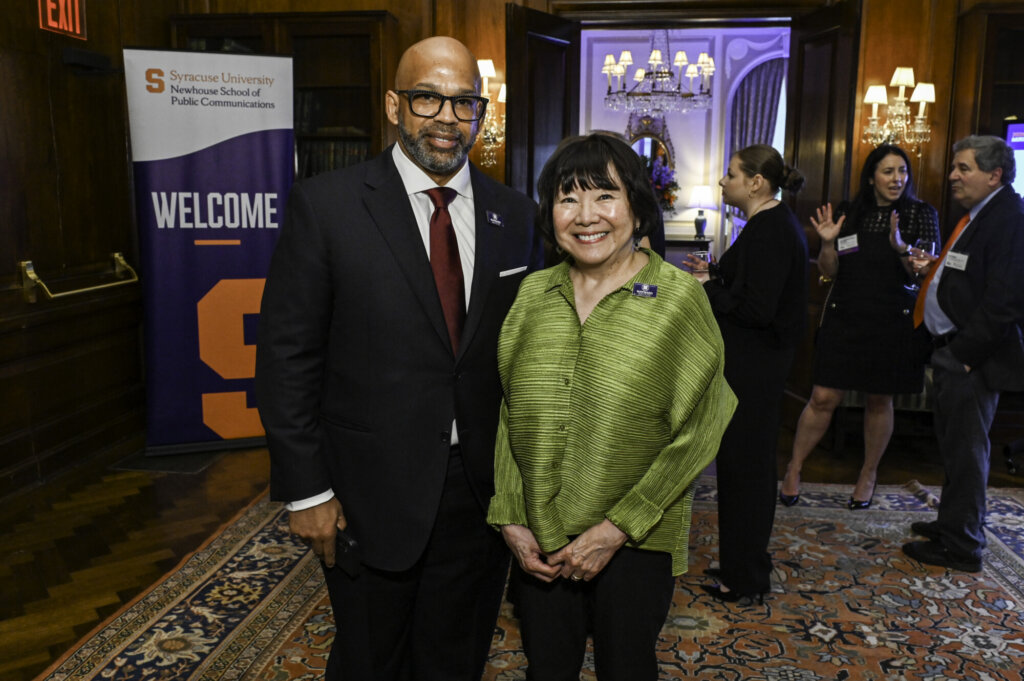
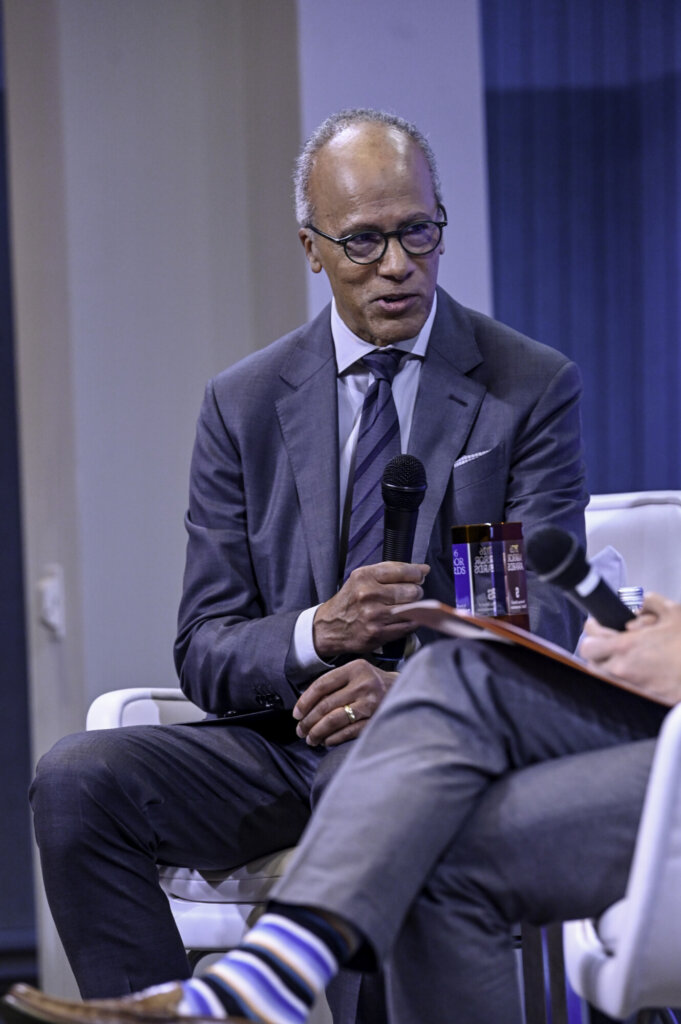

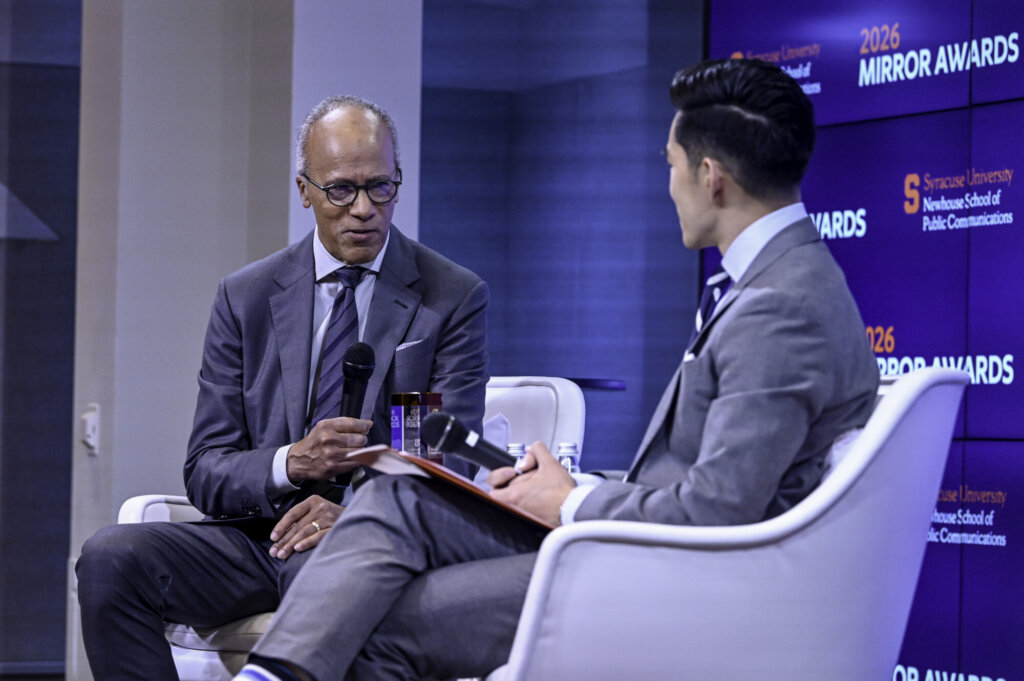
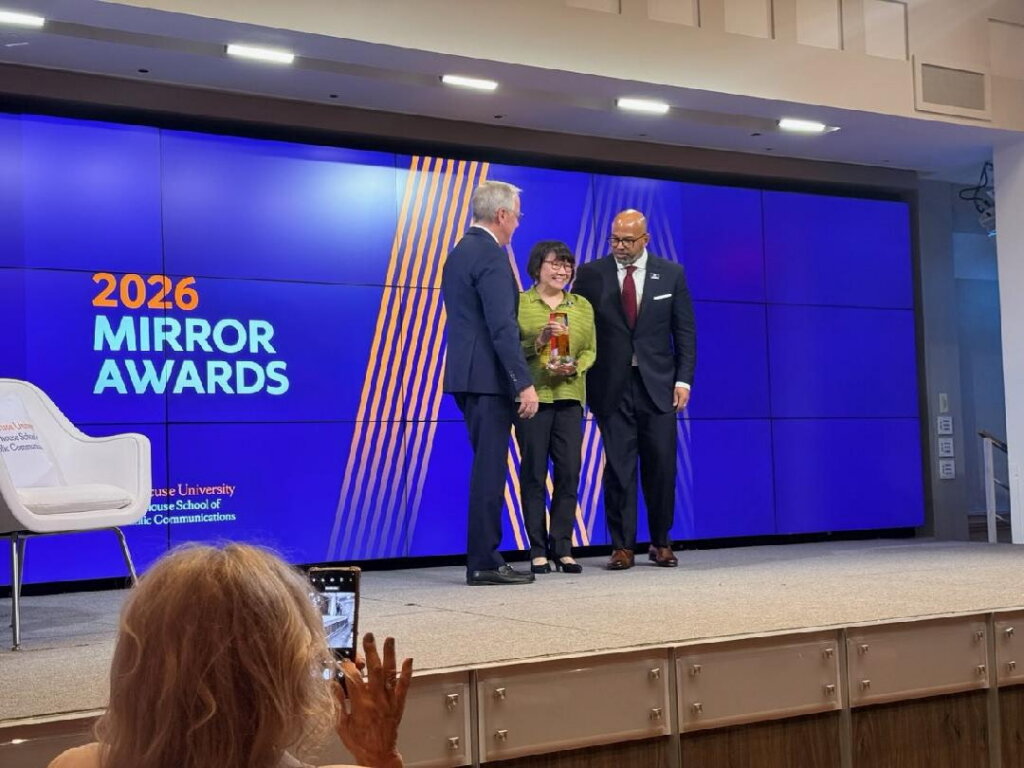
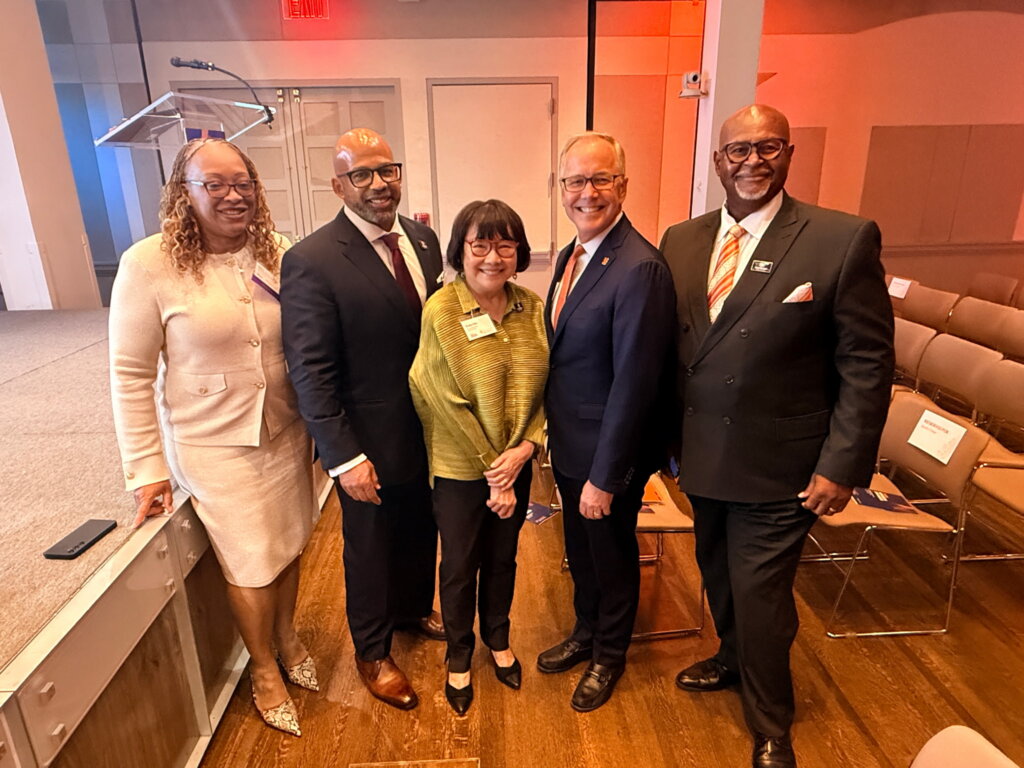
On Tuesday, May 19, 2026 the Maynard Institute was honored to receive the Lorraine Branham Award from Syracuse University’s Newhouse School of Public Communications. Named for former Newhouse dean and Maynard alum Lorraine Branham, who attended the Summer Program for Minority Journalists in 1977 before the Institute received its first official name, the award “recognizes a media organization that has worked to promote inclusion, diversity, equity and accessibility in the news media over the previous year.”
Maynard Institute Board Chair John X. Miller spoke at the awards, and later wrote on the experience of attending the ceremony and reception hosted by Syracuse University.
“It was my honor and privilege to represent the Maynard Institute and introduce Evelyn and Martin at the Mirror Awards, where they accepted the Lorraine Branham Award on behalf of the Institute,” Miller wrote after the awards ceremony.
“Being recognized on the national stage as an organization that continues the work of inclusion, equity and truth-based journalism acknowledges Maynard’s decades-long commitment to expand the community of journalists who aspire to live up to the words and aspirations of Bob Maynard and the founders.
It was a milestone moment for Maynard. In my remarks as the award presenter, I lauded Martin and Eveyln’s stewardship, vision, leadership, adaptability and humanity as they help carry forward Maynard’s mission with urgency and purpose.
As board chair, I am very appreciative of the recognition because it champions the Institute’s persistent work. I share congratulations with the staff and board, too, because the award acknowledges your dedication.
Thank you to the Newhouse School of Public Communications for the Lorraine Branham Award, presented at a fantastic event where NBC News’ Lester Holt was among the six honorees, as the recipient of the Fred Dressler Leadership Award.”
On accepting the Lorraine Branham Award, Co-Executive Director Evelyn Hsu recalled founders Bob and Nancy Maynard, and Bob’s daughter and Institute President Dori J. Maynard.
“We stand on the shoulders of our founders, including Bob Maynard and Nancy Hicks Maynard,” Hsu said. “And we carry deep appreciation for the leadership of our former president, Dori Maynard, who left us far too soon just over a decade ago. I know Dori would have been proud to see the Institute receive an award named for Lorraine Branham, a Maynard graduate whose life and work reflected the power of this legacy.”
Hsu expounded on carrying forward the legacy of the founders, and the generational mantle carried forward by Maynard Institute faculty, staff, fellows and trainees.
“That work has never belonged to one person or one generation. It has been carried by mentors, trainers, editors, reporters, board members, funders and alumni who kept showing up because they believed journalism matters — and because they believed who gets to shape journalism matters, too.”
Co-Executive Director Martin G. Reynolds spoke on past and future visions of belonging in news.
“Nearly 50 years ago, the founders of the Institute believed something simple and profound: the beacons of news in this country should reflect the full diversity of the nation. That mission has always mattered. But it meets this moment with particular urgency,” Marting G. Reynolds said, referencing recent attacks on diversity not only as a practice, but as an ideal and as a reality in America.
“…this honor feels like more than recognition. It is a deeply appreciated act of affirmation for our board, our staff, and especially our graduates, who remain the most powerful reflection of our legacy. Because this work has never been only about who is represented inside newsrooms. It is also about whether the people in our communities are seen fully, heard clearly, and understood for who they are.”
Reynolds hit on the most desired outcome of representation in news: true belonging and investment in communities, and investment in the belonging of each individual within the collective.
“Our hope is that our shared humanity will prevail — and that corrosive attempts to divide us will be met by stories that reveal the beauty, complexity and authenticity of the person beside you.
They do belong. And you belong. Because we belong.”
DEIB training isn’t just a nice-to-have workplace initiative. Diversity in the media directly influences the quality, accuracy, and…
*This article references Maynard Institute programming and interviews Maynard Institute training participants and faculty, including Brenda Verano, who…
Photos by Jennifer Shaevitz, SLO Media Creations.
by Alice Finno, Maynard Institute reporting intern
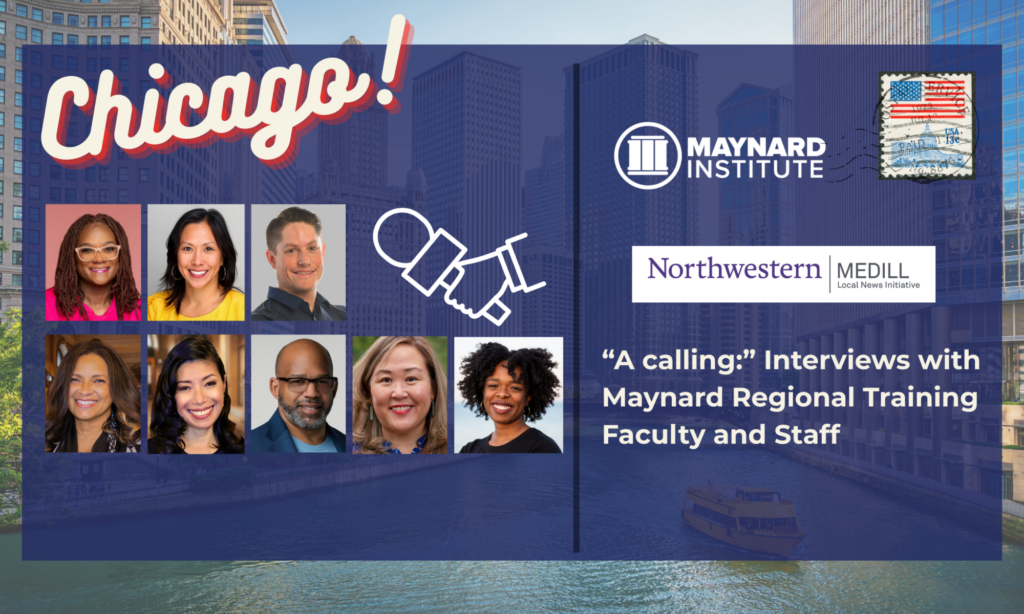
This post contains promotional material for the Maynard Regional Training Series in Chicago.
The Maynard Institute will host a free training for entry- and mid-level editors and managers in Chicago, Illinois, on June 4 through 5, as part of its regional training series.
In partnership with Northwestern University’s Medill School of Journalism, Media and Integrated Marketing Communications, the training will provide coaching and mentoring to help editors and managers working in print, broadcast and digital platforms navigate the complexities of newsroom leadership. Northwestern will cover the standard registration fee on behalf of registrants. Two meals will be provided each day, and limited discounted hotel rooms will be available.
Anyone from the Chicago regional area is invited to attend the training. Registration is open until Tuesday, May 26. Anyone with questions can contact Maynard Regional Training Series Director Odette Alcazaren-Keeley.
Award-winning journalists and Medill professors will lead workshops and discussions together with Maynard Institute faculty.
Martin Reynolds, co-executive director at the Maynard Institute, said that people often start managerial positions without receiving any training, especially when transitioning from a reporter role to a manager or editor position.
However, Reynolds said, only one in ten people have the skills to be a successful manager, according to Gallup, a research and polling organization. During the Chicago training, Reynolds will hold a session about “The Manager’s Mindset” and core aspects of leadership roles, including authority, influence and empathy.
“Having empathy and compassion for your people is really one of the elements that I think is essential,” Reynolds said. “If you don’t have that, it’s very difficult to be an effective manager, a good manager, where your colleagues will thrive under your leadership.”
Mei-Ling Hopgood, journalism professor at Northwestern, will hold a session on using AI with integrity, where participants will discuss newsrooms’ standards and practices when using large language models, such as ChatGPT and Gemini.
“They’re going to be part of newsrooms, they’re going to be part of our workflow, but to be able to say aloud — or to have in writing — this is my philosophy, these are the values that are guiding my use, is very important,” Hopgood said, adding that she hopes people will leave the session having a sense of the guiding principles they want to follow when using AI.
Deborah Douglas, director of the Medill Solutions Journalism Hub, will hold a session called “Complicating the Narrative,” where she will teach people a deep listening technique used in interviewing developed by journalist Amanda Ripley, who currently partners with Maynard alum Hélène Biandudi Hoffer at Good Conflict, guiding and facilitating communication by reimagining conflict “to help people listen and be heard in times of profound disagreement.”
“In a time of deep polarization and shrinking trust, I want to introduce a deep listening technique that models deep listening so that people feel heard and so that they feel safe enough to open up and give us the real answer, not just the surface level answers that people tend to give,” she said.
At the training, Mackenzie Warren, interim executive director of the Medill Local News Initiative, will also present the findings of a study about how Chicago gets its news. The researchers surveyed 1,101 adults in the Chicago metropolitan area and examined consumer behavior, obtaining insights about audiences’ evolving habits and interests.
Warren said the survey focused on 14 counties and included urban, suburban and rural communities in proportions roughly mirroring the United States’ population while also taking race, class and socio-economic status into account to have a representative index.
“I feel somewhat confident in using it as a directional information about how the United States as a whole is getting local news,” he added.
Warren also shared that the Medill Local News Initiative is designed to help the local news ecosystem thrive and highlighted the correlation between positive performance in local news and in democratic norms.
“Without trusted local journalism, it’s not as possible for ordinary people to make good decisions in their lives,” he said.
Doris Truong, deputy director of the Fire Up Entrepreneurship Program at the Maynard Institute, will lead a session on listening and identifying personal values. Truong will talk about interviewing people you disagree with without expressing judgement.
“When you’re talking to sources, it’s really important for them to understand that you’re just trying to understand them, not trying to change their minds,” she said. “You may end up having to interview somebody that you can say ‘I don’t agree with this, but I really want to help my audience understand your perspective.’”
Felecia Henderson, senior director of strategic initiatives at the Maynard Institute, will hold a session about navigating difficult conversations, providing useful steps managers can follow and then role-playing scenarios.
“When you’re a manager, you really have to find a way to strike the right tone, the right setting, the right approach. And a lot of people don’t know what that is,” Henderson said.
Henderson added that when people finish a regional training, they become part of the Maynard Communities of Practice, a program that connects people working in the same field and provides continuous training across different curriculum tracks.
Odette Alcazaren-Keeley, director of the Maynard Regional Training and Communities of Practice Programs, shared that the training will include a roundtable with news leaders from the region to talk about the state of the media in the region.
Alcazaren-Keeley said what participants always appreciate about the programs is sharing the room with other journalists who face the same challenges and be able to learn from each other.
“What we hope is that when they leave, they feel they are not alone, that they have us, and they have each other, and they grow the community with us: they become part of the Maynard family that endures,” she said.
Jasmine Barnes, program manager at the Maynard Institute, said she enjoys creating the vision for a Maynard training and thinking about all the details that will enhance the participants’ experience.
“I’m really hoping that the Chicago training can be a really good opportunity for Northwestern’s network and broader community, as well as some Maynard alumni and some folks who haven’t really been involved with either of those institutions to meet and to really talk about the region and the unique challenges and opportunities that are present in Chicago,” she said.
Mackenzie Warren expressed his excitement for having frontline editors and leaders in journalism come together for the training.
“There’s going be a room full of people who have signed on to this mission and dedicated themselves to this profession that’s more than a profession, it’s a calling,” Warren said.
“Our contributions to journalism will outlast ourselves if we do it right — I’m really encouraged that there’s a room full of people, the next generation of people, who see themselves that way and see this as not just their job, but their mission, and are invested in themselves to get better at their craft.”
On Tuesday, May 19, 2026 the Maynard Institute was honored to receive the Lorraine Branham Award from Syracuse…
DEIB training isn’t just a nice-to-have workplace initiative. Diversity in the media directly influences the quality, accuracy, and…
*This article references Maynard Institute programming and interviews Maynard Institute training participants and faculty, including Brenda Verano, who…


By Celeste Barker Bright for Nonprofit Megaphone
In an era when public trust in news is both more fragile and more essential than ever, how stories are told matters just as much as the stories themselves. For journalism employers, investing in diversity, equity, inclusion, and belonging (DEIB) training is a powerful way to strengthen reporting, build audience trust, and create newsrooms where every voice contributes to more accurate and impactful storytelling.
Diversity, equity, and inclusion training, or DEI training, helps organizations build workplaces where people of all identities and backgrounds are fairly represented, treated, and supported in contributing fully. DEI training programs focus on improving awareness around the experiences of nonwhite and noncisgender male workers. This helps to reduce both conscious and unconscious bias and create systems that ensure equitable access to workplace opportunities and resources.
Many organizations now emphasize DEIB, which adds a critical fourth pillar of social equity: belonging. Belonging goes beyond representation and fairness. It reflects whether employees actually feel accepted, valued, and psychologically safe enough to contribute authentically. Without belonging, even diverse and equitable workplaces may struggle with disengagement or high turnover when employees don’t truly feel included.
In other words, DEI creates access and opportunity, while belonging ensures people feel connected and empowered once they are there. For news media organizations and the American public media as a whole, where storytelling depends on authentic voices and perspectives, that distinction is especially important.
DEIB training isn’t just a nice-to-have workplace initiative. Diversity in the media directly influences the quality, accuracy, and impact of reporting. Research and industry guidance consistently show that inclusive representation in media outlets produces stronger journalism and more sustainable organizations.
A diverse and inclusive newsroom is better equipped to cover stories that concern all American communities and the challenges they face. When journalists reflect a broader range of lived experiences, coverage becomes more representative and less likely to overlook or misinterpret marginalized perspectives.
Inclusive practices help journalists ask better questions, build trust with sources, and avoid harmful stereotypes. DEIB training equips staff with the tools to recognize bias in sourcing, framing, and language, leading to more accurate and nuanced reporting.
Trust is a core currency in journalism, and DEIB training plays a significant role in strengthening it. When audiences see themselves reflected fairly in coverage, they are more likely to engage with and trust a news outlet. That translates to positive company reputations and ratings in very real ways.
Inclusive journalism fosters stronger relationships with communities, particularly those historically underrepresented or misrepresented in media. By improving cultural competency and awareness, DEIB training helps newsrooms build credibility and deepen audience connections.
Organizations that invest in DEIB often benefit from greater creativity and innovation. Forbes explains that diverse teams bring a wider range of ideas, perspectives, and problem-solving approaches, which can lead to better decision-making and more innovative content strategies.
In the fast-changing media landscape, adaptability is essential. DEIB training encourages open dialogue, collaboration, and inclusive leadership practices that help teams respond more effectively to new challenges and opportunities.
Employees who feel valued and included are more likely to stay and contribute at a high level. DEIB-focused environments improve morale, job satisfaction, and overall performance.
For journalism employers, this translates into lower turnover and a more stable workforce. Given the demanding nature of newsroom work, fostering a sense of belonging can help prevent burnout and ensure that talented journalists remain engaged and committed.
Bias in journalism can lead not only to misinformation but also to reputational damage and loss of public trust. DEIB training helps staff identify unconscious biases and understand how they may influence reporting decisions. Structured DEI workshops provide practical tools for addressing bias, improving communication, and fostering accountability. This is especially important in journalism, where ethical standards require fairness, accuracy, and sensitivity.
DEIB training also shapes leadership practices. Inclusive leaders are better equipped to manage diverse teams, support equitable advancement, and create transparent decision-making processes. Organizations that prioritize DEIB develop healthier workplace cultures characterized by trust, collaboration, and shared purpose. In newsrooms, this can lead to stronger editorial alignment and a more cohesive mission.
While internal efforts are valuable, many news organizations stand to gain the most from working with third-party DEIB specialists who bring expertise, structure, and objectivity to the process.
Organizations such as the Maynard Institute for Journalism Education provide tailored training specifically designed for media professionals. Their programs address the unique challenges of journalism, such as inclusive sourcing, equitable storytelling, and newsroom culture. External partners bring proven frameworks and up-to-date best practices that may not exist internally.
Third-party consultants can offer an unbiased perspective on workplace culture and practices. External experts can identify gaps, measure progress, and recommend data-driven strategies for improvement. This objectivity is particularly valuable in journalism organizations, where internal dynamics and hierarchies may make it difficult to address sensitive issues openly.
External partners can design training programs that align with an organization’s size, goals, and audience. Partnering with experts can strengthen broader diversity and inclusion strategies, including hiring and retention efforts. For news organizations with multiple teams or locations, scalable training ensures consistency while allowing for customization based on local needs.
DEIB is not a one-time initiative. It requires ongoing commitment and continuous improvement. External consultants can help organizations move beyond one-off workshops to develop long-term strategies that embed DEIB principles into daily operations. Outsourcing enables companies to build sustainable programs with clear goals, metrics, and accountability structures — all without guesswork or strain on company staff.
For journalism employers, this means creating a newsroom culture where inclusive practices aren’t just passively or abstractly encouraged, but actively and concretely integrated into every aspect of reporting, editing, and leadership. By investing in DEIB training and partnering with experienced organizations, news media employers can strengthen both their workplace culture and the quality of their journalism.
The Maynard Institute inspires and powers the national, collaborative drive for DEIB in news media. Our antiracism training programs have helped create decades of news industry trailblazers, all of whom belong to the “Maynard Family”: a community of deep caring and intergenerational support for journalists of color. Programs by the Maynard Institute are open to all applicants, and the Maynard Institute is committed to addressing the under-representation of people of color and other historically disadvantaged groups in media-related professions.
The Maynard Institute’s Fault Lines® Culture Shift Program gives media professionals the tools to recognize and address biases that shape news coverage. Rooted in the Fault Lines® framework, our program helps organizations move far beyond performative DEI efforts.
Instead, we use intentional DEI practices — built on nearly 50 years of DEI training in media spaces — that are proven to create inclusive workplaces that connect with diverse communities. Fill out our interest form to Register to bring Maynard’s Fault Lines® training to your company today!