News / Blog
Meet our new Program Manager, Jasmine Barnes
Jasmine expands upon this relational work by amplifying and archiving everyday stories as a freelance journalist contributing to South…


Our opening reception will feature a fireside-style chat between Maynard Institute co-executive director, Martin Reynolds and Kevin Merida, executive editor for the Los Angeles Times. Merida is also a member of the Maynard Institute board of directors and an alumni of the Maynard Institute’s Editing Program.
One of the Maynard Institute’s core programs, the Maynard 200 Fellowship provides advanced training to mid-career journalists of color to prime them as candidates for higher leadership roles.
The program seeks out journalism professionals currently working in three areas of focus: entrepreneurship, executive leadership and storytelling. Each track is led by accomplished experts, and this year we are lucky to have award-winning investigative reporter and author Aaron Glantz for storytelling, media strategist Dickson Louie for media entrepreneurship and former newsroom C-suite executive Virgil Smith in executive leadership.
“The relentless uncertainty of our time made it necessary for us to pivot back to an all-virtual training week to keep all participants safe. But what remains unchanged is our commitment at Maynard 200 to deliver cutting-edge training, diverse frameworks and a year-long 1:1 mentorship, grounded in MIJE’s core values of equity and belonging,” said Odette Alcazaren-Keeley, director of the Maynard 200 program.
“We are again privileged as in previous fellowship years, with the caliber of our faculty and also mentors, matched 1:1 to our 44 fellows. They represent expertise not only from general market and ethnic media, but across various disciplines as well— which align in our mission of advancing the leadership power, change agency and authentic voice of our fellows,” she explained.
“We look forward to strengthening the strong spirit of community that we built together with our M200 cohort since our first training week,” Alcazaren-Keeley added.
The 2021 fellows completed their first week of intensive training in April of this year, where they attended panels and discussions formulated to hone their skills. Our fellows have already made huge strides and career changes with the support of their track chiefs.
The Institute has trained two outstanding cohorts prior to the 2021 class, who are now being promoted in both mainstream and ethnic media newsrooms such as the New York Times, Los Angeles Times, Mother Jones, theGrio, the Associated Press, the Washington Informer, Mundo Hispanico, Nieman Journalism Lab, among many others, or earning grants for entrepreneurial media ventures.
After the formal training, fellows are paired with a high-level journalist who has committed to mentoring the fellow for a year.
The program is tuition-free thanks to funding by Google News Initiative, Craig Newmark Philanthropies, The Hearthland Foundation and the McClatchy Foundation. Learn more about the 2021 Fellows.
Jasmine expands upon this relational work by amplifying and archiving everyday stories as a freelance journalist contributing to South…
A recap of our most recent Regional Training at Texas Christian University Bob Schieffer College of Communication in…
The Associated Press announced new members of the senior News leadership team to ensure AP maintains its standing as the world’s preeminent fact-based news organization. Maynard Institute alum Amanda Barrett, previously AP’s Deputy Managing Editor, was promoted to Vice President and Head of News Audience in September 2021.
From the announcement:
“In this new role, Amanda will have a relentless focus on how AP’s news is consumed online, by consumers on AP News and customers on AP Newsroom, as well on social media. At the heart of Amanda’s job is the audience experience — those we reach through our customers and the audiences we are growing on our own platforms and social media accounts. Amanda will also continue to oversee the Nerve Center and play a leading role in AP’s diversity and inclusion efforts, with the goal of ensuring that these priorities are shared and implemented across News.”
We recently caught up with Amanda to congratulate her new role as AP’s Vice President and Head of News Audience. She reflected on the Maynard Institute’s programs that impacted her.
“I first encountered the Maynard Institute when I attended the Media Academy in 2009. Little did I know the profound effect Dori, Evelyn, Martin, and the program would have on my life. I learned so much about being a manager: how to have difficult conversations, how to solve complex business challenges. And I built friendships that I still depend on.” Amanda Barrett, VP and Head of News Audience, The Associated Press
In addition to the Maynard Academy, Amanda participated in the Maynard 200 Fellowship, one of the Institutes core programs that provides advanced training for mid-career journalists of color interested in leadership roles.
“Over the years, the Maynard mentorship never ended. Eventually, Evelyn asked me if I would be interested in a program that would help propel my career to another level and that turned out to be the Maynard 200. Executive coaches Virgil Smith and Caroline Ceniza-Levine were phenomenal, in addition to my mentor Susan Leath. I am so blessed to be a part of the Maynard family.” Amanda Barrett, VP and Head of News Audience, The Associated Press
Excerpt from feature originally published by AP:
“Barrett joined AP in New York in 2007 as a content coordinator, working with journalists across the company on interactive projects. She became deputy East editor in 2009, helping to establish a new regional desk in Philadelphia and lead AP’s coverage of 10 northeastern U.S. states.
Two years later, she returned to New York as city news editor, directing AP’s award-winning coverage of Hurricane Sandy and its aftermath. In 2015, she moved to the Nerve Center as planning and administration manager and assumed leadership in 2017.
Barrett has played a critical role in coordinating news coverage of many of the biggest stories of recent years, including hurricanes Harvey and Maria, the #MeToo movement and the 2018 Winter Olympics. Barrett also serves as a leader of AP’s race and ethnicity reporting team.
Before joining AP, Barrett worked at Newsday, where she led a team of interactive journalists and managed the NYNewsday.com and amNY.com websites. She previously worked as a sports editor at the Orlando Sentinel and at the Roanoke Times in her hometown of Roanoke, Va.”
Jasmine expands upon this relational work by amplifying and archiving everyday stories as a freelance journalist contributing to South…
A recap of our most recent Regional Training at Texas Christian University Bob Schieffer College of Communication in…
Remembering our friend and colleague Michael Days.

As the mystery of Gabby Petito’s whereabouts unfolded in 2021, news media clamored to cover the story. Partially chasing the clicks of the social media users who went viral trying to determine her whereabouts when Petito was announced missing, national and local news prioritized the story and especially when tragically, her remains were discovered. The Maynard Institute was contacted by the media outlets listed below to comment on the outsized coverage the case received.
Gwen Ifill is often credited for coining the term “Missing White Woman Syndrome” during her remarks at the Unity: Journalists of Color journalism conference in 2004. Sociologist Sheri Parks, another African American woman, also spoke about the media practice on CNN in 2006.
The term missing white woman syndrome refers to “the observed disproportionate media coverage, especially in television, of missing-person cases involving young, white, upper-middle-class women or girls compared to the relative lack of attention towards missing women who are not white, women of lower social classes, and missing men or boys.”
Pushing the industry to do better
The Maynard Institute was founded more than four decades ago to address these disparities in media coverage. In 2005, shortly after the term “missing white women syndrome” was coined, Dori Maynard, President of the Maynard Institute at that time, was interviewed for NBC News on the subject.
In 2021, the Maynard Institute was again contacted to weigh in how the news media perpetuates an imbalance of coverage related to missing persons cases. Co-executive director Martin Reynolds was tapped to contribute to discussions about the media’s approach to the Gabby Petito news story, as listed below.
In one of the panel interviews, Martin was joined by Dr. Ava Thompson Greenwell, Documentary Filmmaker & Research of the Black Women Television News Managers, who detailed exactly why the mission of the Maynard Institute to diversify newsrooms is so relevant. Dr. Greenwell said “I did a study of forty Black women news managers in television. They intervene on that pattern and really try to make sure that Black women are given the same dignity as other women.”
New York Times articles
How the Case of Gabrielle Petito Galvanized the Internet
News Media Can’t Shake ‘Missing White Woman Syndrome,’ Critics Say
“What I’m most concerned about is the amount of coverage, and if you look at newsrooms, the coverage decisions are made in places that continue to be disproportionately white,” said Mr. Reynolds, whose organization works with journalists of color.
AFP Yahoo News article
Gabby Petito’s disappearance captivated the world. Why?
“The people who are in the roles of making decisions about what could be news lack diversity,” added Martin Reynolds of the Maynard Institute for Journalism Education, in addressing the disparity.
CBS New York segment
“This isn’t to say that these journalists are bad folks or that this isn’t a worthy story … What I think is really essential is the understanding of the choices that we make as journalists are an articulation of value.” Reynolds said.
The Special Report with Areva Martin talk show
The Special Report with Areva Martin: Missing White Women Syndrome
Additional Panelists included:
Dr. Michelle N Jeanis, Professor of University of Louisiana & Missing Persons Crime & Media Researcher
Dr. Ava Thompson Greenwell, Documentary Filmmaker & Research of the Black Women Television News Managers
The Mercury News
Where’s Frank Somerville? Silence irks activists, stirs questions about suspension
Excerpt:
Community groups have yet to hear from KTVU about Somerville’s complaint: improving coverage of stories about missing and murdered women of color.
The public silence from Channel 2 and Fox, its parent network, has fueled community frustration over the ostensible reason he was suspended — a reported dispute over his push to add a brief commentary on racial inequity to the end of a straight-news story about the disappearance of social media influencer Gabby Petito, whose case had attracted a firestorm of media coverage.
Martin Reynolds, co-executive director for the Oakland-based Maynard Institute, which promotes diversity in America’s newsrooms, said Somerville’s reported solution, to tack a commentary on at the end of a straight news story, would have been “lazy,” as opposed to assigning a full story on the topic. Reynolds, a former editor at the Oakland Tribune and Bay Area News Group, said it would have resulted in the “very disparity (in coverage) he was seeking to address.”
But Reynolds also faulted KTVU for fueling the controversy by not meeting with activists to discuss their complaints about coverage, saying that journalism organizations must offer “a level of transparency and accountability.”
For additional media inquiries, please reach out to us at info@mije.org.
Jasmine expands upon this relational work by amplifying and archiving everyday stories as a freelance journalist contributing to South…
Read an excerpt of the essay written by the Maynard Institute's Co-Executive Director, Martin G. Reynolds, for the…

Chapter 510 & the Dept. of Make Believe is a youth writing center in Oakland, California, with a mission to help every young person in Oakland write with confidence and joy. Rooted in this mission, Chapter 510 believes that when kids and teens can confidently write, they transform themselves and their communities for the better. We can’t think of a better role for Oakland Voices correspondent Marabet Morales Sikahall than Chapter 510’s new Program & Community Manager.
With programs led by teaching artists within a supportive community of diverse volunteers and artists, Chapter 510 strives to increase the number of books written by QTBIPOC youth in the canon of literature and serve the evolution of all Oakland young writers so they can become stronger learners, meaning makers, and agents of change.
Similar to the literary project in San Francisco, 826 Valencia, also known as the Pirate Supply Store, Chapter 510 is located in Oakland with a retail store in the form of an interactive magical bureaucracy called the Dept. of Make Believe that provides youth with “Licenses to Dream” and more.
Oakland Voices is a nine-month program led by the Maynard Institute for Journalism Education that trains Oakland residents to tell the stories of their neighborhoods. The program emerged from a partnership with the Oakland Tribune and it connects Oakland Voices correspondents with more than a dozen media professionals. Participants work individually and in teams, creating content for OaklandVoices.us, which can also be published elsewhere. The collaborative, applied learning approach means correspondents quickly become aware of their power and responsibility as storytellers, and as members of the media.
We asked Marabet how Oakland Voices impacted her journey. “As a young writer I was hesitant about writing journalistic pieces because of a previous traumatic experience,” Marabet said, referring to a high school teacher who discouraged her from writing. “It was through the Maynard Institute’s support for Oakland Voices that I was able to become more confident in my community storytelling.”
“Oakland Voices has helped me become a stronger voice and provided the needed representation of the stories that I grew up with in East Oakland and the new ones, too. If anything, thanks to the Maynard Institute I can say that my community has grown even bigger by getting to know others who, like myself, want to uplift our beloved town.” Marabet Morales Sikahall, 2016 Oakland Voices alum and Chapter 510 Program & Community Manager
Marabet Morales Sikahall is a Guatemalan American writer from Oakland, California. She is an alumna from both Creative Writing programs at San Francisco State University and Berkeley City College, including the Literary Arts program at Oakland School for the Arts. Some of her writing has been featured in The Acentos Review, Acción Latina’s Tribute Chapook for Salvadoran writer, Roque Dalton, Harvard College’s Palabritas, and Oakland Voices. Additionally, her radio story in collaboration with local radio station, KALW and Oakland Voices aired on July 2019 for #MinorityMentalHealthAwarenessMonth. She is also the editor and founder of the literary journal, “Diaspora Baby Blues.”
You can check out Marabet’s Oakland Voices stories on the Oakland Voices website including her love letter to Oakland libraries.
Jasmine expands upon this relational work by amplifying and archiving everyday stories as a freelance journalist contributing to South…
A recap of our most recent Regional Training at Texas Christian University Bob Schieffer College of Communication in…
Remembering our friend and colleague Michael Days.
Marabet Morales Sikahall joins Chapter 510.
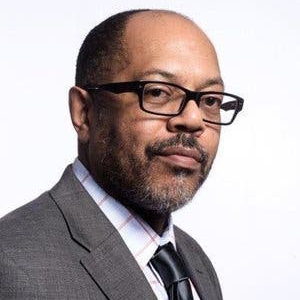
Longtime journalist Kevin Merida, who has served on the board of the Maynard Institute since 2014 and participated in the Maynard Institute Summer Program for Minority Journalists in 1979, was named the executive editor of the Los Angeles Times, one of the largest major metro newspapers in the country.
Merida has served as the editor in chief of ESPN’s The Undefeated since 2015, where he led a division producing content at the intersection of sports, race and culture.
Merida has had the unique opportunity to work in print, broadcast and digital ventures throughout his lengthy career, which was launched by the Maynard Institute’s SPMJ 1979 program, hosted at UC Berkeley. He went on to his first full time reporting job at the Milwaukee Journal and later spent over two decades at the Washington Post, where he rose to managing editor.
Several other alumni of the Maynard Institute’s programs have worked at the LA Times and been instrumental in producing inclusive community reporting, such as Maynard Institute co-founder Frank Sotomayor, who helped lead the LA Times Pulitzer prize-winning series on the Latino community in Los Angeles. That project included the work of Merida’s SPMJ ‘79 classmates, Virginia Escalante and Louis Sahagun.
The current owners of the LA Times, Dr. Patrick and Michele Soon-Shiong, indicated earlier this year that stronger coverage of “Black, Latino, Asian and underrepresented communities” is a priority for the publication.
Merida plans to relocate to Los Angeles with his wife and youngest son. The Maynard Institute sends it’s most heartfelt congratulations to Kevin and family!
Jasmine expands upon this relational work by amplifying and archiving everyday stories as a freelance journalist contributing to South…
A recap of our most recent Regional Training at Texas Christian University Bob Schieffer College of Communication in…
Board member Kevin Merida is the executive editor of the LA Times.
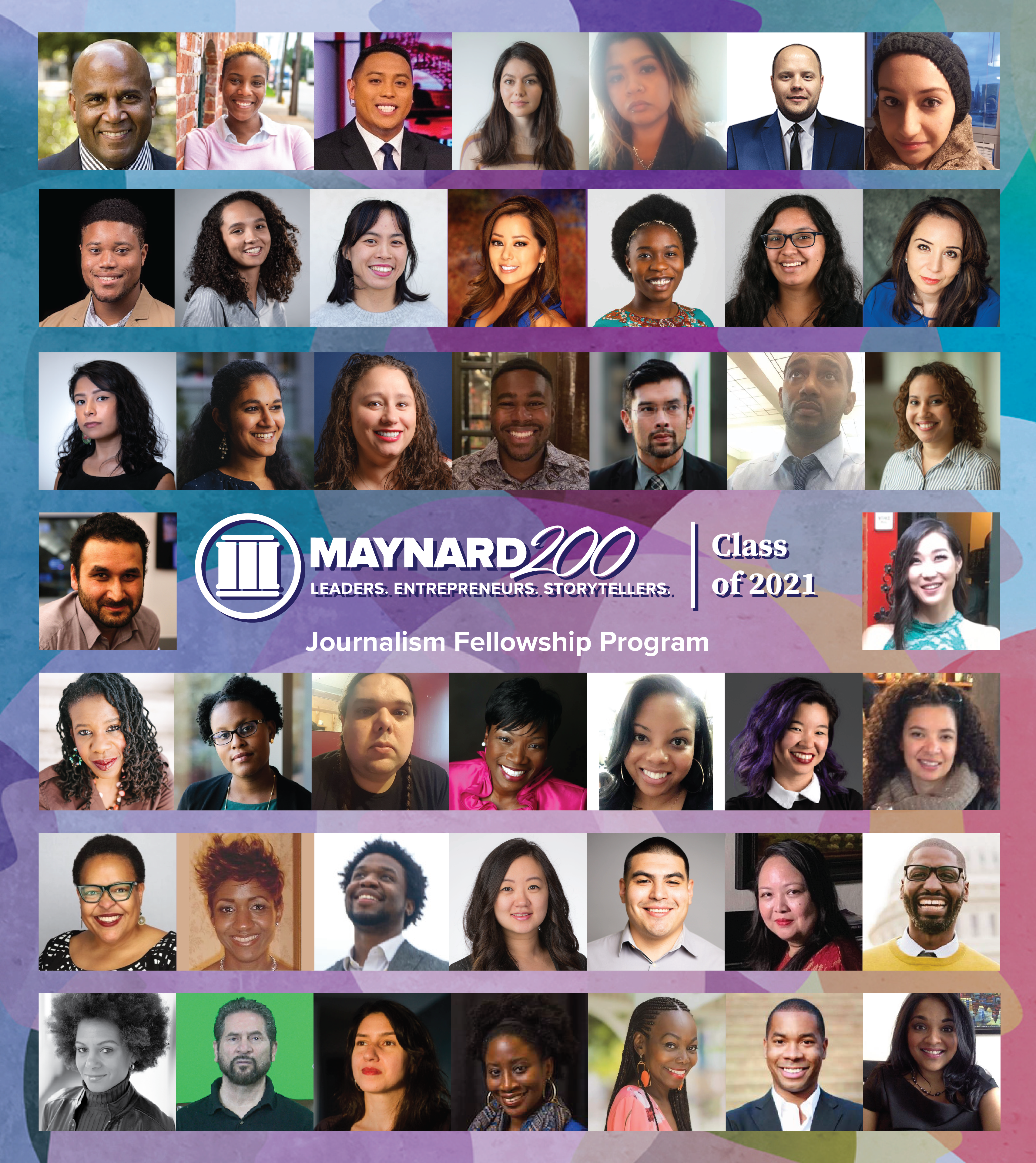
EMERYVILLE, CALIFORNIA (April 8, 2021) —The Robert C. Maynard Institute for Journalism Education [MIJE], a national nonprofit dedicated to making newsrooms look like America and to bring about equity and belonging in media, today welcomes the 44 fellows selected for Maynard 200, the third cohort of its flagship fellowship.
The diverse group of media professionals was selected from a competitive pool of more than 140 applicants. The fellows represent a mix of mainstream, ethnic, local community and niche media, and their entrepreneurial ventures. The Maynard 200 fellowship will provide cutting-edge training and year-long mentorship from top experts.
The goal is to embolden the next generation of storytellers, leaders and media entrepreneurs to transform the nation’s media ecosystem and preserve our democracy by ensuring that the media accurately represents the lives and perspectives of all Americans.
The 2021 class reflects a profound pivot from diversity to belonging. These professionals will provide the energy helping to power the culture shift in America’s newsrooms. Calls by journalists of color for equity and dismantling systemic racism in the news media are profound and will be answered through the work of these fellows.
“We are energized by our fellows’ nuanced coverage, wide spectrum of diverse perspectives, empathetic leadership and innovative entrepreneurial ventures,” said Odette Alcazaren-Keeley, director of Maynard 200. “They will find allyship in and bolster the program’s mission of reinvigorating the media’s diversity pipeline now sharpened by the crises of our time amid our global pandemic recovery and racial justice reckoning.
“Despite our digital pivot for the first training week because of public health protocols for COVID-19, we are committed to deliver the same excellent program this year, aiming to amplify the collective impact of our cohort.”
This year’s Maynard 200 Fellowship will begin with a virtual training week,
April 12-16. The second training round is scheduled in person this November if protocols allow.
Maynard 200’s three-track curriculum delivers a mix of content, expertise and perspectives and includes:
Executive Leadership
Media Entrepreneurship
Storytelling
“We are fortunate to have accomplished leaders in charge of each of our training tracks — award-winning investigative reporter and author Aaron Glantz in Storytelling, media strategist Dickson Louie in Media Entrepreneurship and former newsroom C-suite executive Virgil Smith in Executive Leadership,” said Evelyn Hsu, co-executive director of the Maynard Institute and the architect of Maynard 200. “They are joined by accomplished and devoted professionals who teach and mentor our participants. Our faculty are key to building the next generation of journalists of color.”
“Given the demographics of the nation and the shift to have people pay for the news they use, the need to have media professionals that represent the wide diaspora of lives and cultures isn’t just the right thing to do,” said Martin G. Reynolds, the institute’s co-executive director. “It is imperative if journalism is to be seen as accurate, authentic, trustworthy and credible. It’s not hyperbole to say that the soul of journalism is at stake in this moment and in this time.”
When this third cohort graduates, 93 media professionals will have participated in the Maynard 200 fellowship since its inception in 2018. The program aims to reinvigorate the diversity pipeline in American media by training 200 diverse professionals in its first five years.
The program is tuition-free thanks to funding by Google News Initiative, Craig Newmark Philanthropies, The Hearthland Foundation and the McClatchy Foundation.
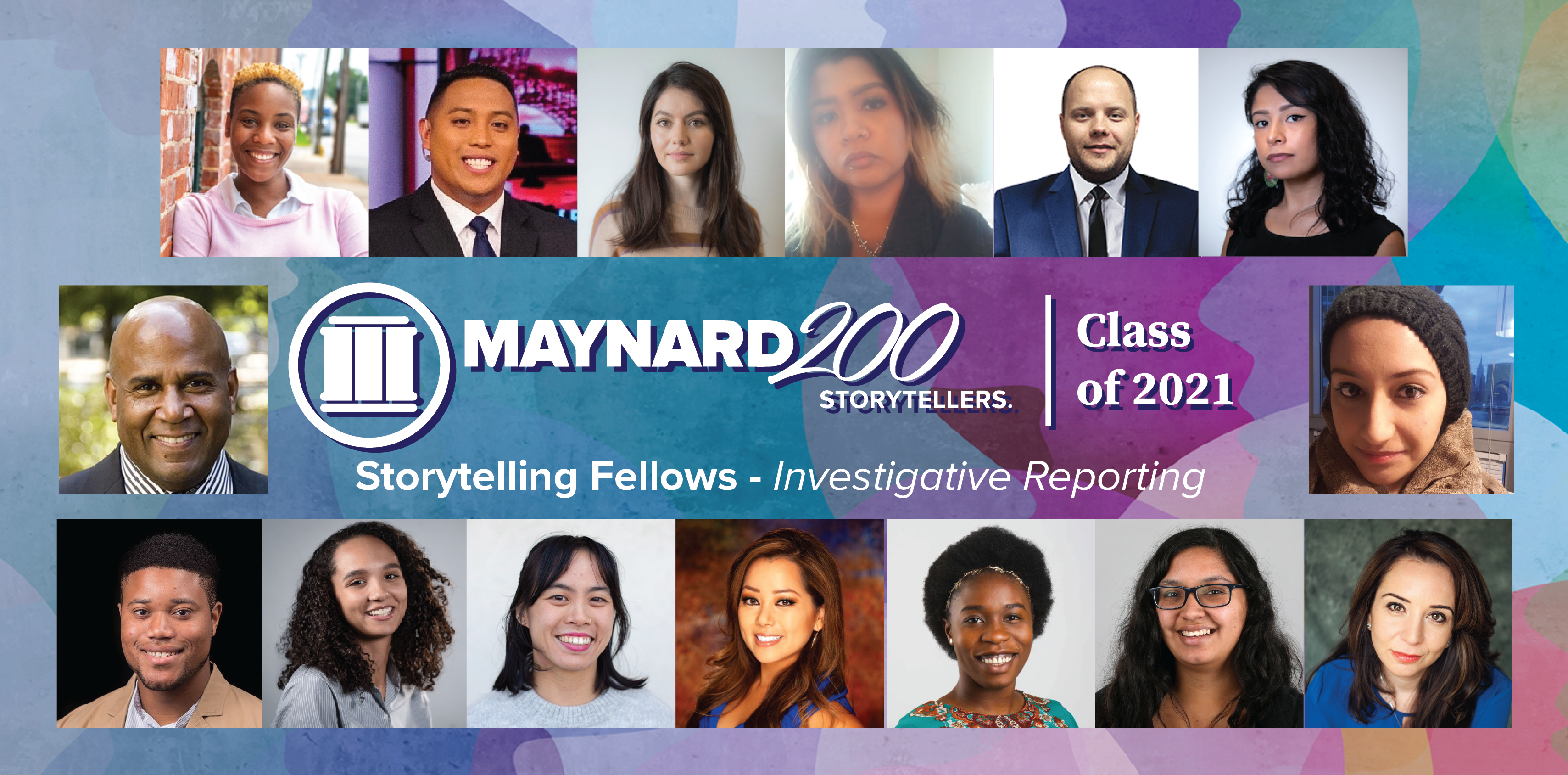
Participating in the Maynard 200 Fellowship – Storytelling track [L-R]:
Jasmine Vaughn-Hall, Rommel Conclara, Estephany Haro, Eleanore Catolico, Ruslan Gurzhiy, Thalia Juarez, Herb Pinder, Sameea A. Kamal, Mark Walker, Cortlynn Stark, Sarah Mizes-Tan, Angela Chen, Marina Affo, Stephanie Casanova, Dalia Hatuqa
STORYTELLING TRACK
Marina Affo, reporter, investigations team, The Philadelphia Inquirer
Stephanie Casanova, reporter and digital producer, Arizona Daily Star
Eleanore Catolico, freelance community journalist/contributor, BridgeDetroit
Angela Chen, morning anchor, KESQ TV- ABC/CBS
Rommel Conclara, Bay Area correspondent, ABS-CBN International-The Filipino Channel
Ruslan Gurzhiy, editor, Slavic Sacramento
Estephany Haro, executive producer, KDTV- Univision 14 Bay Area
Dalia Hatuqa, independent journalist/regular contributor, Foreign Policy
Thalía Juárez, photo editor, The Wall Street Journal / freelance multimedia journalist
Sameea A. Kamal, news desk editor, Los Angeles Times
Sarah Mizes-Tan, race and equity reporter, CapRadio
Herb Pinder, accountability coach, Asbury Park Press / USA Today Network
Cortlynn Stark, breaking news reporter, The Kansas City Star
Jasmine Vaughn-Hall, diversity & inclusion reporter, York Daily Record/USA Today Network
Mark Walker, FOIA coordinator and reporter, The New York Times
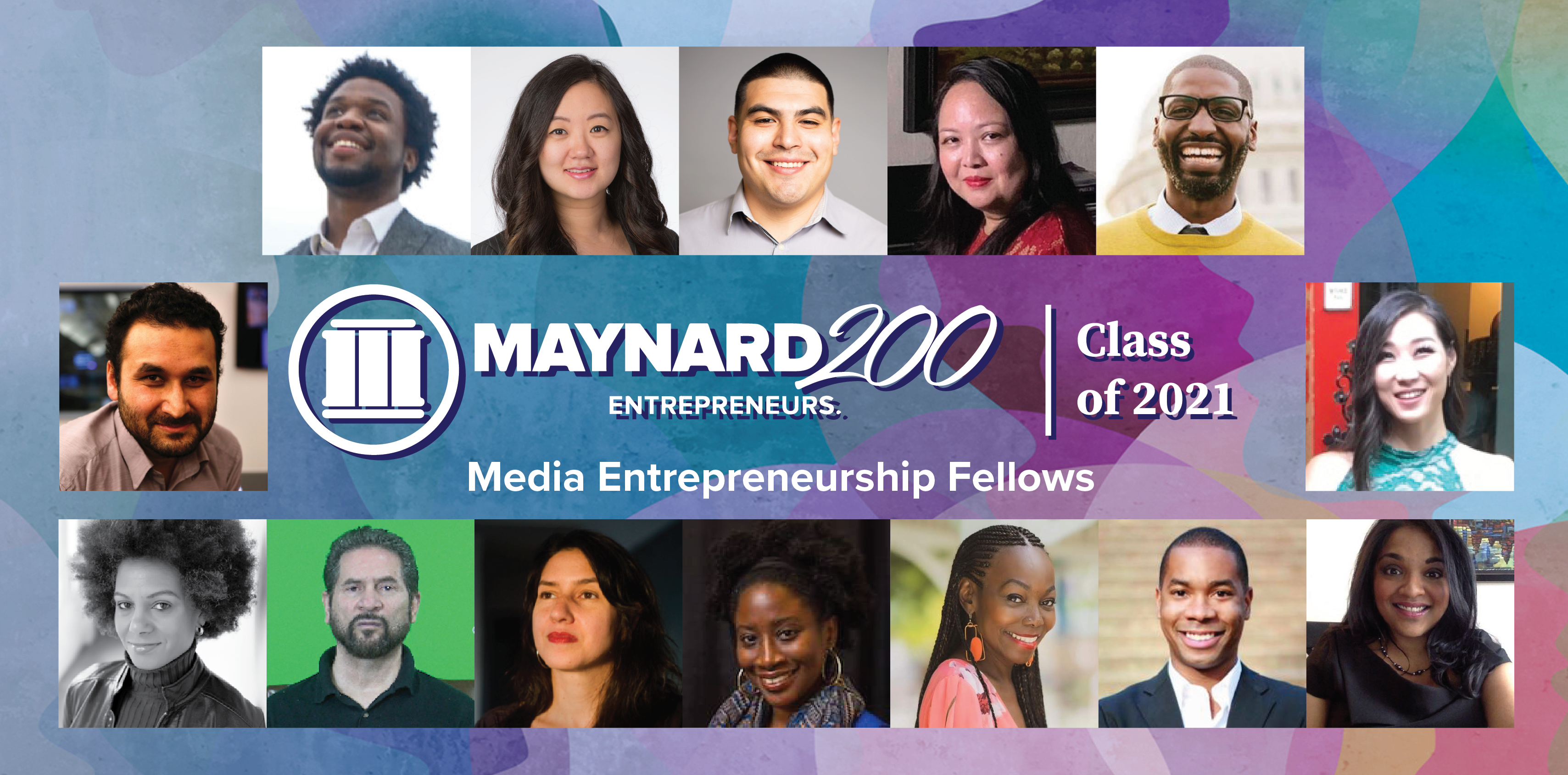
Participating in the Maynard 200 Fellowship – Media Entrepreneurship track [L-R]:
Kevon Paynter, Annie Guo VanDan, Pete Camarillo, Clarisa Strohmeyer, Delonte Harrod, Anuz Thapa, Hannah Kim, datejie cheko green, Marvin Ramírez, Michelle García, Jenee Darden, Felicia Purcell, Travers Johnson, Meena Thiruvengadam
MEDIA ENTREPRENEURSHIP TRACK
Pete D. Camarillo, founder, PST Media
Jeneé Darden, reporter and podcast host, KALW
Michelle García, journalist/curator, Rewriting the West project
datejie cheko green, founder and director, Solidarity Conscious Works
Delonte Harrod, founder, editor, reporter, The Intersection Magazine
Travers Johnson, founder and editor in chief, Queerency
Hannah Y. Kim, principal, Butterfly Strategies, LLC
Kevon Paynter, CEO and founder, Bloc By Block News
Felicia Purcell, freelance writer, various Bay Area publications / content manager, Sports in the Bay
Marvin Ramírez, editor and publisher, El Reportero
Clarisa Strohmeyer, managing director, ganjly.com
Anuz Thapa, journalist and video producer, thestreet.com
Meena Thiruvengadam, contributor, Travel + Leisure/journalist and audience development consultant
Annie Guo VanDan, president, Asian Avenue Magazine
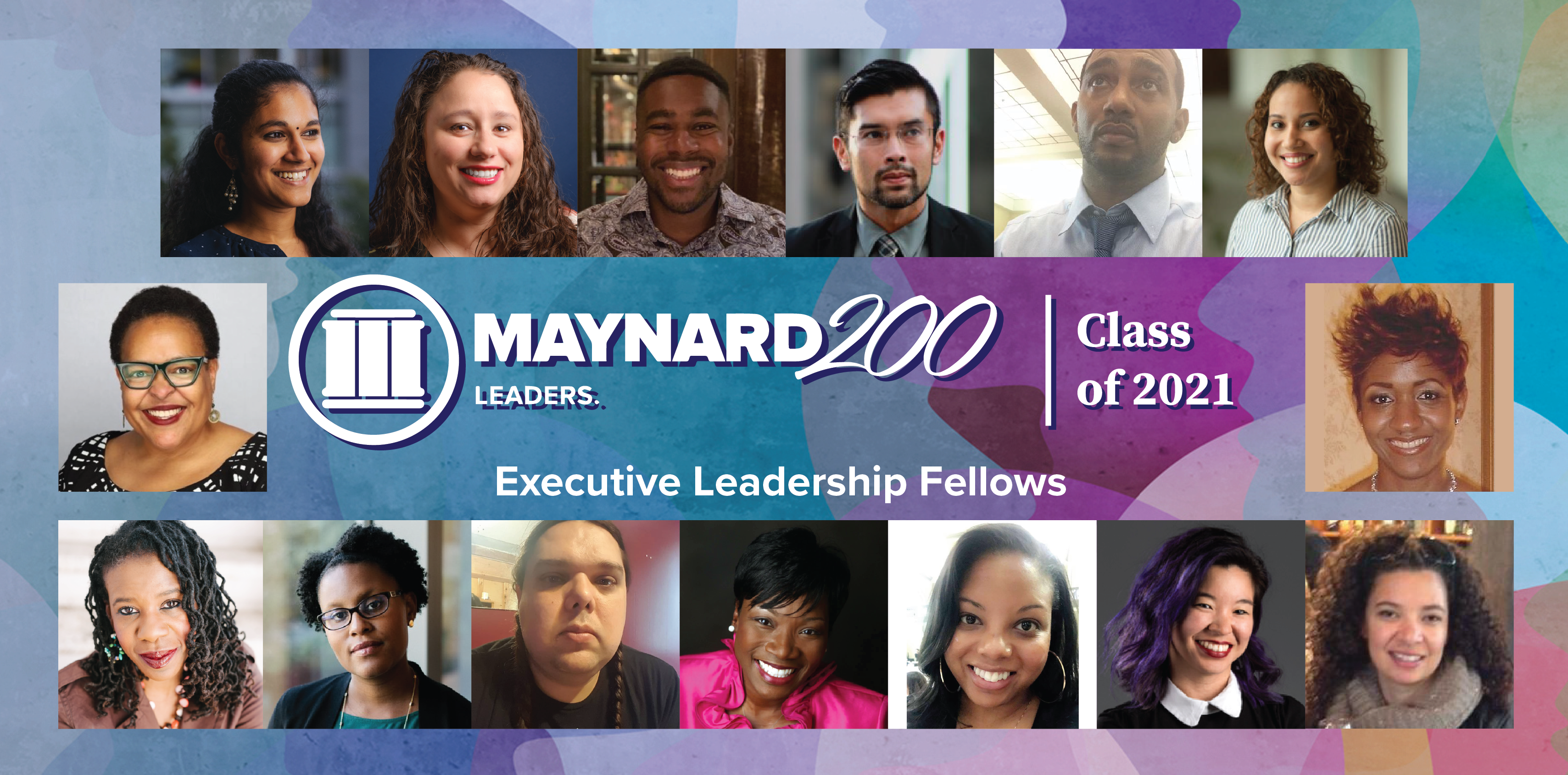
Participating in the Maynard 200 Fellowship – Executive Leadership track [L-R]:
Rajeswari Ramanathan, Michelle Faust Raghavan, Ross Terrell, Stephen Angeles, Gary Estwick, Samantha Guzman, Benét J. Wilson, Khalilah L. Liptrot, Lottie Joiner, Ashton R. Lattimore, Tripp J Crouse, Charmayne Brown, Tasha Stewart, Marian Liu, Anica Butler
EXECUTIVE LEADERSHIP TRACK
Stephen Angeles, supervising producer and news producer, ABS-CBN Global
Charmayne Brown, morning news anchor, WFXR News
Anica Butler, deputy managing editor, local news, The Boston Globe
Tripp J Crouse, news director, KNBA
Gary Estwick, news director, The Leaf-Chronicle (Gannett Newspapers)
Samantha Guzman, executive editor, Decibel – Austin PBS
Lottie Joiner, senior writer/editor, TheCrisisMagazine.com/NAACP
Ashton R. Lattimore, editor-in-chief, Prism
Khalilah L. Liptrot, senior editor, CBSN
Marian Liu, operations editor, The Washington Post
Michelle Faust Raghavan, equity initiative manager, Solutions Journalism Network
Rajeswari Ramanathan, senior video producer, AJ+/Al Jazeera Int’l
Tasha Stewart, senior manager of engagement, WCPO
Ross Terrell, managing editor, KUER NPR Utah
Benét J. Wilson, senior editor, The Points Guy
For more information about Maynard 200, contact:
Odette Alcazaren-Keeley – Director, Maynard 200-MIJE
okeeley@mije.org
I 650-455-3063
Visit: mije.org
###
ABOUT THE MAYNARD INSTITUTE FOR JOURNALISM EDUCATION
The Robert C. Maynard Institute for Journalism Education is the nation’s oldest organization dedicated to helping the news media accurately portray all segments of society, particularly those often overlooked, such as communities of color. The media play a pivotal role in shaping our perceptions of each other. The distorted coverage of communities of color influences public policy and the decisions we make in our personal lives.
Jasmine expands upon this relational work by amplifying and archiving everyday stories as a freelance journalist contributing to South…
A recap of our most recent Regional Training at Texas Christian University Bob Schieffer College of Communication in…
An introduction to the people who are involved in the fellowship.

The Online News Association, the Maynard Institute for Journalism Education and OpenNews are committed to dismantling systemic racism in the journalism industry and transforming news organizations into institutions of belonging.
The past few months, we have worked behind the scenes scheming (the good kind) and strategizing new efforts through our Vision25 collaboration. We’ve convened newsroom leaders, spoken to funders and even brought together many of the people who were newly minted in their news organizations to address diversity, equity and belonging.
The conversations have been robust, revealing and troubling. In April, we’ll share some of what we’ve learned, including how the concept of belonging emerged as the aspiration we are pushing to see operationalized across the news industry.
Meanwhile, we’d like to share with you five opportunities to participate in Vision25 this month—through a fellowship, an event, a coalition, and resources to ensure information equity. And there is more to come.
Maynard 200 Fellowship Program: Apply by March 5
The Maynard 200 Fellowship is the Maynard Institute’s signature professional development program for media professionals of color. The fellowship provides cutting-edge training and year-long mentorship for leaders, storytellers and media entrepreneurs of diverse backgrounds guided by the expertise of a distinguished faculty across relevant disciplines. The program supports and emboldens the next generation of leaders, creators and founders of new media ventures. Diverse media executives advance belonging in their newsrooms, thereby advancing the goals of Vision25.
Apply to the Maynard 200 Fellowship by March 5
Maynard 200 Application Form
Maynard Institute’s Belonging in News series
The third episode of Belonging in the News is coming up on Wednesday, March 10 at 3 p.m. EST / 12 p.m. PST. Martin G. Reynolds, event moderator and co-executive director of the Maynard Institute, will discuss institutions of belonging with Pulitzer Prize-winning journalist, author and correspondent for CBS News, Wesley Lowery. In addition to discussing his experience investigating police shootings for The Washington Post’s “Fatal Force” project, we will discuss his own journey to find belonging as a journalist.
Register to join the conversation
OpenNews is launching the DEI Coalition For Anti-Racist, Equitable, And Just Newsrooms
Over 100 community volunteers have worked to create a digital community space dedicated to learning and taking concrete actions to create newsrooms and workplaces that are anti-racist, equitable and just. The space will serve as a place to work in solidarity across all levels of experience, on challenges members face in moving DEI forward in their newsrooms, and collectively creating strategies and resources to tackle those challenges. The development of this space has embodied the values of belonging that Vision25 is all about: OpenNews has intentionally designed the space with community leaders and members as a collaborative process. You can sign up to receive a notification when the community space, hosted on Slack, opens later this March.
Get notified when the DEI coalition community space opens soon
The Online News Association’s resource database for information access equity
The #ONAinfoequity database provides resources for journalists to engage communities that are historically under- or misrepresented in the media and ensure equitable access to information. Free Press’ Vanessa Maria Graber and ONA Board member Anita Li led over a dozen journalists to collaborate on this project through an ONA Community Circle. It’s a one-stop shop with guidance for identifying gaps in information access, making the case for community engagement to newsroom leadership and discovering ways to improve existing efforts.
Explore and share the #ONAinfoequity database
Support Vision25
Vision25 is a commitment by our three organizations to advance racial equity in journalism. But, to make this a reality, we need to do this together as an industry. If you’re interested in exploring funding or supporting this work, please email Irving Washington at irving@journalists.org to set up a conversation about our plans and how you can help.
Jasmine expands upon this relational work by amplifying and archiving everyday stories as a freelance journalist contributing to South…
Read an excerpt of the essay written by the Maynard Institute's Co-Executive Director, Martin G. Reynolds, for the…
Five opportunities to connect with us.
NEW APPLICATION DEADLINE: MARCH 5, 2021
Maynard 200 Application Form
Media Contact
Odette Alcazaren-Keeley
Director, Maynard 200-MIJE
okeeley@mije.org / 650-455-3063
EMERYVILLE, CA — The Maynard Institute, a nonprofit dedicated to making newsrooms look like America, has announced it will hold its signature Maynard 200 fellowship program in 2021. The fellowship provides cutting-edge training and year-long mentorship for leaders, storytellers and media entrepreneurs of diverse backgrounds, to prime them as candidates for higher roles in the workplace.
Mentorship is provided by distinguished media professionals and experts of varying backgrounds. By emboldening the next generation of leaders in media, the Maynard 200 is facilitating equity and belonging in the newsroom and beyond.
The program is tuition-free thanks to funding by Google News Initiative, Craig Newmark Philanthropies, The Wunderkinder Foundation and the McClatchy Foundation.
Candidates can apply for one of three tracks — Storytelling, Advanced Leadership and Media Entrepreneurship. Applications are now open, and will be accepted through March 5th.
“Our program’s mission, built on the reinvigoration of the diversity pipeline in media, is now sharpened by the triple crises of our time: the public health and economic devastation of the global pandemic, America’s racial reckoning and deep societal fractures laid bare again by the 2020 vote,” said Odette Alcazaren-Keeley, Maynard 200 director. “Responding to these seismic shifts, Maynard 200 continues to bolster the authentic voice, leadership power and change agency of professionals of color.”
“We are fortunate to have top executives, well-known journalists and news leaders, outstanding business strategists and leading academics as members of our program faculty and as mentors,” said Evelyn Hsu, co-executive director of the institute and chief architect of Maynard 200. “They are a generous and dedicated group that has made Maynard 200 a top training program.”
MIJE co-executive director Martin G. Reynolds said, “The fellows represent the future of our industry. Given where we are now as a nation, their perspectives, influence, passion, skill and creativity are essential as they seek to ascend to top leadership roles, create nuanced journalism and start new media enterprises that will help shape the journalistic landscape in the years to come. This program is as much about building up the person as it is about supporting the work they do. It is an honor to see them flourish.”
Reynolds will once again lead the fellows in Fault Lines ®, a core training session of the institute’s foundational framework of diversity, equity and belonging. It’s one of several marquee sessions in the program including Finding Your Authentic Voice and Being Heard, a discussion between public media powerhouses Tonya Mosley and Aarti Shahani.
And this year’s Maynard 200 faculty will be another high-caliber roster as in past years, comprised of esteemed experts across various disciplines. This includes the AP’s Global Investigations Editor Ron Nixon, who also co-founded the Ida B. Wells Society; renowned executive coach and career expert Caroline Ceniza-Levine, also a senior contributor to Forbes.com; and speaker coach Tom Nixon, who has mentored business top brass including from Coca Cola and VISA.
The Maynard 200 Fellowship will begin with a virtual training week, April 12-16. The second training week is scheduled November 8-12 and may be in-person, depending on public health protocols related to the COVID-19 pandemic. Some travel support will be available for the second training week if it is in person.
Fellows are required to attend both training weeks and to participate in the year-long mentorship and supplementary courses.
Since 2018, Maynard 200 has trained 49 media professionals representing African American, Latino, Asian American, Native American and Middle Eastern communities; mainstream and ethnic media organizations, and entrepreneurial ventures from various regions of the United States. Included are fellows who are now being promoted at The New York Times, Los Angeles Times, Mother Jones, CNN, theGrio, Associated Press, The Washington Informer, Mundo Hispano Digital Network, LinkedIn, Nieman Journalism Lab, ABS-CBN international — The Filipino Channel, Sing Tao Daily, the Indigenous Media Freedom Alliance and many others.
NEW APPLICATION DEADLINE: MARCH 5, 2021
Maynard 200 Application Form
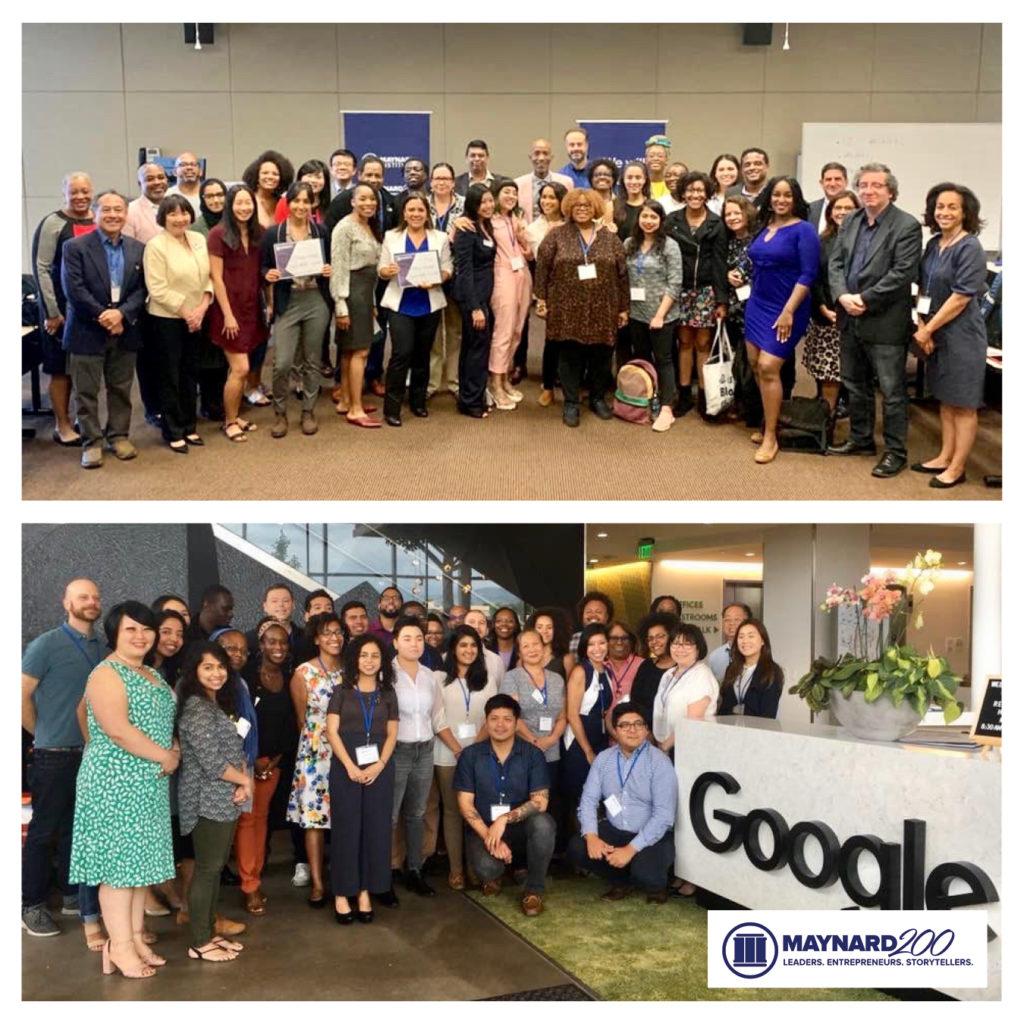
The Maynard 200 journalism fellowship program cohorts gather with some of their mentors, faculty, track executives-in-residence and the MIJE executive team. Top: The 2019 class at USC Annenberg School for Communication and Journalism in Los Angeles. Bottom: The 2018 class at the Google campus in Boulder, CO.
MAYNARD 200 ON PR WEB.
For more information, contact Odette Alcazaren-Keeley – Director, Maynard 200: okeeley@mije.org / 650.455.3063.
ABOUT THE MAYNARD INSTITUTE FOR JOURNALISM EDUCATION
The Robert C. Maynard Institute for Journalism Education is the nation’s oldest organization dedicated to helping the news media accurately portray all segments of society, particularly those often overlooked, such as communities of color. The media play a pivotal role in shaping our perceptions of each other. The distorted coverage of communities of color influences public policy and the decisions we make in our personal lives.
Jasmine expands upon this relational work by amplifying and archiving everyday stories as a freelance journalist contributing to South…
A recap of our most recent Regional Training at Texas Christian University Bob Schieffer College of Communication in…
The fellowship will take place virtually in April and in November.
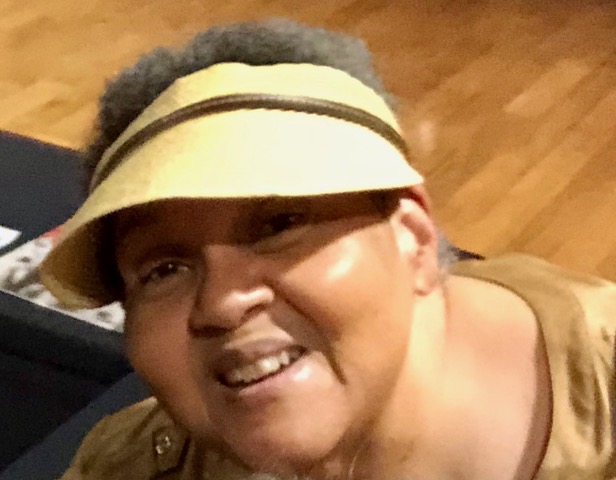
Mary Crystal “Chris” Cage
Mary Crystal “Chris” Cage, 65, passed away Saturday November 21, 2020 from complications due to congestive heart failure.
Chris moved back to Sacramento in 2005 after she developed congestive heart failure and was forced to disability retire. She still led a full life keeping in contact with many friends she made during the years. Most recently she served as a volunteer patient advocate with her health care provider, Sutter Health.
She enjoyed movies, especially Marvel action films, keeping up with politics and reading mystery novels, specifically police procedurals, a legacy of her police beat days. She also loved birds and kept a pair of budgies who passed last spring. She was active in two local bird clubs, volunteering for several activities.
Chris had an interesting career, starting as a police beat and education reporter for the Sacramento Bee. She moved to Washington DC and worked as a writer for the Chronicle of Higher Education, a national education journal, before securing a position in Public Affairs for Teachers College, which is part of the New York State University system in New York City. Chris retired after serving a brief stint in administration for the union representing the university professors of Teachers College.
She earned a bachelor’s degree in journalism from the California State University, Fresno. She is a 1979 alumnae of the Summer Program for Minority Journalists held at UC Berkeley.
She is survived by her niece, Sarah Cage and Sarah’s son Noah, who live in Sandy Hook, Connecticut.
Rest in peace, Chris.
Jasmine expands upon this relational work by amplifying and archiving everyday stories as a freelance journalist contributing to South…
A recap of our most recent Regional Training at Texas Christian University Bob Schieffer College of Communication in…
Remembering our friend and colleague Michael Days.
The Maynard Institute seeks practitioners, consultants and firms that specialize in diversity, racial equity training, organizational transformation to help execute its Equity and Inclusion Transformation Program. An understanding of journalism and the media ecosystem is preferred but not required. Optimal areas of expertise include, DEI, racial equity, restorative and anti-racist practices, microaggressions, trauma, systemic racism and organizational psychology. Practitioners who work over a series of sessions are welcomed and preferred.
The Maynard Institute received funding from the John S. and James L. Knight foundation to pilot a series of newsroom embeds to take news organizations from a conversation about diversity, to institutions of belonging for BIPOC journalists and those of diverse backgrounds. Two pilot embeds (six months each) will be delivered in 2021.
Consultant sessions would be scheduled at various times throughout the embed. Depending on the particular area of expertise, a consultant might come to conduct one two-hour session with follow-up work, or a series of sessions over the six months combined with outside coaching and guidance to various teams within the news outlet.
Fifty years ago, the Kerner Commission excoriated the journalism industry for its lack of diversity. Decades later, the industry has failed to diversify its organizations and leadership to adequately represent the breadth of the communities it needs to serve. At the same time, more evidence has emerged on how critical diversity is to the survival of the media industry. As journalists of color speak freely about their experiences with racism in the newsroom, and audiences of color express deep distrust in journalism institutions, the industry has no choice but to make dramatic change.
The goal of these embeds is to dive deep into three key areas: the institution, the culture and the coverage. By the conclusion of the embed, a news organization will have goals, strategies and steps to move closer to becoming institutions of belonging.
Please send along information about you, your team and/or organization, area of expertise, process and rate sheet to Maynard Institute Executive Administrator, Alida Birnam, at abirnam@mije.org. If you have any questions, please contact Maynard Institute Co-Executive Director Martin G. Reynolds at mreynolds@mije.org.
The deadline for submissions is January 15, 2021.
The Robert C. Maynard Institute for Journalism is the oldest journalism training non-profit in the U.S. dedicated to helping America’s newsrooms reflect the diversity of the nation. 1400 65th St. Suite 200, Emeryville CA 94608 – 510-891-9202
Jasmine expands upon this relational work by amplifying and archiving everyday stories as a freelance journalist contributing to South…
A recap of our most recent Regional Training at Texas Christian University Bob Schieffer College of Communication in…
The institute seeks consultants to help with its work.