News / Uncategorized
Fired Up: The Fire Up Entrepreneurship Program launches in Oakland
“We started selecting this cohort in the spring, so it’s truly inspiring to see them come together for…

Maynard Institute’s training helped editors strengthen skills in ever-changing industry
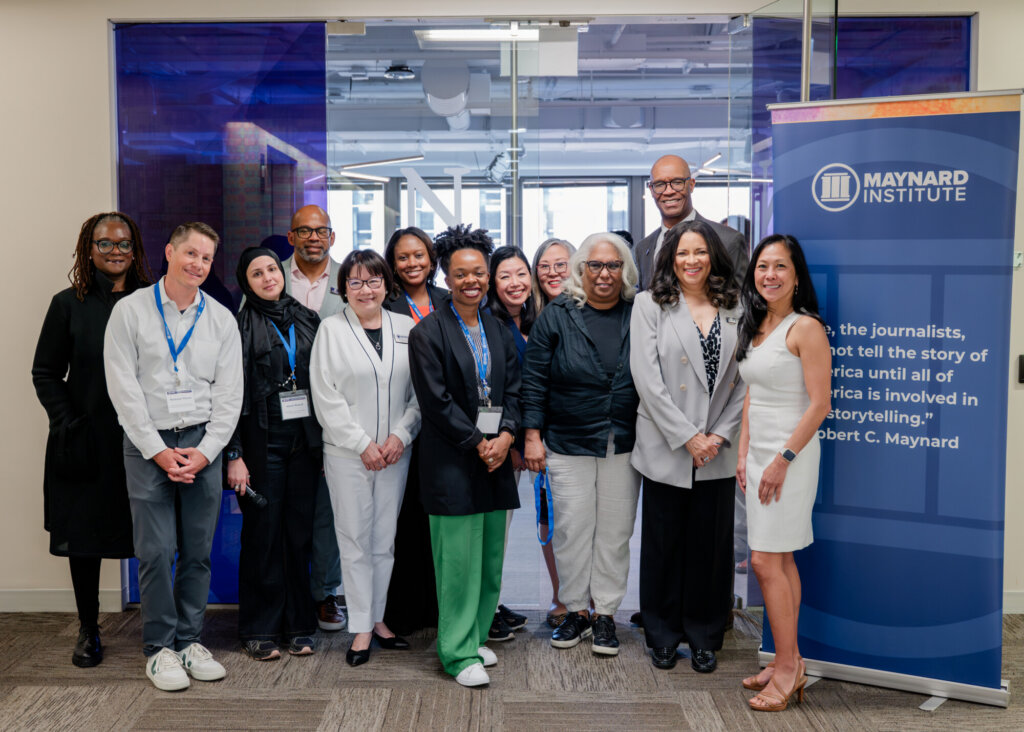



By Vani Subramony, Master’s Student at Northwestern University’s Medill School of Journalism.
“We are in the city of Pope Leo, so we will have confession this morning!” exclaimed Martin Reynolds, co-executive director at the Maynard Institute, as he began his session about leadership. The room of editors, new and experienced, brightened as they eagerly began to share their “Why?” for becoming managers.
The Maynard Institute’s Regional Training Series found a home at Northwestern University’s Medill School in downtown Chicago in early June. The two-day program created space for news leaders to collaborate and practice management skills at a time of, what Maynard Regional Training Director Odette Alcazaren-Keeley described as, “imperiled Constitutional rights, volatility in our industry and assaults on journalism.”
The goal of the series, institute leaders said, is to train frontline editors and managers who are often thrust into their positions with very little assistance. Since 2025, the Maynard Institute has hosted training sessions across the country. The Chicago training drew nearly 50 journalists from a range of non-profit, for-profit and ethnic media.
Early in the day, Medill Dean Charles Whitaker spoke about the role of the university in creating a new generation of leaders at a time of tumult in the industry.
“At this time of incredible disruption and uncertainty in the industry, we thought we had an obligation to assert ourselves in the field,” he said. “Part of that is providing training and leadership to young and emerging leaders but also to established leaders that were also having a difficult time.”
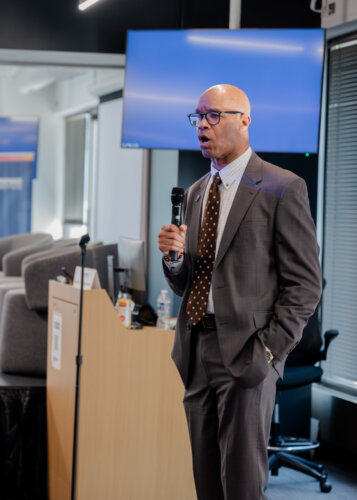
At this time of incredible disruption and uncertainty in the industry, we thought we had an obligation to assert ourselves in the field.
Dean Charles Whitaker
Program faculty, including Medill’s Mackenzie Warren, echoed this sentiment throughout the event, stating the importance of embracing the calling of journalism at this moment in history.
“There are a lot of reasons that people might suggest you not be a journalist today. It’s dangerous. You could be labeled an enemy of the state or an enemy of the people,” Warren said. “And yet, all of those reasons are why to be a journalist.”
Warren, interim executive director of Medill’s Local News Initiative, has been working with the Maynard Institute for more than 10 years. He said Medill shares the same core values as his collaborators at the institute.
“The health and wellness of our community is directly tied to the health and wellness of the information our residents have to make their choices – whether that’s voting, grocery shopping, schooling, health or parenting,” Warren said. “We want to make sure that every Chicagoan has access to trustworthy news and information.”
With his colleague Zach Metzger, director of the Medill State of Local News Project, Warren kicked off the training sessions by discussing the condition of local news across the country. On the second day, he moderated a panel of news leaders about the state of media. Executives from Block Club Chicago, Impremedia, Chicago News Weekly and sports media company The Bigs spoke about funding, audience expansion and what it’s like contributing to local news at this time in history.
“The panel was very invigorating, mainly because they talked about resources I had never heard of,” said Jacqualine Jarju, president and co-founder of the National Association of Black Journalist’s central and southern Illinois chapter. She said she came away with a lot of ideas about possible grant sources and future leadership trainings.
Another key moment for many attendees, like Jarju, was Jean Marie Brown’s session on the Fault Lines framework. Evelyn Hsu, co-executive director of the Maynard Institute, cited Fault Lines as a key way of understanding the different perspectives that guide journalism.
“Those perspectives are influenced by race, class, gender, generation, geography and sexual orientation,” Hsu said. “This should make us aware of our own blind spots and how that could influence how we cover a story.”
Brown, who is associate professor of professional practice and director of student media at Texas Christian University’s Bob Schieffer College of Communication, had each attendee write about their Fault Lines. She cited her childhood in Indiana, education at Medill and age as aspects of identity that she acknowledges when reporting.
“What reporting is supposed to do is reflect the audience and the community that is being served, and so today, we live in a nation that is multicultural and multi-ethnic,” Brown said. “Journalists need to go out and represent that in their reporting.”
Deborah Douglas, director of the Medill Solutions Journalism Hub and session presenter, also talked about the importance of diverse identities in the newsroom.
“Anytime the industry goes through a challenging time, whether that’s technological disruption or financial disruption, we’re affected especially through downsizing,” she said. “A lot of newsrooms haven’t valued the diverse perspectives that they lose when they downsize. Diversity is often the first thing to go.”
Also included in the two-day training were sessions on the use of artificial intelligence in the newsroom, project management, listening with integrity, navigating difficult conversations, managing big projects, and Reynolds’ workshop about management that invoked the Chicagoan pope.
Most striking about the training was the number of young editors in the room.
“Young journalists are incredibly passionate about this craft,” Alcazaren-Keeley said. “If we’re able to provide a sense of belonging this early on, if they see themselves reflected in the industry and know they have a community of support behind them, then we have succeeded in that part of our mission.”
One such journalist was Luis Velazquez, an editor for Cicero Independiente, a bilingual news organization in northern Illinois. Between sessions, Velazquez found himself collaborating with other editors and brainstorming ways to include more freelancers at the publication.
“It’s a universal experience that editors are put in a role where there’s no guidelines,” he said. “I’m very grateful for the Maynard Institute for providing these resources amongst other connections and networks that help reporters and newsrooms.”
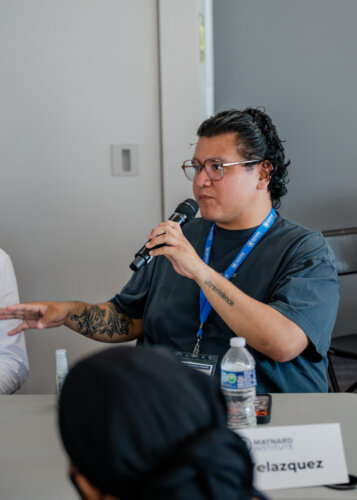
I’m very grateful for the Maynard Institute for providing these resources amongst other connections and networks that help reporters and newsrooms.
Luis Velazquez, an editor for Cicero Independiente
Taryn McFadden, the Chicago Reader’s culture editor, was also inspired to create positive change in the newsroom.
“We’ve had sessions about biases and how to show up in the workplace and be a good supervisor, and as a member of the younger generation, I strive to help our workplace become healthier, which helps us do better journalism,” she said.
McFadden said she sees great importance in capitalizing on diversity and identity in all newsrooms, including that of the Reader.
“Right now, there’s no separating politics and the state of the world from what we do all day, every day,” she said. “I see such a value in having a staff that can reflect the city back on itself.”
News Leaders Panel: State of the Media in the Region – Panelists: Jesús del Toro, director general, general manager and editor in chief, Impremedia; Laura Miller, managing editor, Chicago News Weekly; Terrence Tomlin, co-founder and editorial director, The Bigs; and Maple Walker Lloyd, vice president of partnerships, Block Club Chicago; and Mackenzie Warren, moderator.
Medill Research Briefing: Mackenzie Warren, interim executive director, Local News Initiative, Northwestern University Medill School, and Zach Metzger, director, Medill State of Local News Project
The Manager’s Mindset – Stepping into Your Leadership Role: Martin G. Reynolds, co-executive director, Maynard Institute
Identifying Personal Values – A Listening Exercise: Doris Truong, deputy director, Maynard Institute Fire Up Entrepreneurship Program
Fault Lines® in Motion: Jean Marie Brown, associate professor of professional practice, Bob Schieffer College of Communication, Texas Christian University
AI with Integrity – Shaping Values-Driven Practices: Mei-Ling Hopgood, Medill Charles Deering McCormick Distinguished Clinical Professor, William F. Thomas Professor of Journalism
Complicating the Narrative: Deborah Douglas, founding director, Medill Solutions Journalism Hub
Managing the BIG Story: Maria Carrillo, consultant and writing coach
Tension to Trust – Navigating Difficult Conversations: Felecia Henderson, senior director of strategic initiatives, Maynard Institute
The People Manager Balancing Act: Lisa-Ann Barnes, adjunct faculty, Northwestern University
Donating to the Maynard Institute helps newsrooms and professionals improve their reporting, workplaces, and the communities they serve.
“We started selecting this cohort in the spring, so it’s truly inspiring to see them come together for…
Together, the California Local News Fellowship and Propel Initiative programs support hundreds of newsrooms annually. Explore our programs…
Robert C. Maynard may not have been able to destroy outright the systems of oppression he saw enduring,…