News / Uncategorized
Fired Up: The Fire Up Entrepreneurship Program launches in Oakland
“We started selecting this cohort in the spring, so it’s truly inspiring to see them come together for…

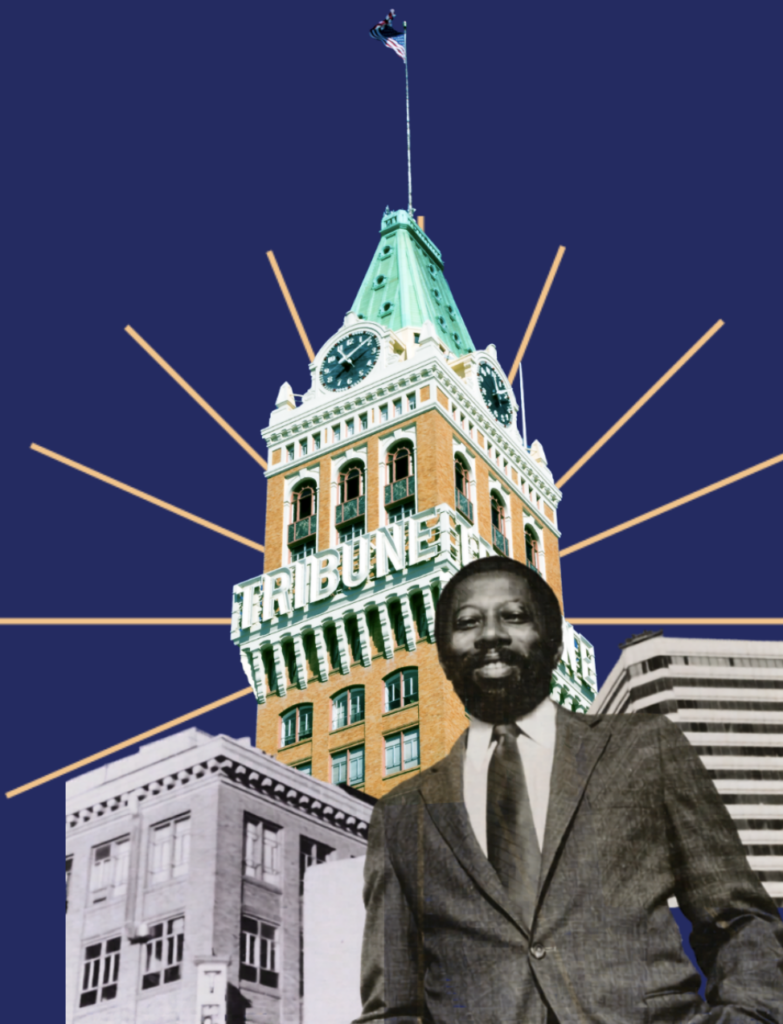
On Robert C. Maynard’s legacy on the occasion of his birthday

By Amani Hamed, Community Engagement Manager, the Maynard Institute
“It was once said by an eminent journalist that our business at best is ‘writing the first rough draft of history.’ The emphasis in that formulation is obviously on the word rough: in such a process, we are bound to be excessive when the circumstances are dramatic. But we have a responsibility that senators and mayors, police chiefs and attorneys general don’t have. That is the responsibility that accompanies the beleaguered blessings of the First Amendment. It is to be ever so restrained and thoughtful about the implications in the expressions of those with partisan interests in the stories we cover. Hyperbole has no place in the news.” – Robert C. Maynard, “No Place for Hyperbole,” 1973.
Today, Wednesday June 17, is Robert C. Maynard’s birthday. He was born on this day in 1937, and passed away after a long battle with cancer in 1993. Today, he would be 89 years old.
Looking back through the essays, articles and memoirs of Robert C. Maynard collected in the book “Letters to My Children,” compiled after his death by his daughter, Dori J. Maynard, it’s difficult not to view him as a sort of journalistic oracle.
Doubly difficult is the experience of looking through his predictions, his lamentations, his sharp critical analysis of an America struggling to limp into the television news revolution post-Jim Crow and realizing that not nearly enough has changed since his time.
His predictions and lamentations appear equally prescient; the things he predicted have come to pass. The things he mourned as symptoms racism, classism, sexism, geographical and generational bias have, in many ways, lingered.
I struggle to grasp what I would say to him to explain this moment and the things that have transpired since his death. How could I, as a journalist, convey to Robert C. Maynard the murder of George Floyd, the DEI renaissance amid the Black Lives Matter movement, the COVID-19 pandemic, the January 6th insurrection? How could I explain a second Trump administration, the defunding of public media, the attacks on our Civil Rights?
The shortest answer is that I couldn’t. I wouldn’t endeavor to explain. I would simply have him read the news.
Many of us read those more recent headlines as events unfolded. We watched those events tumble out on our television news or social media feeds. Some of us were the journalists recording events like the pandemic shutdown, the student encampments protesting genocide in Palestine, the ICE raids in Chicago and Minneapolis, and recorded them as that “first rough draft of history.”
The words Bob Maynard wrote decades ago may sting in how their truth reverberates, and the echo of the past sounds only too similar to the shrieking injustices of our present reality.
Though examining his words it is easiest to see the things that remain, the wounds our nation has not worked hard enough to heal, a deeper meditation reflects glimpses of the vision he sought to make real: a nation in which “all Americans have front-door access to the truth.” In which journalists of diverse backgrounds tell the stories of their communities, and give us all the tools to shape our nation’s future.
“The effect of this phenomenon is best viewed from two vantage points. I speak of the funeral homes and the emergency wards of the hospitals. It is in these places that the import of what we have allowed to happen can be fully appreciated.” – A Deadly Proliferation of Guns, 1988.
In the year 2025, mass shootings killed 358 people and injured at least 1,843 others. Even with gun violence on the rise in 1988, and Bob Maynard witnessing the dialogue (or lack thereof) between “urban” and “country” gun owners, the gun lobby, medical experts and grieving parents, I shudder to think what he would have made of Sandy Hook. Of Uvalde. Of Annunciation School in Minneapolis, or a Masjid in San Diego.
As a journalist and someone who believed in the power of good data and the shifting of perspective to cover all angles of a story, I think Bob would have appreciated the intense and thorough reporting done by the Washington Post on the damage done by AR-15s. Using crime scene photos and in-depth analysis from witnesses, surgeons and firearms experts, the Post also created shocking (and accurate) visualizations to illustrate the effect of an AR-15 on the human body.
Though the illustrations and use of crime scene photos may have been considered in poor taste, they gave the American public, or at least those who had not witnessed gun violence personally, a more complete understanding of a national epidemic.
“News value is easier to judge than fairness or taste because the picture must first meet the test of relevancy,” Maynard said in his 1973 essay Taste, Fairness, and News Value. “But there is another element in news value that is important. And that is freshness of approach. A picture might be of something of which we have all seen 100 photos. It might be a person, a monument, or a building, done in such a way as to arrest the eye and tell us something new about the subject.”
Though gun violence persists, journalists covering not only mass shootings but gender-based violence, suicides and accidental gun deaths are solutions-oriented, highly-skilled and trauma-informed.
One of them is Helina Selemon, Maynard 200 alum and the new Editing Fellow at The Trace, “the only team of journalists exclusively dedicated to reporting on our country’s gun violence crisis.”
“Many white Americans, including distinguished commentators, will tell you that race is no longer an issue in America. They say remedial programs are no longer needed. After all, they argue, discrimination is now against the law. But Americans of color will respond that racism is not so easily expunged.” – Racism, 1991.
After the murder of George Floyd in Minneapolis in May of 2020, a DEI renaissance of sorts was ushered in by protests against systemic racial injustice. Almost before the ink was dry on waves of policies on diversity, equity and inclusion, corporations had a change of heart. The government attacks on DEI initiatives were more pointed, less a chilling effect and more a swift blast of liquid nitrogen.
These cycles of adoption and abandonment of DEI principles and hiring practices were seen in the layoffs of journalists in places like the Los Angeles Times and Washington Post. Maynard 200 fellowship alumni Brianna Tucker and Amber Ferguson were affected by layoffs that disproportionately affected newer staff, women, Latinx and Black employees and LGBTQIA+ reporters.
Increasingly, a narrative is being fabricated that we live in a post-racism world, but even in 1991, Bob Maynard knew what journalists and people of color have known since 1865: laws and policies change and shift, but “racism is not so easily expunged.”
Thankfully journalists are also not so easily discouraged. No layoff could stop Amber Ferguson from being a girl with drive. Brianna Tucker is still reporting breaking news, this time for the Huffington Post. Other Maynard alumni report on intersections of life and race, the ever-present fault lines that Bob Maynard built his training methodology on. Emily Elena Dugdale reports for the LA Public Press on potential ICE intimidation at the polls, Aallyah Wright covers Black life in rural areas of the American South.
Racism persists, but so do the journalists Robert C. Maynard would never meet, but who nevertheless became his legacy.
“Most of the emphasis of the new technology has been on the production aspects of the business. The publishers and craft unions are in protracted discussions all across the land over the loss of jobs to machinery and the problem of which unions will have jurisdiction over which aspects of the new technology.” – Technology and the News, 1973.
When Bob Maynard wrote this in 1973, copy editors were still mandatory and valued staff, print journalism was alive and well, and digital photography was having a troubled infancy.
I wonder now what Bob Maynard would make of the havoc AI is wreaking on already fragile digital and media literacy, on our over-reliance on chatbots and our quick investment in stories and images fabricated (or hallucinated) by AI. That’s to say nothing of the jobs placed on the chopping block as journalists, illustrators, photographers and even editors are culled in favor of the bottom line.
I feel Bob would blanch at the flippancy and disdain with which certain AI proponents seem to regard not only the profession of journalism but the First Amendment. I also feel the work of Maynard alum-turned-faculty Ernesto Aguilar has done in AI-assisted reporting and AI reporting ethics could elicit a certain pride, as would the critical and community-focused reporting on AI by Maynard alumni TaMaryn Waters and Megha Satyanarayana.
Bob was skeptical of anyone who pushed new technology with little thought to how it would affect livelihoods and the craft and calling of journalism, but he was quick to adopt things that could be responsibly wielded by trained reporters with a solid understanding of journalistic ethics. After all, he was there when the Institute that would later bear his name implemented one of the first digital reporting training programs in the country when the internet was in its infancy and people were still asking Jeeves.
His words today read may read like stark warnings of the future he saw being shaped. The earliest of his essays quoted here is from 1973. As though to take up the struggle of influencing the future taking shape before him, he would co-found the Institute for Journalism Education four years after writing Technology and the News. Twenty years after writing it he would leave us, and the Institute would take him as its namesake.
Now, we labor in service of the next generation of journalists. The journalists Bob Maynard trained personally have witnessed and covered events and shaped our deeper understanding of their roots in our society and their effect on our communities. In his time, Black journalists didn’t report on police brutality and the “race riots” of the 1960s, LGBTQIA+ journalists were forced to report on the AIDS crisis from the closet, Asian-American journalists covering America’s war on Vietnam were rare and endangered. Today, terrible events still happen. Racism and homophobia remain entrenched in the systems that undergird this country’s foundations, misogyny and class disparity color our daily lives, attacks on press freedom abound.
But the journalists who have been trained by the Institute he co-founded since his death 34 years ago have changed the way we see, experience and change our world. Black reporters covered George Floyd. Latinx journalists cover ICE raids and concentration camps. Asian-American journalists covered COVID-19 and hate crimes against Asian community members. Trans journalists have crafted style guides that cover everything from pronouns to anti-trans legislation.
Robert C. Maynard may not have been able to destroy outright the systems of oppression he saw enduring, but he lived and died the way all great men do: leaving behind them work destined to remain unfinished, but having trained their successors to take up their tools in their absence.
Donating to the Maynard Institute helps newsrooms and professionals improve their reporting, workplaces, and the communities they serve.
“We started selecting this cohort in the spring, so it’s truly inspiring to see them come together for…
Together, the California Local News Fellowship and Propel Initiative programs support hundreds of newsrooms annually. Explore our programs…
“At this time of incredible disruption and uncertainty in the industry, we thought we had an obligation to…