
Covering Immigration: Journalism, ICE, and Imperiled Civil Rights

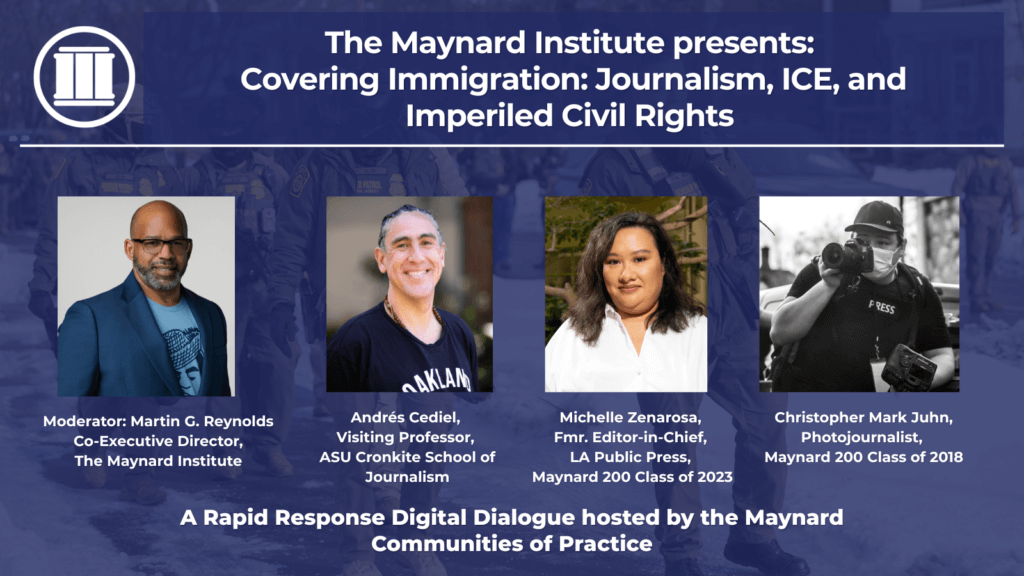
On Tuesday the Maynard Institute hosted a digital dialogue on covering immigration, with guest panelists and alumni Michelle Zenarosa, formerly editor-in-chief of the Los Angeles Public Press, and Christopher Mark Juhn, photojournalist based in Minneapolis, Minnesota.
Also joining the Maynard alumni and co-executive director Martin G. Reynolds was Andrés Cediel, visiting professor at the Arizona State University Cronkite School of Journalism. Cediel is an award-winning documentary filmmaker covering and journalism educator specializing in immigration.
Together, panelists discussed the erosion of civil rights and the mandate of journalism as the “bulwark of our democracy,” as well as physical and digital safety for reporters, mental health and balancing obligation with burnout. Professor Andrés Cediel also discussed the legality of immigration laws from the Constitution to civil courts, and ramifications of civil rights violations for journalists and journalism.
Watch the full webinar here via YouTube, and scroll further analysis and resources.
Click here to view all slides in this webinar as a .pdf.
“Our latest Maynard digital dialogue convened journalists whose expert insight and lived experience illuminated the crisis of immigration enforcement, escalating attacks to press freedom and Constitutional rights,” Odette Alcazaren-Keeley, director of the Maynard Regional Training and Maynard Communities of Practice programs said.
“The conversation deeply resonated with and engaged attendees, including fellow media professionals, partners and supporters across our networks.
“The voices of our two Maynard alumni panelists on the frontlines in Minneapolis and Los Angeles exemplify the power of peer learning, collaboration and support. These are cornerstones of our Maynard Communities of Practice programming that serve our Institute graduates cohort, and we bring to the journalism field – vital in this moment of rupture.
“We see the volatility and anguish gripping America’s cities and newsrooms, but draw hope from the solidarity of communities coming together, and the resilient courage of journalists fighting for truth,” Alcazaren-Keeley said.
Covering Immigration: Journalism, ICE and Imperiled Civil Rights.
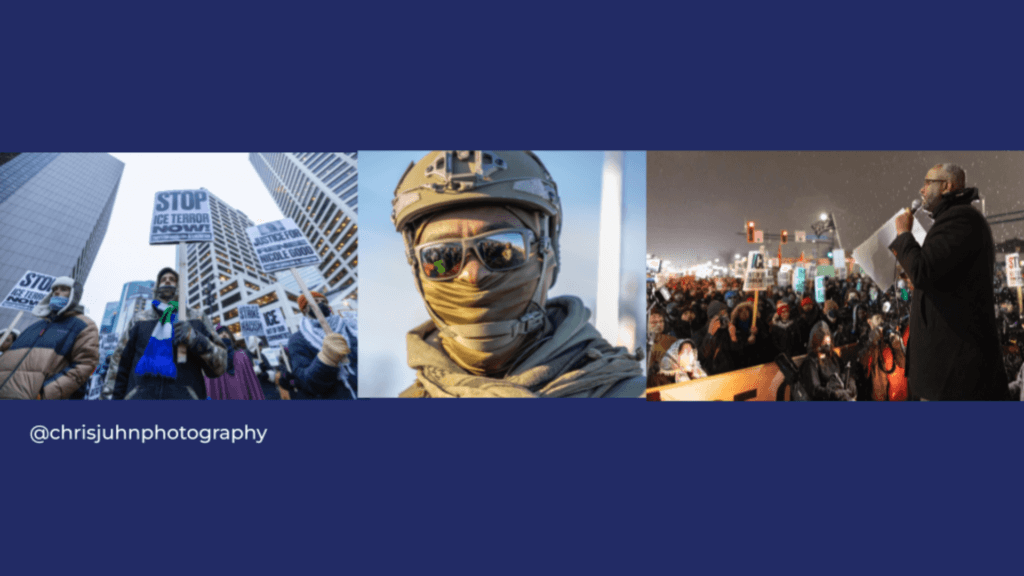
Photography by Christopher Mark Juhn in Minneapolis, MN. January, 2026.

From Michelle Zenarosa: How the LA Public Press adapted to ICE.
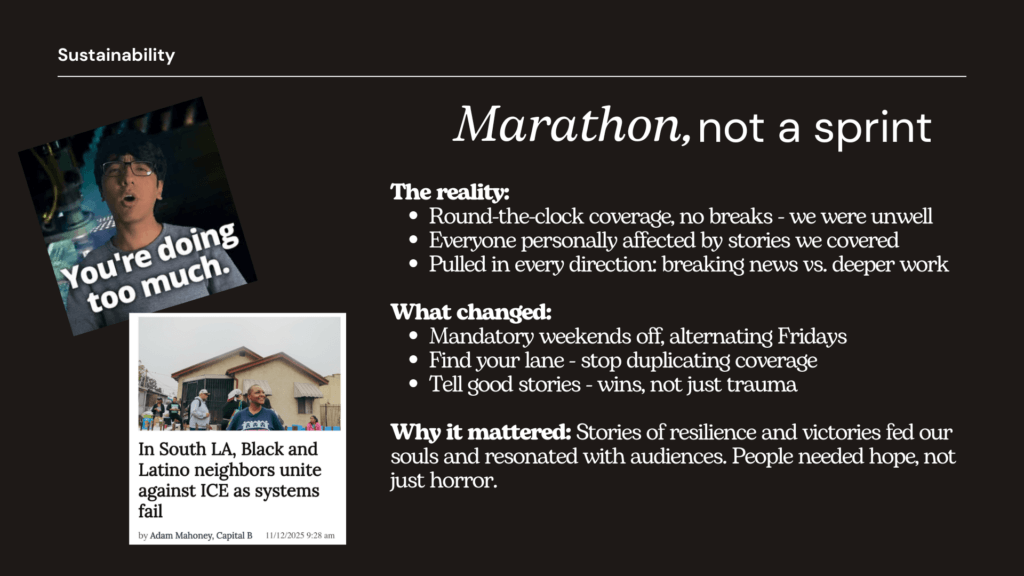
Sustainability: A marathon, not a sprint.

Safety Infrastructure: What we built.
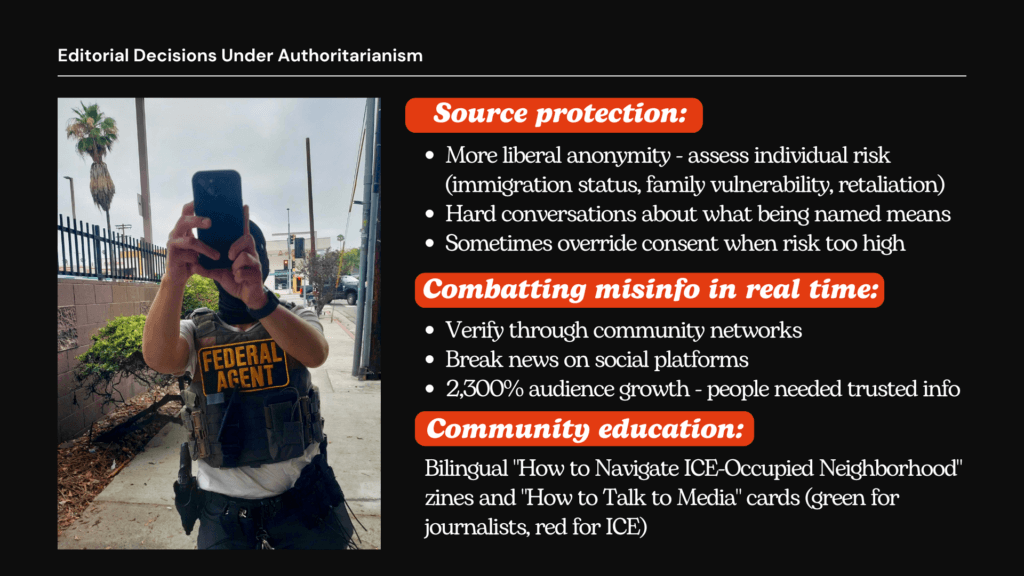
Editorial decisions under authoritarianism.
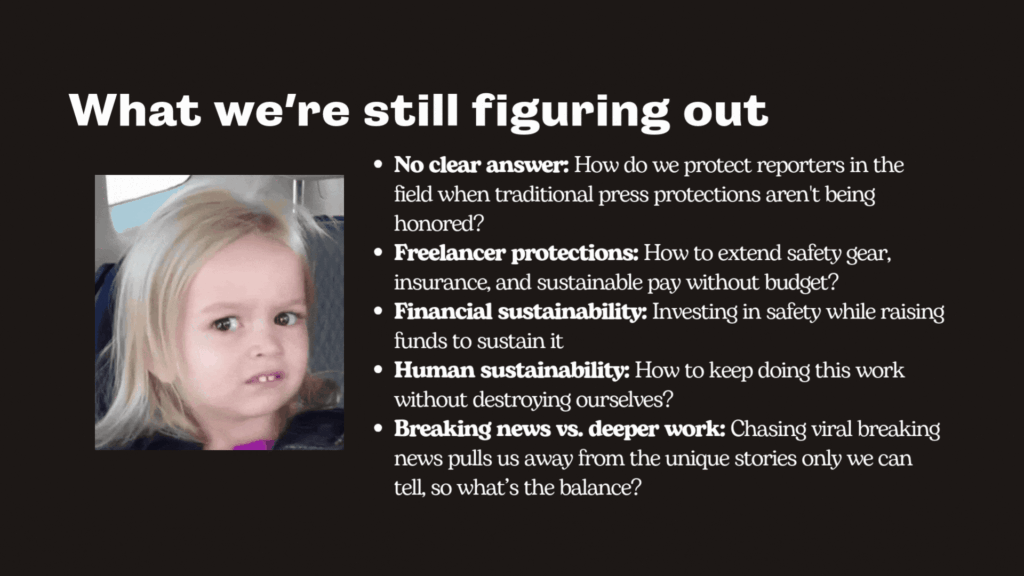
What we’re still figuring out.
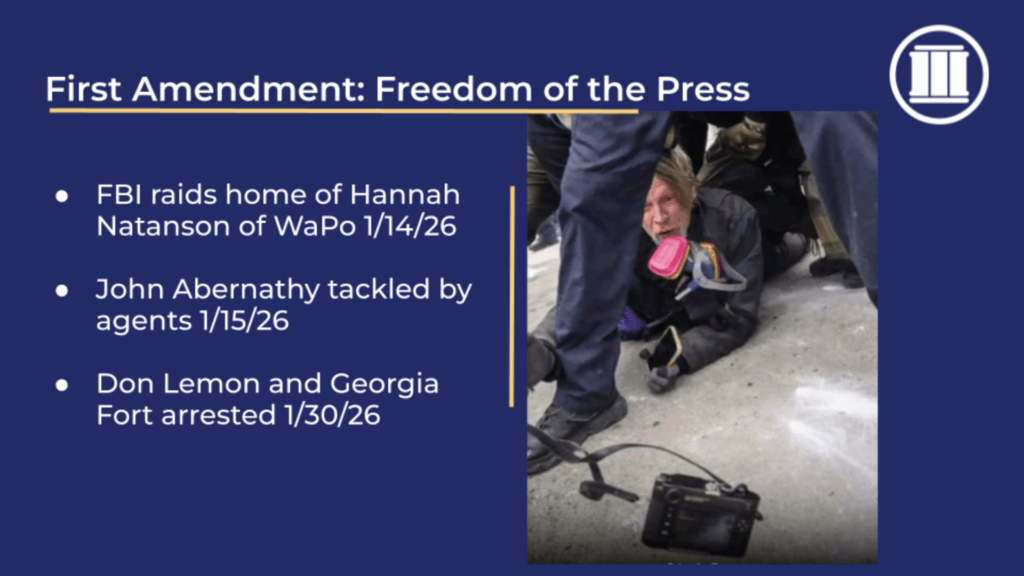
First Amendment: Freedom of the Press
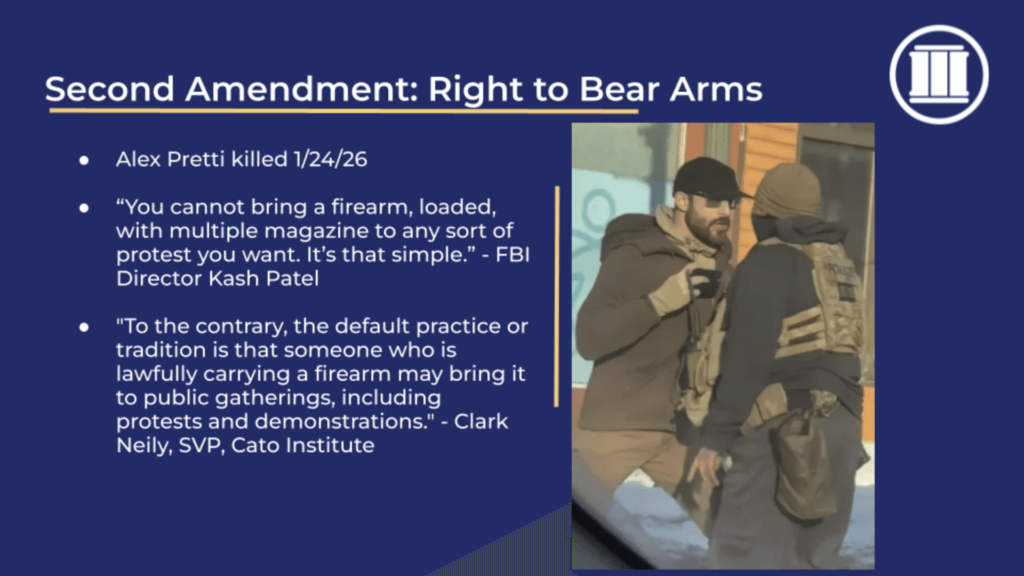
Second Amendment: Right to Bear Arms
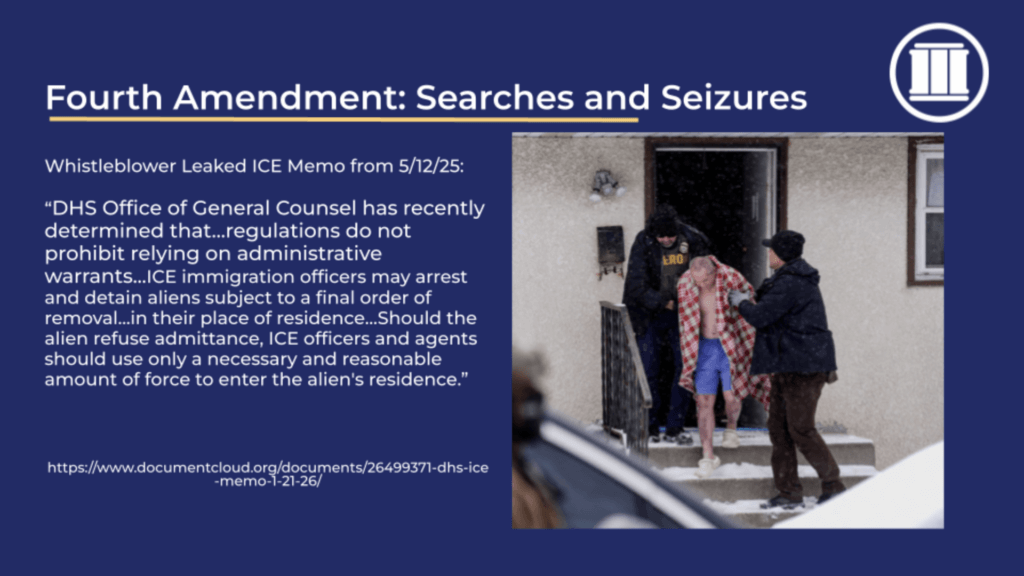
Fourth Amendment: Search and Seizure
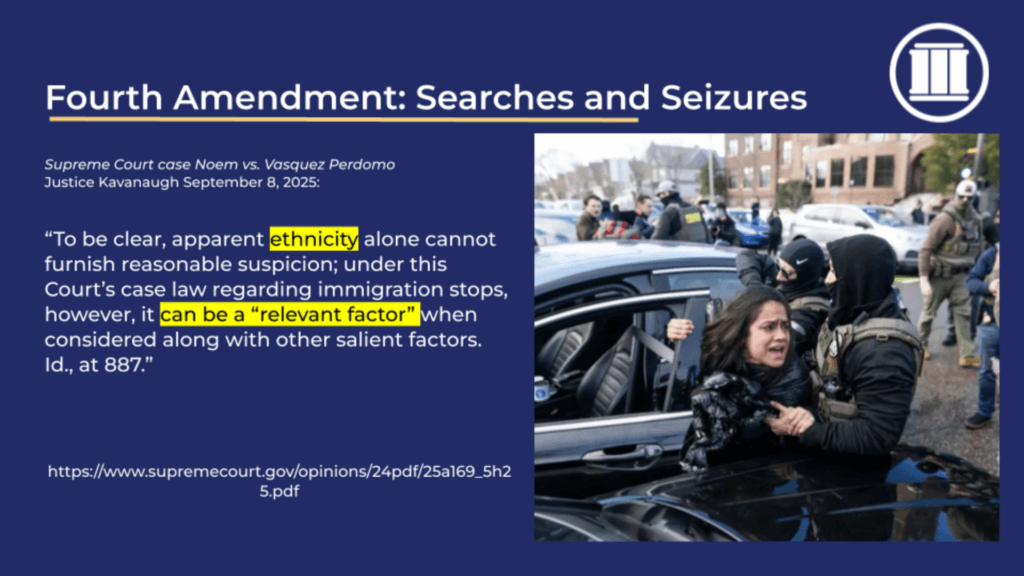
Fourth Amendment: Search and Seizure Pt. 2
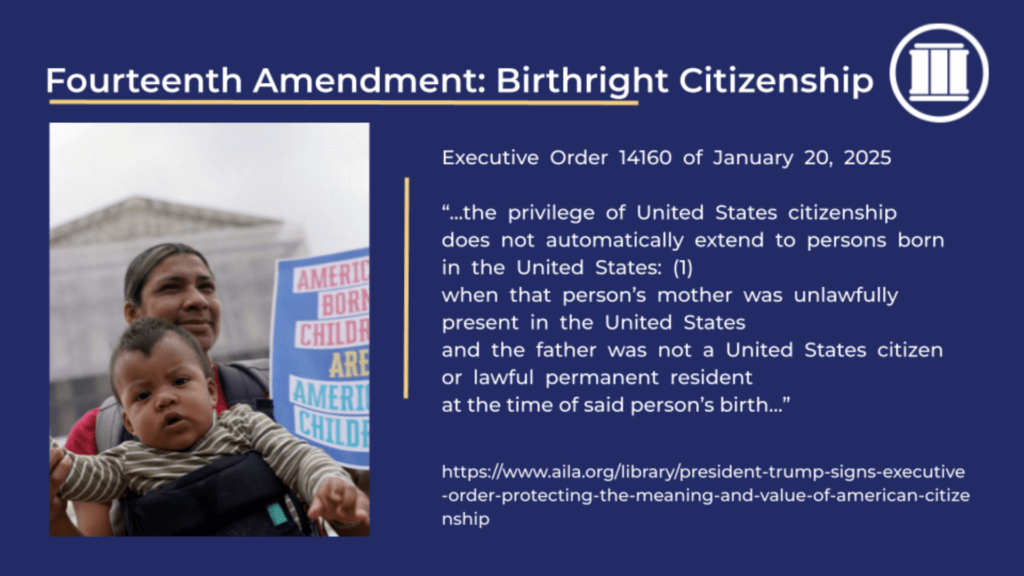
Fourteenth Amendment: Equal Protection Under the Law
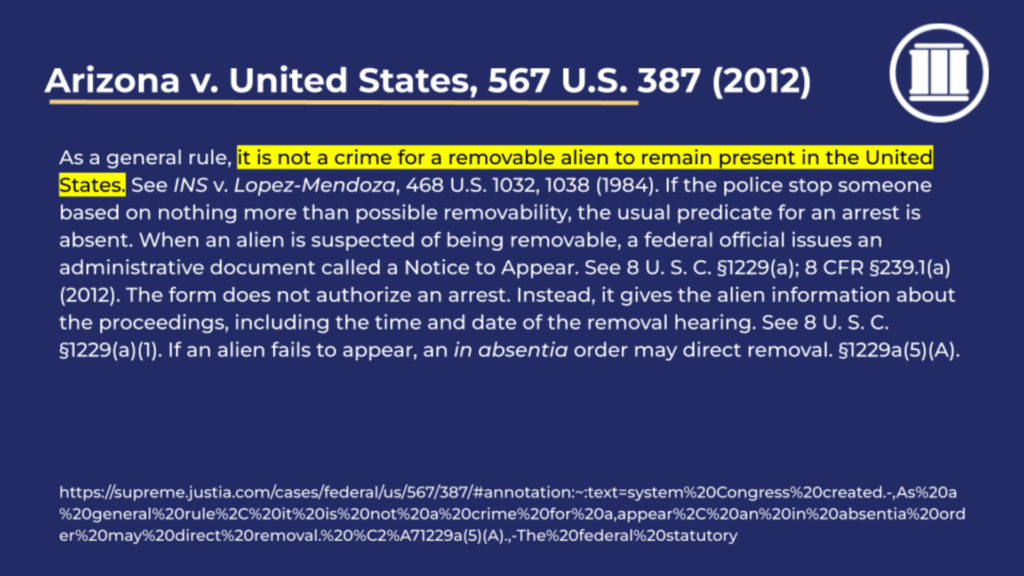
Arizona v. U.S.
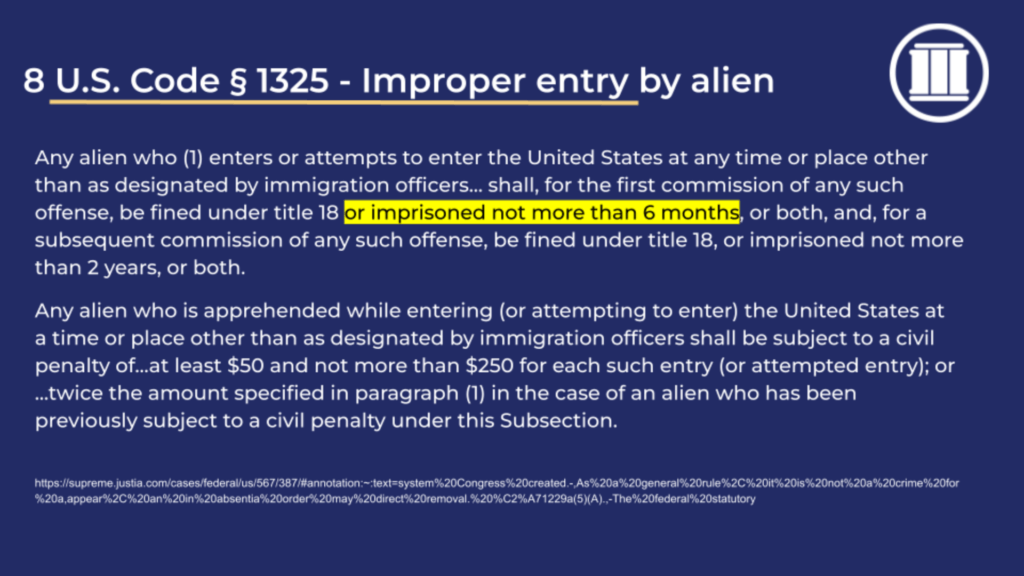
U.S. Code 1325: improper entry
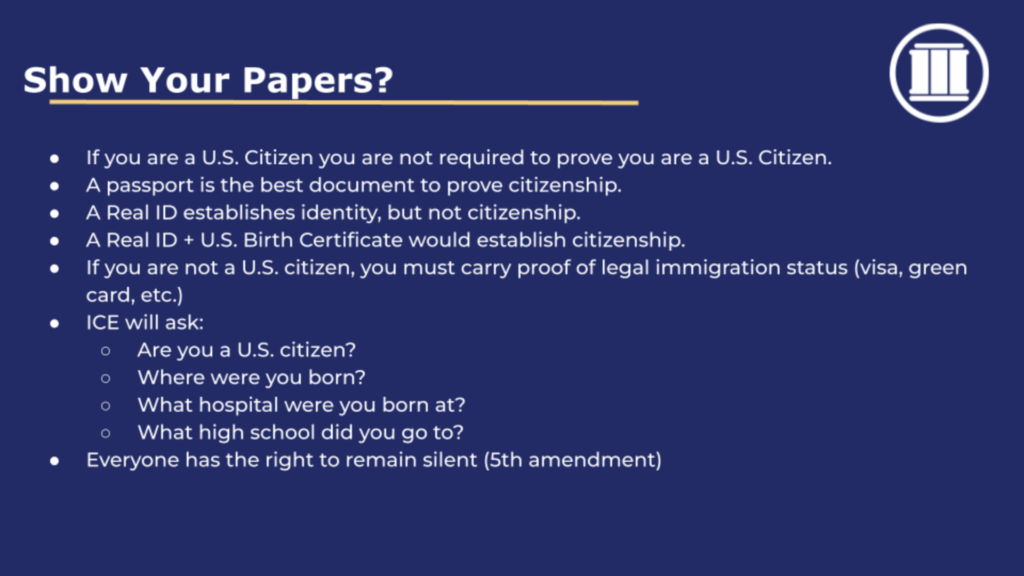
“Show us your papers.”
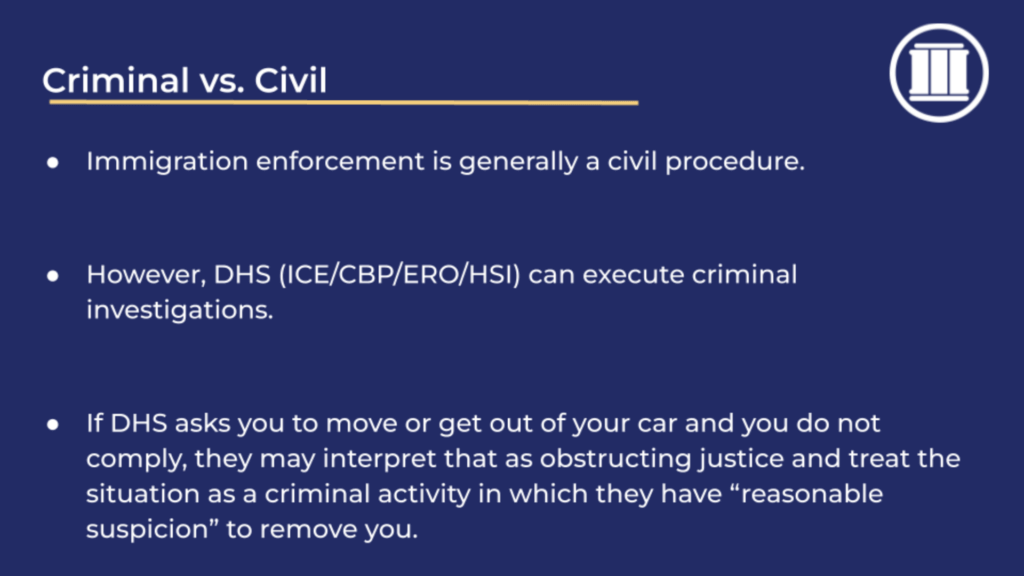
Criminal vs. Civil Issue

Questions?
Attendees said:
“Really helpful. Thanks for flagging issues for us to be thinking about in our newsrooms.”
“Quickly creating a legal Membership Structure within your news org, business, or coalition is one way to quickly define and extend structural protections to freelancers without needing them to be staff. The protections may have to be limited (since funds are limited) but it could provide the type of legal class coverage and some safety protections that are life saving now and in the future. Also – creating a mandatory Buddy System – people working in tight knit groups of three for all freelancers and all staff journalists – can be transformative for protections on and off duty, for care and self-care, for check-ins and follow-ups.
Developing this structure, with rotating responsibilities among the buddies, can take pressure off the hierarchies, decentralize the pressure, and strengthen mutual support practices.”
“Collaborating also is important among different ethnic groups targeted by ICE. We need to unite!”
“I’m Paulina, audio and print journalist in California, I’m really glad I’m here. Thank you to Maynard and all the panelists for your time and for sharing your hard-won insights.”
“I love that approach to comprehensive coverage. Collaborating with other newsrooms and journalists is powerful and so important in this moment.”
“This is great information that’s really helpful up here where we’re more isolated.”
Additional resources from panelists and attendees:
Legal resources:
- https://lookerstudio.google.com/u/0/reporting/00953df3-a562-4a38-a1de-39dbb3bb9b2c/page/p_czttfyt0wd
- https://cpj.org/legal-resources-for-journalists/
- https://www.reporters-shield.org
- https://www.medialegalhelp.org/
- https://www.spj.org/legal-defense-fund/
- https://onlineharassmentfieldmanual.pen.org/legal-resources-for-writers-and-journalists/
- https://www.rcfp.org/legal-hotline/
- https://projourn.org
Personal Protective Equipment and safety resources:
- https://e1.nmcdn.io/assets/iwmf/wp-content/uploads/2026/01/IWMF-2026-PPE-Guide.pdf
- https://e1.nmcdn.io/assets/iwmf/wp-content/uploads/2025/07/IWMF_Immigration-Coverage.pdf
- https://www.iwmf.org/programs/hefat-training/
- https://cpj.org/wp-content/uploads/2020/11/ppe-glossary_cpj-final.pdf
- https://medium.com/message/dressed-for-excess-47a89d343a06
- https://www.spj.org/reporting-safely-and-ethically-multimedia-journalist-safety-guidelines/
Mental Health resources for journalists reporting from conflict:
- https://americanpressinstitute.org/mental-health-resources-for-journalists/
- https://gcjt.org
- https://www.jtsn.org/resources-for-journalists
- https://ijnet.org/en/story/mental-health-tips-and-resources-journalists
- https://www.poynter.org/reporting-editing/2019/how-journalists-can-take-care-of-themselves-while-covering-trauma/
Resources for Trauma-informed reporting:
- El Tímpano: a guide on protecting immigrant sources.
- https://www.echotraining.org/tij/
- https://mentalhealthjournalism.org/resources/
- https://mhanational.org/resources/mental-health-and-media-trauma-informed-reporting-guide/
- https://journalistsresource.org/home/trauma-informed-journalism-explainer/
- https://healthjournalism.org/blog/2024/07/tip-sheet-trauma-informed-reporting-101/
- https://www.ctipp.org/post/toolkit-trauma-informed-journalism