News / Blog
Meet our new Program Manager, Jasmine Barnes
Jasmine expands upon this relational work by amplifying and archiving everyday stories as a freelance journalist contributing to South…


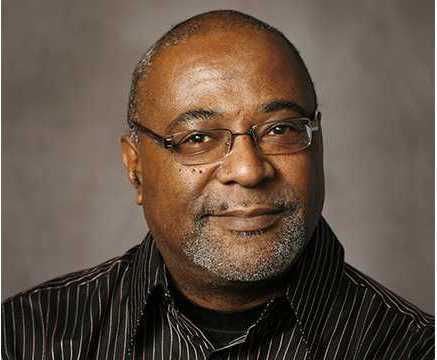
Eugene Kane
Eugene Kane, a longtime columnist for the Milwaukee Journal Sentinel and a graduate of the Maynard Institute’s Summer Program for Minority Journalists, died April 16 at the age of 63.
Kane was known for his award-winning column, Raising Kane, in the Milwaukee Journal Sentinel. He spent most of his career at the Sentinel after graduating from Temple University and the 1981 Maynard Institute reporter training program.
“I knew Gene for nearly 40 years and we became and remained really good friends for life,” said Kevin Merida, a senior vice president at ESPN, and member of the Maynard Institute’s board of directors.
“We entered this craft pretty much at the same time, filled with idealism and fire. That idealism, and determination, was fueled by the connection we shared as grads of the Summer Program for Minority Journalists. I left Milwaukee, but Gene stayed. Gene built a career for himself at the Milwaukee Journal Sentinel, the newspaper he started at and finished at after graduating from the Summer Program.”
“He became a decorated, award-winning columnist in a tough, racially segregated city,” said Merida. “Literally, a journalism Hall of Famer in Wisconsin, and among the best local columnists in the country. He was fierce and funny. and fearless. He took himself just seriously enough, but never too seriously. Lived life fully, playfully, with commitment to our craft–and with no apologies for being black.”
Kane discussed race unflinchingly in much of his work. James Causey, a Sentinel writer and colleague, emphasized that Kane didn’t back down from discussing the “the negative impact that racism has not just on people of color, but on a city he considered one of the most segregated in the country.”
As a journalist, he shared the voices of trusted sources with respect, while simultaneously calling on readers to change the way they thought or acted.
In an interview with “This Is Milwaukee,” Kane said, “For a lot of white people who read the Journal Sentinel, I was the only black person they really knew in a way…who was expressing opinions they didn’t hear anywhere else.”
Kane received many accolades for his writing including Best General Column from the Society of Professional Journalists and Best Commentary from the National Association of Black Journalists. He was inducted into both the Milwaukee Press Club Hall of Fame and the Wisconsin Media Hall of Fame.
Many fans, friends and colleagues celebrated his life and philosophy on social media, such as the current editor of the Milwaukee Journal Sentinel, George Standley who wrote simply, “Eugene encouraged us to always stand up for justice.”
Jasmine expands upon this relational work by amplifying and archiving everyday stories as a freelance journalist contributing to South…
A recap of our most recent Regional Training at Texas Christian University Bob Schieffer College of Communication in…
Remembering our friend and colleague Michael Days.
Eugene Kane was a journalist who died.
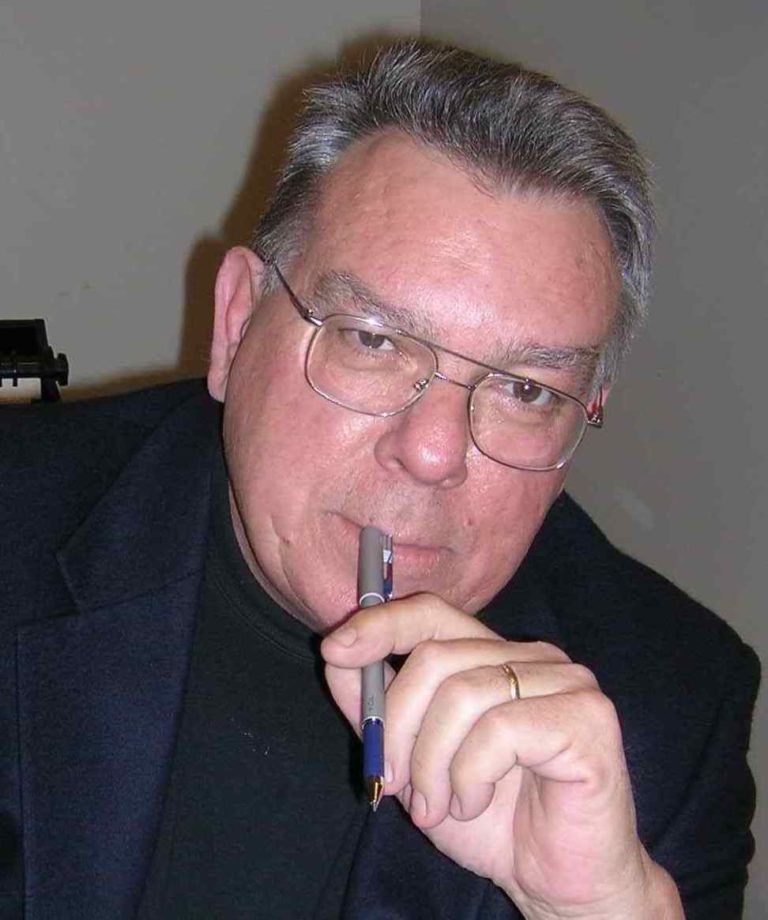
Richard S. Holden
Richard S. Holden wore many hats in his illustrious life – all of them well.
He was an editor extraordinaire. The first memory for most participants in the Maynard Institute’s Editing Program for Minority Journalists is that he had been the YOUNGEST-ever copy desk chief for the Wall Street Journal.
Then we’d learn about his work to help create and produce the Asian Wall Street Journal from Hong Kong.
He was a teacher. I met Rich in the summer of 1982 while attending the editing program. He was one of a small group of editors from across the country who would spend one to two weeks teaching in the program at the University of Arizona in Tucson. Their mission was to mold and create copy editors and future newsroom leaders out of the small group of journalists who had competed to get this training.
Finding the right words to describe Richard Holden is difficult. We met at the Editing Program for Minority Journalists at the University in Tucson, sponsored by the Maynard Institute, and became lifelong friends. He taught and mentored scores of editors from across the nation, some of whom later became top newspaper editors or publishers. I will miss Rich’s humor and his dedication to producing first-class journalism. – Frank O. Sotomayor, co-founder of the Maynard Institute for Journalism Education.
Rich was a mentor. The list of those he nurtured stretches from his days at the Journal to his years at the editing program. It exploded when he became director of what was then the Dow Jones Newspaper Fund and his active involvement in the American Copy Editor Society.
Rich was an advocate. He understood the need to diversify America’s newsrooms, and he pushed to the end that news coverage only gets better when organizations make a commitment to bring and keep minority journalists in the fold, and for those organizations to cover the issues in all communities.
At the Newspaper Fund, he became a voice for the young people trying to break into newsrooms. And hopefully, those young people would join in that advocacy.
But everyone who knew of him knows those facts. What most people don’t know or didn’t appreciate about Richard S. Holden were his loves.
The man loved a good joke, especially puns. There’s the joke about the frog at the bar that he enjoyed telling. And he had that laugh — a barrel-deep baritone – that was the envy of any wanna-be broadcaster. He always bragged about having a face for radio. And when he laughed, you laughed, even if the joke made no sense.
He loved him some University of Missouri and Army football. I never could understand such dedication. But you could always expect an update on those teams during any conversation in the season. And if there was a chance to get to one of their games (Rich and his wife, Mary-Anna, were Army season-ticket holders), he was there.
Rich was one of the faculty standouts at the Maynard Institute’s Editing Program for Minority Journalists in Tucson. I’m among the many beneficiaries of his wisdom, humor and good company in that summer program — and for numerous years after. I long to share one more drink and one more convo with him. – Abe Kwok, 1997 graduate of the Editing Program.
Math was another love. He would bring that passion to journalists who traditionally fear the subject and try to keep the issue at arm’s length. His “Afraid of Math, Take a Number” workshop was straightforward. Don’t be afraid to challenge the numbers, he urged. Make the math simple, and convert those terms through imaginable and relatable issues for the audience, he preached.
Rich had a love of the dapper. Maybe it was those stints in Southeast Asia. (He had served in Vietnam, and he learned fashion secrets during his years at the Asian Wall Street Journal.) The gentleman loved a finely tailored wool suit, with an even finer tie and pocket square. Oh, and the French cuffs, as I was reminded by another Maynard alum.
But Rich took dapper to another level. Always show up dressed to the nines, he advised. You can always take things off, but the first impression is what counts – a lesson that was shared every year in Tucson.
Rich loved WrestleMania. You read that right. The man would travel across the country to see the bouts. I still remember the times he flew into Detroit for those exhibitions, and then write a commentary column for the Journal.
Rich was one of the great champions of diversity who was passionate about changing things for the better. He was always supportive of our efforts and offered his wisdom, time and talent to mentor, advise and help many people, including me. And he had fun doing it! – Ron Recinto, former member of the national board of the Asian American Journalists Association
And there was those vices – booze and smoking. He loved a good whiskey. And he never turned down a good stogie (apologies to the purists) to complement those cigarettes. The locations are everywhere, the stories are many. If you knew Rich, you’ve got one.
It is because of all of those things that Rich Holden was so special to this Maynard grad.
He was always bigger than life – from that first meeting. The Vietnam War background and his having been a top editor at the Wall Street Journal. He had worked in China and learned the language. He had been director of the news fund and those “Dow Jones interns” are everywhere.
I had been a student and later would have the opportunity to sit beside him as an instructor for many years. I would bring him to my newsrooms to share his knowledge.
Over those years — the bond began that summer of 1982 — Richard S. Holden became one of a very small group that I call “the brothers I never had.”
He was family and I’m going to miss him. But I’ll have the memories.
There was the annual exchange of junk Christmas gifts. The Holdens were early recipients of the “Big Mouth Billy Bass” wall plaque, and gave me a “Buckmasters Deer Huntin’ ” game. (The overgrown collection of singing, dancing, chiming Christmas dolls/toys has become a staple in my home each year.)
When I moved to New York, I would take any opportunity to head out to the Holden home in New Jersey and use the opportunity to reestablish my Southern roots as we would tackle his house maintenance issues. Oh wait, it’s true. Rich, this bigger-than-life figure, was a complete klutz in the house.
It was my pleasure to work with Rich for 22 years. He was thoughtful, generous, fun-loving, a deft editor and determined to make news industry diversity more than a numbers game. Despite recent setbacks, he was upbeat and encouraging to the end. He can rest now. – Linda Shockley, managing director, Dow Jones News Fund.
Those visits became opportunities for me to practice the simple things – cutting the grass (Rich adored the diagonal cut of the Yankee Stadium outfield), cooking, barbecuing and throwing parties. (There was that huge hole in the stairway wall that was always there and a reminder of what can happen when you take a bad step. We never really tackled that one.)
But we did tackle carrying a six-foot sub sandwich on our shoulders one weekend through downtown Madison, much to the dismay of the local police. They apparently were tracking us to our car several blocks away. (Breaker! Breaker! We have a black and white team strolling through town with a giant sub. Stay alert!)
The consummate editor, teacher, mentor and advocate, Rich Holden never had a cross word for or about anyone. He affected the lives of many as reflected by the memories posted on Facebook. I hope everyone gets a chance to read them. As many wrote, he made us all better.
The industry lost a giant on April 15, 2020. And I lost a close, cherished friend.
Rest in peace, Richard S. Holden.
Walter T. Middlebrook, a 1982 graduate of the Maynard Institute’s Editing Program for Minority Journalists, was named the Foster Professor of Practice in the Donald P. Bellisario College of Communications at The Pennsylvania State University in March 2020. He left The Detroit News in January 2018 as an assistant managing editor after an extensive career that included stints at The New York Times, Newsday/New York Newsday, USA Today and the St. Paul Dispatch and Pioneer Press. He had been a business writer at the Pioneer Press when he came to Maynard to learn the skills of a copy editor, which led to positions as a newsroom manager.
The Maynard Institute’s Editing Program for Minority Journalists – later the Editing Program, then the Multimedia Editing Program – started with a pilot in 1979 and over three decades launched a generation of journalists, most of them journalists of color, into the management ranks of news organizations around the country. Like many Maynard programs, it was the first of its kind. Richard S. Holden taught in the editing program for more than 25 years, volunteering weeks of his time every summer. He was a lifelong mentor to many Maynard grads. – Evelyn Hsu
Jasmine expands upon this relational work by amplifying and archiving everyday stories as a freelance journalist contributing to South…
A recap of our most recent Regional Training at Texas Christian University Bob Schieffer College of Communication in…
Remembering our friend and colleague Michael Days.

MIJE partnered with Solutions Journalism Network, which presented a webinar on April 3, on covering the COVID-19 pandemic. Fellows and alumni of the Maynard Institute’s Maynard 200 and Oakland Voices programs attended and shared their own coverage of the public health crisis.The session: ‘Solutions Journalism 101: Covering the Coronavirus Outbreak’ was designed for journalists with varying levels of familiarity with the solutions journalism framework, and want to learn to use it in covering the pandemic.
Speakers Sarah Gustavus, Mountain West Region manager and Michelle Faust Raghavan, West Coast Region manager, both from SJN, discussed the 4 pillars of this framework. Solutions journalism is defined as “rigorous, evidence-based reporting on responses to social problems.”
The session was organized and moderated by Odette Alcazaren-Keeley, Maynard 200 director, who opened the discussion with a global and national situationer on the outbreak. She quoted latest data at the time of the webinar, on COVID-19 infections, deaths and shelter-in-place orders, including from the Johns Hopkins University Center for Systems Science and Engineering, the CDC and the New York Times. This session is part of a series of webinars to be offered to Maynard Institute fellows, alumni and its broader media community to provide information, perspectives and resources amid the pandemic.
For more information regarding the Maynard 200 journalism fellowship and this webinar: contact: Odette Alcazaren-Keeley @ okeeley@mije.org
Jasmine expands upon this relational work by amplifying and archiving everyday stories as a freelance journalist contributing to South…
A recap of our most recent Regional Training at Texas Christian University Bob Schieffer College of Communication in…
Two journalism groups discussed COVID-19.
PROGRAM UPDATE: POSTPONED
This press release is revised accordingly with MIJE statement on postponement of programs in light of coronavirus threats to public safety.
EMERYVILLE, CA — The Maynard Institute for Journalism Education and Northwestern University Medill School of Journalism, Media, Integrated Marketing Communications announce their partnership for this year’s Maynard 200 journalism fellowship program, aligned in their mission to galvanize diversity in media and to bolster careers of more journalists of color nationwide.
Schedules and Venue: TBD – Dependent on the recommendations of healthcare professionals in light of the coronavirus threats to public safety.
The fellowship aims to train 200 journalists of color in the United States by 2023.
It supports the next generation of storytellers, managers/leaders and media entrepreneurs of diverse backgrounds by providing relevant training courses, resources and mentorship for a year by distinguished media professionals and experts in various disciplines.
A majority of the estimated 35-member 2020 fellowship class will be recruited locally, and the rest will be chosen from a national pool of applicants.
Candidates can apply for one of three tracks — Storytelling, Advanced Leadership and Media Entrepreneurship.
Link to the Maynard 200 application portal.
Fellows are required to attend both sessions and to participate in the year-long mentorship and supplementary courses.
“We couldn’t be more excited to rekindle our partnership with Northwestern, and to be able to do so in San Francisco is all the more fortuitous,” said Martin G. Reynolds, Maynard Institute co-executive director. “We are committed to helping support the next generation of journalism entrepreneurs, leaders and storytellers, and we know this great institution shares a similar goal and passion in service of its students. We look forward to collaborating with Northwestern’s faculty to infuse Maynard 200 with their wisdom and expertise.”
“For more than two decades, the Maynard Institute held its path-breaking Management Training Center at Northwestern’s Kellogg School of Management,” said Evelyn Hsu, the institute’s co-executive director. “We are pleased to be partners with the university again and look forward to recruiting speakers from Northwestern’s renowned faculty.”
“Medill is deeply committed to increasing diversity in all levels of media, and we’re delighted to share our faculty and space with Maynard to prepare journalists from across the country,” Medill Dean Charles Whitaker said. “These journalists will go back to their communities with an enhanced understanding of how to share rich reporting and insights with their readers, viewers and listeners.”
Maynard 200 Director Odette Alcazaren-Keeley said this year’s program cements the renewed alliance of the two institutions.
“In its third year, we see Maynard 200 as a catalyst in transforming the media landscape, especially in amplifying the voice, skills, growth and authentic power of diverse journalists,” she said. “We are once again creating a dynamic, vibrant curriculum and faculty roster to address the current needs of diverse media professionals.
“Since 2018, we have had the expertise of distinguished speakers and mentors from The Washington Post, The New York Times, Google News Lab, The Wall Street Journal, Associated Press, Los Angeles Times, Impremedia, ProPublica, USC Annenberg School for Communication and Journalism, USC Marshall School of Business, NBC, CBS, Reveal and many other respected media and academic institutions. We look forward to having the knowledge and resources of Northwestern Medill’s respected faculty, as well as of its academic affiliates and network of experts.
“We’re continuing our mission to expand access to training for more journalists of color representing the general market, diverse and community media, and to spark a mini-movement of diversity in the industry, that gives real power to them.”
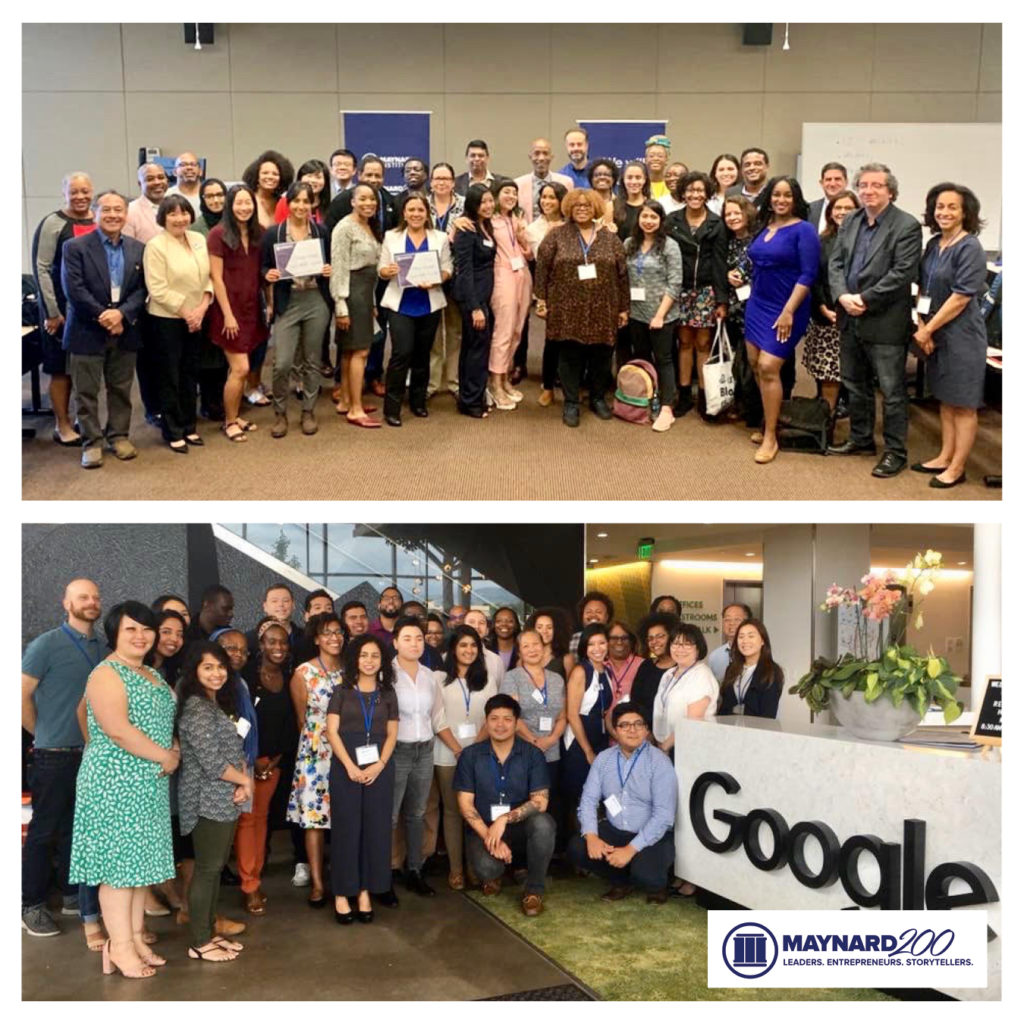
The Maynard 200 journalism fellowship program cohorts with some of their mentors, faculty, track executives-in-residence and MIJE executive team. Top: The 2019 class at USC Annenberg School for Communication and Journalism in Los Angeles, CA; Bottom: The 2018 class at the Google campus in Boulder, CO
Forty-nine Maynard 200 fellows representing mainstream and diverse media organizations and entrepreneurial ventures, as well as print, broadcast, online and multimedia portals, have participated to date from across the United States. They continue to express appreciation of the program.
“There is no experience like the experience of being a Maynard 200 fellow,” says Hélène Biandudi Hofer, a 2019 participant in the media entrepreneurship track. “From the support that you receive, the resources you’re given, the mentors that are there to help lead and guide you, the trainings, the workshops, webinars . . . and especially the family unit that is created with the other Maynard fellows and the Maynard leaders, it’s unlike any experience that I’ve had as a journalist and as a media entrepreneur.
“I feel that not only has my passion for journalism been enhanced . .what this program gifted me is how it has really changed how I look at this work, and empowered me to be more of a leader in news in our country.”
Hofer is host and producer of “Need to Know” on WXXI-TV in Rochester, N.Y., a veteran team member on CBS’ “48 Hours” and founder of HBH Enterprises LLC based in New York.
The 2020 Maynard 200 program is supported by Google News Initiative and Craig Newmark Philanthropies.
MAYNARD 200 APPLICATION PORTAL
UPDATE: Applications will continue to be accepted and processed. DEADLINE IS CURRENTLY LIFTED
For more information about Maynard 200:
contact director Odette Alcazaren-Keeley at okeeley@mije.org
ABOUT THE MAYNARD INSTITUTE FOR JOURNALISM EDUCATION
The Robert C. Maynard Institute for Journalism Education is the nation’s oldest organization dedicated to helping the news media accurately portray all segments of society, particularly those often overlooked, such as communities of color. The media play a pivotal role in shaping our perceptions of each other. The distorted coverage of communities of color influences public policy and the decisions we make in our personal lives.
Maynard seeks to help news media achieve both a diverse staff and provide the public with the most accurate and nuanced coverage possible.
Maynard breaks the cycle of inaccurate depictions by using a three-pronged approach: training media managers, journalists and correspondents from communities of color; creating content to demonstrate nuanced coverage; and keeping media accountable through its Watchdog program.
ABOUT NORTHWESTERN UNIVERSITY MEDILL SCHOOL OF JOURNALISM, MEDIA, INTEGRATED MARKETING COMMUNICATIONS
The Medill School of Journalism, Media, Integrated Marketing Communications prepares the best journalism and marketing students from around the world to lead the media into the future. The school was established almost 100 years ago, and more than 17,000 Medill graduates now engage in all types of industries and are among the nation’s most successful journalists and marketers. Medill, the only journalism school at a Top 10 university, offers undergraduate and graduate degrees in journalism and a graduate degree in integrated marketing communications. Visit medill.northwestern.edu

Jasmine expands upon this relational work by amplifying and archiving everyday stories as a freelance journalist contributing to South…
A recap of our most recent Regional Training at Texas Christian University Bob Schieffer College of Communication in…
The Institute explains its fellowship program and where it will take place.
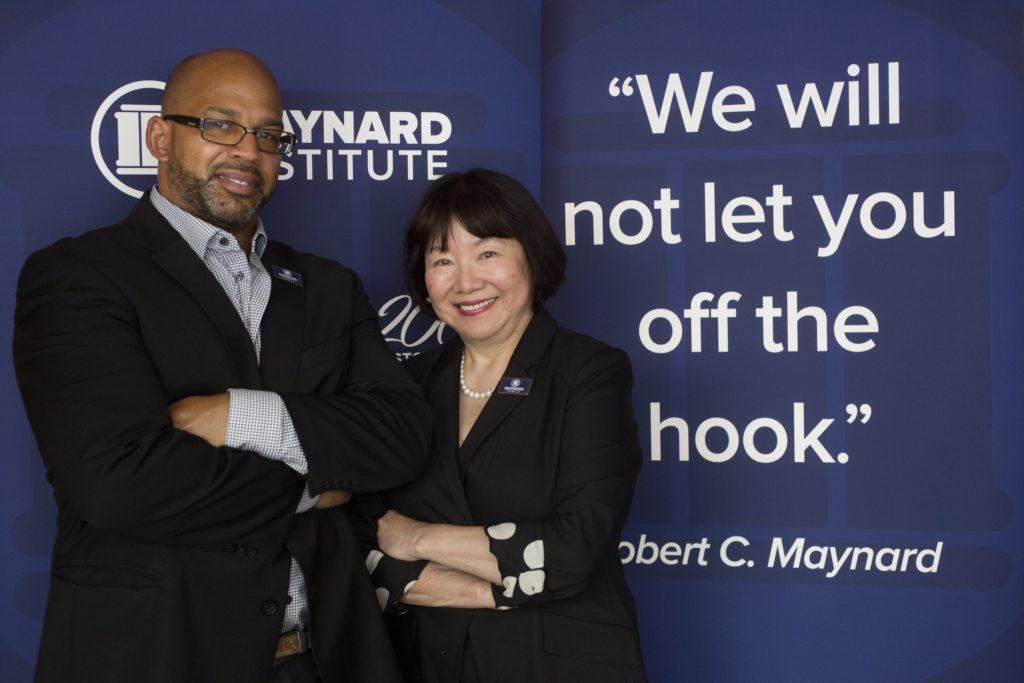
Co-executive directors, Martin Reynolds and Evelyn Hsu
EMERYVILLE, CA — August 5, 2019 — We have some very exciting news to report. The John S. and James L. Knight Foundation today announced $1.2 million in new funding for the Maynard Institute for us to develop an in-depth transformation program for news organizations to help them establish more equitable and inclusive workplaces.
This is a huge deal.
It represents an emerging shift in the funding priorities on the part of philanthropies as they begin to further show, with their dollars, how important diversity, equity and inclusion are to the health of our democracy and to the Fourth Estate.
A portion of this grant will also go to fund Maynard’s general operations and will help us add the staffing necessary to bring this initiative to fruition. Over the years Knight has been an important partner and supported many Maynard programs. But this is the first grant it has made that will include some general support, which is needed and greatly appreciated. This also represents an important and ongoing evolution on the part of foundations, which are beginning to understand the need to support basic operations of nonprofits that do work that may never earn enough revenue to sustain them. We applaud foundation grants that award general support.
The exciting investments in local news made by Knight, Facebook and Google over the past year or so are critical as the for-profit sector, in particular, begins to migrate from an ad-based revenue model, to one that looks to subscribers as key sustainers of news gathering.
But here’s the rub.
The vast majority of American news organizations, particularly at the local level, lack the diversity necessary to reach audiences of color. You would be surprised how little data outlets have on the audiences they could have if they approached coverage and business practices using Fault Lines as a framework.
In many cases, diverse communities have turned away from their local outlets, instead looking to so-called ethnic media to see themselves accurately reflected.
And while ethnic outlets often have deep relationships and are trusted by these communities, they often lack the resources to do the kind of deep-dive journalism that is necessary to hold power to account.
We seek to help news organizations transform from within. We’ll be selecting two news organizations to pilot this program over the next 18 months. Each “Equity and Inclusion Transformation Embed” will run six months.
One will be selected out of the Knight-Lenfest Newsroom Initiative (formerly known as Table Stakes), the other through a competitive national call-out. For-profit, independent and nonprofit news outlets will be eligible to apply. The application will be made public in late 2019.
For the Maynard Institute, this is about more than just diversity around the room, although that is vitally important. It’s about the need for journalists of color and those of diverse backgrounds to have a voice in what coverage looks like. To have the power and influence to help make real decisions about the strategy and direction of their news organizations, to have their whole selves reflected in the work they do and the roles they play.
The lens through which the world is seen cannot be viewed through one set of eyes. Our nation is diverse and the work we do, whether stories, sales, marketing, audience engagement or membership, must reflect that diversity.
Given the racial toxicity of our national discourse, the need for newsrooms to possess exceptional levels of cultural competency could not be more acute.
Issues that reach across the social fault lines of race, class, gender, generation, geography and sexual orientation are some of the most challenging to navigate in society, let alone our newsrooms.
This grant will empower us to develop a program to help news outlets go from a conversation about diversity, to becoming workplaces that are equitable and inclusive in service of the very diversity they seek.
Journalism is the truth serum of a democracy. But if the public distrusts the institutions that inform it, our society’s health is in peril. Diversity is the antidote to treat distrust. This work could not be more needed and more vital at this time in our nation’s history.
It won’t be easy.
We’ll be chronicling this journey as part of the grant, so keep an eye out for how the work is progressing. On behalf of the Board of Directors and alumni of the Maynard Institute, we deeply thank the Knight Foundation for its support.
We know Dori would raise a glass of red wine, offer a wry smile and then tell us, it’s time to get to work.
Martin G. Reynolds and Evelyn Hsu
Maynard Institute co-executive directors
–
Knight Foundation is a national foundation with strong local roots. We invest in journalism, in the arts, and in the success of cities where brothers John S. and James L. Knight once published newspapers. Our goal is to foster informed and engaged communities, which we believe are essential for a healthy democracy. For more, visit kf.org.
The Robert C. Maynard Institute for Journalism Education is the nation’s oldest organization dedicated to helping the news media accurately portray all segments of society, particularly those often overlooked, such as communities of color. The media plays a pivotal role in shaping our perceptions of each other. The distorted coverage of communities of color influences public policy and the decisions we make in our personal lives. Maynard seeks to help news media achieve both a diverse staff and provide the public with the most accurate and nuanced coverage possible. For more information visit mije.org
Jasmine expands upon this relational work by amplifying and archiving everyday stories as a freelance journalist contributing to South…
A recap of our most recent Regional Training at Texas Christian University Bob Schieffer College of Communication in…

Charlene Carruthers, author and strategist, was a panelist at MIJE’s Converse & Convene dinner.
WASHINGTON, DC – With trust in the media still recovering from an all-time low in 2016, the Robert C. Maynard Institute for Journalism Education convened a group of journalists and other stakeholders Oct. 29 for a candid conversation about their roles in a democracy.
“We are all in our silos, and we cannot afford to be,” said Martin G. Reynolds, co-executive director of the Maynard Institute. “These three constituencies are vital to our society as those seeking media justice work to address inaccurate portrayals, net neutrality and media consolidation, while movement or issue activists seek to change our society through organizing and public protest — and all this as journalists seek to tell the stories of humanity and hold truth to power.”
A group of more than two-dozen attended the Oct. 29 “Converse & Convene” dinner, the first of two gatherings sponsored by a grant from the Nathan Cummings Foundation. Attendees included a diverse set of reporters, editors, educators, funders, activists and organizers. The event was fittingly held inside the Fourth Estate Room at the National Press Club and was facilitated by Keith Woods, NPR’s vice president of newsroom training and diversity.

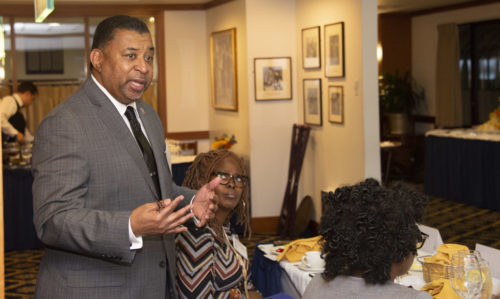
Converse and Convene dinner attendees.
The dinner’s aim was to facilitate a dialogue surrounding a shared goal of more inclusive journalism, contextualized and informed by the people who are often excluded from the conversation. Its intent was also to build relationships and foster communication between groups that oftentimes must collaborate to tell stories no one else will.
Trust and confidence in mass media has risen 13 points from a dismal low of 32 percent two years ago, but it’s still 27 points below its high-water mark from 1976, according to annual Gallup polls.
Monte Young, Newsday
The role of journalism and journalists has changed over the last four decades. The traditional mold of journalists still exists, but present-day reporters are being undermined by an administration that dismisses critical coverage as “fake news” and casts them as “the enemy of the people.”
Even those who claim to be objective are under attack. President Donald Trump and the White House blame the fourth estate for an especially violent week in America that saw 11 people murdered in a synagogue, two African-Americans killed by a white supremacist and more than a dozen high-profile Democrats and donors targeted by a serial mail bomber who appears to be a fervent Trump supporter.
The blame game continues despite the fact that CNN has been sent suspicious packages in recent days and five people were gunned down at the Capital Gazette newsroom in Annapolis, Maryland, earlier this summer.
Dinner participants acknowledged the tension between each of their roles, and most agreed that a firewall should separate them. Veterans emphasized that the role of reporters is simply to tell the truth, a mission that sometimes upsets activists who struggle to have their stories shared or have their own ideas about how a story should look.
Reporters and editors made clear that while the end result may not always be ideal, they’re constantly fighting behind the scenes to produce under-covered stories and include language that’s often stripped away by copy editors who aren’t comfortable working through stories involving race and culture.
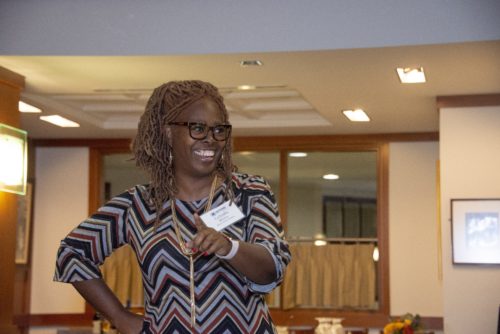
LaTosha Brown, Black Voters Matter
A split emerged when it came to bias among reporters. More experienced journalists upheld objectivity as a basic tenet of journalism, while others made the case for having bias and owning it — like the owners of television networks, TV stations and newspapers. As one millennial put it, having to choose between activism and journalism for her is like having to say whether she’s black or a woman: the two can’t be separated.
Activists said they want journalists to see how an imbalance in the foundation of journalism impacts their work, and they challenged the notion that there are only two sides to any story. LaTosha Brown, co-founder of Black Voters Matter, said people of color are often marginalized because stories have always been slanted in favor of the majority.
Brown took issue with the perceived value of a story and highlighted what she called the “sins of sensationalism,” the misconception that black readers only want to see sensational stories. She acknowledged that African-American reporters sometimes don’t want to be pigeonholed into covering the so-called “black” story but asked: “If you don’t take our stories, who’s gonna take our stories?”
“I’m not saying that there’s not other journalists that will, but there is a particular kind of framework and nuance and culture competency that you can capture,” she explained.
Editors noted that newsrooms respond to metrics. So one idea for activists to have a larger impact in media coverage is to promote the stories that do get told. High engagement and social media reach are data reporters and editors can point to when the higher-ups are wary of pursuing a particular story.
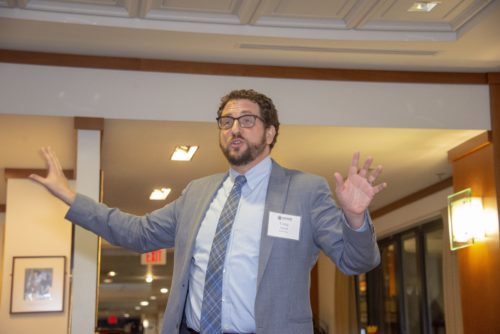
Craig Aaron, Free Press
It’s also important that each constituency understands — and learns — what the others do, attendees said. Like journalists, organizers are also trained. They learn how to agitate and interact with systems to transform them but don’t necessarily seek media attention for their work.
“We are oftentimes taught as organizers to not organize for media attention and to be wary of journalists and that our work is not for the sake of being visible or for the sake of the sensational story or anything,” said Charlene Carruthers, an author and strategist. “It’s to drive forth a strategy to achieve a desired change.”
Critics said TV networks’ exclusion of journalists and freelancers who don’t get booked because they don’t work at mainstream publications like The New York Times or Washington Post limits exposure to and muzzles reporters at smaller organizations who are subject-matter experts on local issues and topics they cover. They also lamented that TV networks are dominated by commentary instead of news reporting.
Participants presented a lack of funding as another challenge to storytelling. It’s tough to organize without money, they said, and hard to generate exposure without the proper resources in newsrooms to dig into issues.
The solution to any of these problems is unclear, but attendees believe a step in the right direction is more collaboration with one another and more conversations with the communities they serve. The idea that all three constituencies are working for their respective communities is the common cause that unites them.
Said Woods: “If we have a common interest in the people and principles we serve, then there’s something to be gained from talking across these titles and understanding what we have to offer to one another and testing the boundaries of collaboration.”
Jasmine expands upon this relational work by amplifying and archiving everyday stories as a freelance journalist contributing to South…
Read an excerpt of the essay written by the Maynard Institute's Co-Executive Director, Martin G. Reynolds, for the…
The Maynard Institute gathered a group of journalists to discuss their roles in a democracy.